A power supply can have an output-adjustment control without offering a user-configurable output-overvoltage protection setting. For an equipment builder, confusing those functions can turn a protection requirement into an undocumented commissioning step. Start an output overvoltage protection review by asking what the exact supplied revision actually specifies, rather than assigning a second function to a visible trimmer.
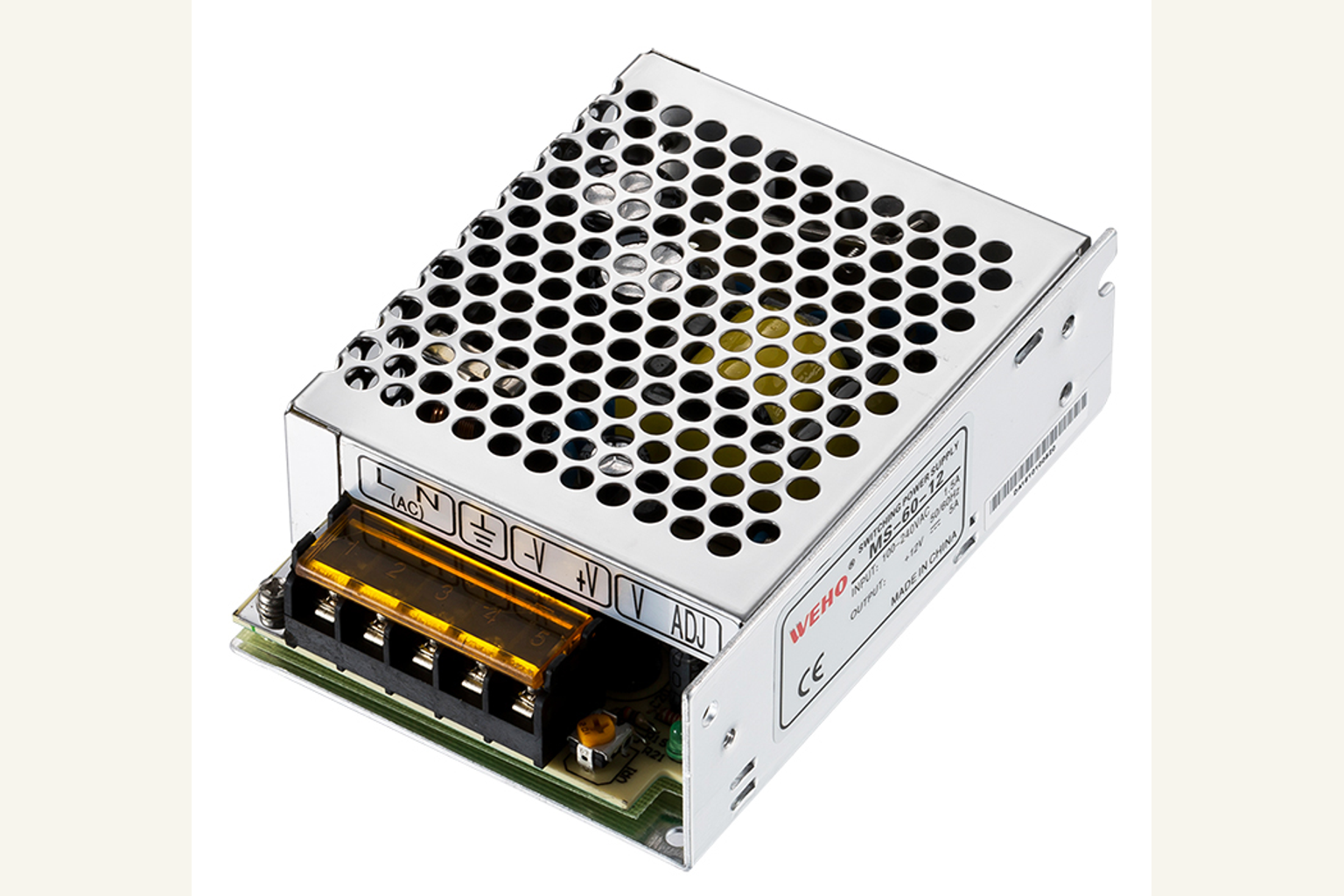
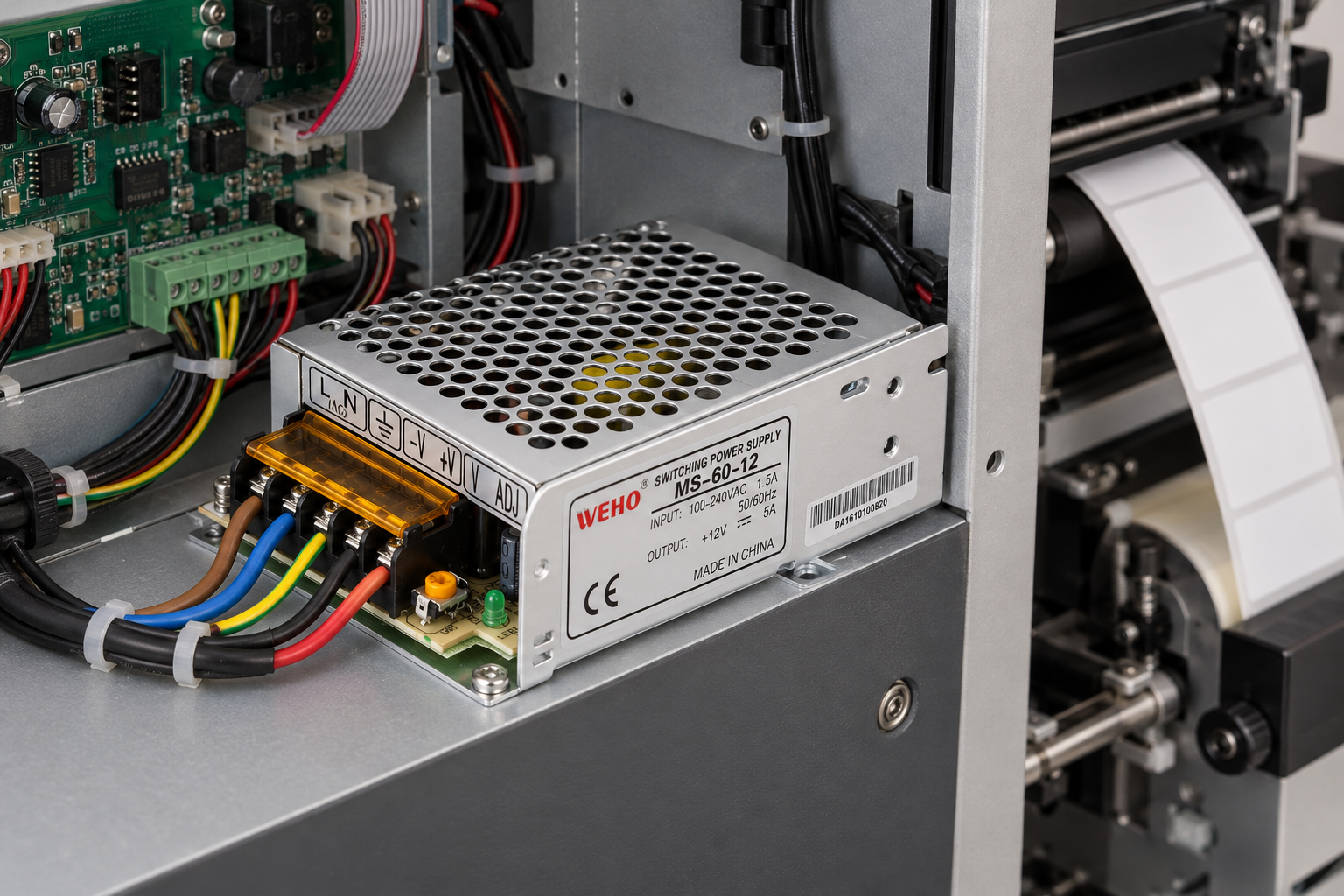
The photographed example here is the WEHO MS-60-12. Its authentic nameplate identifies a +12V, 5A output, and its front edge has a control marked V ADJ. That physical marking is evidence of an adjustment interface—not evidence of an adjustable OVP threshold. This article is a documentation and approval checklist, not a procedure for energised adjustment, fault injection or defeating protection.
Separate three questions in the equipment record
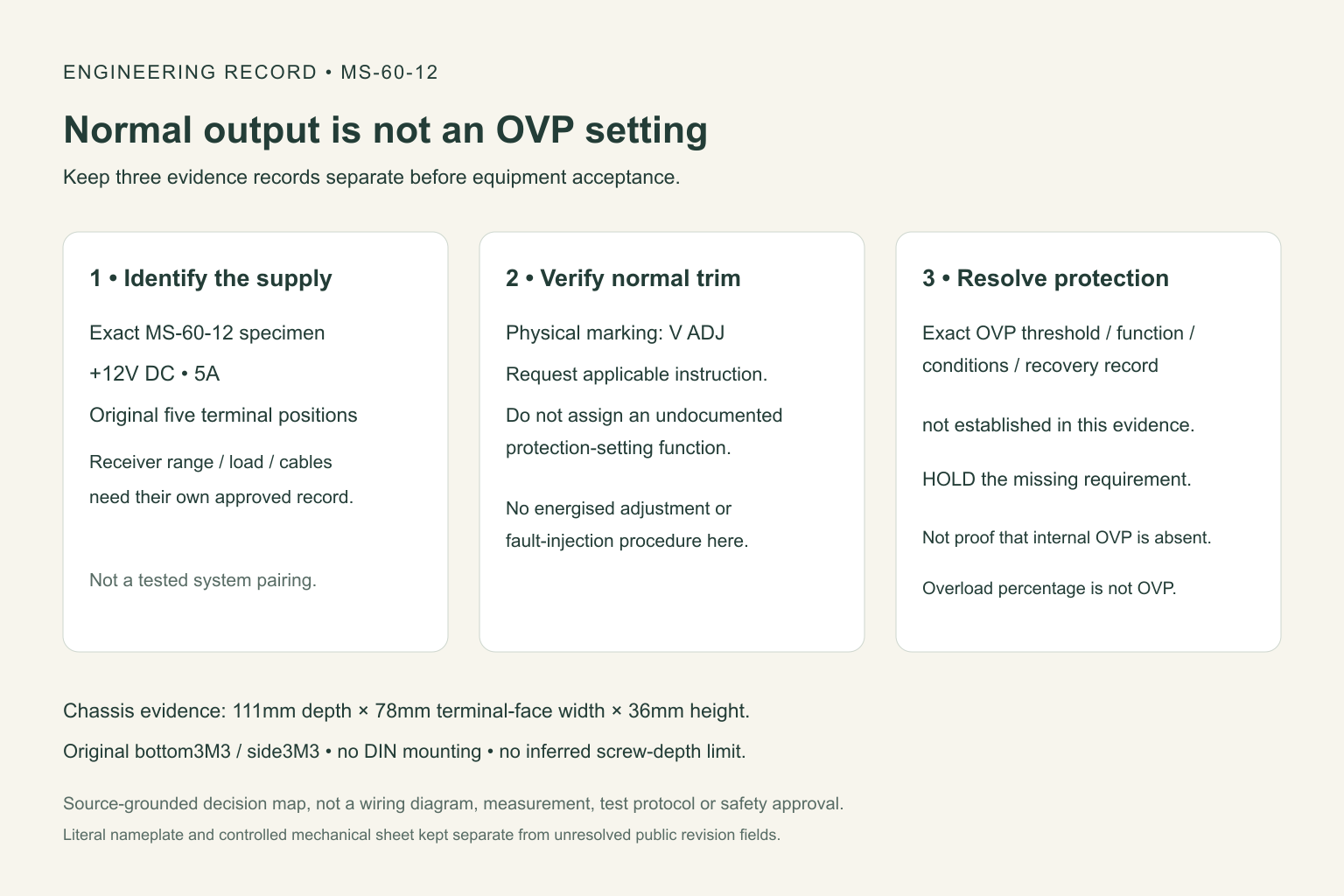
First, establish the intended normal output and the receiving equipment’s acceptable supply range. Second, establish the manufacturer’s permitted adjustment method and limits for the delivered revision. Third, request the independently documented overvoltage protection behaviour, if that function is required. An answer to the second question does not automatically answer the third.
| سجل | Evidence needed | What it does not establish |
|---|---|---|
| Normal output | Exact model, receiver limits, approved load and cable conditions | An OVP trip threshold |
| Output adjustment | Supplier-approved control, range and commissioning instruction | Permission to alter a protection circuit |
| حماية الجهد الزائد | Exact revision’s function, threshold conditions and recovery information | Compatibility with every receiver |
A generic family description, an adjacent model’s protection table or a control labelled only V ADJ cannot close the missing record. Keep the protection question open until the supplier and equipment engineering owner have resolved it for the actual assembly.
What the MS-60-12 evidence supports
The selected original photograph reads MS-60-12, INPUT 100–240VAC 1.5A, 50/60Hz and OUTPUT +12V 5A with the original DC symbol. The physical front terminals are L, N, protective earth, −V and +V. The amber hinged terminal guard, front-right recessed orange adjustment control and green indicator lens belong to this photographed specimen; they are not interchangeable with another series’ terminal arrangement.
The complete MS-60 sheet shows a 111mm terminal-to-rear length, 78mm terminal-face width and 36mm height. Its bottom and side drawings each identify three M3 positions. These dimensions and interfaces describe the selected chassis, not an approved clearance envelope or evidence of hidden screw engagement in an illustration.
ال official English MS-60 page and the retained complete manufacturer sheet provide product and overload-protection information. The evidence reviewed for this article does not establish a specific adjustable OVP threshold or a user OVP-setting procedure. That is an evidence gap, not a finding that the product has no internal overvoltage protection.
In particular, the sheet’s overload-protection percentage must not be relabelled as an overvoltage threshold. The public page and retained sheet also differ in auxiliary input and other performance fields. Do not silently combine those revisions or extend the literal photographed input marking into a wider approved operating range.
Make the supplier question specific
A useful technical enquiry identifies the full model, nameplate photograph, delivery revision and equipment requirement. Ask whether overvoltage protection is present in that exact revision, how its specified conditions are defined, whether the function is fixed or configurable, and what recovery behaviour applies. If the supplier offers a different model, reopen that model’s electrical and mechanical qualification rather than treating it as the same specimen.
Ask separately whether the visible V ADJ control has a permitted normal-output adjustment function and which instruction governs it. A missing OVP record should remain a hold item. Do not resolve it by turning the trimmer, borrowing a threshold from a neighbouring model or deliberately creating an abnormal input or load condition.
Keep receiver protection and supply settings distinct
The receiving controller may impose limits different from the supply’s nominal output marking. Its approved documentation, interface requirements and system protection design are separate inputs. A power-supply protection statement alone cannot establish the receiver’s tolerance, an external protection setting or the equipment’s restart permission.
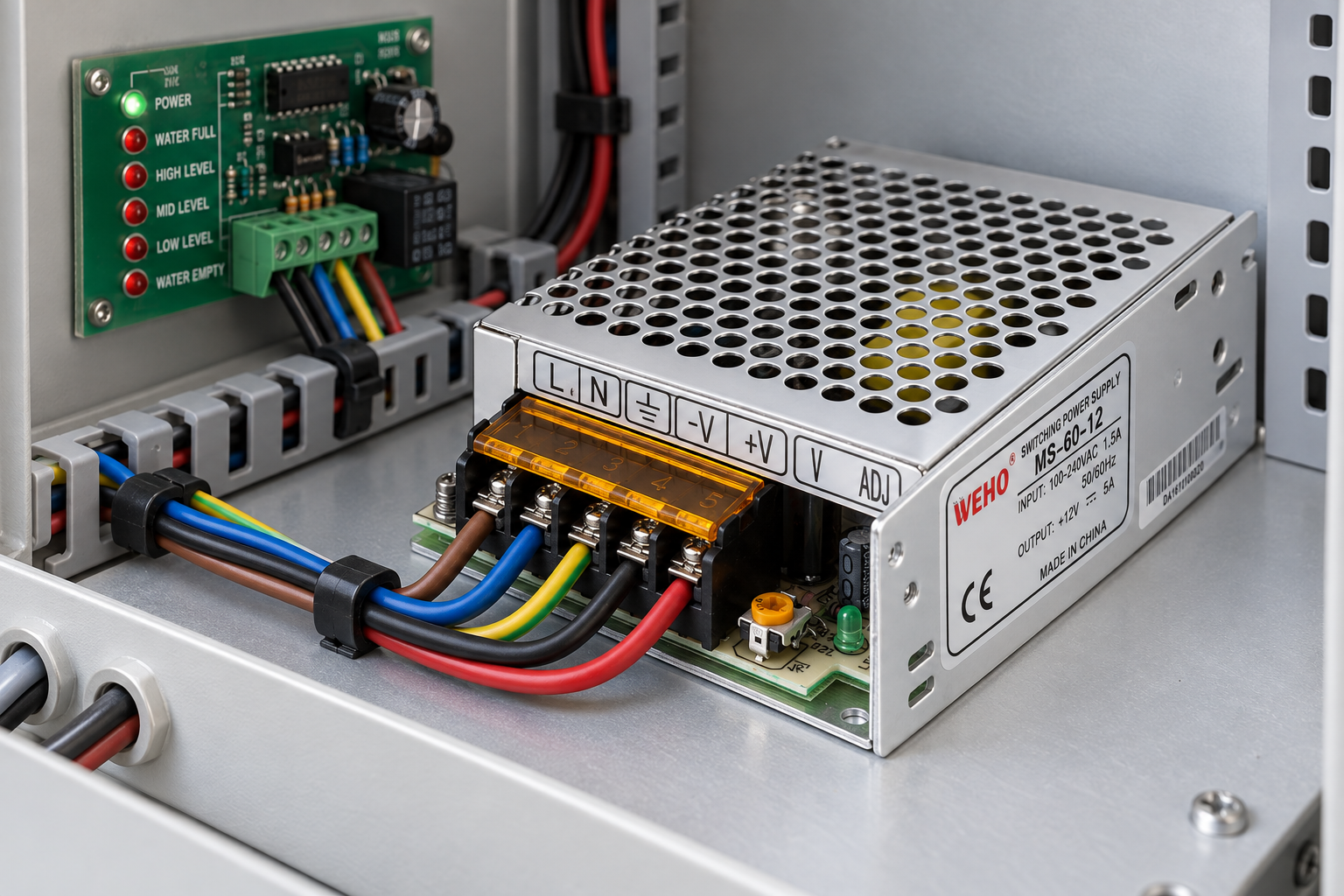
The two application illustrations show proposed dry, protected electronics integration at the source chassis’s ordinary scale. They do not document a commissioned water-level controller, a qualified printing interface, a measured voltage or a protection test. The product is chassis-mounted, not a DIN-rail model, and all illustrated conductors enter the real terminal mouths rather than ventilation or screw-access openings.
Release a documented decision, not a guessed setting
Before equipment acceptance, retain the exact supply identity, receiver requirements, approved normal-output instruction, supplier protection clarification and the engineering owner’s decision. An unresolved OVP requirement remains unresolved even if the enclosure fits and the nameplate is readable. Any testing or commissioning belongs to the qualified team’s approved procedure; this checklist does not supply one.
Does V ADJ mean OVP adjustment?
No such meaning is established by this specimen’s marking. Treat it as the labelled interface and request the applicable instruction; do not assign an undocumented protection-setting function.
Can the overload percentage answer an OVP question?
No. Keep the manufacturer’s protection descriptions separate and request the exact overvoltage record needed by the equipment specification.
What if the required record is unavailable?
Hold that requirement open or qualify another documented solution. Neither a generated photograph nor a general family claim can substitute for the missing revision-specific evidence.