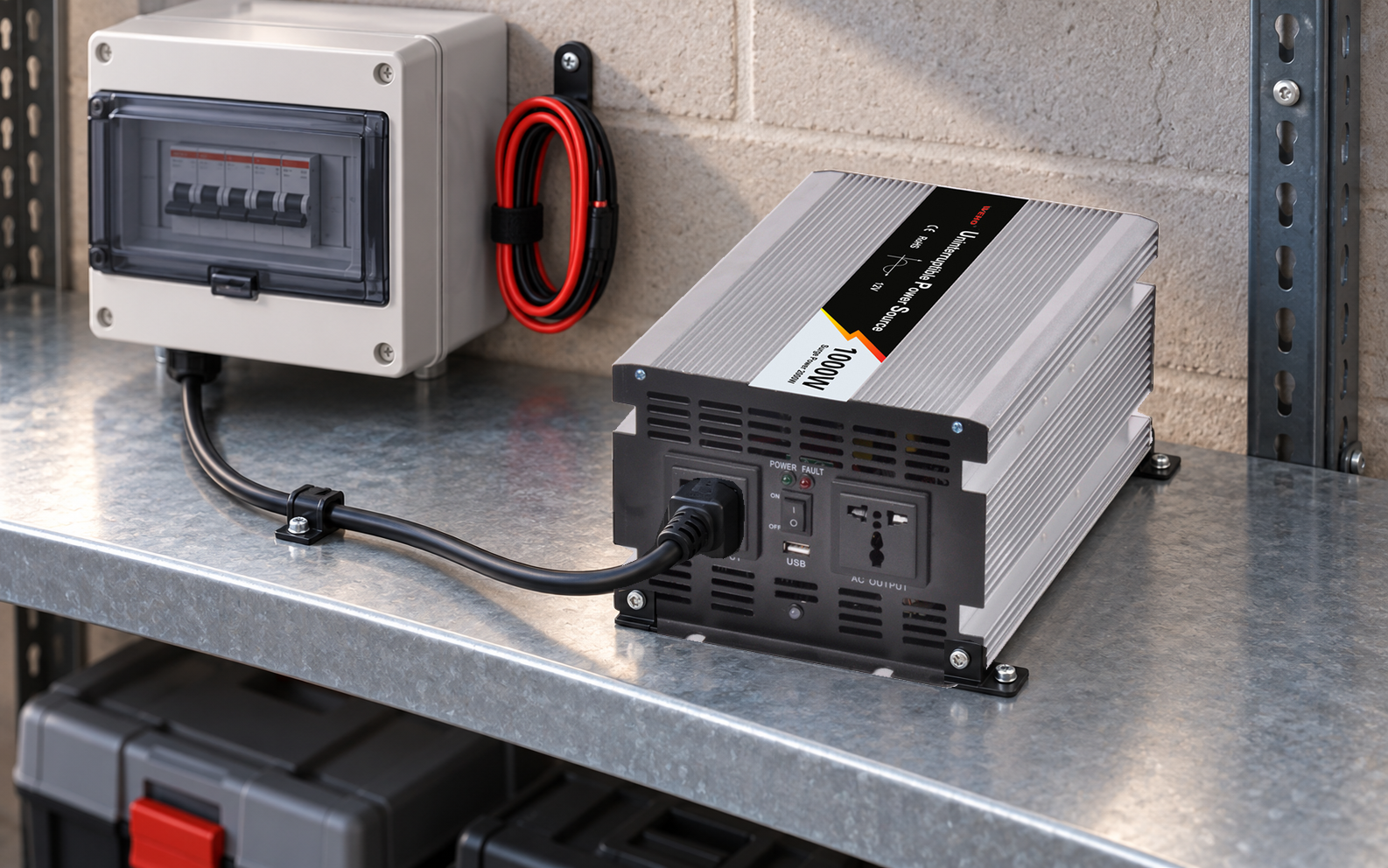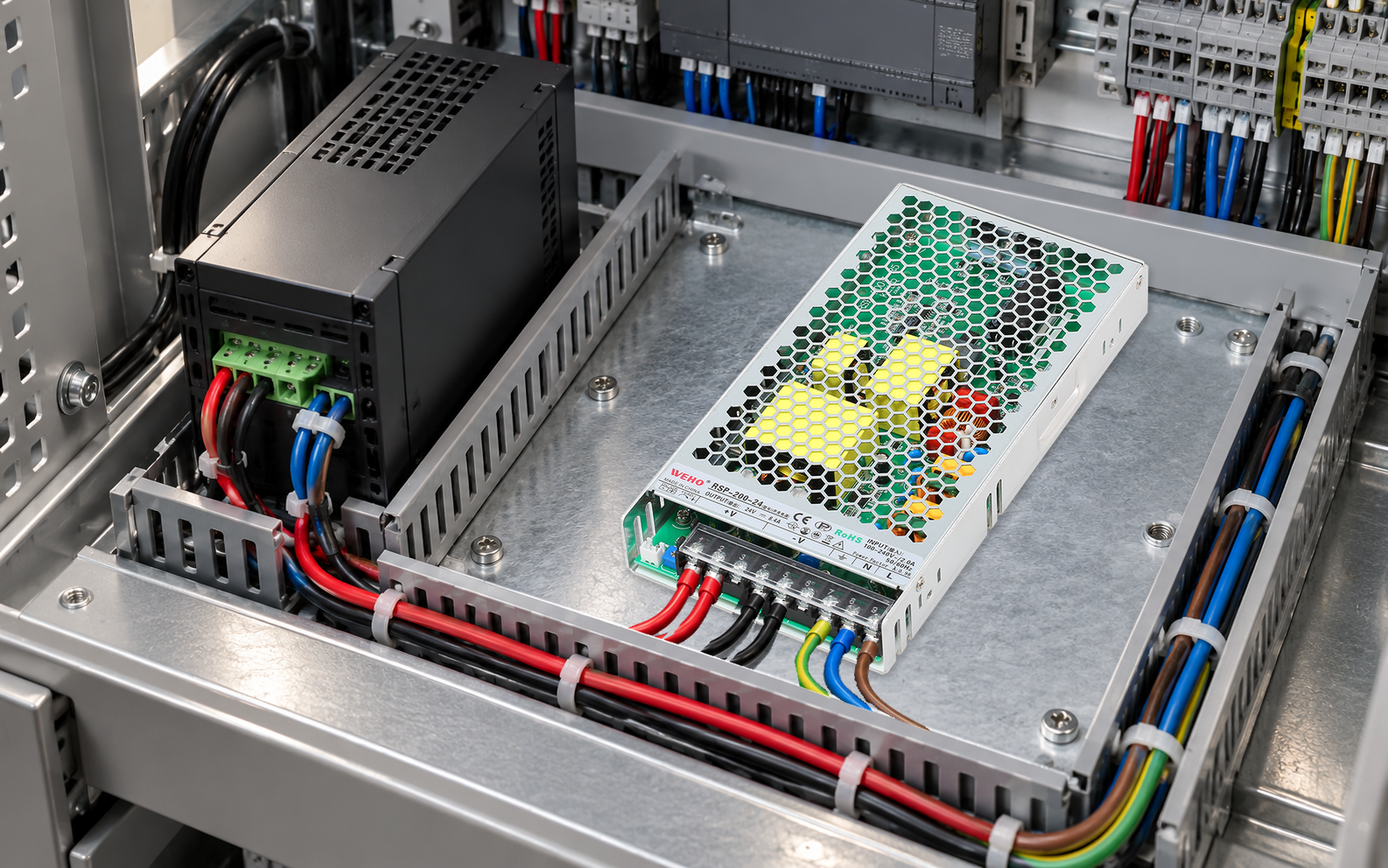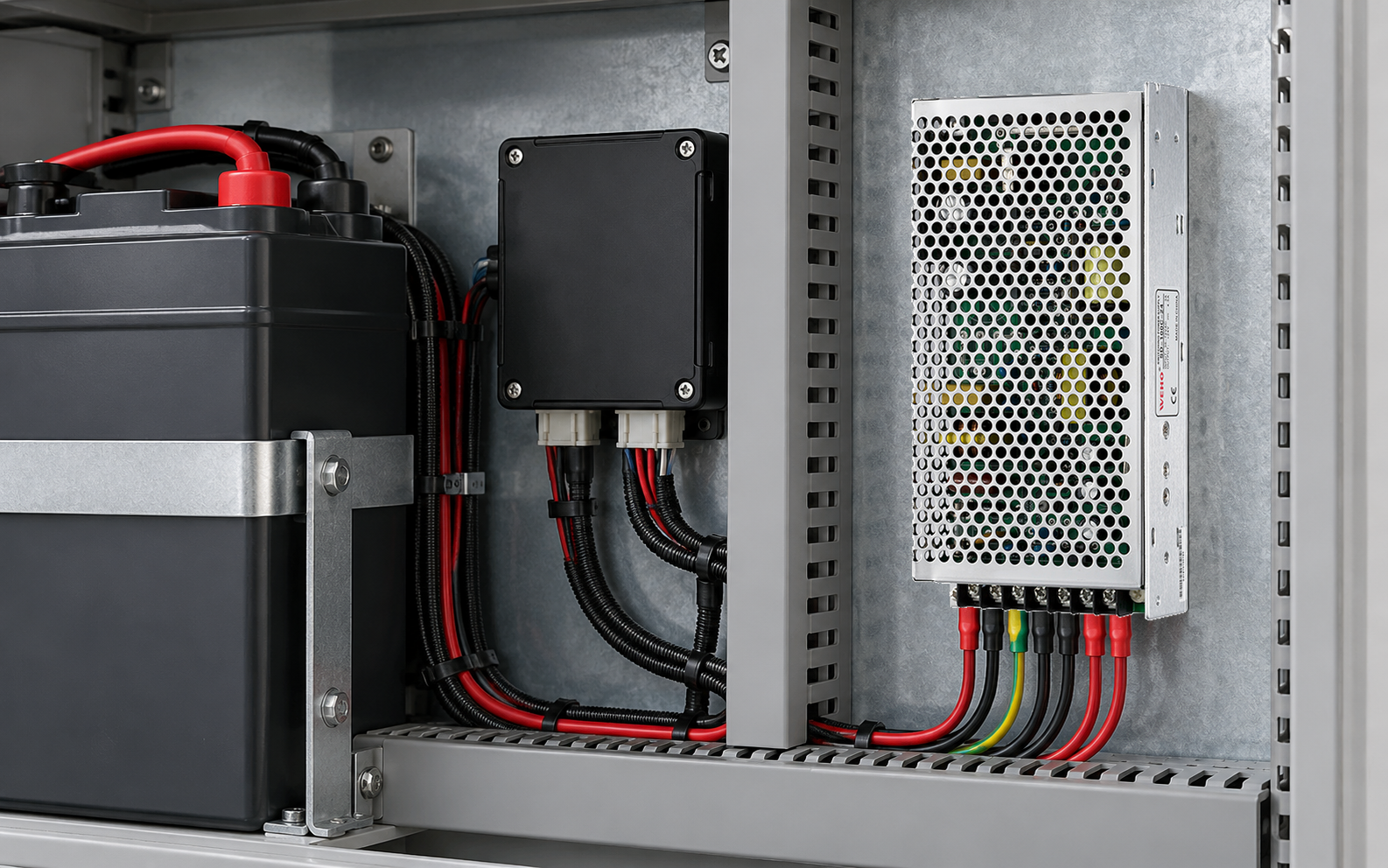
Evaluate what reaches the DC-DC converter when the BMS disconnects and reconnects, not only the battery’s nominal voltage. The permitted steady input window, reconnect transient and downstream restart behavior are separate questions.
For a battery-powered equipment team, the decision is whether the complete battery/BMS/converter/load configuration is supported and repeatable. The WEHO SD-100 family is used as a document reference; the available evidence does not establish BMS hot-reconnection compatibility for an unspecified subtype.
Confirm the input letter before discussing a battery pairing
ال official SD-100 specification distinguishes B variants with 19–36 V DC input, C variants with 36–72 V DC input and D variants with a different input range and arrangement. Record the complete subtype, output version and delivered revision. A family name without that input letter cannot establish the intended source envelope.
Keep the battery’s actual maximum charging voltage, low-state voltage and the BMS switching arrangement in the same record. A nominal 48 V battery label is not a complete source specification. Do not transfer a terminal assignment from one input subtype to another.
Confirm the output limits separately for the delivered subtype and load. This reconnection method does not select an output load or turn a steady input range into a permissible transient peak. Request the applicable transient and recovery limits before choosing the final test conditions.
Define what the BMS actually switches
Identify whether the BMS opens a battery power path, issues an external control command or operates another switching device. Record which pole or poles are affected, what remains connected and how reconnection is initiated. Include any permitted automatic retry, precharge or manual recovery behavior from the actual battery/BMS documentation.
Texas Instruments’ hot-plugging discussion explains that input capacitance and inductive source wiring can produce inrush and voltage ringing when DC power is reapplied. Its design example demonstrates a mechanism, not the SD-100’s internal circuit or a guarantee that every BMS reconnection produces the same waveform.
Request any specified converter limits on transient input voltage, inrush, allowable source impedance and reverse energy. If those limits are absent, record the missing information instead of interpreting silence as unrestricted hot-plug permission.
Use stored energy to understand why one event is not another
Illustrative calculation, not SD-100 capacitance data: assume a capacitor of 470 µF is charged to 48 V. Its stored energy is E=½CV², giving 0.5×470×10−6×48²=0.541 J. At 96 V with the same capacitance, the value is 2.166 J, four times as large.
The example shows why voltage matters strongly to an energy estimate. It does not predict the actual peak current, ringing or component stress in a reconnecting system. Those depend on the real capacitance, wiring, switching behavior and source impedance. Do not add this example capacitor or a generic damping resistor to the product based on this calculation.
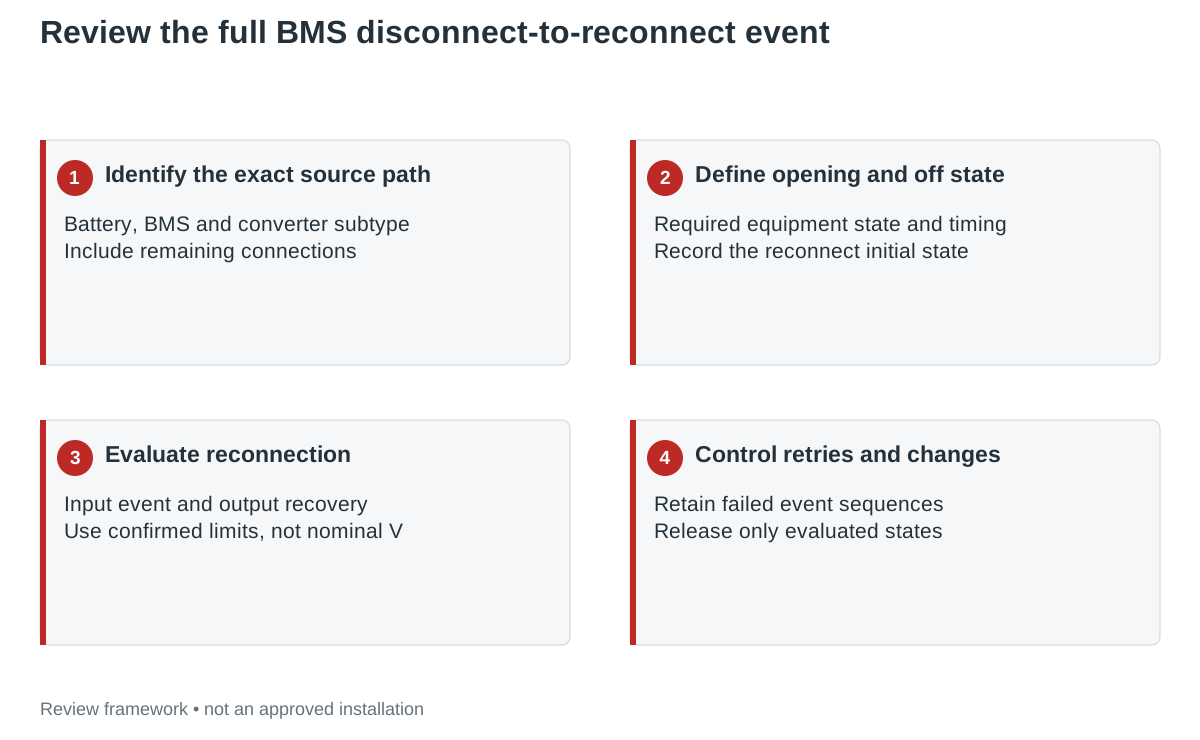
Specify separate opening and reconnection observations
| Event or condition | Record together | Acceptance question |
|---|---|---|
| BMS opens | Trigger reason, load state, converter input/output and required equipment state. | Does equipment enter its specified state without relying on an undefined supply condition? |
| Off interval | Duration, remaining energy sources and residual converter/load voltage. | Is the initial condition for reconnection known? |
| Reconnection | Source voltage, switch behavior, input current/voltage event and output recovery. | Are all confirmed electrical limits and restart requirements met? |
| Automatic retry | Retry rule and number/timing of allowed attempts. | Does the system avoid an unresolved repeated trip/restart cycle? |
| Changed source or harness | Battery/BMS revision and cable configuration. | Does previous evidence still represent the actual assembly? |
Have the responsible team define measurement methods, protection and test access. The objective is a controlled qualification record, not an instruction to repeatedly disconnect a live battery by hand.
A successful bench restart may miss the production event
Illustrative case: a converter restarts normally from a laboratory source after a long off period. In the intended equipment, the BMS automatically reconnects after a short interval with different wiring and some downstream electronics still energized. The laboratory run did not reproduce that initial state or source path.
Revise the plan to cover the actual allowed BMS transition and remaining connections. Keep the battery, BMS, wiring and load revisions identifiable. If reconnection causes another trip, retain the event sequence and reason codes before choosing a correction. Do not assume that a larger converter or an arbitrary delay solves the underlying input event.
Make the approved recovery behavior explicit
Use the blank BMS disconnect/reconnection record to define required evidence, test states and disposition. Record which recovery states were supported, which failed and which require further information. Retest the affected cases after changes to the BMS, source wiring, converter or load.
For the SD-100 reference, the useful next step is an exact-subtype discussion with the manufacturers. A steady input-range match can support initial screening; it cannot replace the missing reconnection and system-recovery evidence.
Use the project record
Open the blank BMS opening and DC-DC reconnection record to record your conditions, evidence and decisions. The worksheet contains no pre-approved result.
Review the complete battery-to-load transition
Send WEHO the full SD-100 subtype, battery voltage envelope, BMS model/switching behavior, wiring arrangement and load restart requirements. Request applicable transient-input, inrush and recovery limits before approving the pairing.