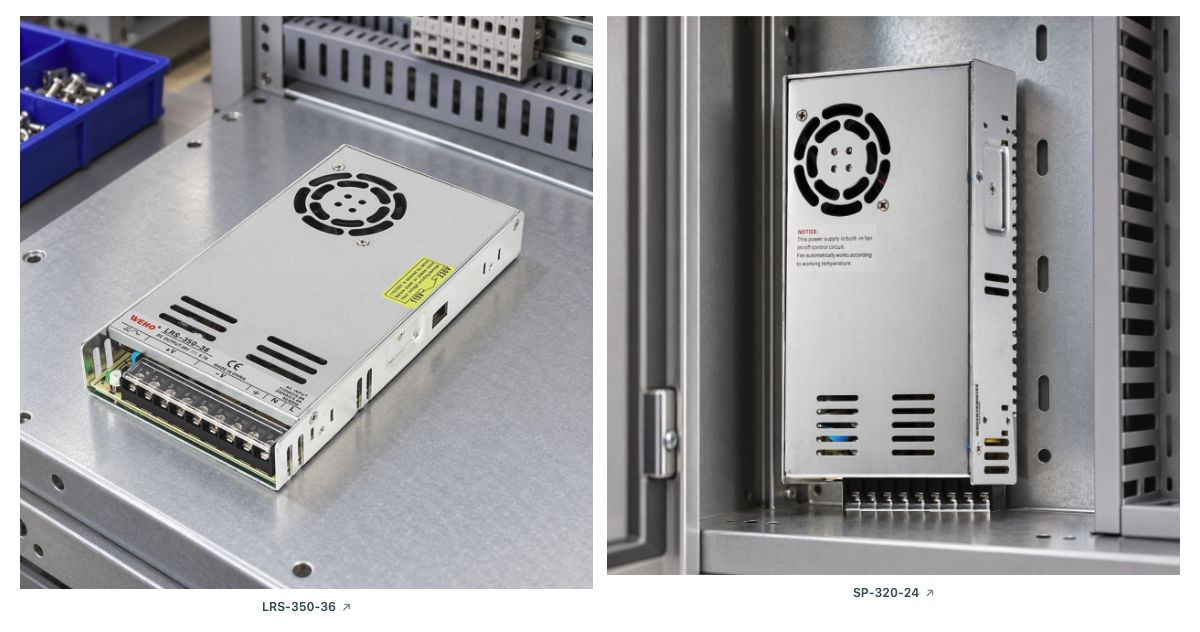
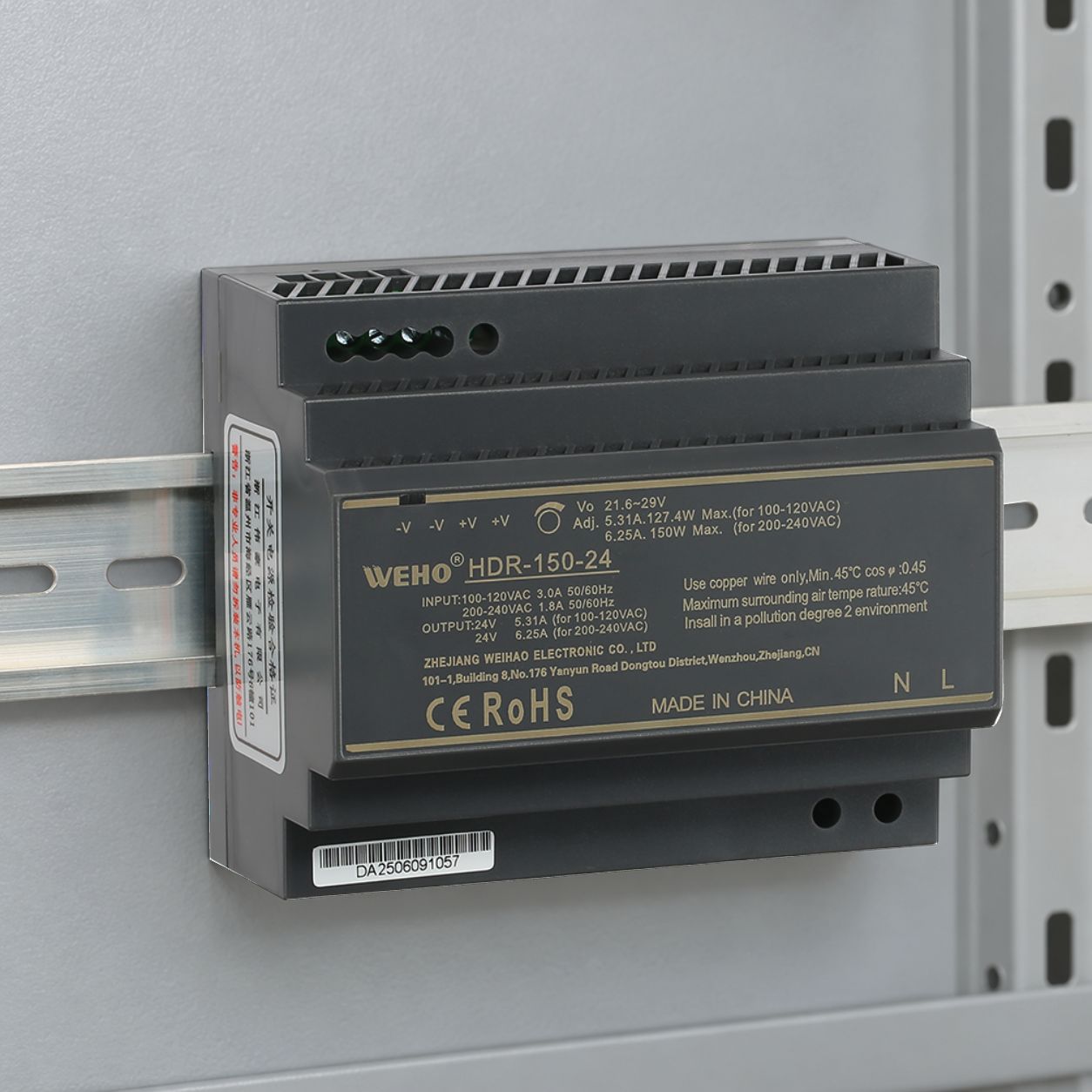
A hipot test, also called a dielectric withstand test, applies a specified electrical stress across insulation. For an OEM buyer, the useful question is whether a traceable result demonstrates the required test on the correct power-supply assembly. A green indicator or a certificate mentioning a different model cannot answer that question.
Before approving a supplier record, verify five items: product identity, insulation path, authorized test conditions, valid test equipment, and the disposition of failures or retests. The framework below is a document-review aid for procurement and supplier-quality engineers. Qualified personnel must establish and perform any high-voltage testing under the applicable safety procedure.
Article sections
Define what the record is supposed to prove
Start with the purchasing specification and the equipment’s applicable safety requirements. Identify whether the evidence concerns design qualification, a routine manufacturing check, an agreed incoming inspection, or a test after assembly or repair. Keep these purposes separate in the approval record.
A qualification report for one configuration does not establish that every delivered unit received the required routine check. Conversely, a production pass does not supply the construction review, certification scope, or wider evidence needed to qualify a design. Ask which document supports each requirement instead of treating one report as the complete safety file.
Also distinguish dielectric withstand, insulation resistance, and operating leakage-current measurements. They answer different questions and produce different records. Chroma’s electrical-safety FAQs distinguish a withstand test from an insulation-resistance measurement; the latter reports resistance. Do not accept an insulation-resistance result as an automatic substitute for the specified withstand test.
Review the test definition before the pass result
The following matrix is a proposed supplier-review checklist. The actual settings and acceptance rules must come from the applicable product requirements and the authorized procedure, including any recognized conditions of use.
| Review item | Evidence to request | Reason to hold approval |
|---|---|---|
| Assembly identity | Exact model, output version, hardware revision, and serial or lot reference | Report covers a similar family but cannot be tied to the offered assembly |
| Tested insulation path | Identified circuit groups and a controlled connection diagram | The recorded path differs from the path required by the specification |
| Test program | Procedure revision, AC or DC mode, specified stress, timing, limits, and required preparation | Only a headline voltage is supplied, with no controlled program |
| Test equipment | Tester and fixture identity, calibration status, and relevant function-verification record | Equipment validity or connection integrity is unresolved |
| Result and disposition | Original result, available measurements, failure reason, and authorized retest history | A replacement pass hides the initial failure or a changed program |
View full diagram ↗
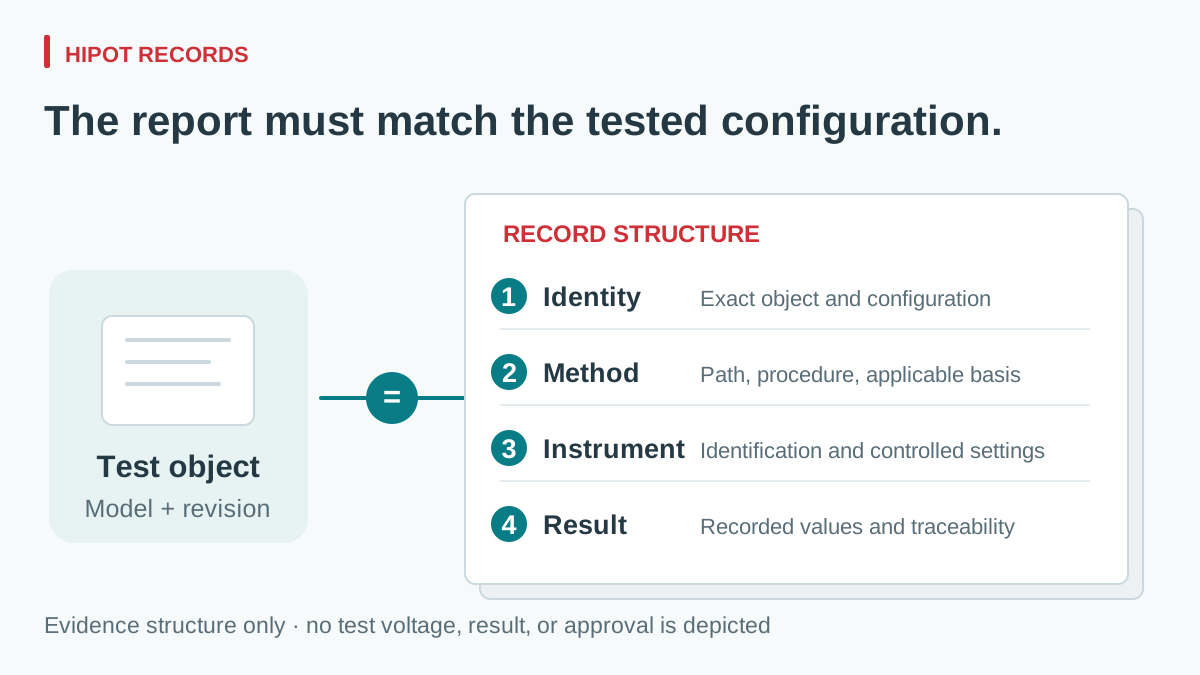
A diagram matters because “input to output” and “input to chassis” are different test descriptions. The test laboratory or responsible engineer must define the circuit groups and connections for the actual construction. A buyer should audit that definition, rather than improvising a connection from a generic internet drawing.
Why matching the voltage alone is insufficient
AC and DC test records cannot be compared using the number on the front page alone. The waveform, duration, current limits, connection arrangement, and approved method affect the meaning of the result. Do not invent an AC-to-DC conversion or shorten a test to match another supplier’s quotation.
Power-supply input filters can make the distinction significant. TDK-Lambda’s explanation of hipot testing describes current through Y capacitors during an AC test and the charging behavior involved with a DC test. That supports checking the specified method and the product’s instructions; its example settings are not universal WEHO test requirements.
Review any instruction to disconnect, bridge, or otherwise prepare a component as part of the controlled procedure. An undocumented modification can make two apparently identical tests cover different assemblies. The record should identify the preparation and any required restoration or subsequent checks. Ask the responsible compliance engineer whether the resulting evidence meets the intended requirement.
Audit the tester, fixture, and original data
A current calibration certificate is useful, but the review should also establish how the test system’s correct operation is checked. Associated Research’s paper on tester verification explains that faults in safety-test equipment can produce incorrect results. A pass should therefore be linked to the applicable equipment-verification process, not treated as self-validating.
Request the test-program identifier recorded against the unit, not just a screenshot of the program currently loaded. Where the supplier keeps numerical results, retain the measured value, units, applicable limit, and test stage. If the agreed record contains pass/fail only, identify that limitation and decide whether additional information is necessary for this project.
Control failures explicitly. Keep the original result, investigation, repair or fixture correction, authorization, and subsequent outcome together. Repeating a test until it passes leaves an ambiguous record. Any further electrical stressing must follow the manufacturer’s instructions and the responsible engineer’s decision; this article does not propose a general retest voltage or allowance.
Example: two passing reports, one unresolved requirement
Consider a hypothetical OEM comparing two offers for an enclosed AC-DC supply. Supplier A provides a traceable report for the quoted revision, with the required insulation paths and the authorized routine-test program identified. Supplier B provides a “PASS” page for an earlier revision and an unrelated inspection sheet listing insulation resistance.
The correct purchasing action is to request the missing withstand evidence from Supplier B. The information does not establish that its hardware is defective; it establishes that the offered configuration is not yet supported by the required record. A lower price does not resolve that evidence gap.
Suppose Supplier A’s power supply is then installed in a metal enclosure with a changed harness and additional filters. Keep its supplier record, but ask the equipment compliance engineer what further assembly-level evaluation is required. The component record should enter the equipment file with its scope intact.
Match an LRS-350-24 quotation to the insulation record
When WEHO LRS-350-24 is proposed as an enclosed single-output AC-DC source for an OEM assembly, tie its full model suffix to both the purchasing specification and the safety-evidence request. The LRS-350 public specification lists 24 V, 0–14.6 A for this version; confirm the permitted operating conditions separately from the insulation evidence. Compare the quotation, sample rating label, applicable specification, and assembly revision named in the report. Its withstand-voltage row distinguishes input-to-output, input-to-FG and output-to-FG paths. Match the report’s path to the requirement instead of accepting a generic “hipot tested” entry. Neither the output rating nor a recognizable enclosure establishes that a unit or shipment passed the agreed test.
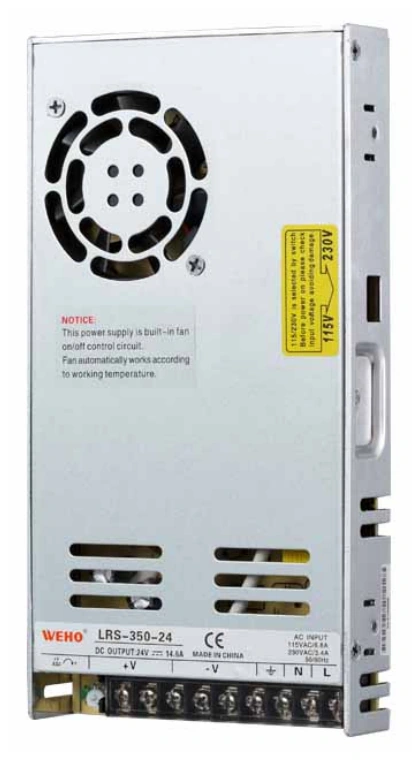
LRS-350-24 model reference; a product photograph does not establish a hipot result.
View original photograph ↗
Ask which insulation paths, assembly revision, test stage, and procedure the available record covers. Request the agreed unit or lot reference and the handling of failures or changes. If the record identifies a different configuration, resolve the difference before sample release. This is a documentation-review example, not a statement that LRS-350-24 has completed a particular hipot program.
Put the evidence requirement into the purchase agreement
Specify the deliverable before ordering: the configuration covered, required report fields, unit or lot traceability, record retention, change notification, and the route for resolving discrepancies. Distinguish evidence required before sample approval from information supplied with production shipments.
Use the OEM power-supply RFQ checklist to connect these requirements to the quoted configuration. For substitutions, the power-supply replacement checklist helps keep electrical, mechanical, and documentation changes in the same review.
Send WEHO the proposed power-supply model and your required safety-evidence list, including the equipment application, market, configuration, and applicable procedure references. Ask what documentation is available for that exact assembly. Agree any outstanding qualification or production-record requirements before making the release decision.