Key Engineering Takeaways
- A cold-start input-current figure does not define every short-off restart condition.
- Retain the operating history, interruption time and actual input waveform.
- Peak current and pulse energy are different checks for upstream components.
- Qualify the switching assembly without assuming a particular internal limiter topology.
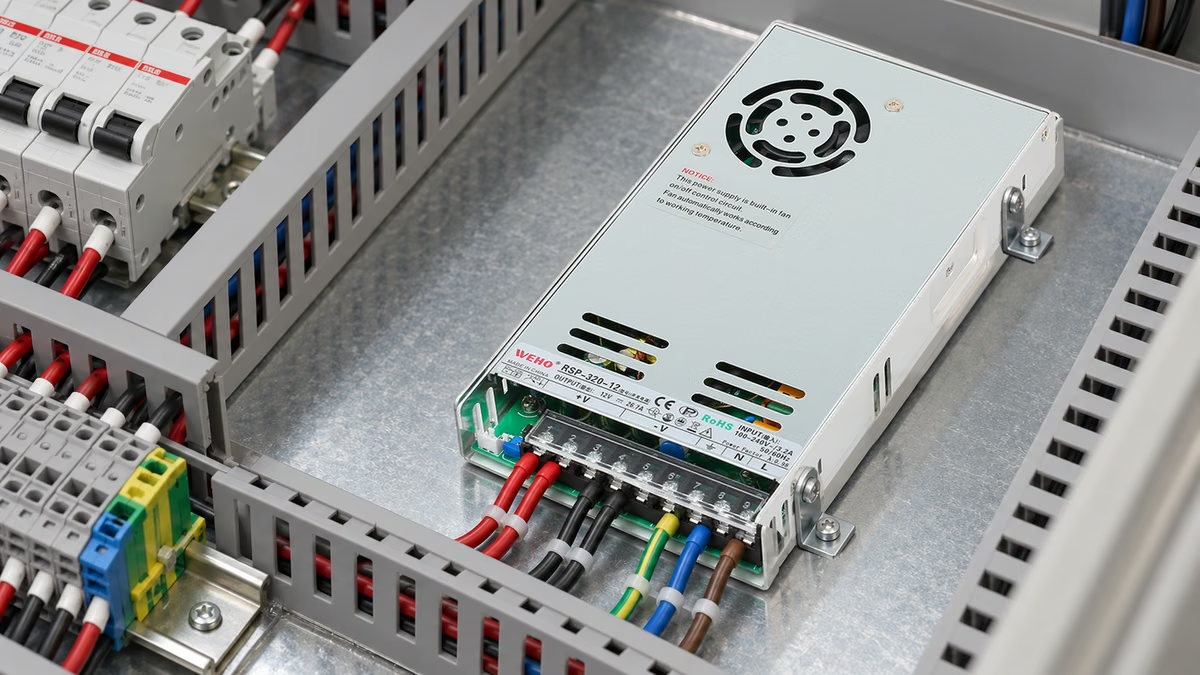
Why should an OEM test short-off restarts separately?
A power supply restarted after a brief interruption can begin from a different electrical and thermal state than a fully conditioned cold start. An initial energization result therefore does not describe every repeated switching duty. The engineering decision is whether the actual input switching assembly withstands the required operating sequence.
El RSP-320-12 product documentation identifies the supply family and provides cold-start inrush information. Its scope matters: a cold-start entry is not an all-restart envelope. This article does not assign an undocumented warm-restart current or internal circuit to the product.
The topic is input stress after short OFF intervals. It differs from calculating simultaneous startup of many supplies or checking whether the downstream controller recovers after a voltage sag. Those questions can share a test event, but they require different acceptance records.
Which physical states can change the restart result?
Input capacitance, stored charge, thermal state and any input-limiting arrangement can influence a restart. The exact behavior depends on the actual design and operating conditions. Do not infer it solely from a cold-start number, an active-PFC label or a visible fan grille.
TDK's inrush-limiting application discussion explains why an NTC limiter's temperature history matters when that technology is used. That is a general component principle. It does not prove that the RSP-320-12 uses a particular NTC arrangement or that a generic cooldown time applies to this supply.
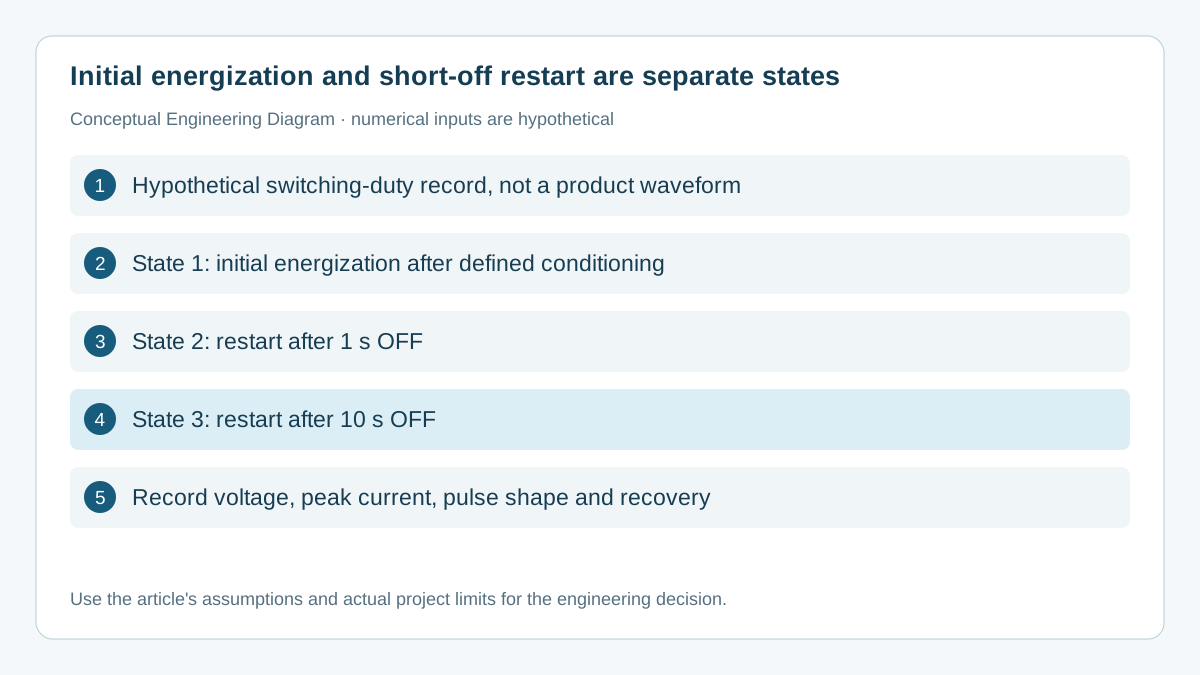
Hypothetical Switching-Duty Example
Assume an OEM machine must tolerate an initial energization and restarts after 1 s and 10 s OFF intervals. These intervals are project requirements for the example, not manufacturer restart instructions. The qualification plan records the prior ON condition and repeats each required OFF interval under the specified source and load conditions.
The test should capture the input voltage and current with sufficient timing and measurement capability for the event. Retain peak current, pulse duration and relevant pulse shape. Also record whether the upstream contact, protective device and equipment recover in accordance with their own requirements.
Do not rank two events by peak alone. A hypothetical rectangular 20 A pulse lasting 2 ms has an I²t of 20² × 0.002 = 0.8 A²s. A hypothetical 10 A pulse lasting 10 ms has 10² × 0.010 = 1.0 A²s. The lower peak has the larger I²t in these assumed examples.
Real inrush pulses are not necessarily rectangular. Calculate or measure the relevant integral from the actual waveform using the component manufacturer's method. The example illustrates why peak and duration both matter; it does not define a fuse limit or establish contact endurance.
What belongs in a restart qualification matrix?
Define the required switching duty before choosing the test sequence. Include the actual source, upstream device and equipment loading. A different line impedance or switching phase can change the event, so retain conditions that explain the result rather than reporting only one maximum number.
| Condition | Record | Acceptance subject | Do not infer |
|---|---|---|---|
| Initial energization | Defined prior conditioning | Cold-start duty | All warm restarts covered |
| Short OFF interval | Prior ON state and actual OFF time | Restart input stress | Zero stored energy |
| Input switching | Contact/device and source conditions | Making duty and endurance | Steady-current rating is enough |
| Protección | Actual pulse and device criteria | Required coordination | Peak current alone determines outcome |
An upstream switch's continuous current rating is not its capacitive-load making rating. Use the applicable switching-duty evidence for the selected component. Similarly, fuse or breaker coordination requires the relevant device characteristics and conditions; a supply's current peak cannot be compared with a protection label as if both described the same quantity.
When several supplies share the same switching device, the assembly adds another variable. Their events may overlap or differ with source impedance and initial states. Keep that multi-unit assessment separate from the single-unit restart matrix rather than assuming multiplication produces a valid measured waveform.
How should the OEM perform and record the tests?
Use an approved procedure that controls the required states and measures the actual interruption interval. A software command timestamp may not equal the time the input voltage disappears or returns. Record the event at the relevant electrical point.
- Identify the exact supply, upstream switch or protective device, source arrangement and required machine switching cycle.
- Establish the permitted preconditioning, load and environmental conditions. Define which initial and restart events the test must cover.
- Record input voltage and current with an appropriate probe, range, bandwidth and capture window. Retain saturation and clipping checks for the measurement path.
- Compare the captured events with the applicable upstream component and equipment criteria. Record both successful operation and abnormal behavior.
- Repeat the affected coverage after a source, input switch, protection, supply revision or operating-sequence change.
Do not repeatedly force an unqualified assembly through abnormal operation to obtain a more attractive result. Stop according to the approved procedure if protective operation, overheating, contact damage or other defined abnormal conditions occur. Preserve the event record and investigate the cause before continuing.
Mains switching and current captures require qualified personnel, appropriate equipment and the applicable energy-isolation procedure. A brief OFF interval does not establish that internal energy has disappeared. This article does not give a discharge waiting time or permission to access the primary circuit.
How should cold-start data appear in the purchase record?
Keep the manufacturer's cold-start information with its stated voltage and conditions, then attach the separate equipment restart qualification. Do not rewrite a published cold-start value as the guaranteed maximum for an untested switching sequence. Also avoid interpreting one observed pulse as a new manufacturer limit.
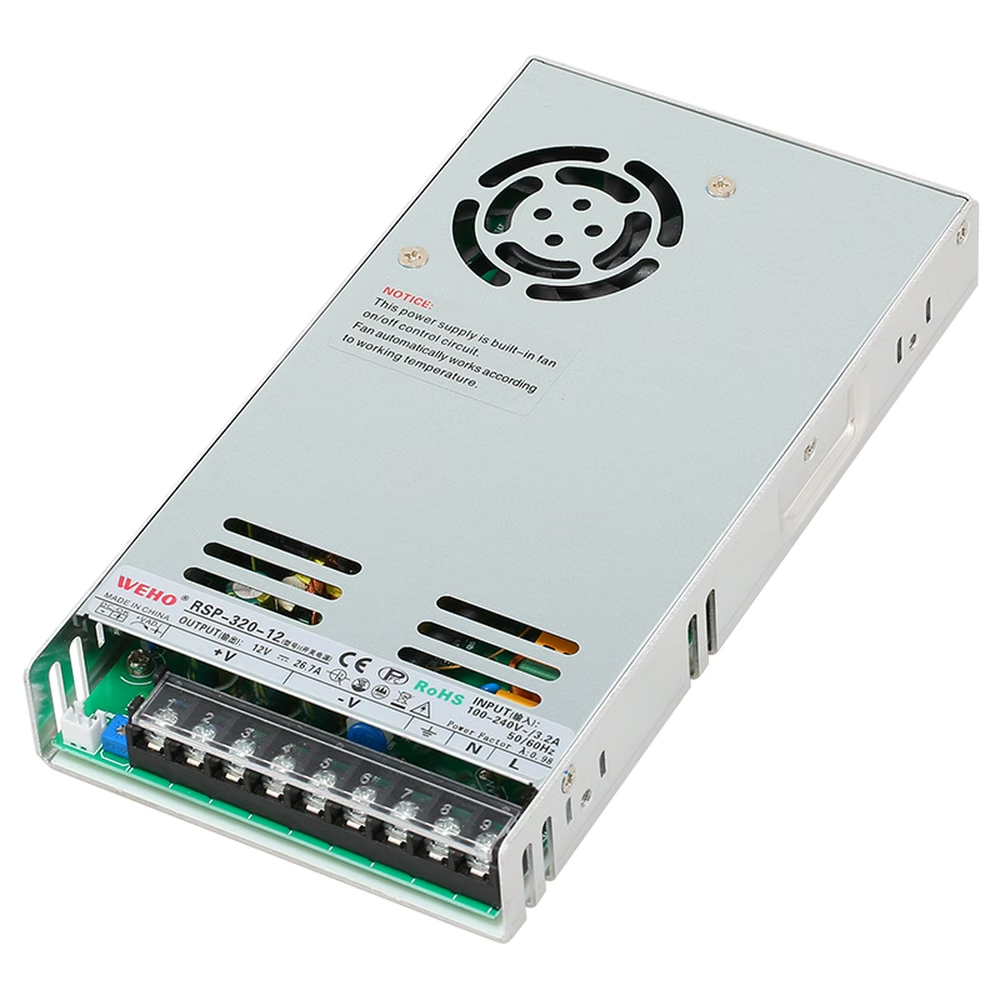
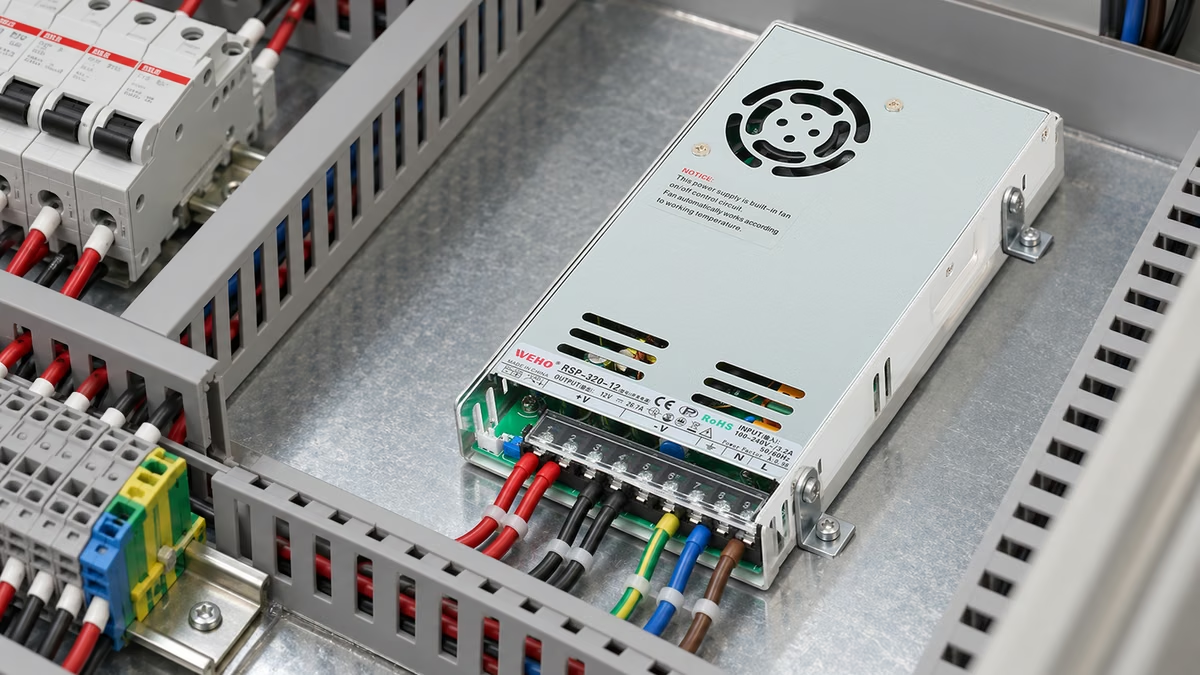
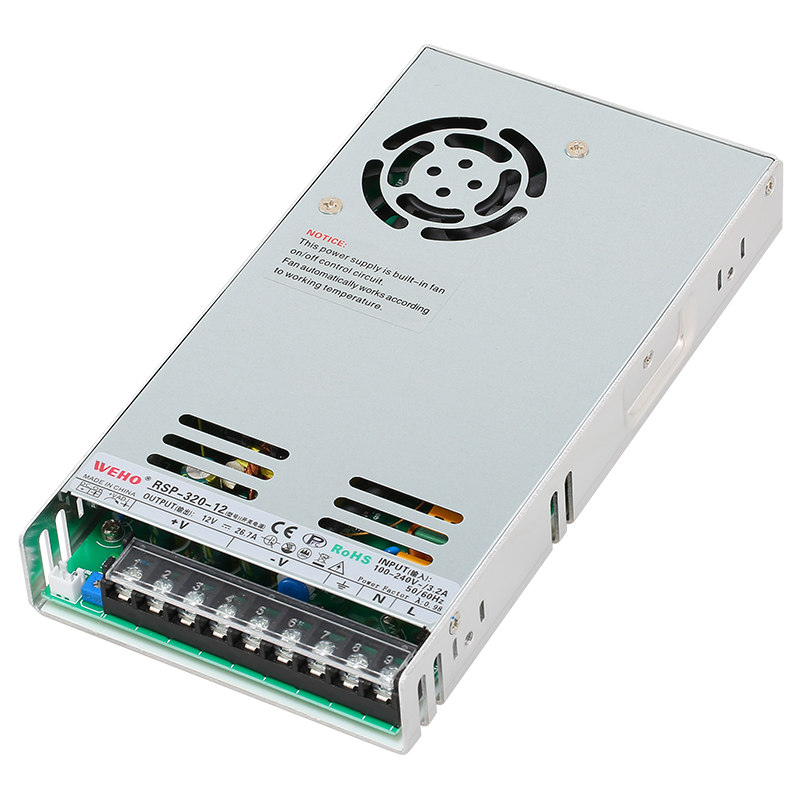
Use the RSP-320-12 specification reference to identify the candidate and the applicable document. The product photograph supports identity. It does not reveal the complete input limiter, contact condition or energy state during a restart.
The final release record should link the supply version, switching assembly, required cycle, measurement configuration and accepted results. If firmware changes the allowed restart interval, review that change against the recorded coverage. A software modification can alter electrical stress even though the power supply and harness remain physically unchanged.
What should you send WEHO when reviewing restart behavior?
Send the exact model, source voltage, prior load and ON duration, actual OFF intervals, upstream device and captured input traces when discussing the RSP-320-12 supply candidate. Ask for the applicable documentation and any available restart guidance. Keep the final assembly acceptance tied to its actual components and requirements.
Engineering FAQ
Does active PFC eliminate inrush current?
No. Active PFC describes a power-factor-related function, not a blanket absence of input charging events. Use the documented inrush conditions and qualify the required switching assembly. Do not infer restart stress from the PFC label alone.
Is a warm restart always worse than a cold start?
No. The result depends on the actual design, stored charge, thermal state, source and interruption interval. Test the required conditions rather than assuming an ordering between cold and warm events.
Are the example's 1 s and 10 s OFF times manufacturer instructions?
No. They are hypothetical project conditions used to structure a test matrix. Use the actual equipment requirements and applicable product guidance. An OFF interval is not an internal discharge or safe-access instruction.
Can I select a relay using only the supply's steady input current?
Not when the making or repeated switching duty imposes additional requirements. Check the relay manufacturer's applicable load category and endurance conditions along with the actual event. Continuous current and switching stress are different constraints.
Does a lower current peak always mean less protection stress?
No. Pulse duration and shape also matter, and different upstream devices use different acceptance criteria. Evaluate the actual waveform using the applicable component method. The rectangular examples illustrate the distinction rather than define a protection limit.