













Choosing a C-Curve Breaker for Switch-Mode Power Supplies

A C-curve breaker may be suitable for a switching-power-supply branch, but its letter and ampere rating are not enough to select it. An OEM must coordinate the actual startup current and duration with the exact breaker’s time-current behavior, while retaining conductor protection, fault interruption and the installation’s other protective requirements. Do not size an AC input breaker from the DC output current.
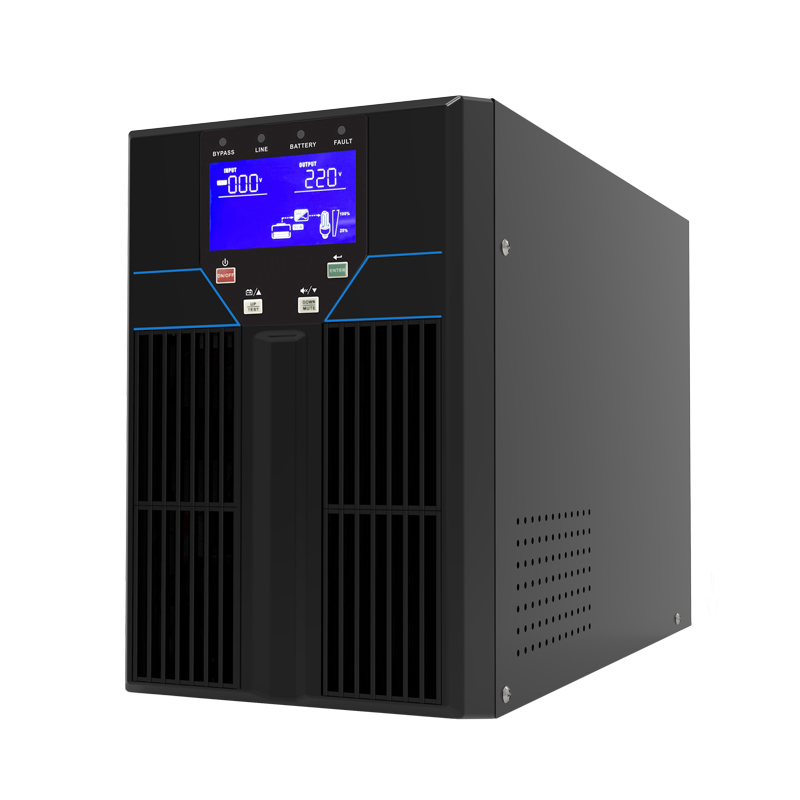
The WEHO SP-500-48 provides a useful procurement example. Its photographed sample is marked 48 V, 10 A at the output; those figures describe the DC branch, not a 10 A recommendation for the upstream AC breaker. This article is a selection and acceptance framework, not a protection design for an unspecified installation.
First identify what “C curve” means for the offered device
Ask the breaker supplier for the complete model, applicable standard, rated voltage, pole arrangement, breaking capacity and time-current curves. Do not assume the same letter produces identical behavior across every manufacturer’s product or every AC/DC rating.
The relevant curve contains time-dependent behavior; a single magnetic-trip multiple is not a complete coordination study. Obtain the instantaneous-trip range and full time-current curve for the actual breaker rather than adopting a band from a different product.
Request startup evidence that can actually be compared
The matched SP-500 sheet lists cold-start current as 18 A at 115 VAC and 32 A at 230 VAC. The current product-page table instead lists 36 A at 230 VAC. Neither number supplies a complete pulse duration or waveform. Resolve the delivered revision and obtain matched startup data before committing the panel bill of materials.
Record the input voltage, source impedance, initial temperature, elapsed time since shutdown, connected load and number of supplies started together. A cold-start description does not automatically cover every short interruption or restart sequence. Where several supplies share a breaker, the simultaneous-start envelope must be evaluated rather than assuming that each unit will start at a different instant.

Separate three decisions in the purchasing specification
| Decision | Evidence to request | Common substitution risk |
|---|---|---|
| Normal carrying duty | Actual input current, cabinet temperature and device derating | Using output amperes as input amperes |
| Startup continuity | Inrush time profile and the exact no-trip/trip boundaries | Comparing only a peak with a curve letter |
| Fault protection | Conductor limits, available fault current and protective-device coordination | Increasing the breaker rating solely to avoid nuisance trips |
The referenced explanation of time-current protection checks evaluates a defined point on a time-current curve. Its equipment example and recommended device are not an SP-500 selection, but the example illustrates why duration belongs in the evidence request. Ask the supply and breaker vendors to address the same operating conditions, not unrelated catalogue numbers.
Use a controlled sample acceptance plan
Approve a test matrix before the sample is energized. It should cover the agreed input range, startup loading, the installation’s simultaneous-start sequence and relevant restart conditions. Qualified personnel should record current with suitable equipment and safe procedures, then retain the waveform, conditions and breaker behavior with the panel revision. A photograph of a breaker beside a supply is not evidence that this work has been done.
Acceptance must also include normal loaded operation at the specified enclosure temperature and the installation’s required protection verification. “It started once” is not an adequate release criterion. Conversely, an unexpected trip is a reason to investigate the source, wiring, unit condition and timing before changing the breaker.
Keep substitution and bulk supply under change control
A change in supply revision, breaker family, input filter, cable length, number of simultaneous loads or startup sequencing can alter the combination. Record which changes require requalification. Keep an approved sample identity, revision-controlled drawings and test results against the purchase specification so that subsequent lots can be checked against the same acceptance basis.
For the SP-500-48 enclosure, the matched drawing gives 185 × 120 × 93 mm and M3 mounting with a 4 mm maximum screw engagement. Preserve access to the terminals and fan airflow when arranging the protective devices. Mechanical fit and protection coordination are separate checks; passing one does not establish the other.

What to include in an RFQ
Send the target AC supply, expected voltage limits, output load profile, number of units per branch, startup sequence, enclosure conditions, proposed breaker model, conductor arrangement and target-market requirements. Include sample quantity and expected production demand, then ask for matched inrush data and the applicable product revision. Commercial quantities and lead times should be confirmed in the quotation.
Use the WEHO SP product page to identify the family and request SP-500-48 revision and startup information for the actual project.
Buyer questions
Can I move to a larger C breaker if the supply trips at startup?
Not without checking the whole protection design. A larger rating may change conductor protection or fault coordination. First identify the measured startup event and the exact device response.
Does built-in PFC eliminate inrush coordination?
No. Power-factor correction and energization behavior are different characteristics. Obtain startup evidence for the offered revision even when the supply has PFC.