Approve a switching power supply manufacturer for a defined pilot lot before authorizing a production ramp. The release decision should connect the agreed build configuration, inspection results, unit counts and unresolved exceptions. A factory photograph, a favorable sample or a completed purchase order cannot establish that the next production lot will reproduce the accepted assembly.
On this page
- Define the decision the pilot lot must resolve
- Freeze the configuration before the first unit enters the lot
- Use a release matrix that connects evidence to a decision
- Reconcile unique units before reporting a yield percentage
- Keep inspection coverage separate from lot disposition
- Close exceptions without erasing their history
- Authorize the next stage with explicit change triggers
- Discuss a pilot-lot evidence package with WEHO
Define the decision the pilot lot must resolve
For an OEM supplier-quality team, the question is specific: can this identified product and production route advance to the next agreed order stage? Separate that decision from selecting a supplier, comparing quotations or qualifying the equipment design. A pilot lot provides evidence about its own build and the conditions actually exercised; it is not a blanket approval for different models, sites or revisions.
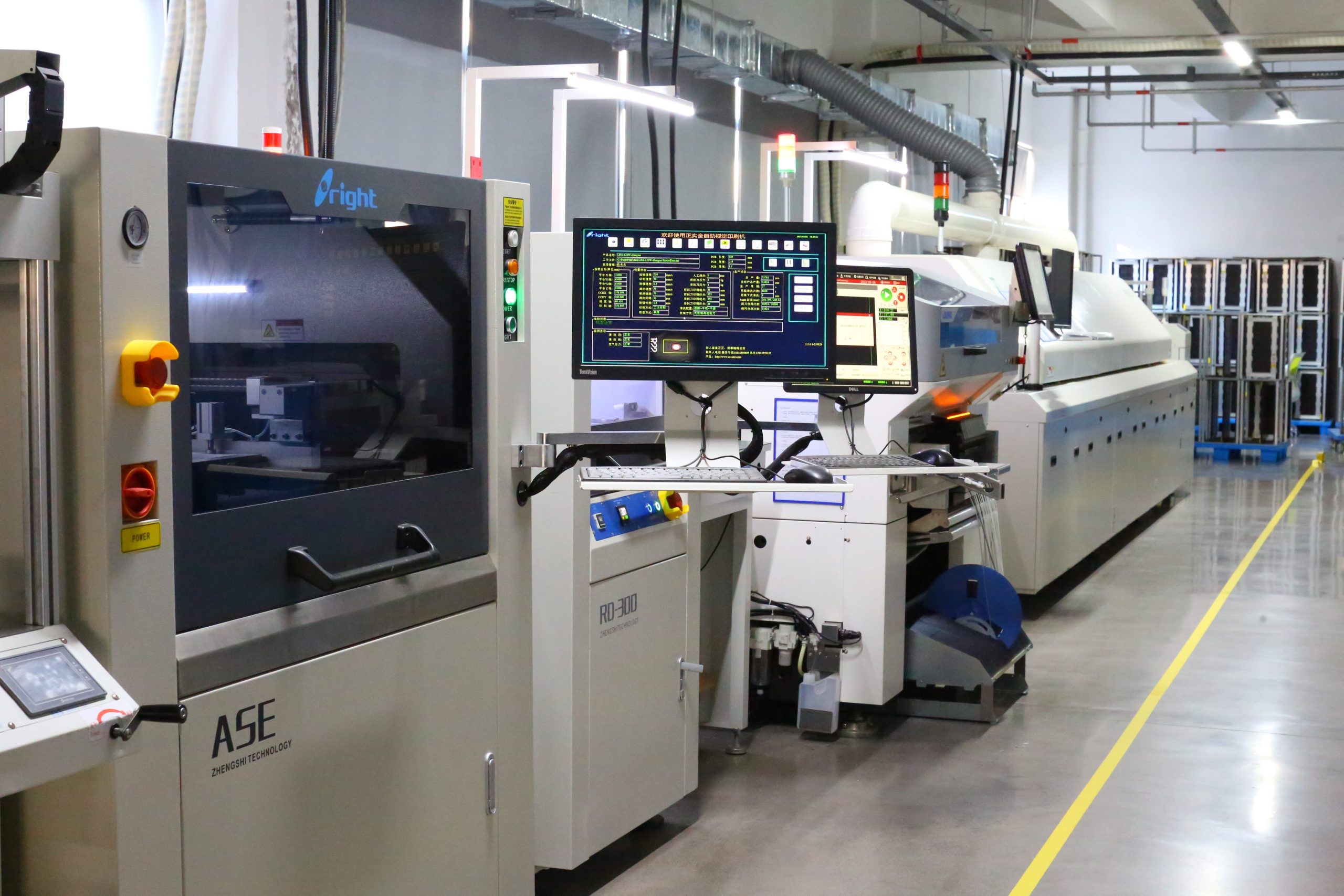
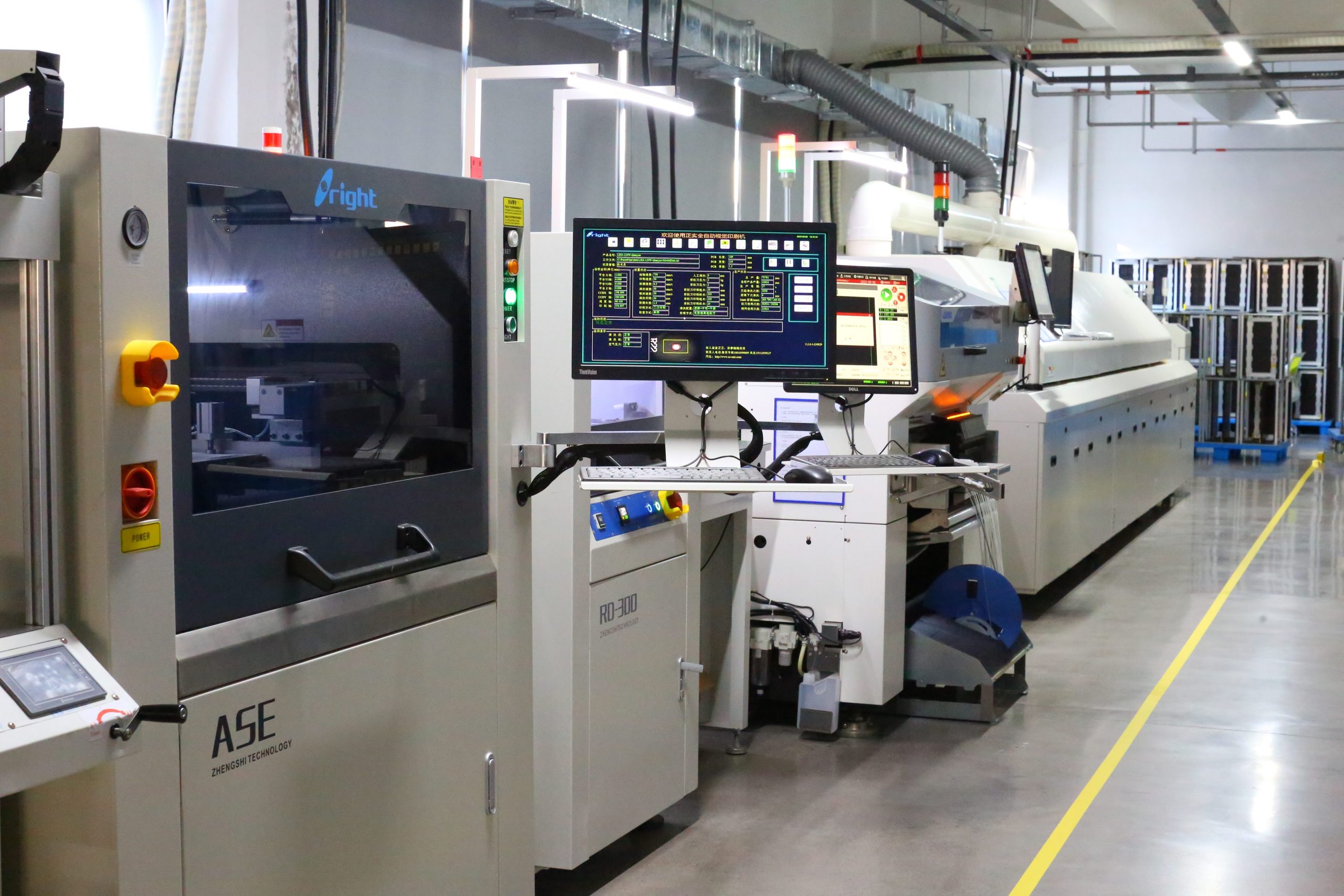
The photograph below shows automated production equipment from WEHO’s factory image library. It provides manufacturing context. It does not identify the product on the line, demonstrate a particular inspection method or establish an output rate. Ask for records tied to the proposed order when assessing those questions.
Freeze the configuration before the first unit enters the lot
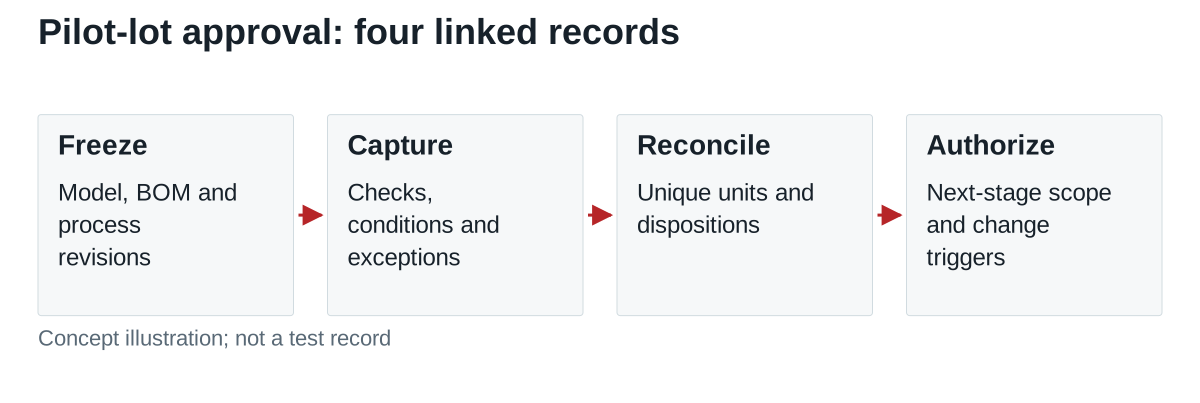
Record the exact model and suffix, hardware/BOM revision, approved component alternatives, labels and packaging configuration. Identify the manufacturing location, route and applicable work-instruction revisions. Specify which changes require review during the trial. Do not let a component substitution disappear into a general claim that the product is “equivalent.”
Agree the required electrical, mechanical and identification checks, with their methods, conditions, limits and record format. The product specification and responsible engineering owners define those requirements. This article does not prescribe a universal test list, lot size or burn-in recipe.
Use a release matrix that connects evidence to a decision
| Release question | Evidence to retain | Reason to hold approval |
|---|---|---|
| What was built? | Exact model, BOM, revision and unit/lot identities | Results cannot be traced to the accepted configuration |
| Was the intended route used? | Route and instruction revisions, with recorded deviations | A material process change was not assessed |
| Were required checks completed? | Method, conditions, applicable limits and linked results | A required result is missing or outside its limit |
| Where did every unit finish? | Unique counts for released, held and scrapped units | Counts overlap or units are unaccounted for |
| What happened to exceptions? | Original finding, disposition, rework and retest history | A later pass has replaced the original finding |
| What is authorized next? | Approver, accepted scope, open actions and change triggers | Shipment or ramp approval has no defined boundary |
Reconcile unique units before reporting a yield percentage
Hypothetical example: a pilot lot contains 160 uniquely identified units. Of these, 142 pass the agreed checks at first review, 10 pass after documented rework and retest, 5 are scrapped and 3 remain on hold. The reconciliation is 142 + 10 + 5 + 3 = 160 units. If authorized dispositions release the first two groups, 152 units are released.
The first-pass proportion is 142 ÷ 160 = 88.75%; the released proportion is 152 ÷ 160 = 95%. Report both with their definitions. Counting the 10 reworked units twice would inflate the result. These invented counts illustrate record reconciliation, not WEHO quality performance, a recommended acceptance threshold or a statistically designed sampling plan.
Keep inspection coverage separate from lot disposition
State whether each result covers all units or a selected sample, how the sample was selected and which characteristics it covers. NIST’s introduction to acceptance sampling distinguishes a lot-disposition decision from estimating the lot’s quality. A favorable sample should not be presented as proof that every unit was inspected.
If an acceptance-sampling plan is used, agree its decision rules and risk basis before the results arrive. NIST’s sampling-plan overview explains that plans contain rules for accepting, rejecting or continuing examination. The 160-unit arithmetic above does not select such a plan.
Close exceptions without erasing their history
For each held or reworked unit, preserve the original symptom, affected characteristic, disposition authority and resulting verification. If a fixture, instrument or instruction caused an event, record the basis for that conclusion and which earlier results need review. A general “operator issue” note does not define the affected population.
Separate an isolated unit disposition from a change to the production process. An accepted repair does not automatically approve that repair method for every later order. Carry unresolved actions into the release decision with an owner and scope; do not describe an open investigation as closed.
Authorize the next stage with explicit change triggers
List what remains the same for the next order and what has changed: components, tools, fixture revision, instructions, location or product configuration. The responsible reviewers determine which changes reopen qualification or require another controlled trial. Increasing order quantity alone does not supply evidence for an untested process change.
Retain the accepted configuration, completed matrix, unit-count reconciliation, exception records and signed disposition together. Commercial shipment approval, product qualification and continuing process monitoring remain separate decisions.
Discuss a pilot-lot evidence package with WEHO
Send WEHO your proposed model and pilot-lot review requirements, including the intended order stage, controlled specification, traceability needs and expected records. Ask which configuration and production route can be reviewed against them before agreeing quantities or scheduling the next stage.