Key Engineering Takeaways
- A slow voltage trend cannot establish the absence of a short load-related dip.
- Specify the shortest event of interest, recording method, trigger and pre-event history before collecting data.
- Align load-command and electrical records without claiming a timing order finer than their uncertainty.
- Use the WHP-2000 family as a candidate; a recorder layout does not represent measured product behavior.
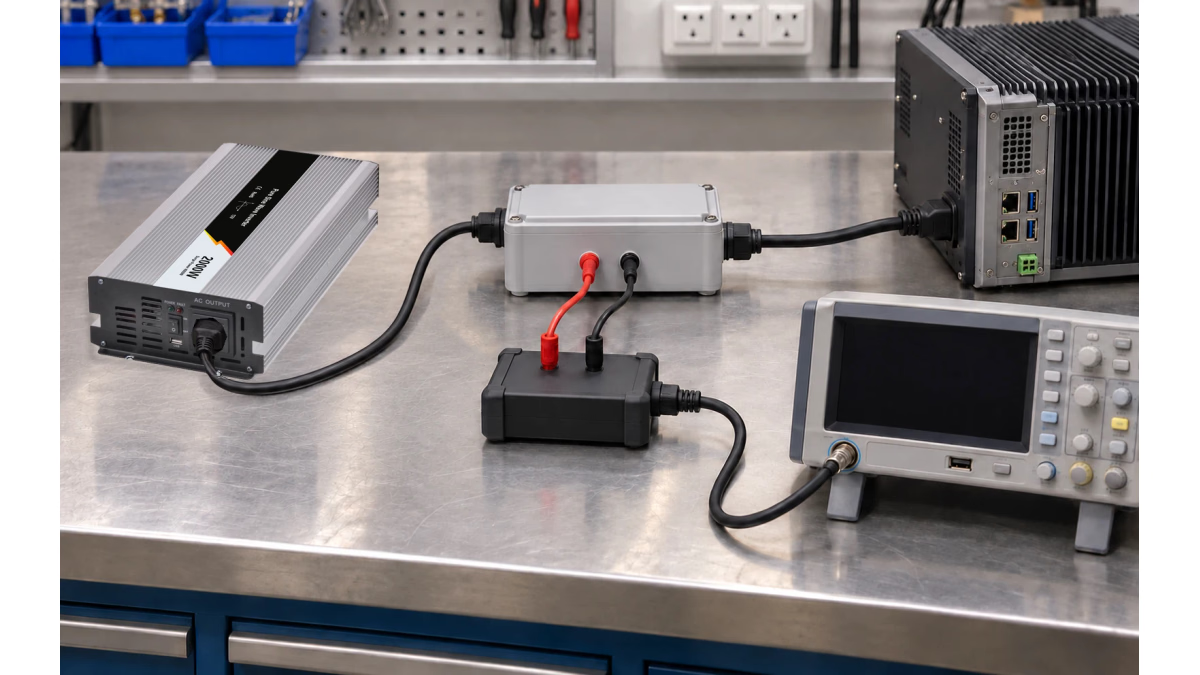
Why can a data log miss the reported interruption?
A recorder can show a normal-looking trend while the connected equipment experiences a brief interruption between recorded points. The report “voltage was stable” is unsupported if the instrument's method cannot resolve the event relevant to the load.
An OEM investigating a cyclic machine should first define what evidence could distinguish the proposed causes. The useful deliverable is an event record containing the load state and relevant electrical observations, with enough timing detail to answer the question.
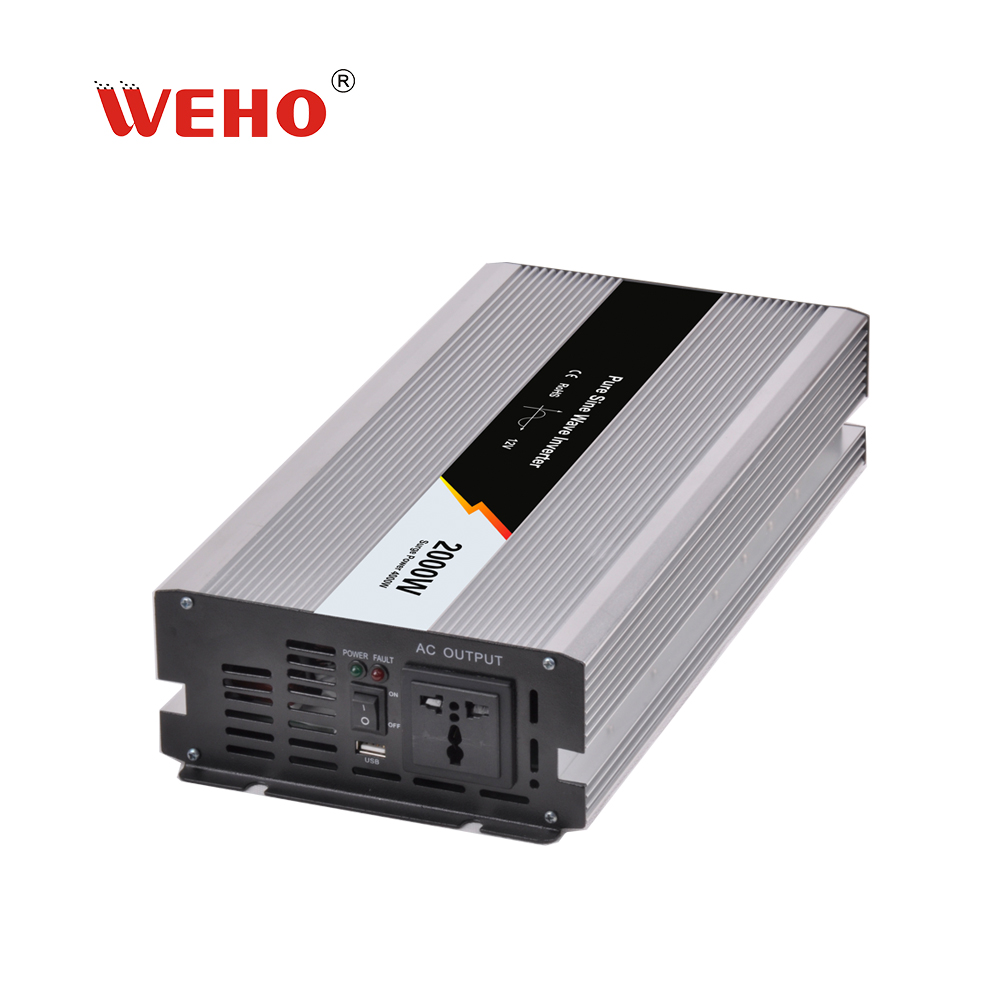
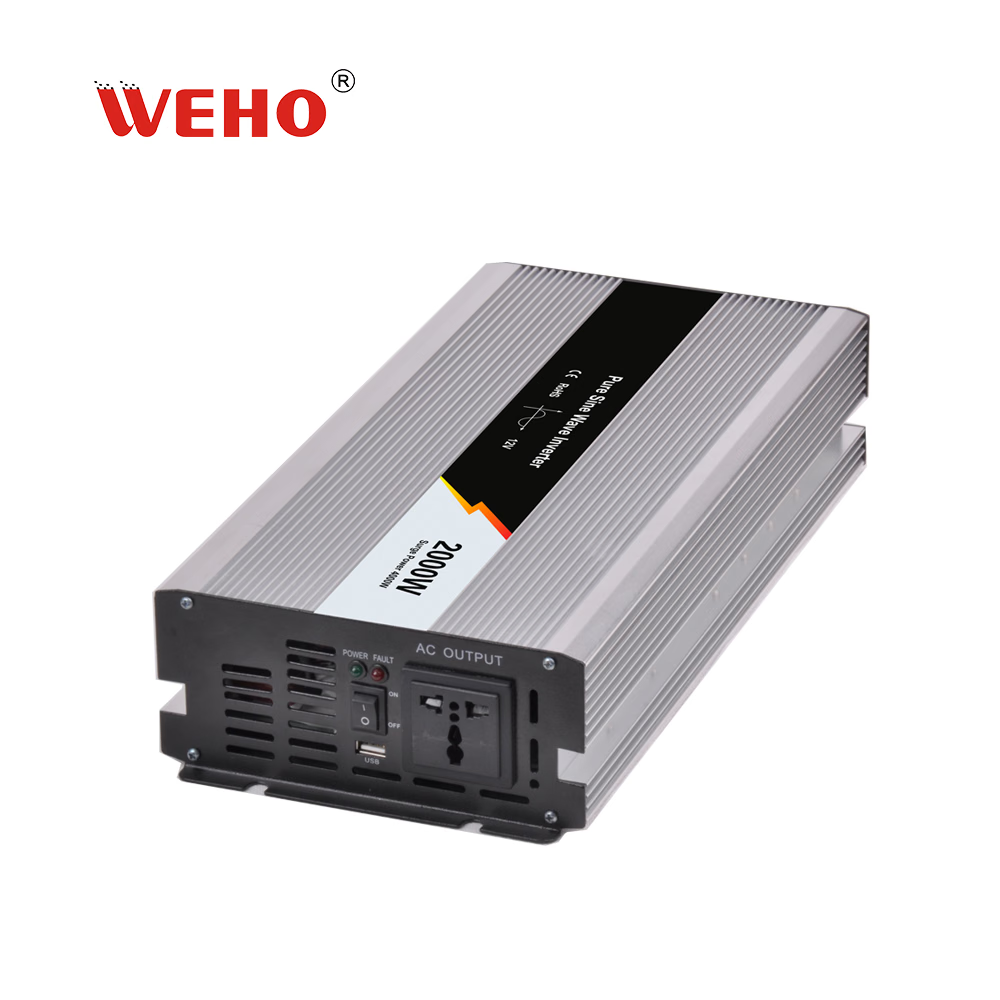
The WEHO WHP-2000 family page identifies the pure-sine inverter family and available input/output configurations. The exact sample and ordered option belong in the record. Neither a family description nor an illustration establishes that a particular transient occurred or was absent.
How does recording interval relate to the event?
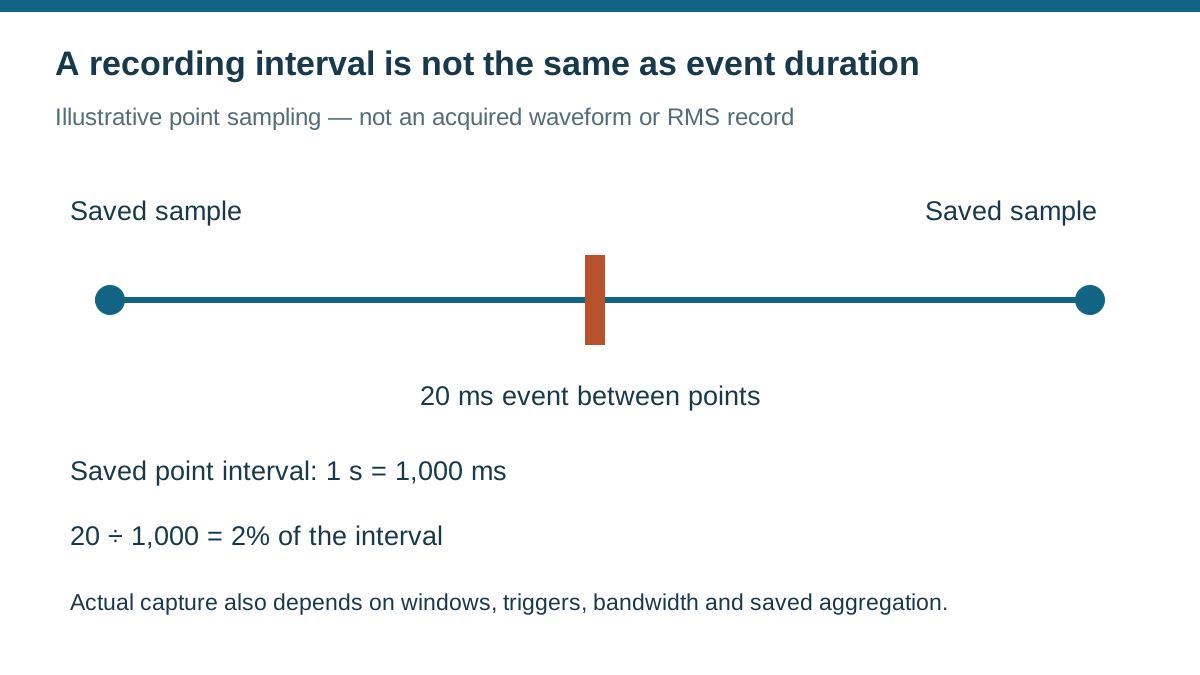
A point-sampled trend may miss an event shorter than the interval between points, depending on timing. That simple statement does not fully describe a power-quality instrument: its RMS calculation window, internal sampling, aggregation, triggering and saved records can differ.
Distinguish the instrument's waveform sample rate from its displayed or exported trend interval. A fast internal converter does not ensure that a one-second exported average preserves a short voltage dip. Conversely, a slow trend display may coexist with a separate event-capture function if the instrument supports and enables it.
Hypothetical interval example
Assume a hypothetical 20 ms event and a logger saving one instantaneous voltage-related sample every 1 s. The event spans 20 ÷ 1,000 = 2% of the recording interval. Depending on alignment, a saved point can fall entirely outside it.
Changing the saved point interval to 5 ms would nominally place about 20 ÷ 5 = 4 intervals across that duration. This arithmetic is not a complete instrument specification or proof that four samples adequately characterize an AC event. RMS windows, phase, input bandwidth, trigger behavior and the actual decision still matter.
A receiver may respond to energy loss over an interval, an undervoltage threshold, a missing cycle or its own control logic. Define the receiver's relevant criterion before deciding which electrical record is sufficient. A waveform trace, half-cycle RMS record and one-second average are not interchangeable evidence.
The Yokogawa electric power measurement fundamentals provide background on measurement quantities. Recorder-specific capabilities and settings need the actual instrument manual; no general sample-rate formula alone establishes a valid power-quality test.
What should the capture plan include?
The plan should state the event the team needs to resolve and how each saved channel contributes. Do not collect dozens of unrelated channels while omitting the load command or the electrical boundary relevant to the complaint.
| Planning item | Define | Save with the record | Interpretation limit |
|---|---|---|---|
| Event of interest | Load complaint and shortest relevant duration | Receiver requirement and test objective | No universal dip threshold is assumed |
| Electrical quantity | Waveform, RMS event or integrated result | Calculation and aggregation settings | Different quantities answer different questions |
| Capture window | Pre-event and post-event history | Trigger and retained intervals | A triggered image may omit the cause |
| Time alignment | Common markers and clock relation | Offset, resolution and uncertainty | Uncertain order cannot prove causation |
| Measurement point | Inverter outlet or receiver inlet | Connection/boundary diagram | Downstream path effects may differ |
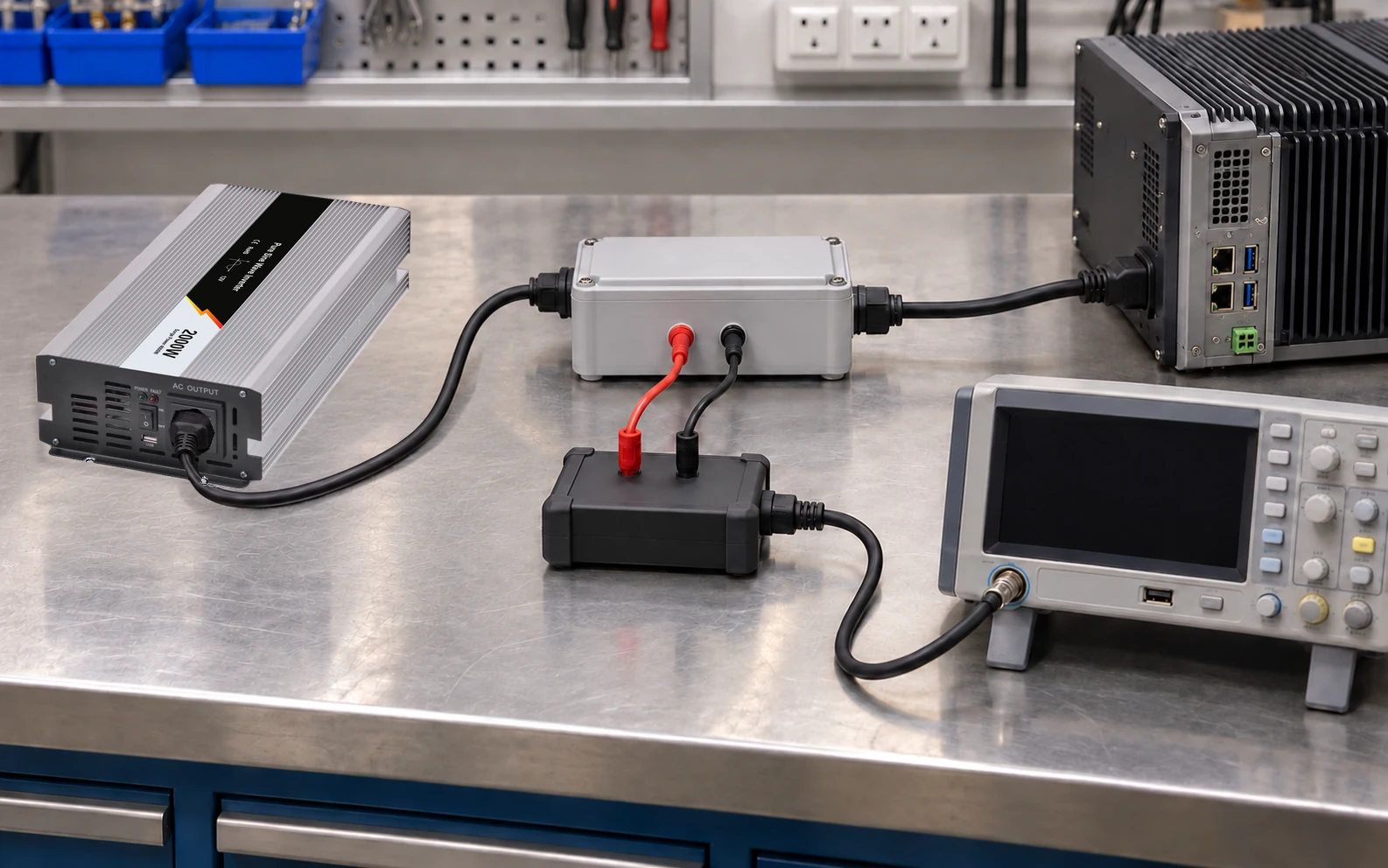
If both battery and AC observations are needed, use a suitable protected arrangement and identify each channel's reference and isolation. This does not authorize connecting ordinary grounded oscilloscope leads to arbitrary inverter points. Qualified test personnel must select rated interfaces and the laboratory procedure for the actual source topology.
Also record whether the device itself stopped or only its communication link disappeared. A missing status message is an equipment observation, not automatically an AC interruption. Keeping the communication event and supply event separate prevents a convenient but unsupported diagnosis.
How should the event investigation proceed?
Begin with an instrument check and a controlled load sequence, then retain the complete record. Do not diagnose a sample from one screenshot taken after the event has already passed.
- Translate the complaint into a testable observation. Name the load operation, observed symptom and relevant acceptance criterion. An unexplained operator description such as “power blinks” needs clarification from the actual equipment record.
- Identify the offered inverter variant and test boundary. Save its label and the actual DC/AC configuration. Use the inverter DC input comparison for the separate voltage-selection question, not as proof of this unit's configuration.
- Confirm the recorder method against the event duration. Review instrument bandwidth, RMS window, event trigger and exported aggregation. Check whether a min/max summary preserves duration or only reports an extreme.
- Include relevant pre-event history. A record starting after a trigger may miss a prior battery or load change. Set a window that can show the proposed causal sequence without inventing a standard interval.
- Mark the load event and align the records. Use supported synchronization or a documented common event. A manual note with one-second resolution cannot order two transitions separated by a few milliseconds.
- Repeat the controlled case where the test plan permits it. Retain failed captures, changes in settings and any missing data. A nonreproduced complaint remains unresolved rather than automatically becoming a product fault or a clean bill of health.
For example, suppose a receiver reports a reset while the one-second AC trend remains nominal. The first action is to review whether the trend could resolve the reset's supply criterion, not to conclude the receiver is defective. A suitable event capture may resolve the question; it may also show that the relevant electrical condition remained within the specified requirement.
If a measured AC change follows a load command, that timing alone still does not identify the inverter as the cause. Review the measurement point, DC supply, connection path and load behavior. The inverter shutdown diagnosis guide addresses this cause separation after a valid event record exists.
Preserve original files as well as annotated screenshots. Keep instrument settings and event IDs with the released report so another engineer can reproduce the interpretation. A cropped trace without its timebase, scale and acquisition method is difficult to audit.
What should the WEHO technical inquiry contain?
Send the WHP-2000 evaluation inquiry with the exact sample, battery conditions, load sequence and the relevant unedited event record. Include instrument method, measurement boundary, time alignment and the acceptance criterion being investigated.
Ask for the current offered-unit documents relevant to the observed event. Report what was measured separately from the suspected cause. This lets the technical discussion address a repeatable operating condition instead of arguing over an attractive trend screenshot.
Engineering FAQ
Does a one-second trend prove there was no 20 ms dip?
No. It depends on what the instrument captures and saves, including any separate event records. A slow trend alone cannot establish the absence of a shorter event relevant to the receiver.
Is waveform sample rate the same as exported logging interval?
No. Internal sampling, calculation windows and saved aggregation are different settings or functions. Review the actual instrument method and the information retained in the exported record.
Can two logs prove event order if their clocks differ?
Only within their documented alignment and timing uncertainty. If the apparent separation is smaller than that uncertainty, report the order as unresolved rather than asserting which event caused the other.
Does an equipment reset prove the inverter output failed?
No. A reset is an equipment observation. Establish the relevant electrical event at the defined boundary and compare it with the receiver's requirements before assigning the cause.