Key engineering takeaways
- A tool setting is not a universal force or a qualified bundle condition.
- Match the exact tie, tool and bundle construction before selecting settings.
- Verify restraint and cable condition together under the intended environment.
- Keep metal-tie tooling instructions separate from polymer-tie applications.
Cable-tie tension should be qualified for the actual tie, application tool and bundle rather than selected from a universal setting number. The assembly must retain the intended restraint while preserving cable and insulation requirements. A neat appearance, a tight hand feel or a setting copied from another line cannot establish that balance.
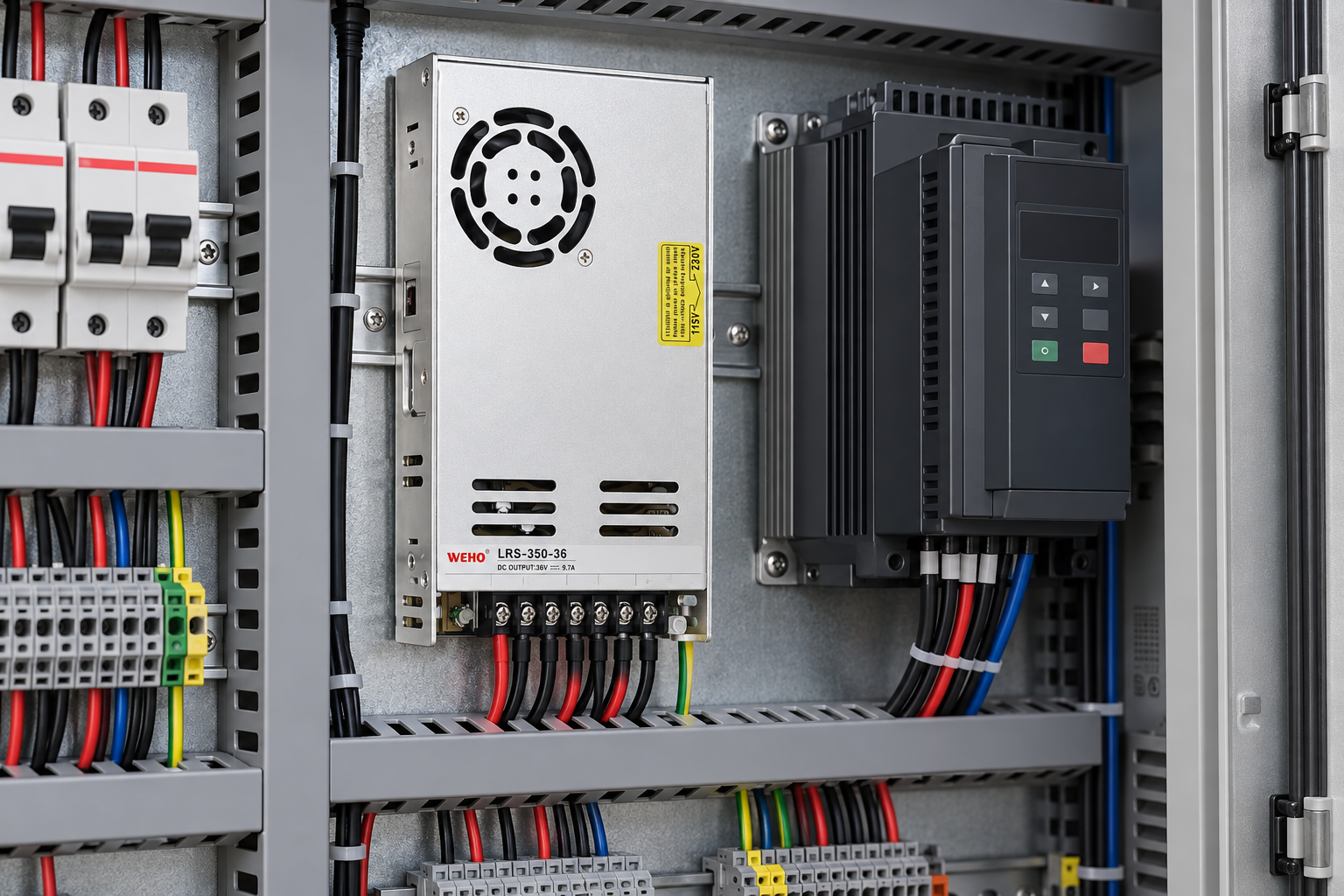
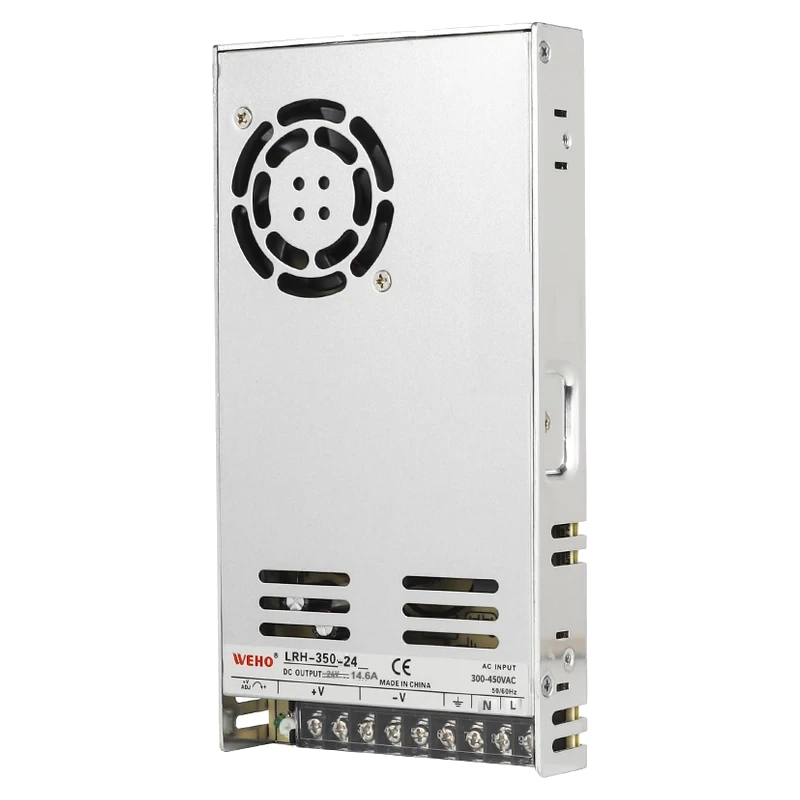
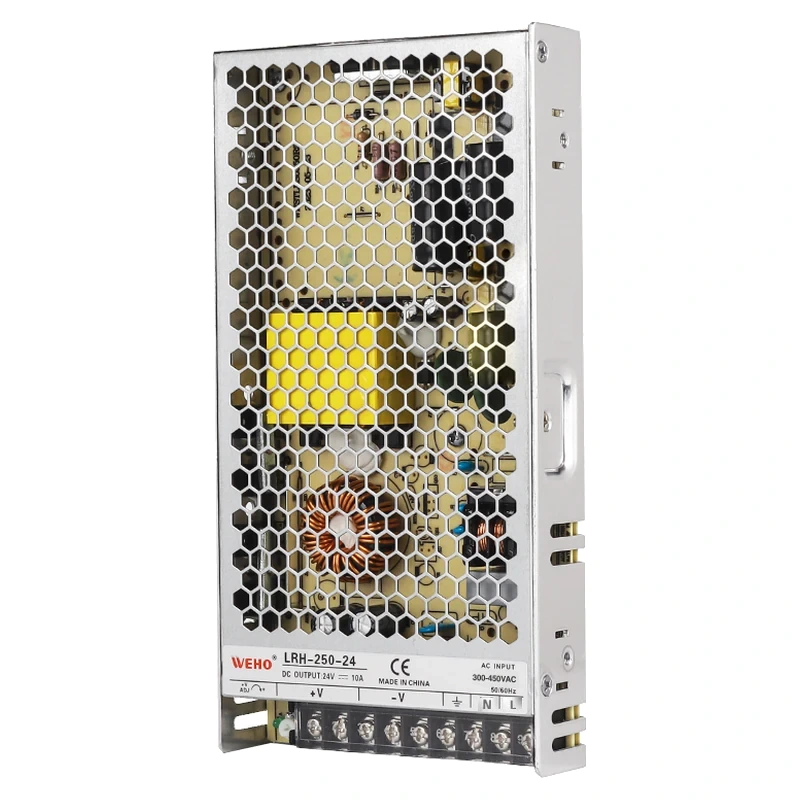
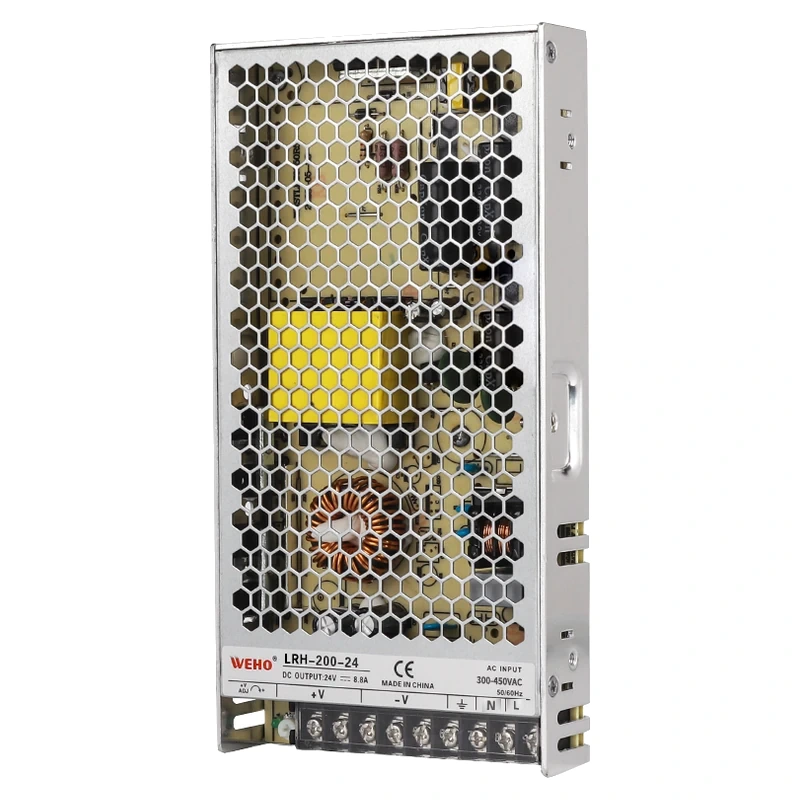
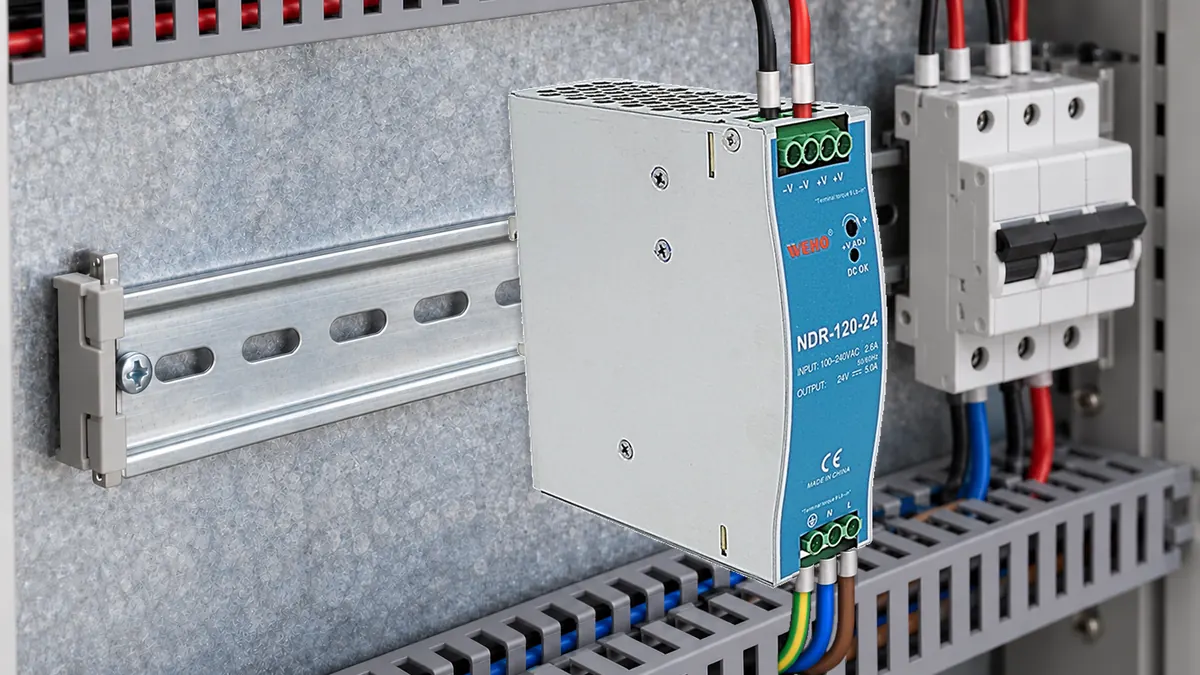
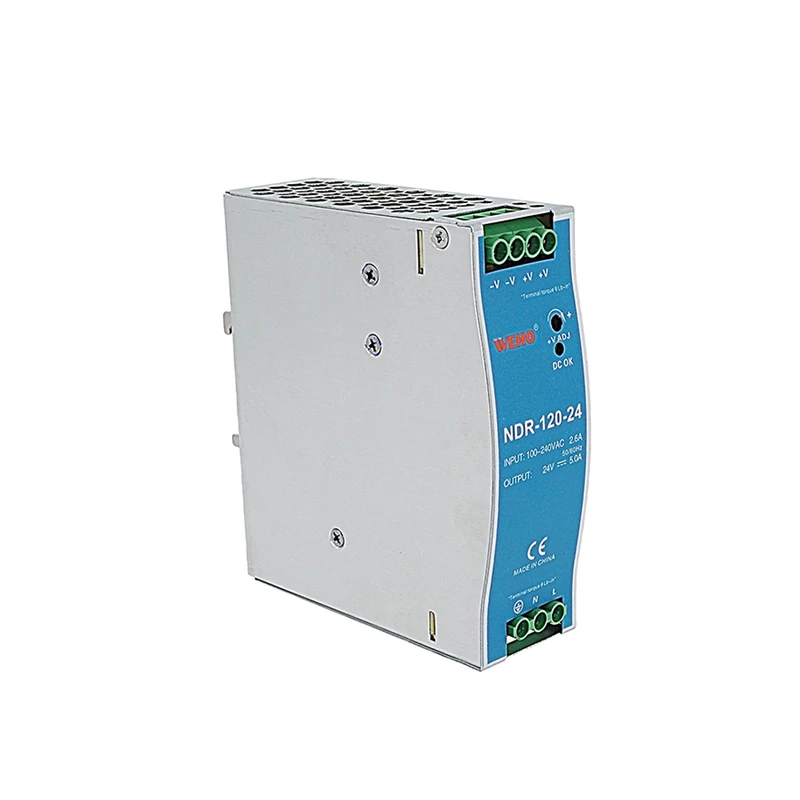
For a panel incorporating the WEHO NDR-120-24, this is an external harness-integration question. The product provides the enquiry identity and ordinary installation context; its photograph does not qualify a tie tension. The example below uses fictional bundle variants without assigning a WEHO cable type, tie or force.
Identify the exact assembly combination
A bundle description should identify cable families, jacket materials, diameters, quantity and routing geometry. Include whether the tie bears directly on a cable surface, an approved sleeve or a support feature. A setting validated on a firm, uniform bundle may behave differently on a softer or mixed-diameter assembly.
HellermannTyton's cable-tie overview distinguishes material and construction choices for different environments and applications. Treat those choices as actual part identities, not interchangeable generic ties. Confirm the selected tie's application requirements before developing an installation setting.
Application-tool compatibility is another controlled variable. Tool family, tension mechanism, adjustment scale and cutoff behavior can differ. A position marked “3” on one tool is not evidence of the same installed condition on another, and a setting scale should not be reported as newtons without an applicable basis.
The tie's published mechanical strength is also not the intended installation tension. Strength characterizes a defined test of the tie, while the cable bundle can impose a different limiting requirement. Obtain the cable, tie and tool guidance relevant to the assembly instead of using one component's strongest-looking number.
| Controlled element | 기록 (Record) | Reason it matters | Required verification |
|---|---|---|---|
| Tie | Exact part, material and lot | Geometry and environment affect behavior | Application suitability and installed condition |
| Tool | Model, identity, setup and instructions | Setting and cutoff are tool-specific | Correct compatible operation |
| Bundle | Cables, diameters, support and sleeve | Compliance and contact geometry vary | Restraint without unacceptable damage |
| 환경 | Temperature, fluids and service motion | Initial condition may not persist | Relevant conditioned assembly evidence |
Keep metal and polymer tooling methods separate
HellermannTyton's HDT16 manual addresses specified metal cable ties and its compatible tool operation. Its tension guidance and installation sequence belong to that documented combination. Do not transfer its numerical references or metal-band method into a nylon-tie instruction.
The manual also warns that excessive tension can damage a bundle and discusses protection within its application context. The general lesson is to evaluate the cable assembly, while the actual permissible method remains component-specific. A source-specific protective accessory is not automatically approved for every cable or enclosure.
For polymer ties, use the actual compatible tool and tie instructions, including their environmental and handling requirements. Do not infer a conversion between the metal-tool scale and a polymer-tool scale. If the necessary force or setup relationship is unavailable, state that limitation and qualify the assembly through an approved method.
A hand-pull assessment can be useful only when defined for a specific inspection purpose. It should not become an uncontrolled extra tensioning step after the calibrated or qualified application operation. Repeatedly tightening until a bundle “feels secure” can defeat the original setup control.
Design a fictional bundle-qualification matrix
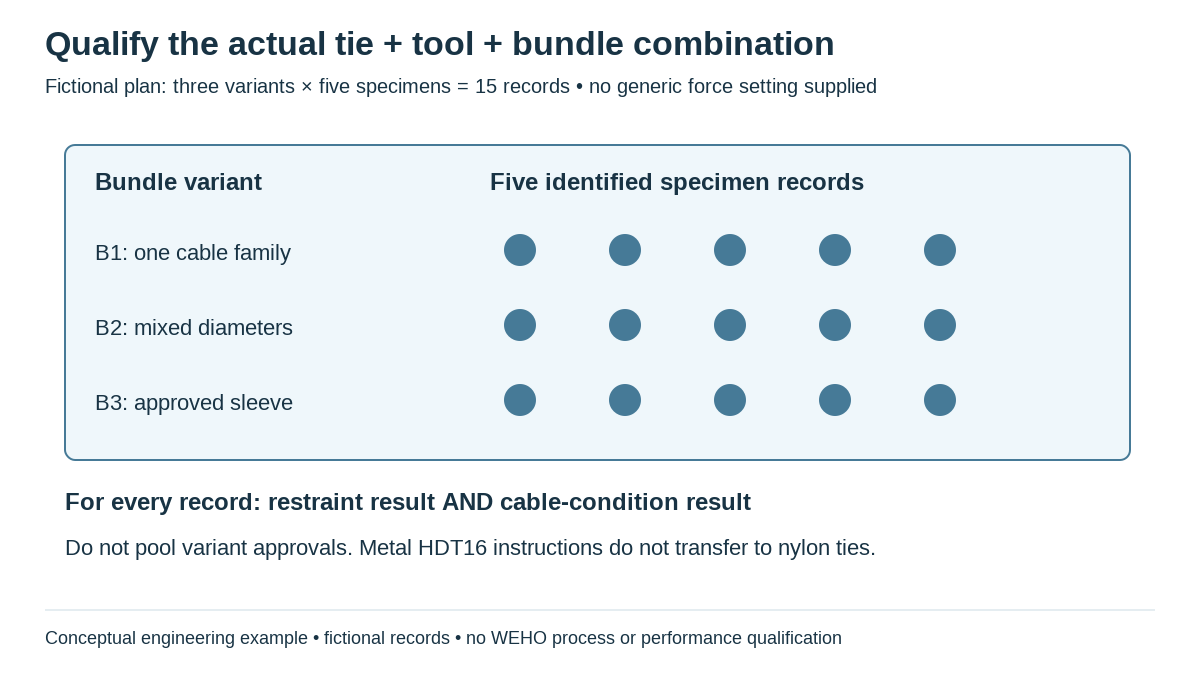
Assume an OEM has three proposed bundle constructions: B1 contains one cable family, B2 is a mixed-diameter bundle, and B3 uses an approved protective sleeve. Five specimens of each construction are evaluated under one identified compatible tie/tool setup. The plan therefore contains 3 × 5 = 15 specimen records.
Fifteen specimens are a fictional planning choice, not a recommended acceptance sample size or proof of statistical reliability. The point is to preserve each construction's identity instead of combining all results into one average. The approval authority must choose the actual sample rationale and acceptance criteria.
For each specimen, record the installed tie condition, defined restraint result and cable condition before and after relevant conditioning. A tie that retains the bundle but damages insulation does not meet a combined criterion requiring both. A visually undamaged cable is also insufficient if the assembly fails its required restraint check.
| Fictional variant | Specimens | Controlled comparison | Record separately |
|---|---|---|---|
| B1: one cable family | 5 | Reference proposed construction | Each restraint and cable-condition result |
| B2: mixed diameters | 5 | Different contact and compliance | Results belonging to B2 only |
| B3: approved sleeve | 5 | Different tie-to-bundle interface | Sleeve identity and observed behavior |
| 총 | 15 | 3 constructions × 5 specimens | No pooling into a universal setting |
If B2 shows unacceptable cable deformation while B1 meets the defined criteria, B1's result cannot approve B2. Investigate whether the tie, support, tool setup or bundle design needs revision. Retain the failed condition and any revised configuration as separate records, rather than quietly replacing the original data.
Swipe horizontally on a small screen, or open the full-size diagram.
Do not read an indentation in a schematic as a quantified acceptance limit. The real criteria need cable-manufacturer guidance, applicable workmanship and functional requirements. Define observation methods and timing so an inspector knows which installed and conditioned states must be assessed.
Verify the support system as well as the tie
A tie may retain cables locally without providing the intended strain relief for a terminal or connector. Identify the external forces and where they are transferred into the enclosure or support. Do not assign a tie the function of an approved cable gland, clamp or cable cleat without the relevant design evidence.
NASA-STD-8739.4A with Change 1 includes bundle-support workmanship examples in its 2016 application context, including unacceptable deformation. It supports taking cable condition seriously, but it is not an automatically applicable industrial panel contract. Use the requirements actually governing the OEM assembly.
HellermannTyton's application-tooling range illustrates that tools are differentiated by application. Confirm compatibility through the selected product instructions rather than assume that any tensioning gun can produce the qualified condition. Tool maintenance and replacement should remain visible in the process record.
The related WEHO cable-gland and strain-relief article addresses enclosure entry and restraint boundaries. Tie qualification adds the local bundle-contact and installation process. Keep the load path of each restraint feature distinct when assessing the finished equipment.
Release a combination-specific installation instruction
- Identify the assembly. Record cable, tie, tool, support and any sleeve identities. Verify that the documented combination matches the intended production route and operating environment.
- Define combined criteria. State required restraint and acceptable cable condition, including relevant conditioning. Record the measurement and inspection methods; verify that neither criterion can mask failure of the other.
- Qualify the setup. Evaluate approved specimens at the documented setup using compatible instructions. Record individual results and failure observations; verify applicability separately for each bundle variant.
- Control production use. Release the tool identity, setting, inspection and maintenance requirements. Record changes or substitutions; verify that an operator cannot silently apply another tool's scale.
- Review changes and service evidence. Assess new cable material, bundle geometry or environmental exposure. Record renewed verification where needed; verify that the previous approval actually covers the changed combination.
Prepare a harness-integration enquiry
Send WEHO the exact NDR-120-24 enquiry identity, harness routing and the installation documents you need. Keep tie/tool qualification with the parties responsible for those components and the finished panel. No universal tension, bundle design or supplier installation service is established by the fictional matrix.
Frequently asked questions
Is a cable tie's tensile strength the installation tension?
No. Tie strength and an acceptable installed bundle condition are different requirements. Select and verify the installation process for the actual cable, tie, tool and support combination.
Can a metal-tie tool setting be copied to a nylon-tie tool?
No. Different tie and tool systems need their own applicable instructions. The HDT16 metal-tie manual does not provide a conversion or approval for a polymer-tie process.
Does a secure bundle automatically prove acceptable insulation condition?
No. Restraint and cable condition need separate checks against the combined acceptance criteria. Excessive compression can be unacceptable even when the bundle does not move.
Do fifteen specimens prove a universal production setting?
No. Fifteen is only the fictional matrix size used here. Actual sample rationale, variants, conditioning and acceptance evidence must support the particular released combination.