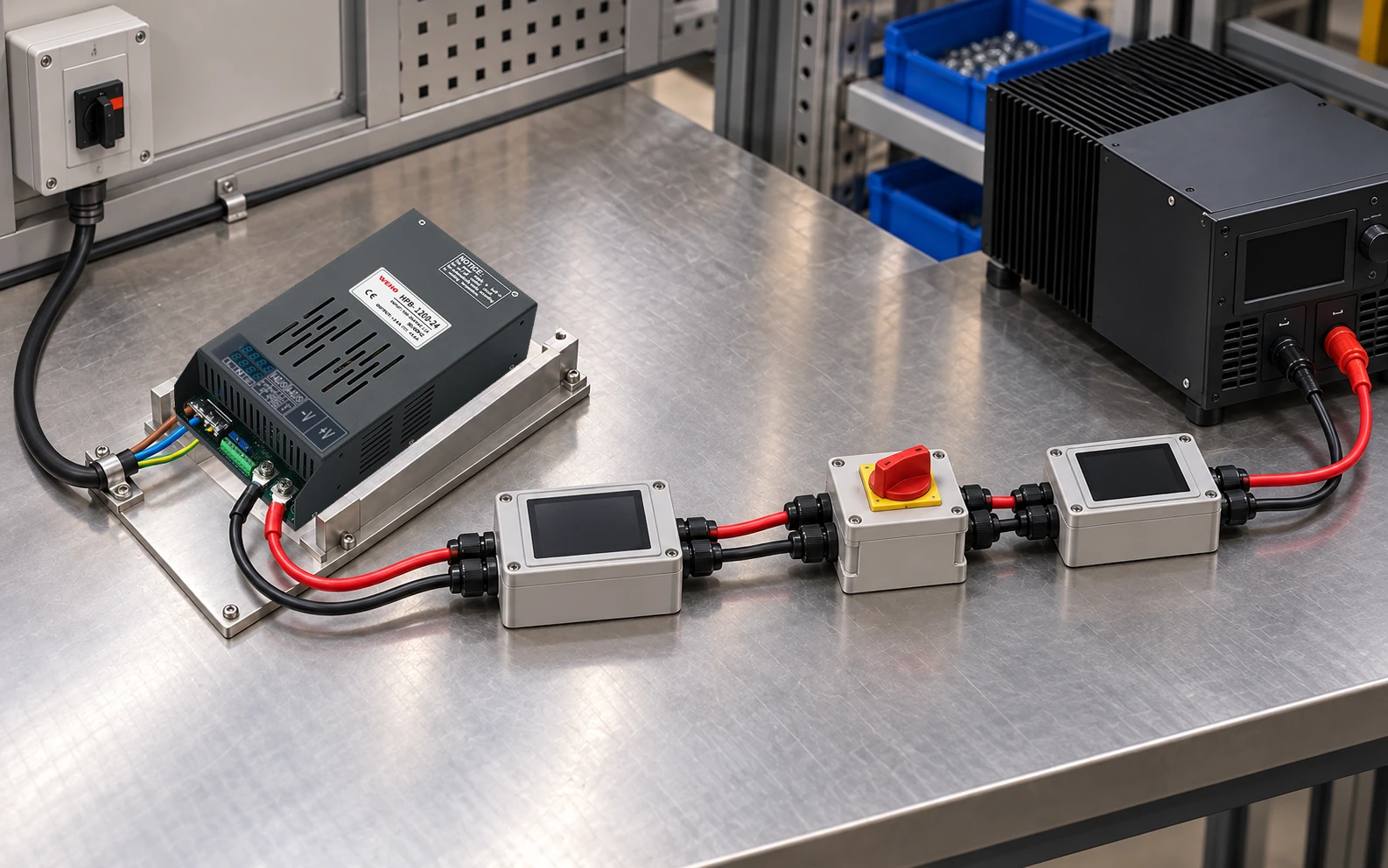
No. A power supply delivers electrical power in the form required by a load; a transformer is a magnetic component that transfers energy between windings. Many switched-mode power supplies (SMPS) contain a transformer, but some converters use other topologies without one. A transformer by itself does not generally provide regulated DC output.
The distinction matters when an engineer or buyer is choosing a complete power supply or specifying a component for a power-supply design.
Understanding the Power Supply
A power supply converts electrical power from one form to another. For example, an AC/DC supply may convert the AC line input into regulated DC for electronic equipment. DC/DC converters and DC/AC inverters perform different conversions, so the input and output must be checked for the particular product.
In a typical isolated AC/DC switching supply, the conversion may involve:
- 정류: converting the AC input to pulsating DC.
- 필터링: smoothing the rectified voltage and reducing unwanted ripple.
- Switching and magnetic conversion: using switching devices and a magnetic component to transfer energy.
- Output rectification and filtering: producing the DC output from the switching waveform.
- Regulation and protection: controlling the output and providing the protection functions specified for that model.
The exact topology and available protections vary by design. Regulation holds the output within specified limits under stated conditions; it does not mean the output never changes or that connected equipment is protected under every fault.

The Role of the Transformer
A transformer is a passive magnetic component with windings coupled by a changing magnetic field. A changing voltage applied to a winding produces changing magnetic flux, which induces a voltage in another winding. Transformer construction, winding arrangement and insulation determine how the component can be used.

The key functions of a transformer within a power supply can include:
- Voltage transformation: providing a turns ratio suited to the power-conversion design. In a switching converter, the final DC output also depends on topology and control; turns ratio alone does not establish the regulated output.
- Isolation: separate, suitably insulated windings can form a galvanic isolation barrier. The required safety classification depends on the complete design, insulation system and applicable approvals; a transformer alone does not guarantee safe touch or prevent every fault.
- Multiple outputs: separate secondary windings can support multiple output circuits where the design calls for them.
- Impedance transformation: a transformer can reflect impedance between windings in applications that require it.
In an SMPS, a high-frequency magnetic component can be smaller than a line-frequency transformer of comparable function, although size depends on the design and operating conditions. In a flyback converter, the coupled magnetic component stores energy during part of the switching cycle and transfers it during another part. Other topologies transfer energy differently; energy storage is not the same in every transformer-based converter. See Analog Devices' explanation of flyback and forward converters.
The Interdependence
While distinct, the power supply and the transformer are closely related within an isolated SMPS. The transformer's characteristics—including turns ratio, core material, winding resistance and leakage inductance—affect the converter's losses, regulation and power-handling design.
Conversely, the power supply's control circuitry and topology determine the transformer's operating conditions. Switching frequency, duty cycle and current waveforms affect losses, temperature rise and saturation. A non-isolated buck or boost converter may use an inductor instead of an isolation transformer, so the presence or absence of a transformer depends on the topology.
| Question | 변신 로봇 | Power supply |
|---|---|---|
| What is it? | A magnetic component with coupled windings | A device or system that supplies power to a load |
| Main role | Transfer energy between windings and provide a suitable voltage ratio; isolation depends on construction | Convert the available input into the output required by the load |
| DC output | A transformer alone does not rectify or regulate its output | An AC/DC supply can provide a DC output within its specified conditions |
| Selection checks | Voltage, frequency, current, insulation and construction | Input and output ratings, regulation, protection, isolation, environment and approvals |
Choosing the Right Device
For an equipment input that requires regulated DC, start with its specified voltage, current and tolerances, then check the supply's input range, output rating, operating temperature, installation requirements and applicable safety documentation. Do not connect the output of a bare AC transformer directly to a load requiring regulated DC unless the equipment manufacturer explicitly specifies that arrangement.
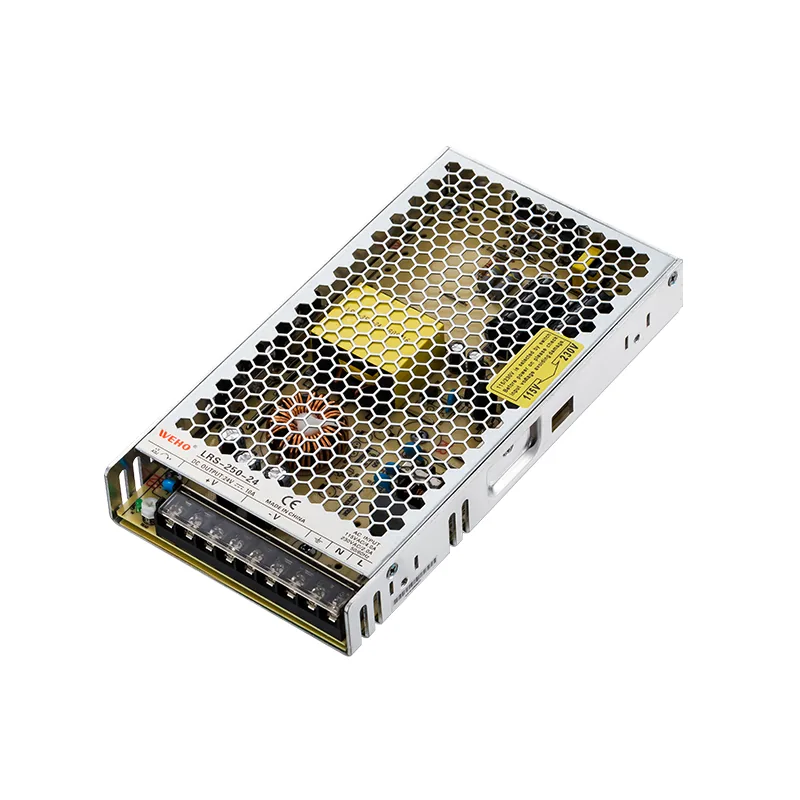
그만큼 WEHO LRS-250-24 AC/DC switching power supply product page is an example of a complete power supply rather than a standalone transformer. Check the exact output model and current documentation before deciding whether it is suitable for your load; the product page does not establish the internal topology of every model.
결론
A power supply and a transformer are not the same thing. A power supply is a complete device or system that supplies power to a load, while a transformer is a magnetic component used in many—but not all—power-conversion designs.
The transformer's properties and the power supply's control circuitry interact in transformer-based designs. Understanding both helps engineers and buyers compare the complete system's electrical and installation requirements.
WEHO에 문의하세요 with the available input, required output, load and operating environment to discuss a suitable power supply.