Power Supply HS Code and Customs Guide
For a power supply shipment, start customs classification with the function and condition of the goods being imported, not a code copied from a competitor’s invoice. A static-converter heading may be a useful research starting point, but the final national tariff code, duty treatment and documentary requirements need confirmation for the destination and entry date. Procurement should settle that review before releasing production packaging.
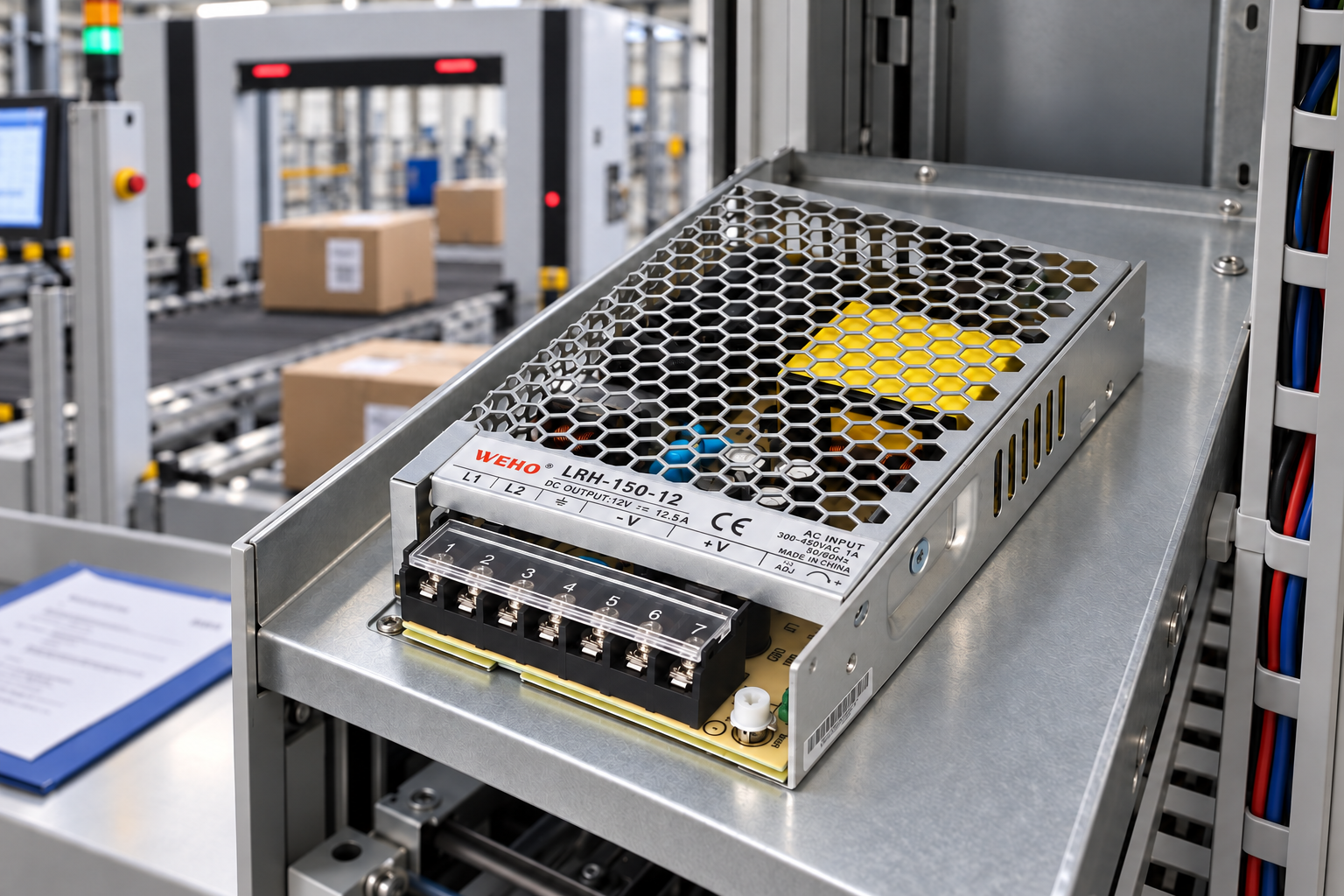
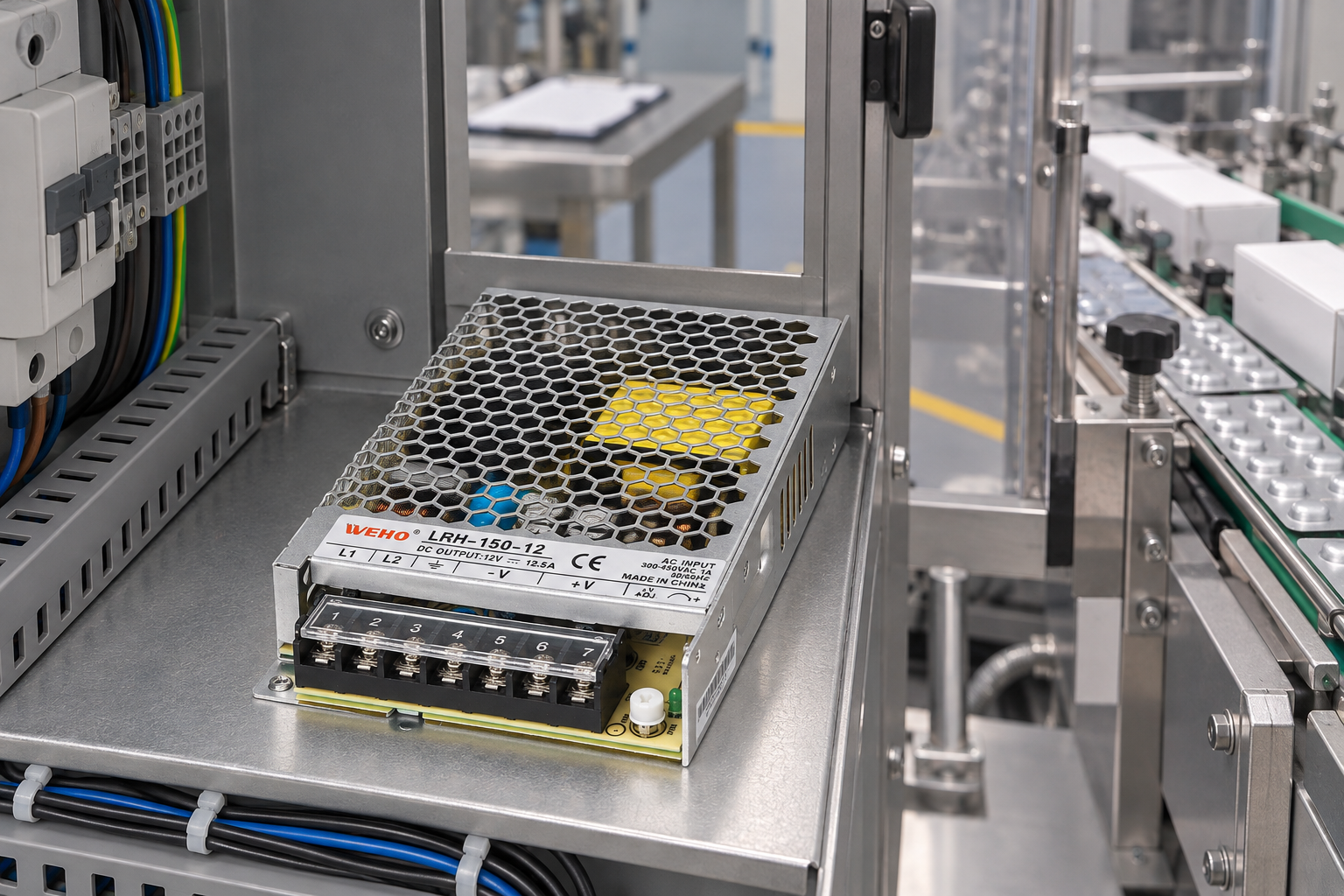
The WEHO LRH-150-12 is a practical component example: the original label identifies an AC-to-DC supply with 300–450 VAC input and 12 V, 12.5 A output. That description is much more useful to a broker than “electronic accessory.” It does not, by itself, decide a binding classification for every shipment containing the product.
Separate the international heading from the destination declaration
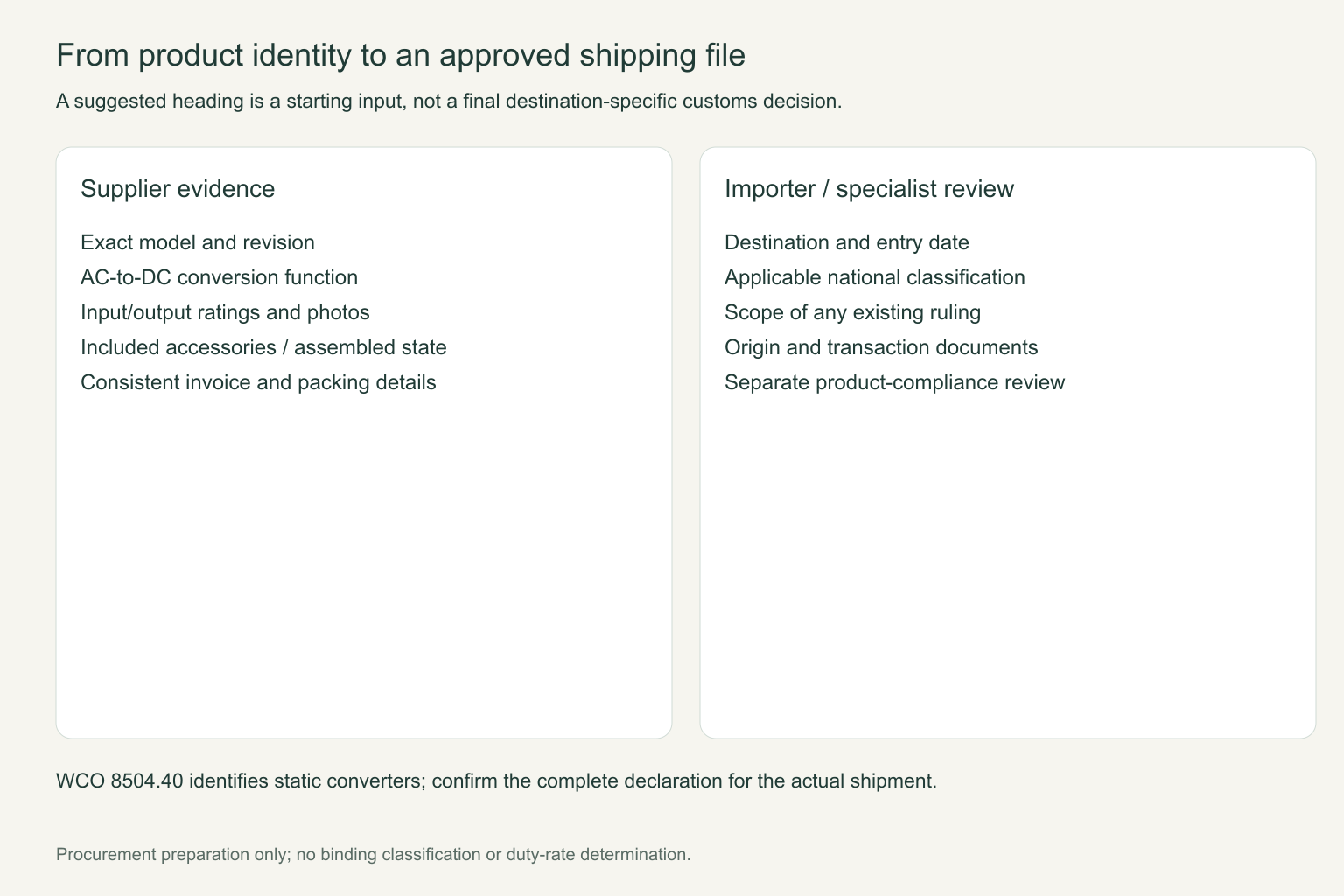
The WCO’s HS 2022 Chapter 85 nomenclature places static converters under subheading 8504.40 within heading 85.04. Use this as a starting reference for a standalone AC-to-DC converter. It is not a universal instruction to enter the same complete code for power supplies, chargers, transformers, spare assemblies and finished machines.
The importer or appointed customs specialist should check the applicable destination tariff, legal notes and current measures using the actual product description. Keep the approved classification rationale and review date with the purchasing file. Do not treat a six-digit international subheading as a confirmed national declaration code or a guaranteed duty rate.
Build a product identity sheet that a broker can use
A useful classification packet is short, factual and consistent across departments. Ask the supplier for the exact model, conversion function, input and output ratings, photographs, technical sheet and a description of what is included in the shipment. State whether the item is imported separately or already installed in a larger assembly. If the goods or packaging change, ask whether the previous review still applies rather than assuming it transfers.
| Information to supply | Why it matters to the purchasing handoff |
|---|---|
| Exact model and revision | Connect the quotation, sample, label, technical sheet and shipping documents to the same goods |
| Actual conversion function | Distinguish an AC-to-DC supply from a transformer, DC-to-DC converter, battery charger or inverter |
| Ratings and photographs | Support the technical description without relying on a broad product-family name |
| Condition as imported | Explain standalone units, included accessories and integration into a complete machine |
| Destination and planned entry date | Allow the responsible specialist to check the relevant tariff version and measures |
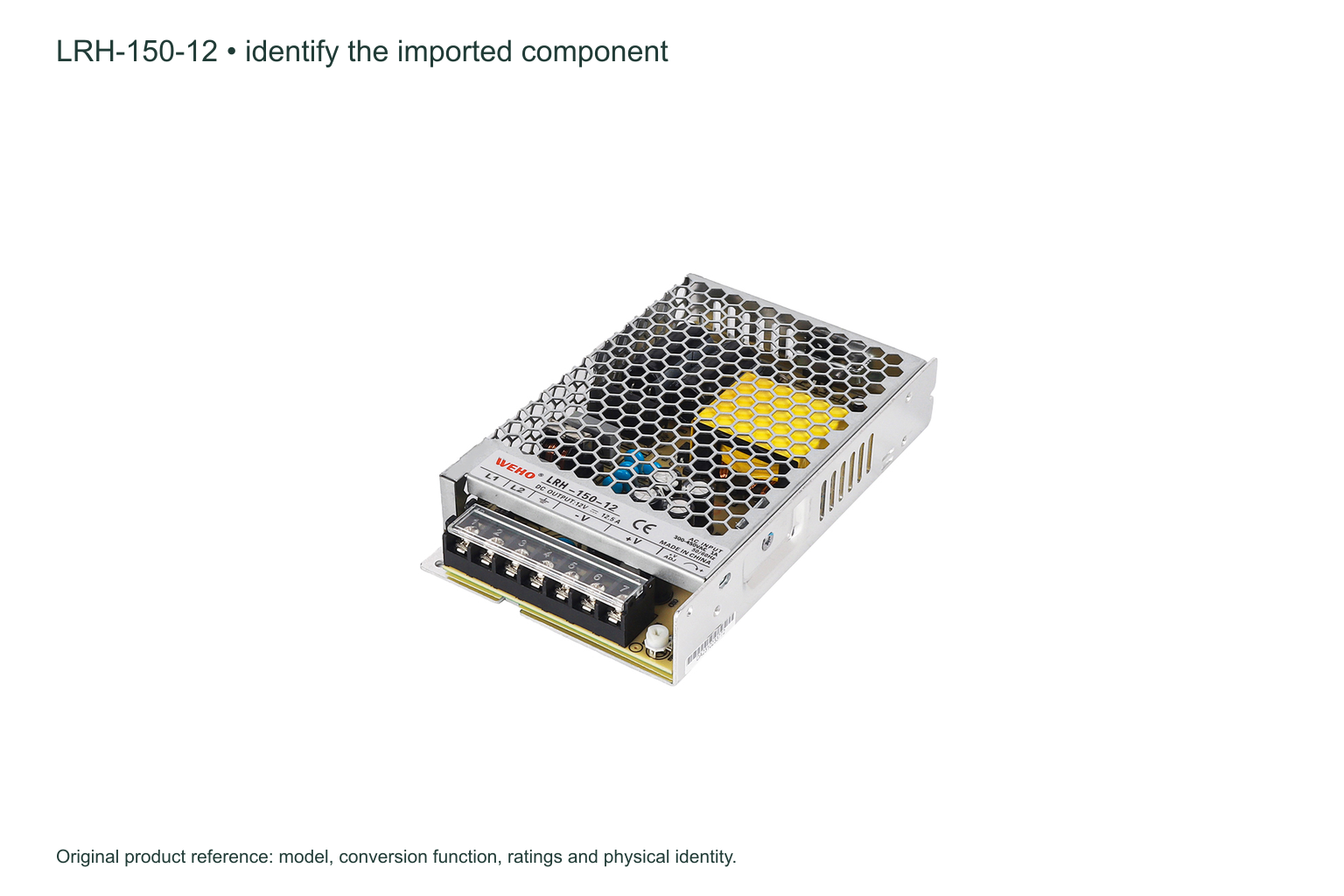
Use the LRH-150-12 as a document-control example
The retained specimen has a shallow metal enclosure and seven covered terminals. Its label reads LRH-150-12, 300–450 VAC, 1 A, 50/60 Hz and 12 V, 12.5 A. The complete drawing gives an overall 159 × 97 × 30 mm envelope. These details help a buyer identify the offered component and detect a substitution before shipment. They do not establish country of origin, preferential treatment or regulatory approval.
For an invoice description under review, “AC-to-DC switching power supply, model LRH-150-12, 300–450 VAC input, 12 V DC 12.5 A output” conveys the function more clearly than a marketing phrase. The importer and broker must approve the final description and classification. Avoid copying unrelated family ratings into the documents: a 300–450 VAC label does not describe a direct 480 VAC input unit.
Do not use the HS code as a substitute for compliance evidence
Tariff classification and product conformity are different decisions. A code does not confirm that a component meets the importing market’s safety, EMC, environmental or labeling requirements. Likewise, a logo on a label does not determine the customs code. Assign an owner to each review and record the evidence needed for the exact product and its intended sale or integration.
Country-of-origin documentation, commercial value, packaging quantities and transport information also need their own consistent records. Ask the broker which documents apply to the actual transaction. Do not promise a certificate, preferential rate or exemption merely because an earlier order used a similar product name.
Resolve uncertainty before the shipping deadline
When classification remains material or disputed, consider the destination authority’s formal ruling route with the importer. For example, the U.S. CBP Binding Ruling Program provides a pre-importation route for classification decisions based on submitted product information; its guidance distinguishes a binding classification decision from non-binding duty-rate information. That is a U.S. process example, not a rule for every destination.
Give the responsible specialist enough time and a complete description. A supplier’s suggested code is a starting input, not a replacement for the importer’s review. If a ruling or prior decision is being relied upon, confirm that its product facts and scope actually match the shipment. Do not extrapolate from a unit with a different conversion function or from a complete machine to a separate replacement component.
Close the OEM purchasing record before dispatch
At sample approval, save the agreed model and label photographs, technical description and classification-review owner. Before production dispatch, compare the packing list, invoice and actual goods against that frozen identity. Changes to the model suffix, included modules or assembled condition should trigger a document check, even if the purchase-order unit price is unchanged.
Request draft documents early enough for correction without relabeling or repacking under time pressure. Specify who approves the description, who provides origin evidence and who handles questions from the broker. Ask the supplier to notify the buyer before substitutions or document revisions; do not invent shipping lead times or assume every document can be issued immediately.
Buyer questions
Can every switching power supply use 8504.40 automatically?
No. That WCO subheading is a useful starting reference for static converters, not a complete destination-specific classification decision. Confirm the actual goods, condition as imported and applicable national rules with the responsible specialist.
Does an accepted sample settle customs and market compliance?
No. Sample acceptance fixes an engineering and purchasing reference. Classification, origin, value and market-entry requirements still need their own documented reviews for the transaction.
Request the exact-model technical and shipment-description package from WEHO with the destination, imported configuration and required documents. Ask your importer or broker to confirm the final declaration and treatment before shipment. This guide is a procurement preparation framework, not a binding customs determination.