Use segmented memory to retain detailed waveforms around selected events, then report the actual coverage. Save segment timestamps and configuration. Cumulative stored waveform time, elapsed monitoring time and intervals when the instrument cannot accept a new event are different quantities.
- Keep every retained segment and its time tag.
- Calculate stored time separately from elapsed time.
- Check rearm and record-length limits on event separation.
- Do not convert retained-time fraction into a detection probability.
State the event question and the record boundary
A rare rail disturbance may require a high sample rate around each event and a long wait between events. Segmented acquisition can use memory efficiently by storing selected short records. It can help compare event shape and timing without storing every idle sample between triggers.
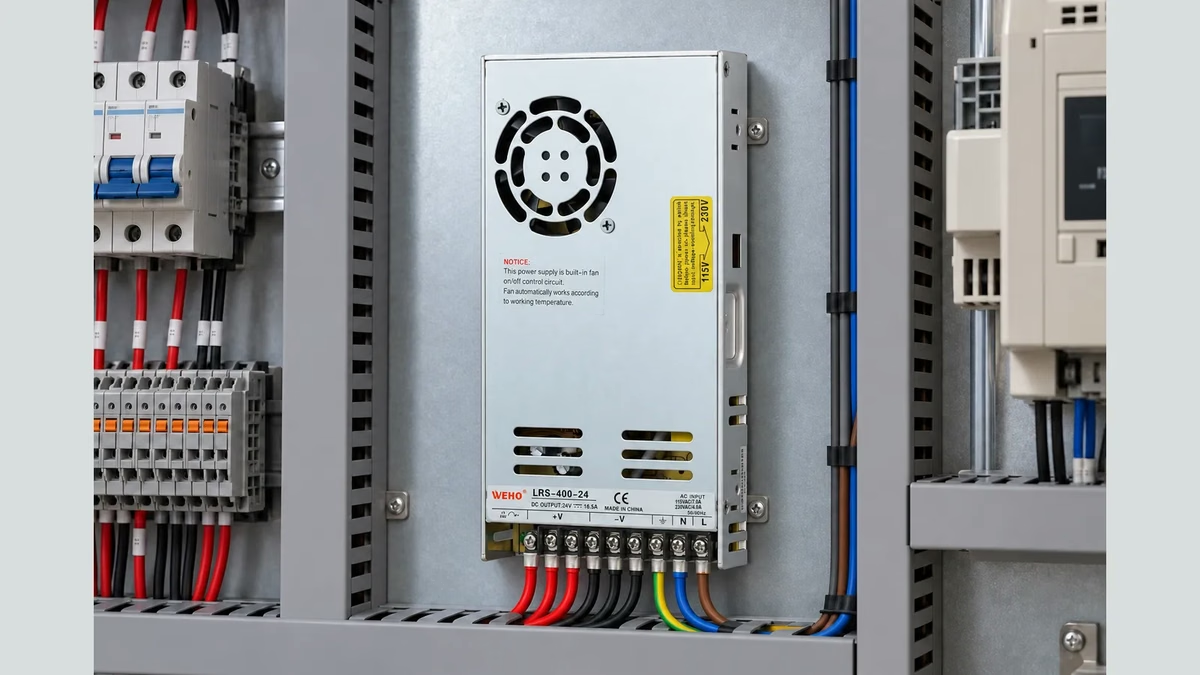
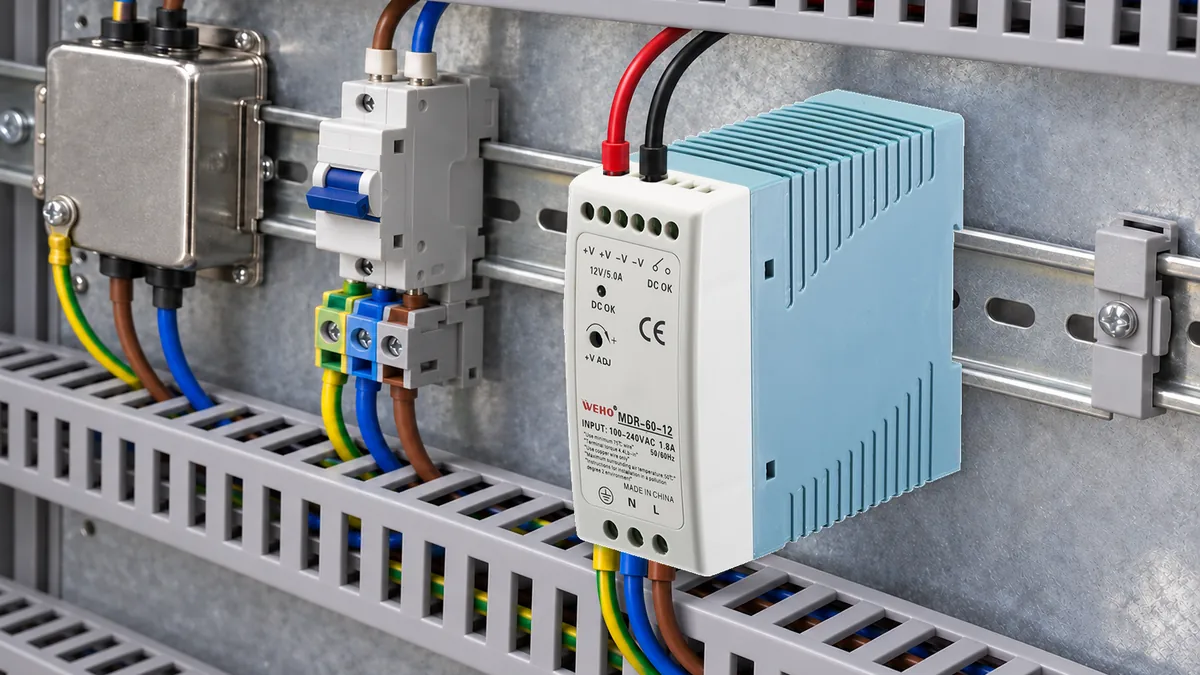
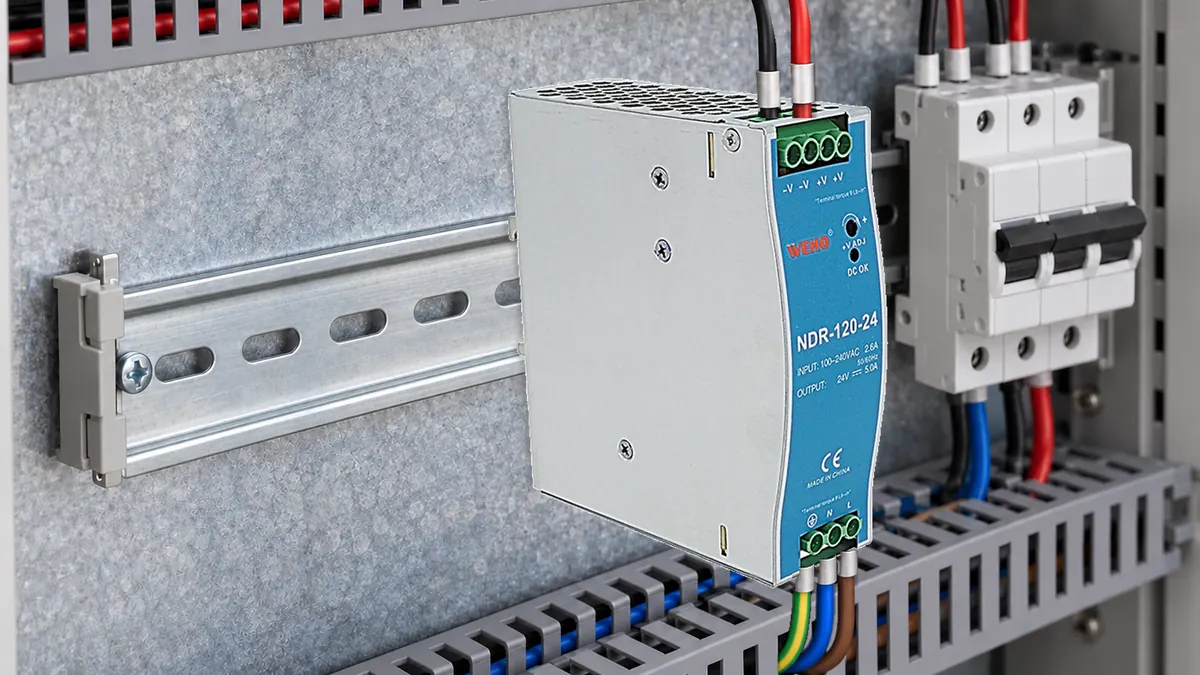
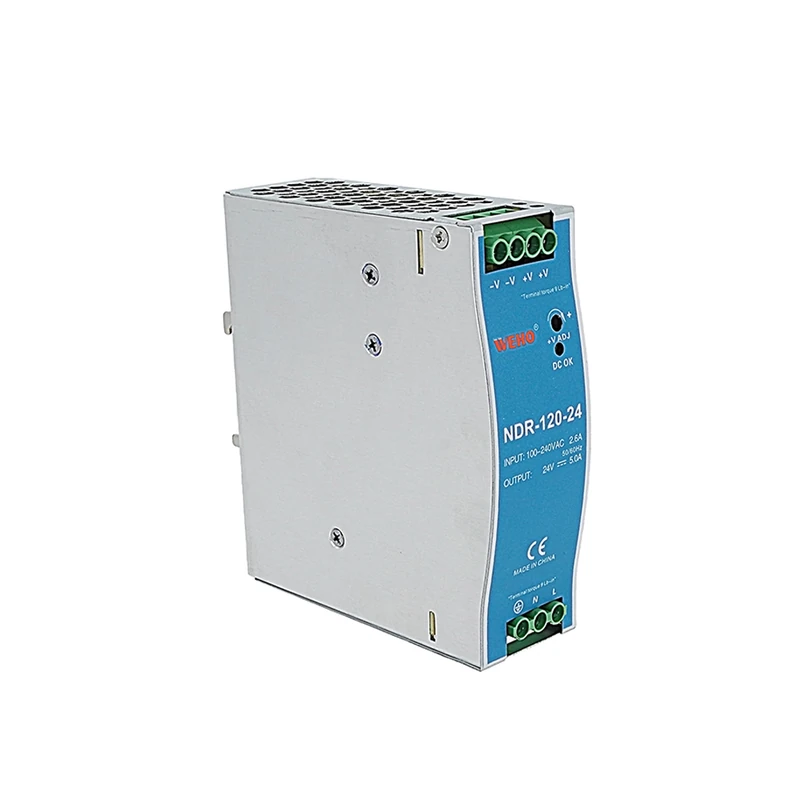
For an investigation around the WEHO NDR-120-24 source reference, identify the source and monitored point. The segmentation method belongs to the external instrument. No event rate, fault record or monitoring capability is assigned to the supply by the application image or example.
Define whether you need event shape, spacing, total count or evidence that an event did not occur. Those questions require different support. A set of captured pulses can answer the shape question while leaving the total number of occurrences uncertain.
Distinguish segment duration from event availability
Each segment contains a limited pretrigger and posttrigger record. After completing it, the instrument needs whatever rearm process applies to its configuration before accepting another event. Record duration and rearm interval together affect which closely spaced events can become separate retained records.
Keysight's segmented-memory application note explains how selected waveform bursts can be stored with time tags. Its instrument-specific performance figures are not universal rearm values. Check the actual scope, enabled channels, record length, acquisition mode and relevant options.
A time tag usually locates a segment relative to a reference, but its precise meaning needs documentation. Determine whether it marks a trigger, record start or another event, and whether it uses the same timebase as waveform samples. Do not infer nanosecond event timing merely because exported values contain many decimal places.
Keep this coverage question separate from trigger selectivity. The chosen trigger condition determines which events are candidates. Segment capacity, record completion and rearm determine which of those candidates can be retained. Changing a trigger to count different events does not remove acquisition gaps.
Calculate a hypothetical memory allocation
Assume a hypothetical configuration retains 200 segments, each 50 μs long. The cumulative stored waveform time is 200 × 50 μs = 10,000 μs, or 10 ms. Suppose the first and last trigger timestamps span 20 s. The elapsed span is much longer than the time represented by stored samples.
The retained-time fraction is 0.010 s / 20 s = 0.0005, or 0.05%. This does not mean the instrument detects only 0.05% of qualifying events. Triggered segmentation intentionally selects event regions; detection depends on event timing, qualification and instrument availability, not a simple uniform sampling probability.
At an actual 100 MS/s, a 50 μs sampled block contains approximately 5,000 samples per channel. Two hundred such blocks require 1,000,000 samples per channel before instrument-specific overhead or storage details. Confirm that the selected scope configuration actually provides the assumed sample rate and segment allocation.
Swipe to view the complete diagram, or open full size.

The cumulative duration convention counts N/fs for each block. The time between first and last sample points is one sample interval shorter. That difference is usually small here, but stating the convention avoids confusing sample-count arithmetic with exact endpoint timestamps.
A short record may also truncate the recovery of a slow event. Segmentation saves memory only if the selected window still contains the evidence needed for the decision. Increase it when necessary and reassess capacity, sample rate and availability rather than shortening recovery merely to collect more segments.
Keep a coverage matrix with the export
The Keysight scope operating guide distinguishes filling a segment from subsequent rearming. Its explanation reinforces the need to evaluate complete record timing rather than quoting rearm time alone as the shortest possible separation between saved events.
Swipe table horizontally when needed.
| Quantity | Meaning | Evidence to preserve |
|---|---|---|
| Segment duration | Waveform retained around one event | Sample count, rate and trigger position |
| Segment timestamp | Event reference on documented clock | Time-tag definition and raw values |
| Rearm interval | Readiness between acquisitions | Applicable model/configuration evidence |
| Elapsed observation | Start, stop and acquisition state | Arming record and termination reason |
Record why acquisition ended. Reaching segment capacity, an operator stop, a timeout and a saved subset create different coverage statements. The last retained trigger tag does not necessarily identify when the instrument stopped monitoring.
The export can change the available evidence. Some workflows save only the currently displayed segment or omit time tags from a simplified file. Verify the exported count and associated records before deleting instrument memory or beginning another run.
Challenge the acquisition and export together
- Define the event width, relevant recovery interval and minimum separation the investigation must resolve. State whether total-event count is part of acceptance.
- Configure the actual channels, sample rate, segment length and capacity. Save the setup and confirm the supported configuration.
- Apply a suitable controlled reference sequence through an approved test arrangement. Include representative event spacing and known timestamps.
- Compare the known sequence with retained segment count and time tags. Identify missing, merged or truncated events without assuming their cause.
- Export all required segments, then reopen the files independently. Verify count, timestamps, units, scaling and complete waveform content.
A challenge with widely spaced events cannot prove that closely spaced events will be retained. Sweep the relevant separation or use an appropriate reference pattern when that behavior controls the decision. Keep the achieved challenge conditions with the result rather than reporting only a nominal waveform update rate.
If two segments appear identical, determine whether they represent repeated events or a duplicated export. A consistent timestamp and file-identity record can help distinguish those cases. Avoid deduplicating waveforms solely because their shapes are similar; repeatability may be the phenomenon under investigation.
When absence matters, obtain a method qualified for that claim. A separate counter or continuous recorder may provide complementary evidence if its threshold and timing relationship are validated. Combining instruments does not automatically solve coverage unless their respective boundaries are explicit.
Timestamp differences between adjacent retained events are useful even when the total event count remains uncertain. They describe the spacing between those particular records. Keep that distinction in plots and captions: a histogram of retained intervals is not automatically the distribution of every physical event in the equipment.
Also retain whether the instrument was armed before the operating sequence began. The first saved event may follow an unrecorded startup period. A complete acquisition-state record helps the reviewer avoid extending the observation window into time when no capture method was active.
Check whether time tags restart with each acquisition run. Combining files from separate runs without retaining run identity can create apparently repeated or reversed event times. Preserve the original run identifier and its clock reference before constructing one combined timeline.
Keep the segment index associated with the corresponding channel data. A later analysis must not pair one channel's event with another segment merely because the file ordering looks similar. Validate the export's association on a known multichannel event before relying on it to describe an equipment sequence.
Send complete segments with a bounded conclusion
For the WEHO NDR-120-24 event-record review, provide the complete segment set, time tags, setup, monitored signals, input/load conditions and required rail behavior. Include the observation start/stop record and any validated event-spacing limits.
A defensible report says that a stated number of qualifying records were retained under the documented conditions. Extend that statement to an event count or absence conclusion only when the detection and acquisition evidence support it. Preserve uncertainty in monitoring coverage as a specific next check rather than disguising it with a long elapsed test duration.
Engineering FAQ
Does segmented memory continuously record between events?
Segmented memory normally retains selected waveform regions and omits intervening idle data. Check the actual instrument mode. A long span between time tags does not establish a continuous waveform record.
Can stored time divided by elapsed time predict missed events?
That ratio describes retained-time fraction, not a general detection probability. Triggered selection and acquisition availability depend on the event sequence. Validate the actual detection requirement with an appropriate challenge.
Is rearm time the minimum spacing between saved events?
The full acquisition cycle also includes the configured record and applicable timing behavior. Use the instrument's complete model-specific explanation and validate the chosen configuration. A quoted rearm value alone is insufficient.
What should be checked after exporting segmented records?
Check the segment count, time tags, scaling, units and full sample content by reopening the files. Confirm that the export contains all required segments rather than only the displayed one.