C3Z One-Touch Setting: An OEM Sample-Acceptance Guide
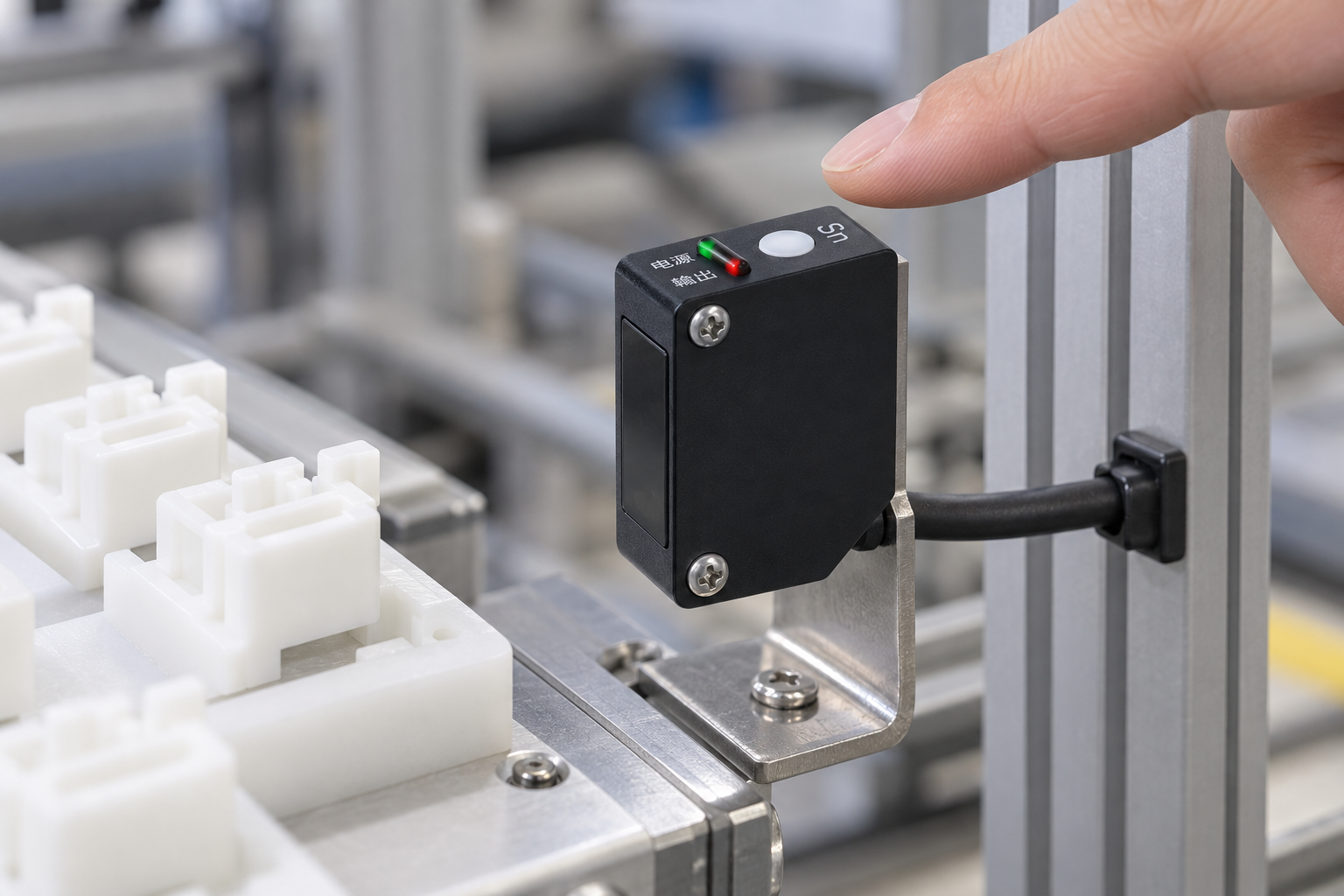
The C3Z one-touch button helps an OEM set a sensing condition, but a button operation is not a complete machine acceptance test. Confirm the exact output type, use representative production samples, and verify the controller’s target-present and target-absent states before releasing the setting to a production line.
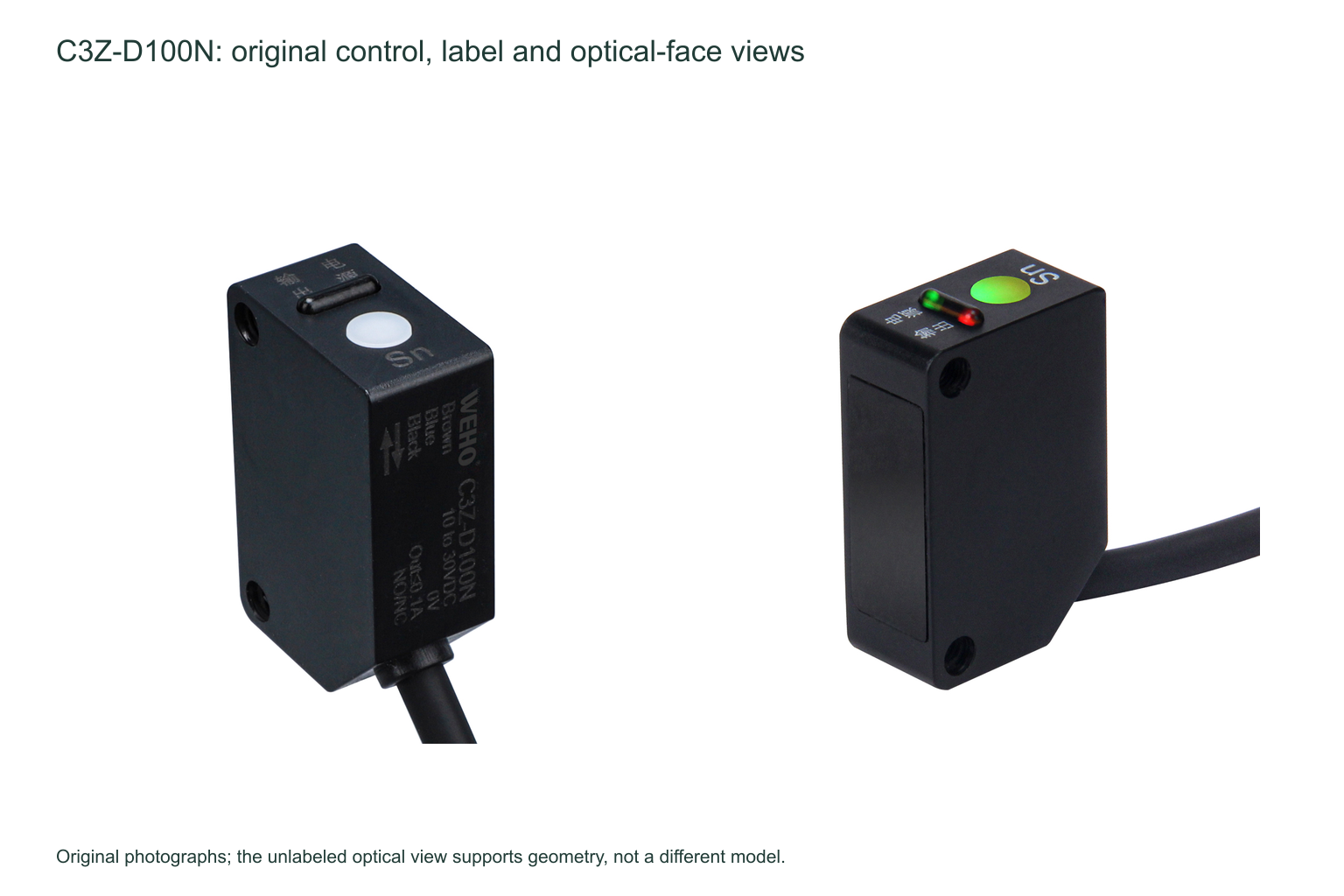
This guide uses the WEHO C3Z-D100N diffuse sensor. The N suffix identifies the NPN version; changing NO/NC behavior does not turn it into a PNP device. A replacement purchase must preserve both the electrical interface and the approved application setting.
What the documented button functions do—and do not—establish
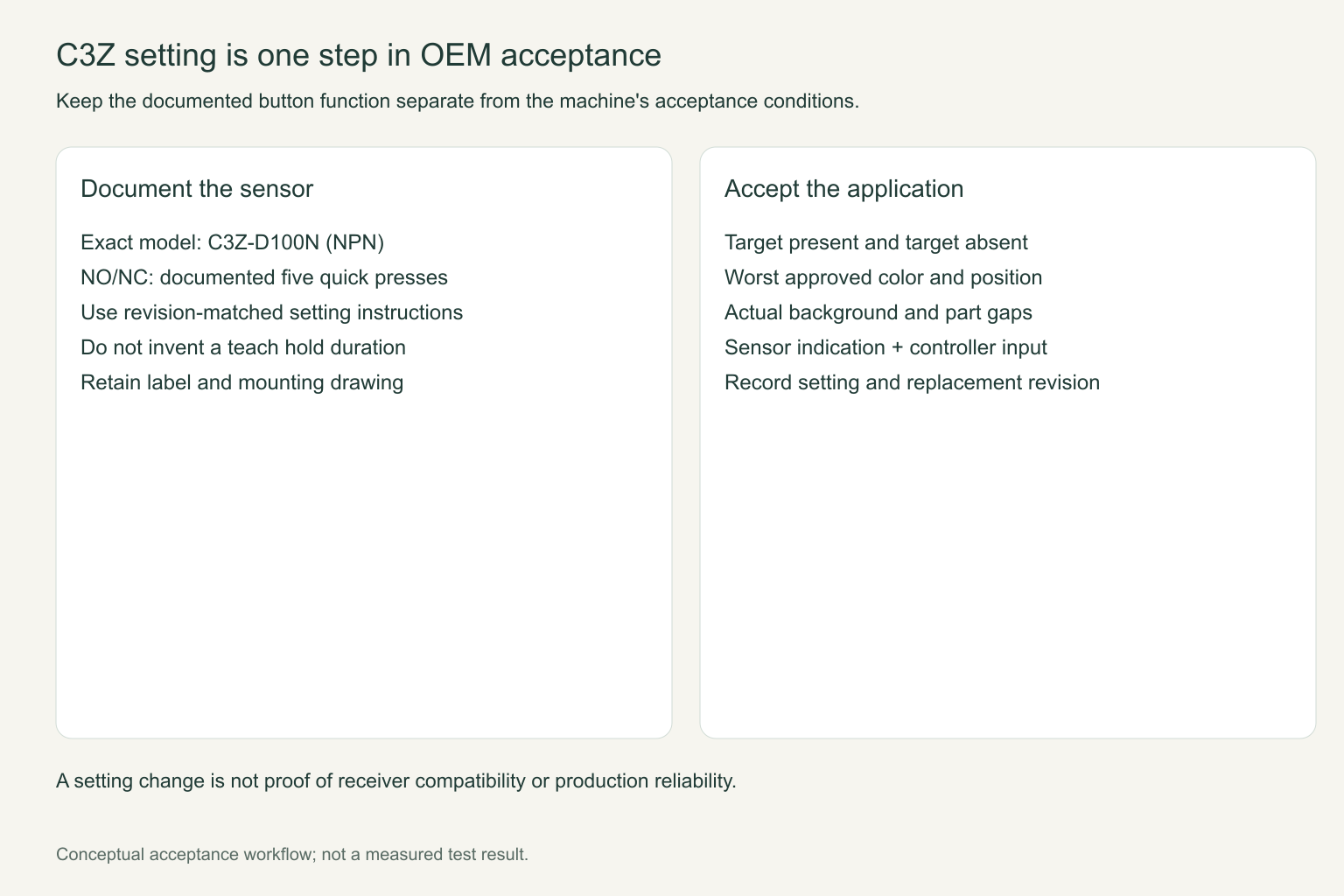
The C3Z specification describes one-button distance setting and separately states that pressing the button five times quickly switches NO/NC action mode. These are different commissioning decisions: one concerns the sensing condition, the other the output behavior. The published information does not define a complete timed teach sequence or a universal press duration. Obtain the operating instruction for the offered revision instead of copying a long-press recipe from another sensor series.
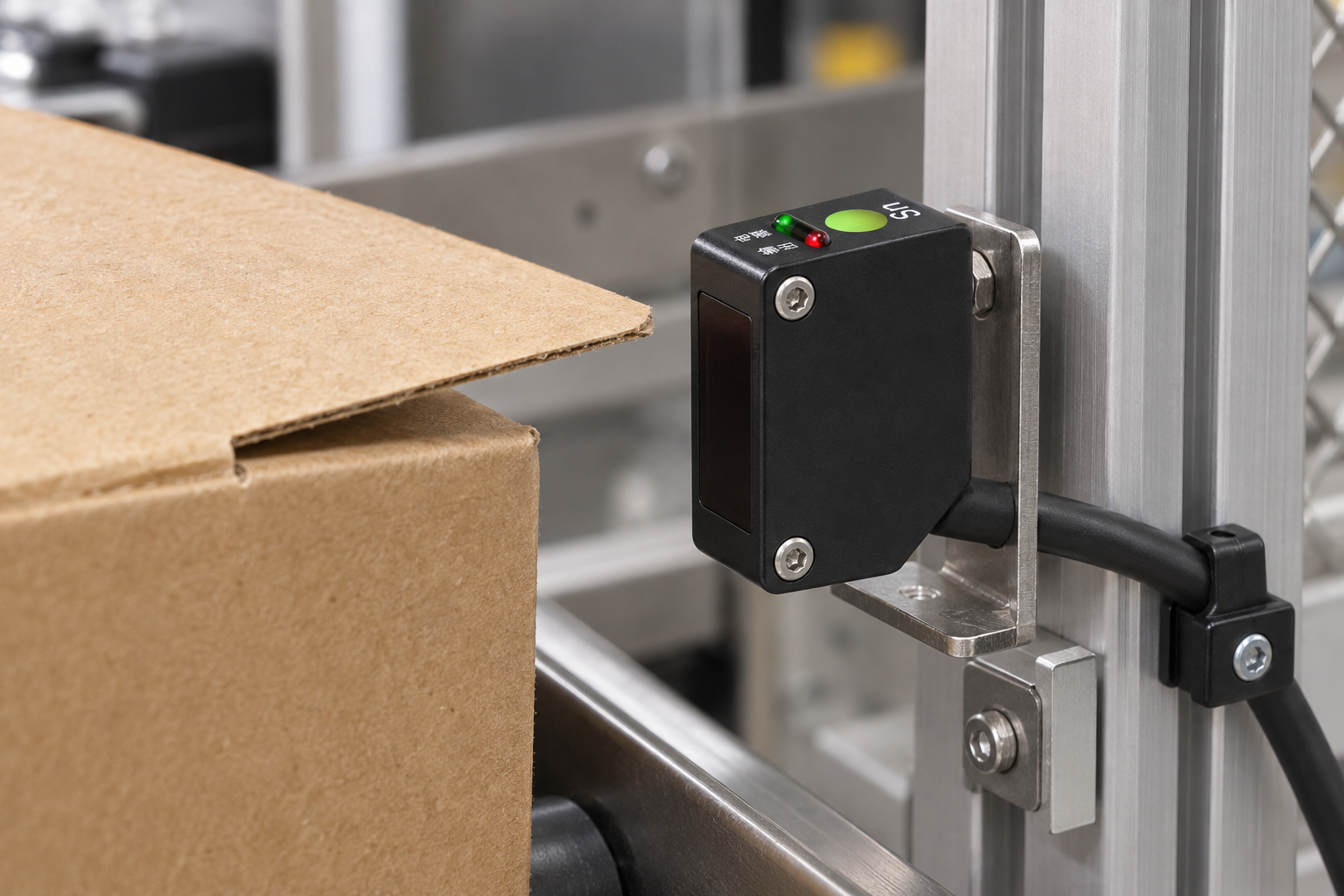
The D100N specification lists an adjustable 100 cm detection distance using a 10 × 10 cm white matte-paper reference target. That reference is not a guarantee for a small dark part, a glossy curved surface or a target close to a reflective machine frame. Set and accept the application with the actual part family, not only with a convenient white card.
Freeze the interface before adjusting the sensor
| OEM requirement | Record before sample approval |
|---|---|
| Electrical variant | Full C3Z-D100N marking, NPN receiving-input compatibility and 10–30 VDC supply conditions. |
| Physical arrangement | Target distance, orientation, background, bracket position and cable routing. |
| Output meaning | The required controller state for target present, target absent and loss of supply. |
| Setting procedure | Supplier instruction revision, initial state, operation performed and result observed. |
The sheet specifies a load current no greater than 100 mA. Check the receiving input rather than using the output to operate an unspecified machine load. Isolate hazardous motion while changing a setting: an unexpected input transition must not start an actuator.
Build a repeatable sample-acceptance sequence
- Fix the geometry. Use the intended bracket and the two original mounting positions. Leave access to the top control and indicators without loosening the sensor during adjustment.
- Record the baseline. Observe both the sensor indication and the actual controller input with and without the target. Record the initial action mode before altering it.
- Apply the matching instruction. Use the supplier’s revision-specific setting procedure. When selecting NO/NC, verify the result of the documented five-press operation rather than assuming the previous mode.
- Challenge the setting. Present the smallest, darkest or least favorable approved samples at the allowed position extremes. Include the real background and the gap between parts.
- Confirm the machine interpretation. Check the receiver’s input filtering and the application’s response to removal, replacement and restart under the machine’s safe commissioning procedure.
A green power indicator and red action indicator are documented, but an illuminated indicator does not prove that the PLC program interprets the input correctly. Keep those two observations separate in the acceptance record.
Control replacement and batch changes
For repeat orders, attach the approved full model, label photograph, mounting drawing and operating-instruction revision to the purchasing specification. Require notice of changes to the output interface, cable, housing, control behavior or supplied instructions. Retain the approved target sample or a controlled drawing of it so that a new lot can be checked against the same conditions.
Define the acceptance quantity and permitted miss/false-trigger criteria with the machine owner; a short successful demonstration is not a statistical reliability claim. If a replacement works only after moving the bracket or changing the PLC logic, treat that as an engineering change rather than an equivalent drop-in part.
Questions buyers ask
Does five-button switching change NPN to PNP?
No. It changes the documented NO/NC action mode, not the transistor output type identified by the model suffix.
Can we standardize one setting for every product color?
Only after the complete target range passes the agreed application checks. The published white-paper reference does not establish equal response from every material or finish.
Prepare a useful C3Z enquiry
Review the C3Z product information, then send WEHO your application requirements: full replacement model, target photographs and dimensions, distance, background, conveyor speed or cycle time, receiving-input type, supply, mounting space, quantity and destination. Ask for the exact offered revision and its setting instructions before approving the sample.