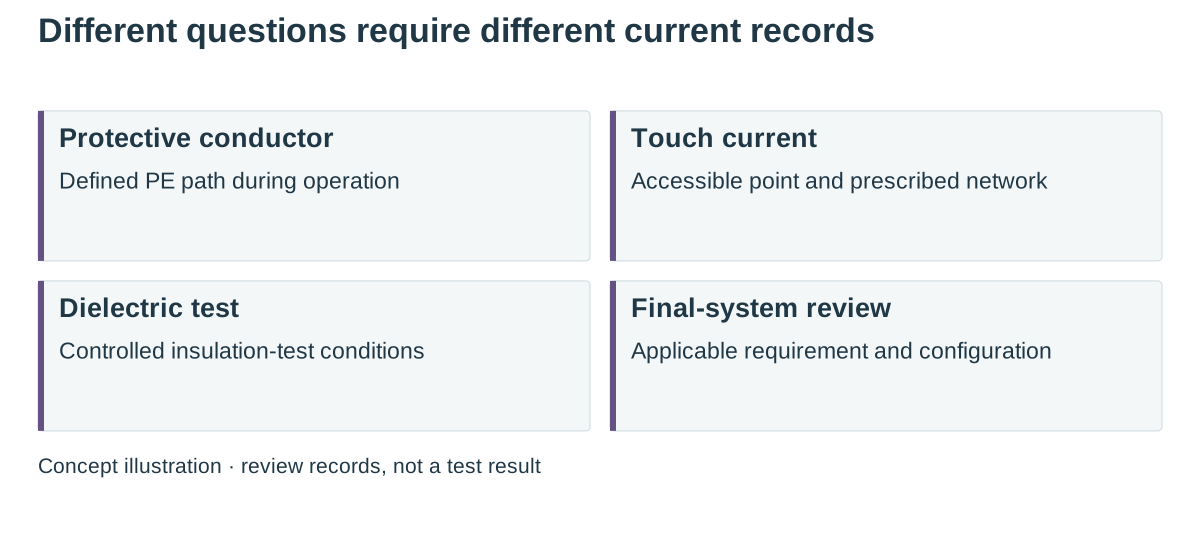
Before comparing power supply leakage current, identify the current path, measurement network, operating condition and applicable product requirement. Protective-conductor current, touch current and the current measured during an insulation test are different records. A value from one cannot be used as the acceptance limit or test result for another.
On this page
- Replace the ambiguous field name with a defined measurement
- Keep the path and the measuring network together
- Freeze the configuration behind the reading
- Identify the HDR-150-24 configuration before choosing the method
- Decide whether the returned evidence answers the requirement
- Send a measurement-specific enquiry
- Two questions to close the review
- Technical references
Replace the ambiguous field name with a defined measurement
A sourcing sheet headed only “leakage: mA” omits the information needed to interpret the number. Is it current in protective earth during normal operation, current through a body-impedance network connected to an accessible part, or an instrument reading during a dielectric test? Name the quantity and the equipment boundary before discussing whether the value is low enough.
IEC 60990 defines methods for touch-current and protective-conductor-current measurements. Its published scope explicitly does not specify the limit values. The applicable product standard and equipment classification must supply the acceptance basis. Do not turn a measurement-method reference into a universal current limit.
Keep the path and the measuring network together
TDK-Lambda’s explanation of IEC 60990 testing distinguishes protective-conductor current from touch current evaluated through a body-impedance network. The network matters because the test concerns a defined human-contact response rather than any arbitrary meter connected to an output or enclosure. Its historical standard references do not replace the current product-specific assessment.
ที่ XP Power guide identifies EMC filter Y capacitors as a contributor to earth current. That helps explain why insulation can be intact while an AC current still exists through a capacitive path. It does not prove the cause or magnitude of a reading on an unknown assembly, nor does it establish an acceptable value for that assembly.
| Record | Path or condition to identify | Do not substitute |
|---|---|---|
| Protective-conductor current | Current in the defined PE path at stated operating conditions | A touch-network result or a hipot reading |
| Touch current | Accessible point, prescribed measuring network and test condition | An ordinary ammeter value without the specified network |
| Dielectric-test current | Defined test voltage, connections, duration and instrument rule | Normal-operation leakage compliance |
| ความต้านทานของฉนวน | Specified DC test and resistance result | A touch-current result |
| System residual current | Defined monitored branch and operating state | The component’s individual touch-current evidence |
Freeze the configuration behind the reading
Retain exact model/revision, input voltage and frequency, operating/load state, accessible point or protective-conductor path, test equipment and method revision. Where the applicable plan includes supply polarity, normal and specified fault conditions, preserve those states separately. The test owner should define the required setup and safe execution; this article is not a mains-test connection procedure.
Include connected interfaces in the system definition. A cable shield, grounded load, communication interface or external filter can change the available path. A component test with one arrangement does not automatically describe a final assembly with another. Record the actual configuration so the safety reviewer can determine which evidence remains applicable.
Do not lift protective earth or alter protective connections as an informal way to obtain a preferred value. Any abnormal or fault-condition assessment belongs within an authorized test procedure. An unexplained difference between two readings should trigger a configuration and method review before it is called a product defect.
Identify the HDR-150-24 configuration before choosing the method
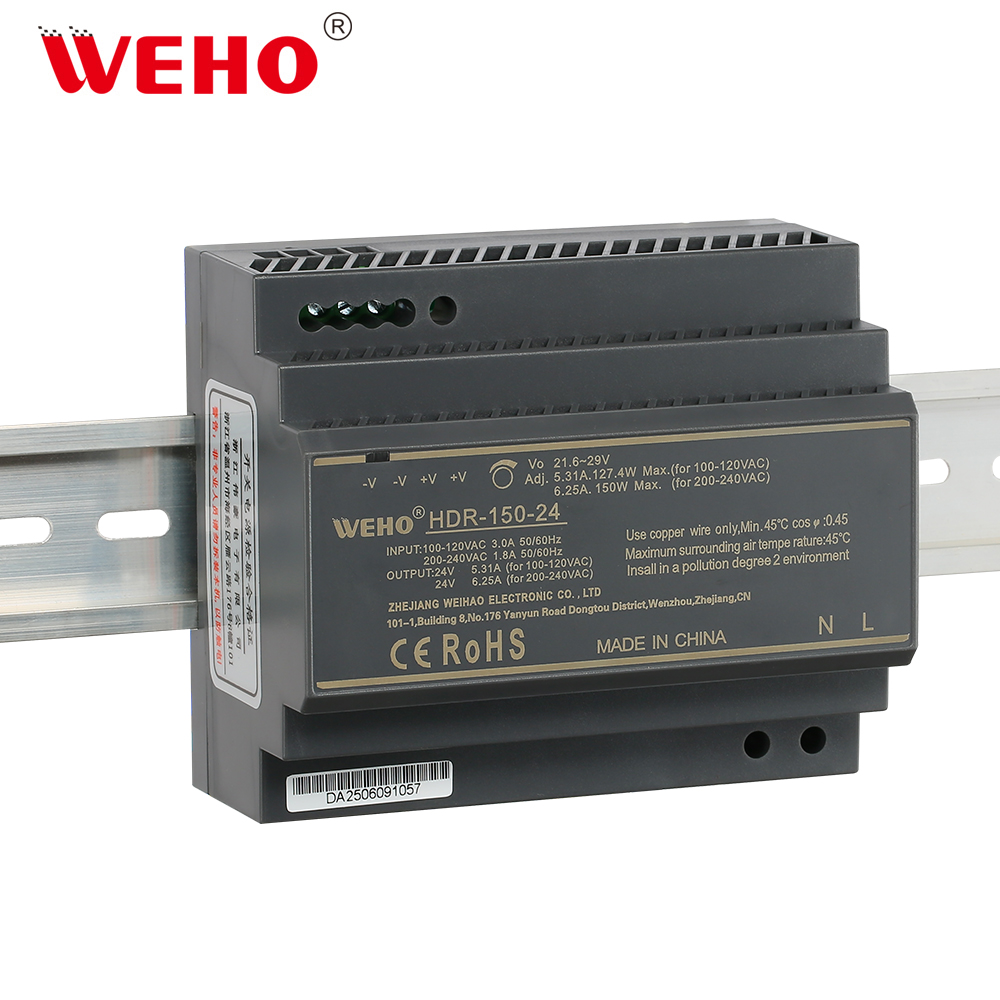
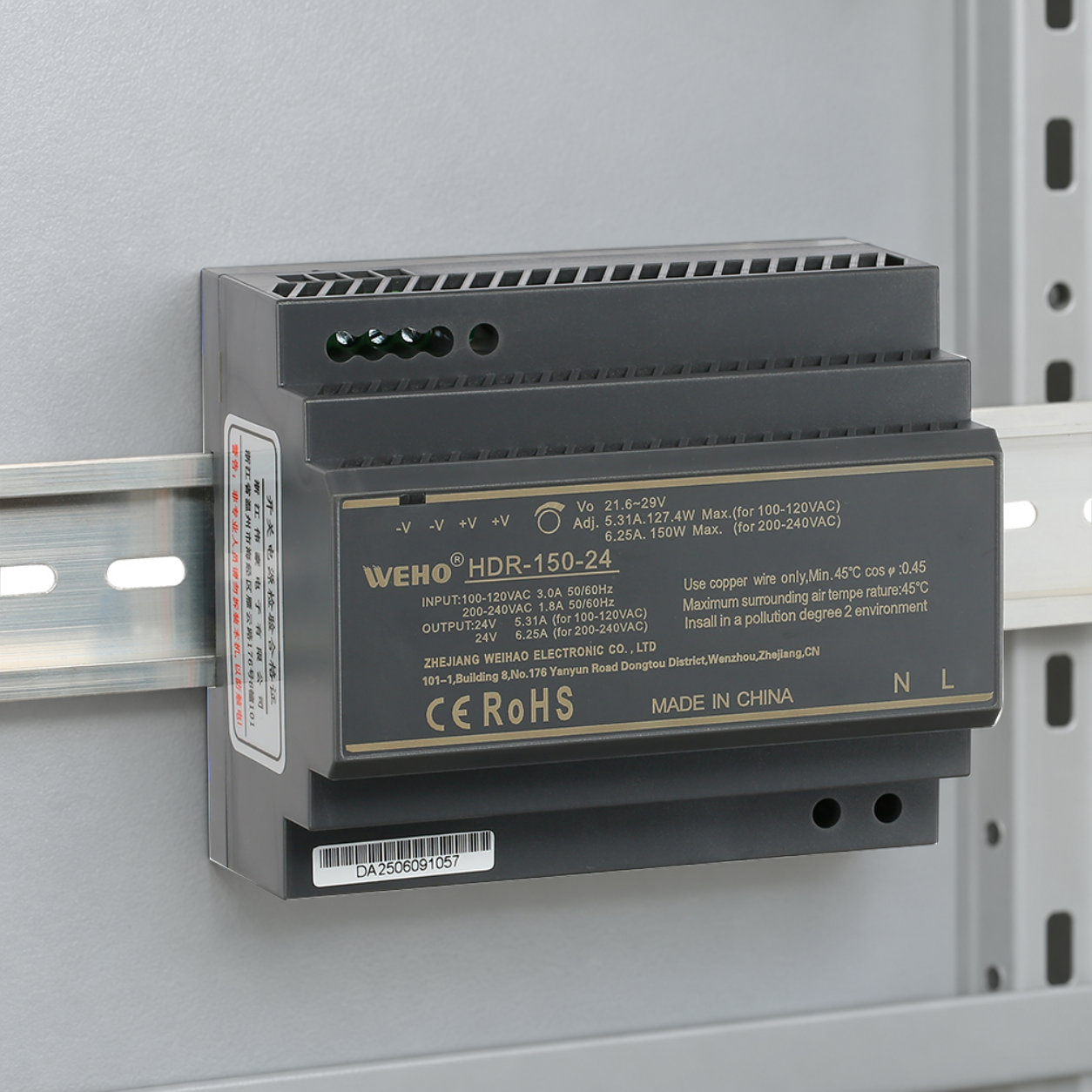
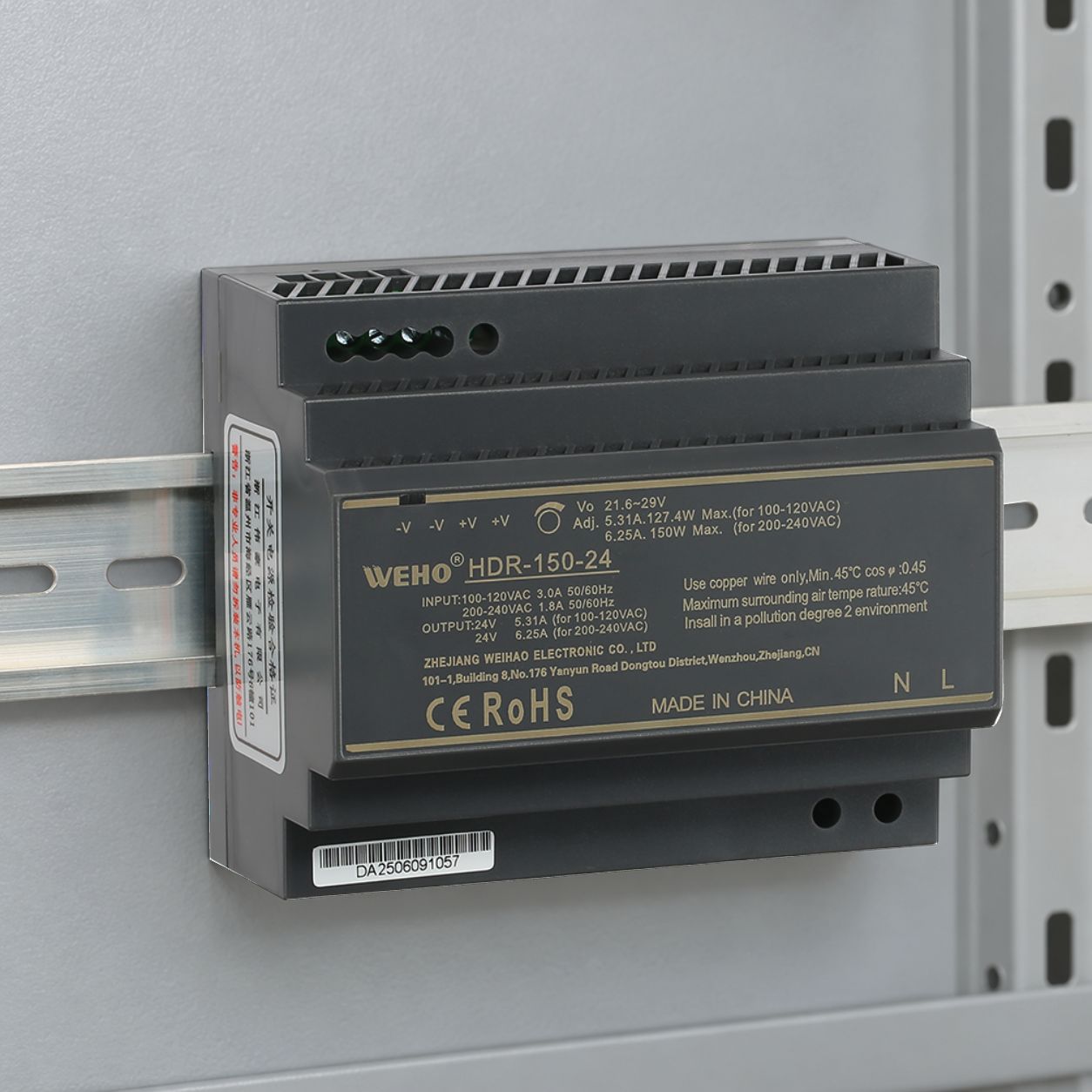
ที่ WEHO HDR-150-24 product details และ HDR-150 manufacturer specification identify a concrete DIN-rail candidate. Match the pictured full model and N/L input markings to the applicable document revision and the sample under assessment.
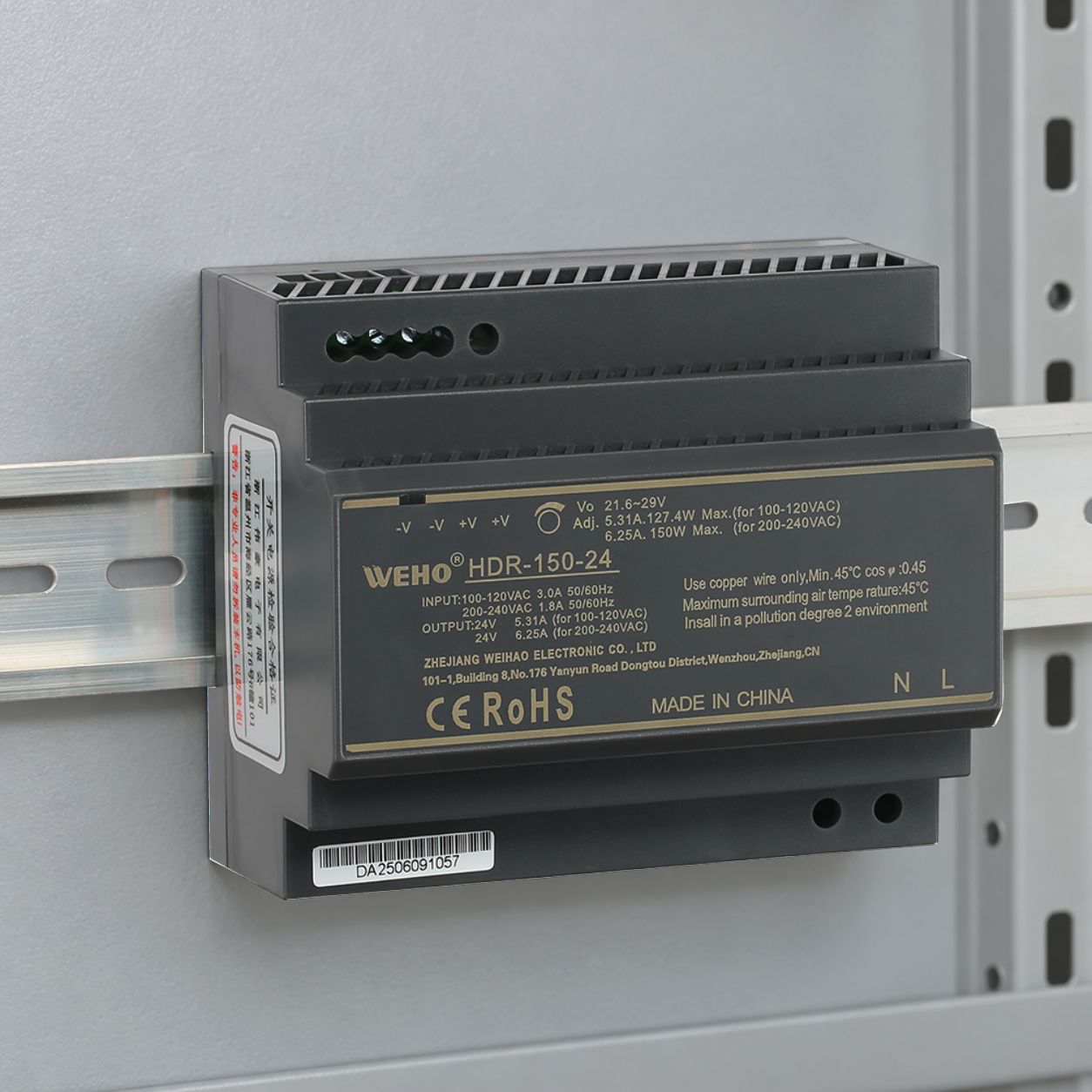
Record the sample’s input arrangement, DC load, accessible points, connected interfaces and host equipment. The plastic housing and the pictured terminal arrangement do not establish a safety class. Nor can the presence or absence of an external protective-earth terminal select the current measurement or its acceptance limit.
Have the reviewer distinguish the required touch-current assessment from protective-conductor-current measurements applicable to an equipment PE path. Define that path at the correct component or equipment boundary; do not invent a PE measurement point on this sample. The applicable product assessment and documented method determine the setup.
The HDR-150 sheet’s withstand-voltage and insulation-resistance fields retain their own meanings. They do not constitute operating touch-current results. Request the applicable current evidence, measurement network, operating conditions and requirement for the ordered revision and final equipment configuration.
Decide whether the returned evidence answers the requirement
Start the review with the product requirement, then match the reported quantity, method, configuration and result to it. A useful report includes the applicable document revision, identified sample and a clear pass/fail or measured-value record. If the method is incomplete or the current path is unnamed, hold the comparison rather than assuming that a smaller numerical value is better evidence.
If the component and final-system configurations differ, identify the additional assessment needed. A design change may affect an interface or current path without changing the power supply itself. Keep that review linked to the system drawing and explain which test evidence is being retained, replaced or supplemented.
This differs from an RCD nuisance-trip investigation. WEHO’s separate multiple-SMPS leakage-budget article addresses a monitored branch and its equipment population. A branch observation can support that investigation; it cannot stand in for an individual equipment touch-current result or select a universal safety limit.
Send a measurement-specific enquiry
Ask WEHO for model-specific current evidence with the exact candidate, intended equipment category, input conditions, connected interfaces and the quantity your reviewer must assess. Request the method, conditions, applicable requirement and document revision with any stated value. Keep unresolved system-level testing visible before releasing the design.
Two questions to close the review
Does a high isolation withstand voltage prove low touch current?
No. An insulation withstand test and an operating touch-current measurement have different purposes and methods. Obtain the evidence required for each.
Can one leakage-current limit be used for every industrial product?
No. Establish the applicable product requirements and measurement conditions for the equipment under review. A method standard alone does not supply a universal pass limit.