












- RTD thermal hysteresis ay isang indikasyon na depende sa histori sa parehong reference temperatura.
- အပူပေးလမ်းကြောင်းနှင့် အအေးပေးလမ်းကြောင်း၏ ရလဒ်များကို သိရှိနိုင်အောင် ထားပါ၊ ချက်ချင်း ပျမ်းမျှမလုပ်ပါနှင့်။.
- Kahiwahati ng probe na hiwalay sa mga gradient ng pinagmulan, pag-uugali ng pagbabasa, at patuloy na paggalaw.
- Define the relevant temperature excursion before accepting a calibration result for service.
ပြန်လာသောလမ်းကြောင်းက ရလဒ်ကို ပြောင်းသွားသလားဆိုတာ မေးပါ။
તાપમાન સેન્સર, વધુ તાપમાનની સ્થિતિમાંથી પાછો એ જ સંદર્ભ તાપમાને આવી શકે છે, પરંતુ અલગ જ માહિતી આપે છે. તેથી, માત્ર વધતા તાપમાનની કૅલિબ્રેશન પ્રક્રિયાઓનું પુનરાવર્તન કરવાથી ઓપરેશનના ઇતિહાસની અસરોની તપાસ ન થઈ શકે. એન્જિનિયરિંગનું કાર્ય એ નક્કી કરવાનું છે કે આ અસરો જરૂરી માપન નિર્ણય માટે મહત્વપૂર્ણ છે કે નહીં.
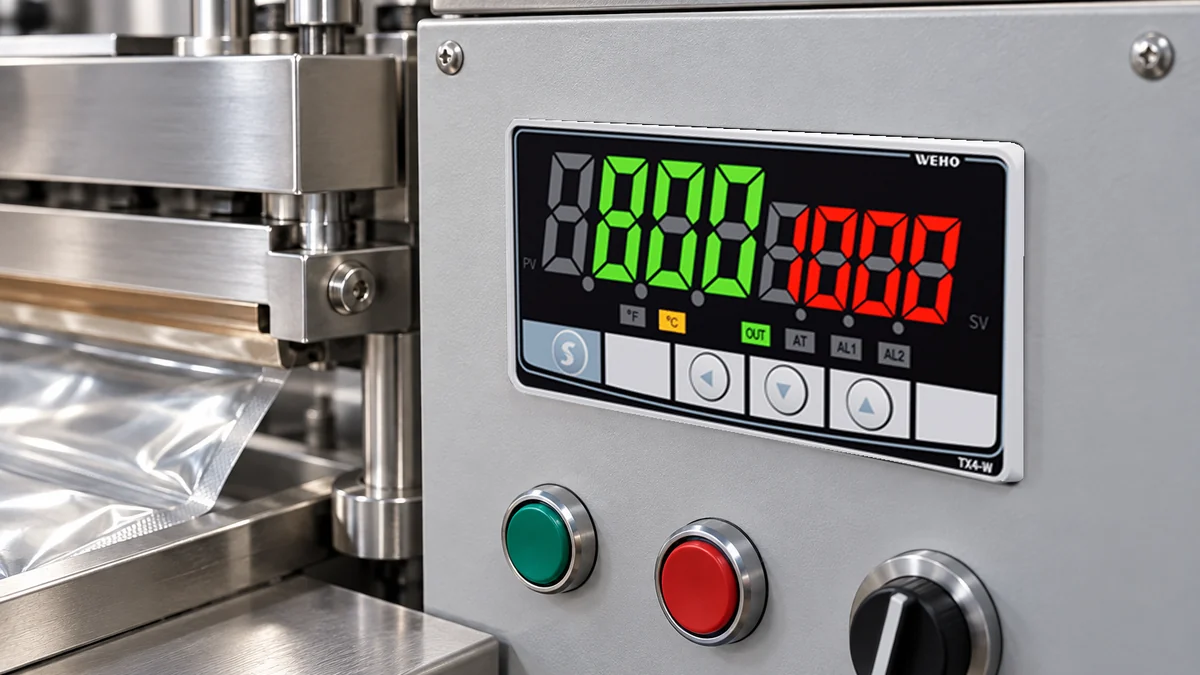
para isang sensing chain na nauugnay sa TX4-W controller reference, વાસ્તવિક RTD, રીડઆઉટ કન્ફિગરેશન અને એક્સર્શન હિસ્ટ્રીની ઓળખ કરો. કન્ટ્રોલર મોડેલ અથવા નોમિનલ Pt100 નામ ઇન્સ્ટોલ કરેલા પ્રોબની હિસ્ટેરેસિસને નક્કી કરતાં નથી. સંબંધિત પુરાવા ચોક્કસ માપન શ્રેણી અને પરિસ્થિતિઓના હોય છે.
ઇથરે, થર્મલ હિસ્ટેરેસિસનો અર્થ ON/OFF કન્ટ્રોલરની સ્વિચિંગ ડેડબેન્ડ નથી; તે વિવિધ તાપીય ઇતિહાસો પછી થર્મોમીટરના તાપમાન-પ્રતિરોધ સંબંધ સાથે સંબંધિત છે. આ બંને અર્થોને અલગ રાખવાથી, પ્રોબના વર્તન સંબંધિત આવશ્યકતાઓના જવાબમાં અસંબંધિત કન્ટ્રોલર રિટર્ન-વેલ્યુ સેટિંગ્સનો ઉપયોગ થતો અટકે છે.
ક સ્વીકૃતિ રેકોર્ડમાં પ્રોબને કયી શ્રેણીમાં પરીક્ષણ માટે તૈયાર કરવામાં આવી, તુલના માટેના તાપમાનો અને તેનો ઇરાદિત ઉપયોગ જણાવવો જોઈએ. થોડા ફેરફારો પછીના પરિણામોના આધારે વધુ મોટા ફેરફારો પછીના વર્તનનો અંદાજ લગાવી શકાતો નથી. તેવી જ રીતે, વધુ પ્રમાણમાં સંપર્કમાં આવ્યા પછી થતા અપરિવર્તનીય ફેરફારોને પણ કોઈ તપાસ વિના સામાન્ય, પરિવર્તનીય હિસ્ટેરેસિસ તરીકે ગણી શકાતા નથી.
Kilala ang pag-asa sa kasaysayan mula sa ibang kontribusyon
PTB’s DKD-E 5-1 ekspert raportı, વિભાગ 2.2માં, થર્મલ ઇતિહાસ પર આધાર રાખતી રેઝિસ્ટન્સ-થર્મોમીટર હિસ્ટેરેસિસ વિશે ચર્ચા કરવામાં આવી છે. અહેવાલમાં સમજાવવામાં આવ્યું છે કે રચના અને યાંત્રિક તણાવો આ અસરને પ્રભાવિત કરી શકે છે. અહીં આપેલ શ્રેણીઓ અને ચિત્રો કોઈ પણ પ્રકારના પ્રોબ અથવા WEHO કન્ટ્રોલર માટેની વિશિષ્ટતાઓ નથી.
આ યંત્રણા, વિદ્યુત ઉત્તેજનાને કારણે ઘટકમાં ગરમી ઉત્પન્ન થતી હોય તેવી આત્મ-તાપન પ્રક્રિયાથી ભિન્ન છે. તે, ખોટા તાપમાન-પ્રતિરોધ વક્ર અથવા અનિચ્છનીય ઇન્સ્યુલેશન લીકેજ માર્ગથી પણ ભિન્ન છે. અનેક પરિબળો એકસાથે અસ્તિત્વમાં હોઈ શકે, તેથી ‘હિસ્ટેરેસિસ’ નામ આપવાથી માપનની અન્ય બાબતોની ચકાસણીની જરૂરિયાત દૂર થતી નથી.
A sequence that shows rising indications over time is not sufficient to identify hysteresis. The reference source may still be settling, the readout may be drifting, or immersion may have changed. Preserve a stable reference observation and the complete sequence so the apparent path effect can be tested against those alternatives.
Fluke’s dry-well performance discussion also identifies hysteresis in a calibrator’s internal resistance thermometer. That matters because the source can contribute history-dependent behavior of its own. A stable displayed block setpoint is not automatically an independent reference for the probe under test.
Kalkulahin ang hipotetikong pagkakaiba sa dalawang landas
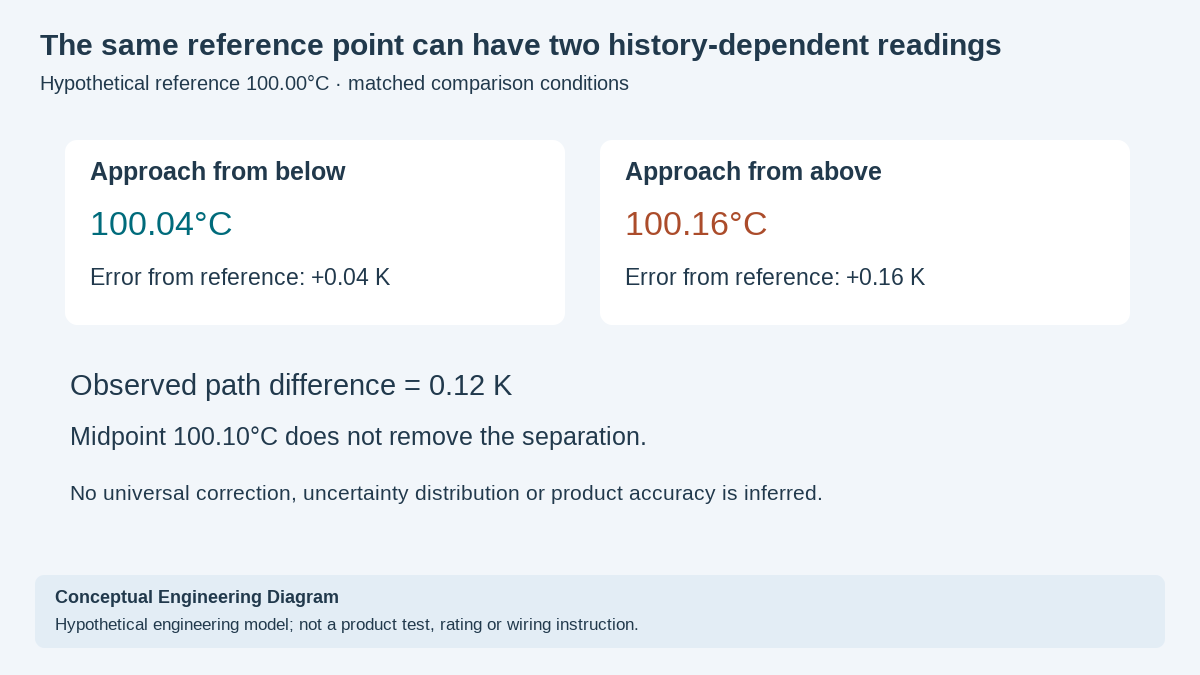
Assume a qualified comparison source and reference establish 100.00°C under the declared conditions. A probe/readout chain is observed at that point after approaching from below and again after approaching from above. The following readings are invented to explain the arithmetic; they are not calibration results for TX4-W or a named RTD.
Suppose the ascending-path indication is 100.04°C and the descending-path indication is 100.16°C. The indication errors relative to the reference are +0.04 K and +0.16 K. The observed difference between the two path results is 100.16 − 100.04 = 0.12 K.
The midpoint of those indications is (100.04 + 100.16) ÷ 2 = 100.10°C. Relative to that midpoint, the observations lie at −0.06 K and +0.06 K. These are descriptions of the two assumed observations, not an automatically valid correction or a statistically established uncertainty distribution.
| Hypothetical result | Indication | Error from reference | Retained meaning |
|---|---|---|---|
| Reference at comparison point | 100.00°C | Reference basis | Defined source condition |
| Approach from below | 100.04°C | +0.04 K | Ascending-path observation |
| Approach from above | 100.16°C | +0.16 K | Descending-path observation |
| Path difference | 0.12 K | Not a new reference error | Difference between observations |
| Midpoint | 100.10°C | +0.10 K | Arithmetic summary only |
Applying a −0.10 K correction would center these two observations around the reference, but it would not remove their separation. More importantly, two observations do not establish that the midpoint applies at other temperatures, excursions or service histories. A correction policy needs its own justification and uncertainty treatment.
Swipe horizontally on a small screen, or open the full-size diagram.
A project could have different dispositions for the two path results under its declared acceptance rule. For example, a narrow allowable indication error could include one observation and exclude the other. State that rule before testing and include measurement uncertainty rather than selecting whichever approach direction gives the preferred result.
ဒီဇိုင်းဆွဲပေးပါ သမိုင်းထိန်းချုပ်ထားသော နှိုင်းယှဉ်မှု
Record the conditioning endpoints, direction, dwell criteria and actual sequence. Use endpoint conditions suitable for the probe, source and intended service. Do not deliberately exceed a probe’s limits to force a larger effect; such exposure can damage the sensor and invalidate the intended comparison.
| Record element | Why it matters | Control to retain | Interpretation limit |
|---|---|---|---|
| Prior temperature excursion | Establishes history | Actual endpoints and sequence | Smaller range may not cover service |
| Comparison condition | Establishes common point | Reference, stability and location | Displayed setpoint alone is insufficient |
| Measurement chain | Identifies observed system | Probe, leads, readout and configuration | Does not isolate probe automatically |
| Repetition and timing | Tests consistency | Raw values and timestamps | Two points do not prove a population bound |
Use the same immersion and mechanical arrangement at each comparison where the method requires it. Moving a sensor to a different position can change heat flow or the source gradient. If repositioning is unavoidable, record the change and evaluate its contribution rather than burying it in a reported hysteresis number.
A practical study may repeat ascending and descending sequences or include intermediate checks. The exact plan belongs to the relevant calibration method and intended claim. Do not infer a universal cycle count, endpoint temperature or allowable hysteresis from the simple example in this article.
If a probe’s readings continue to move after each cycle instead of forming a repeatable relationship, preserve that evidence separately. Continuing drift, mechanical damage or another instability may require investigation. A single average can obscure whether the system is repeatable enough for the proposed correction or release method.
Verify ataupun release ang kaugnay na sukatan
- Define the service history. Record the intended temperature range, relevant excursions and required measurement limits. Verify that the proposed study represents those conditions without exceeding component limits.
- Establish the comparison boundary. Identify probe, leads, readout and source/reference method. Record configuration and uncertainty contributions; verify that source changes can be distinguished from the chain under test.
- Preserve the approach direction. Follow the defined conditioning and stabilization sequence. Record each raw indication and reference value with direction and time, verifying that opposite-path observations describe comparable reference conditions.
- Evaluate the declared quantities. Calculate path differences, errors and any permitted summaries. Verify the acceptance and uncertainty treatment against the actual method rather than assigning an unsupported distribution to a two-point range.
- Document the approved use. Retain the applicable history, correction policy and conditions requiring reassessment. Verify the affected chain after probe replacement, excessive exposure or a relevant configuration change.
The study is a measurement qualification, not an instruction to alter controller settings until both paths appear identical. Preserve existing correction values and raw results. A changed input correction can hide one offset while leaving the underlying path dependence and other errors unchanged.
Where the temperature measurement influences a protective function, keep that equipment assessment separate from ordinary process indication. The responsible engineering team determines whether the complete sensing and protective arrangement is suitable. This calculation does not establish functional-safety performance or authorize bypassing an interlock.
Give WEHO the history with the controller enquiry
For a TX4-W measurement-chain discussion, include the full controller and RTD identities, configuration, excursion history and paired reference readings. State whether the question concerns controller indication, probe calibration or the installed chain. Request applicable documentation without assuming a calibration service or probe-specific guarantee is available.
FAQ sa Inženyeriya
ရေ့တ်ဒီ အပူအလှည့်အပြောင်းသည် ထိန်းချုပ်သူ၏ ဒက်ဒမ်းဘန်းလာလား?
No. Thermal hysteresis concerns history-dependent thermometer behavior at a reference temperature. Controller switching deadband concerns the separation of control transitions; their units may resemble each other while their meanings differ.
Might an ascending calibration cover both temperature directions?
Only when its applicability to the required service is established. A single direction does not itself quantify the effect of returning from a hotter condition, so preserve the relevant conditioning history.
နှစ်ခုသော စက်ရုံများကို ပျမ်းမျှလုပ်ခြင်းက ဟိုက်စတရီတစ်ကို ဖယ်ရှားပေးပါသလား?
No. It produces a numerical midpoint while the path difference remains. Any correction and uncertainty treatment require a justified method for the actual intended use.
ဥပမာ ဖတ်ရှုမှုများက TX4-W မှာ တိကျမှုကို ဖော်ဆောင်ပေးသလား?
No. They are hypothetical observations selected to show a path difference. Controller accuracy and probe behavior require their own applicable documentation and actual measurement evidence.