giriiş
A battery backup can help selected security equipment continue operating during a mains failure. To specify one, identify the loads that must remain active, their input requirements and the required standby time, then check that the power supply, charger, battery and connected equipment are compatible. This guide covers access control, CCTV and alarm systems and the questions a project team should resolve before selection.
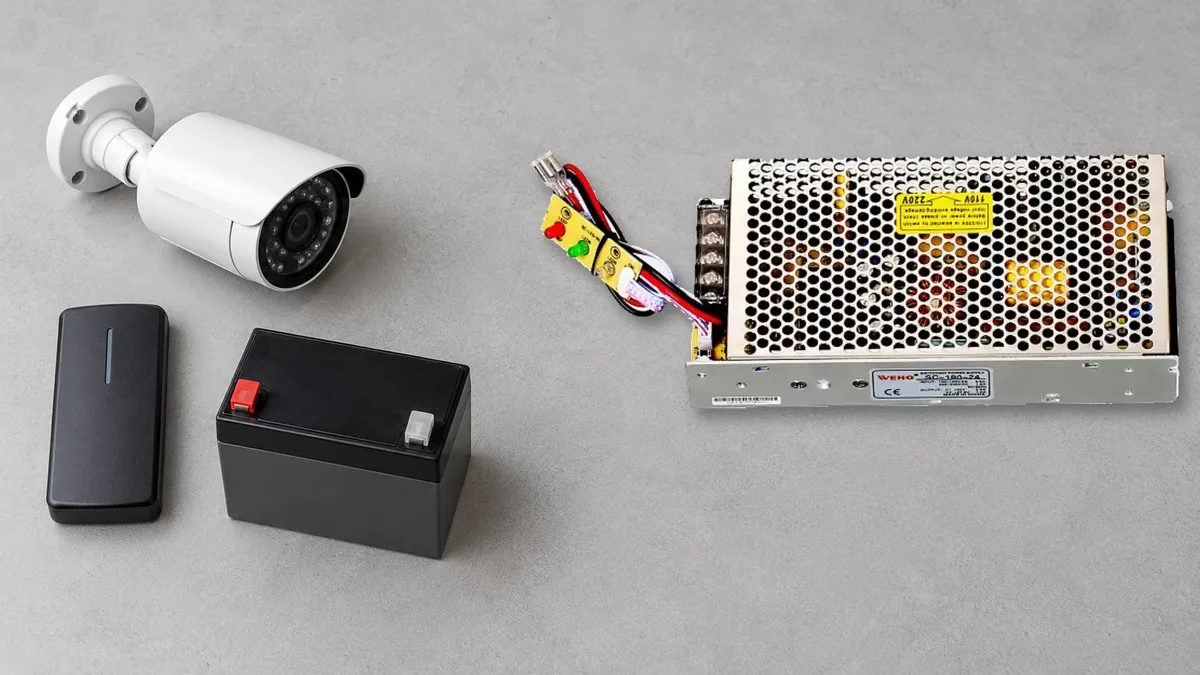
Why Battery Backup Matters for Security Systems
A power interruption can disable cameras, access readers, controllers, network equipment and alarm communication. A properly designed backup system can support selected loads during an outage, provided its battery and output have sufficient capacity and the entire system has been tested under the required conditions.
Maintaining Protection During Power Outages
Start by listing the functions that must continue when mains power is lost. Cameras may also depend on a recorder, network switch or communications link; backing up one device alone does not guarantee the complete function remains available. Verify each device's supply voltage and its allowed input range.
Preventing Security System Downtime
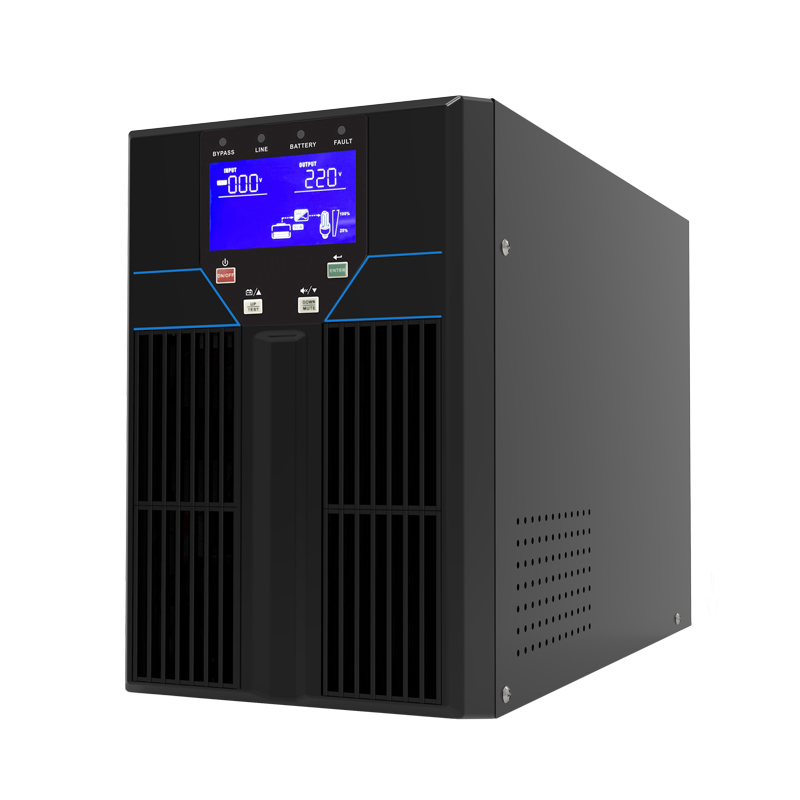
Check how the selected supply changes between mains and battery operation and whether every connected device tolerates the resulting interruption and output voltage range. Use the manufacturer's documentation and test the complete system rather than assuming every backup supply provides uninterrupted output.
Ensuring Continuous Access Control Operations
Controllers, readers and electric locks can react differently to a power failure. Define the required door behavior with the system designer and the responsible local authorities; emergency egress and fire-release requirements take priority. Do not assume a battery backup or any particular lock automatically satisfies those requirements.
Supporting Emergency Response and Alarm Transmission
Alarm panels, detectors and communication paths must be considered together. For a fire alarm or other life-safety system, use components and configurations approved for the specific installation and jurisdiction. A general-purpose security power supply is not automatically approved for fire alarm use. A qualified designer should verify the applicable requirements and the complete system.
Reducing Business Risks and Property Loss
Backup power can reduce the interruption of selected security functions, but it does not eliminate every security risk. Specify the functions, conditions and test procedures in the project documentation, and confirm any insurance requirements directly with the insurer.
Which Security Systems Require Battery Backup?
Requirements depend on the installation, applicable rules and the end user's risk assessment. The following examples help identify loads for review; they are not a substitute for an approved design.
Access Control Systems
Include the controller, readers, communication equipment and the expected lock operating loads in the review. Confirm standby current and peak current, door behavior on power loss and the approved emergency release arrangement for the installation.
CCTV and Video Surveillance Systems
Include cameras, the recorder or storage, network switches and any required communication equipment. Check each device's voltage and current requirements, and calculate the load for the functions that must remain active during the outage.
Intrusion Alarm Systems
Review the panel, detectors and communications path as one system. Use the alarm system manufacturer's approved power and battery configuration and the applicable local requirements.
Yangın Alarm Sistemleri
Fire alarm power sources and standby time are governed by the applicable system design, approvals and local requirements. A qualified professional should select and verify the complete approved system; this article does not establish that any WEHO product is approved for fire alarm use.
Intercom and Video Door Entry Systems
Check whether the entrance station, indoor stations, controller, network and locking equipment need to remain operational during an outage. Include their normal and peak loads when preparing the backup budget.
Smart Building Security Systems
Integrated projects may rely on control panels, networks and monitoring equipment supplied from different circuits. List the dependencies and decide which functions require backup before sizing the battery and distribution equipment.
Battery Backup Runtime Reference Table
The table below is a checklist for gathering project data; it does not prescribe a universal battery capacity or required runtime.
| System | Load information to collect | Backup and compatibility checks |
|---|---|---|
| Access control | Controllers, readers, locks and communication loads; standby and peak current | Required door behavior, compatible voltage and locally approved emergency release arrangement |
| CCTV | Cameras, recorder, storage and network equipment | Required recording and communication functions; each device's input range |
| Intrusion alarm | Panel, detectors and communications | Manufacturer-approved battery and power arrangement; applicable local requirements |
| Fire alarm | System loads defined by the approved design | Approved system components, standby and alarm requirements for the installation |
| Intercom or integrated system | Devices, network and controllers needed in an outage | Load dependencies, battery compatibility and verification of complete operation |
For an initial capacity estimate, add the currents drawn simultaneously from the battery and multiply by the required hours. Use current at the battery side: if a load operates at a different voltage, estimate its battery-side current using the applicable conversion efficiency rather than adding currents from different voltage rails directly. The result is a starting figure in ampere-hours, not a battery selection: discharge characteristics, conversion losses, end-of-discharge voltage, temperature, aging, peak loads and manufacturer limits affect usable capacity. Use the battery manufacturer's discharge data and verify the specified duration by a controlled test under applicable conditions.
The WEHO SC-120 battery-charge power supply product page is a starting point for reviewing a power-supply series with a battery-charge function. Confirm the exact model and document revision, battery chemistry and charging requirements, output voltage range, load budget and installation conditions with WEHO before selection. Check the applicable total power and current limits for the simultaneous equipment load and battery charging against the exact model’s documentation. Product listing alone does not establish suitability or approval for a fire alarm system.
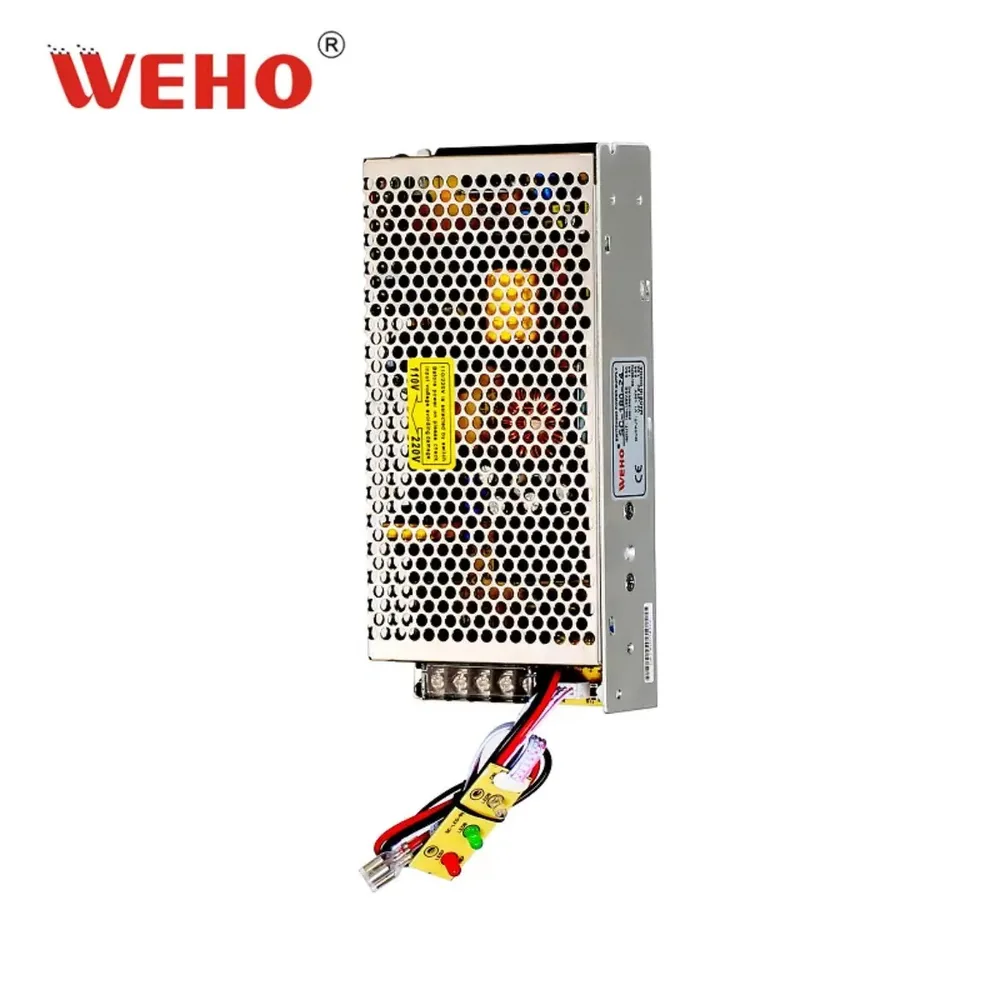
The WEHO SC-180 series is a separate battery-charge power-supply example. The pictured SC-180-24 is not the SC-120 discussed above; check the exact model documentation and system compatibility before selection.
SSS
How long should security system battery backup last?
The required duration depends on the system's function, the project specification and applicable local rules. For regulated fire or life-safety functions, the qualified system designer must determine the applicable standby and alarm requirements. For other loads, agree on the desired outage duration and verify it through the complete-system design and test.
What type of battery is best for security power backup?
Choose a battery whose chemistry, voltage, capacity and charging profile are explicitly compatible with the selected charger and the system manufacturer's instructions. Sealed lead-acid batteries are used in some standby systems; their suitability for a particular supply and installation must be checked, not assumed.
Do insurance policies require backup power for security systems?
Requirements vary by policy and location. Ask the insurer for the applicable written conditions; the presence of backup power alone does not guarantee compliance or a premium change.
How often should security backup batteries be tested?
Follow the system and battery manufacturers' instructions, applicable local requirements and the site's maintenance plan. A qualified person should check the battery and complete system at the required intervals, including a runtime test where specified.
Çözüm
Battery backup can help maintain selected security functions during an outage when the loads, power supply, charger and battery are matched and tested as a complete system. Confirm the required operating duration, voltage range, load and peak current before selecting equipment, and use approved components for regulated life-safety functions.
WEHO'ya başvurun with the available source, required loads, backup duration, battery requirements and installation conditions to discuss an appropriate product.