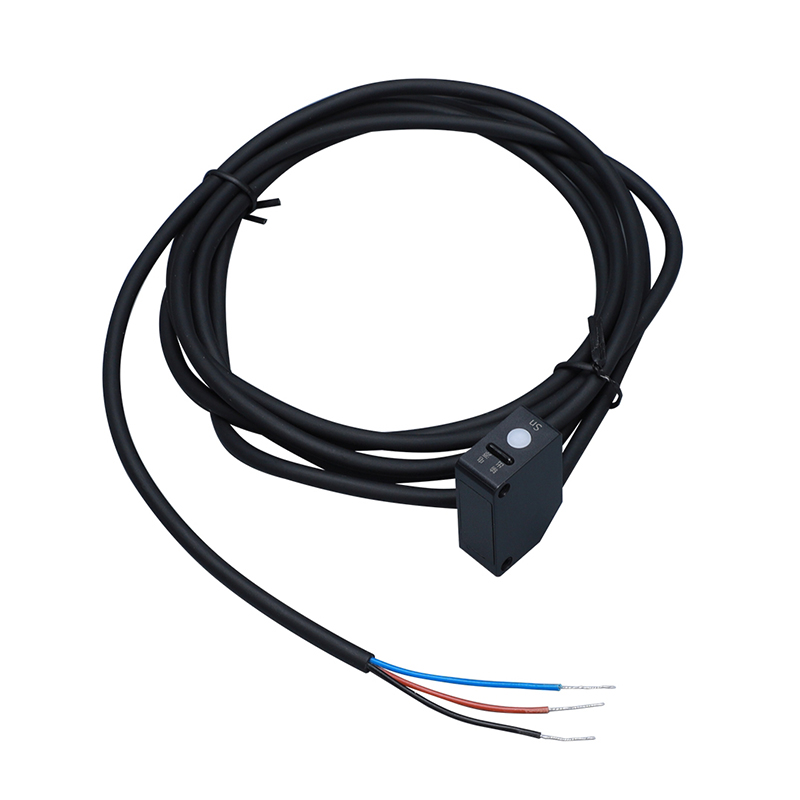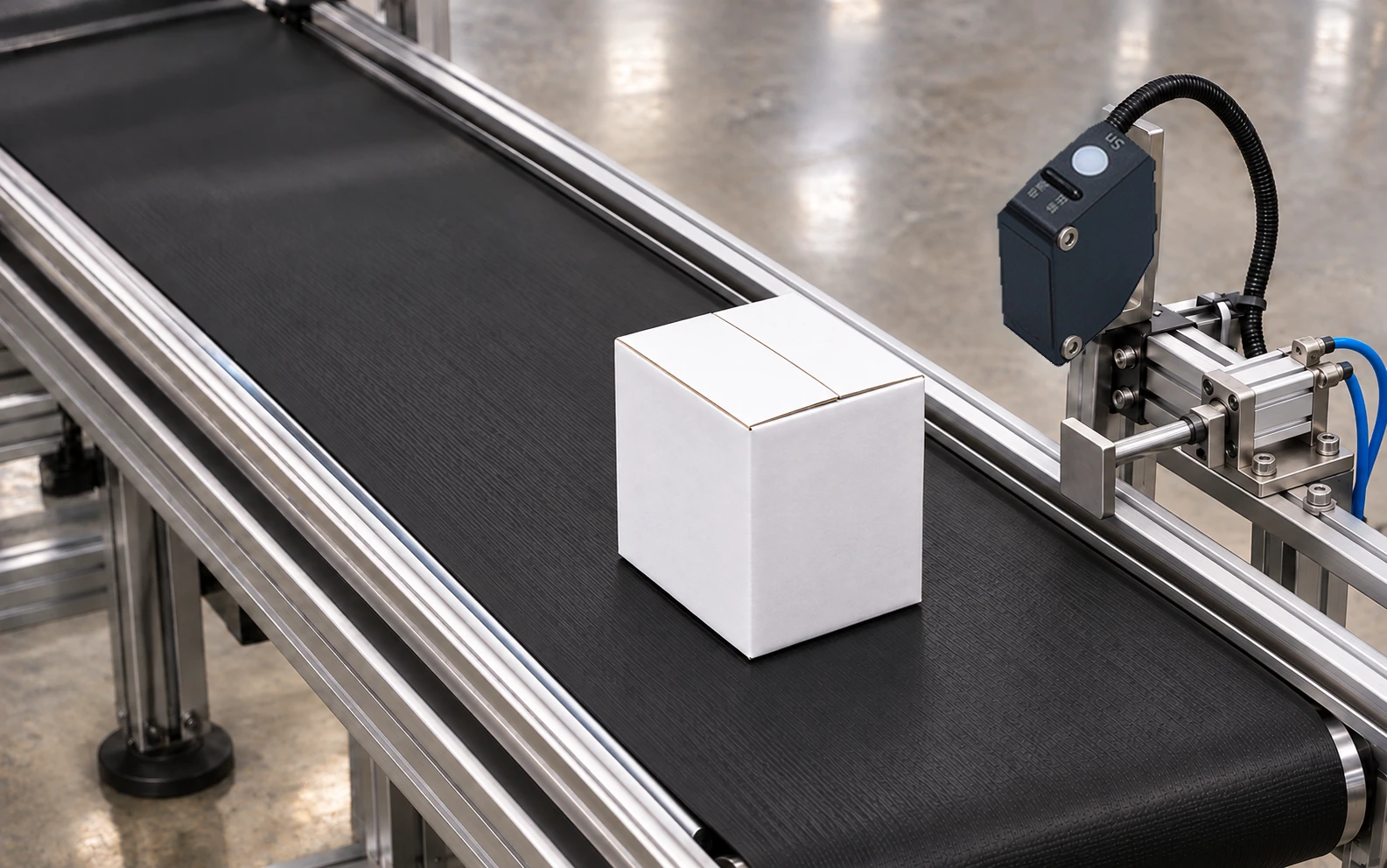
Convert detection-chain delay into travel before deciding where a sorting trigger belongs. A C3Z-TOF4N product table lists 10 ms response, but the receiving input, controller task and output device add their own timing. At a moving conveyor, those milliseconds become a physical position change.
This guide helps an OEM controls designer build a first timing budget for a non-safety sorting or inspection trigger. It does not establish a guaranteed trigger accuracy, an approved stopping distance or suitability as a protective device.
Separate range from timing
The WEHO C3Z-TOF4 table lists C3Z-TOF4N as NPN and describes diffuse-reflective TOF operation,50–4000 mm adjustable distance and 10 ms response. The stated reference target is 10 ×10cm white non-glossy paper. A4m range does not imply a faster response, a smaller spot or an analog distance output.
Confirm the real target can be detected at the chosen geometry before using the timing number. No detailed jitter bound, separate operate/reset maximum or complete application timing distribution has been established from the inspected page. Keep those missing items visible in the design record.
Use one consistent speed and time basis
For constant speed, additional travel is d = v × t. Convert milliseconds to seconds before multiplication. At 0.80 m/s,10 ms corresponds to 0.80 ×0.010 =0.008m, or 8 mm. This is the geometric travel associated with the catalog response figure, not a verified position-error bound for the sensor.
The OMRON photoelectric definition describes response time as the delay between a light-condition change and the output operation or reset. The material’s physical edge, the optical threshold and the point at which the machine acts are different events. Choose and label the event used by each timing entry.
Add the identified receiving chain
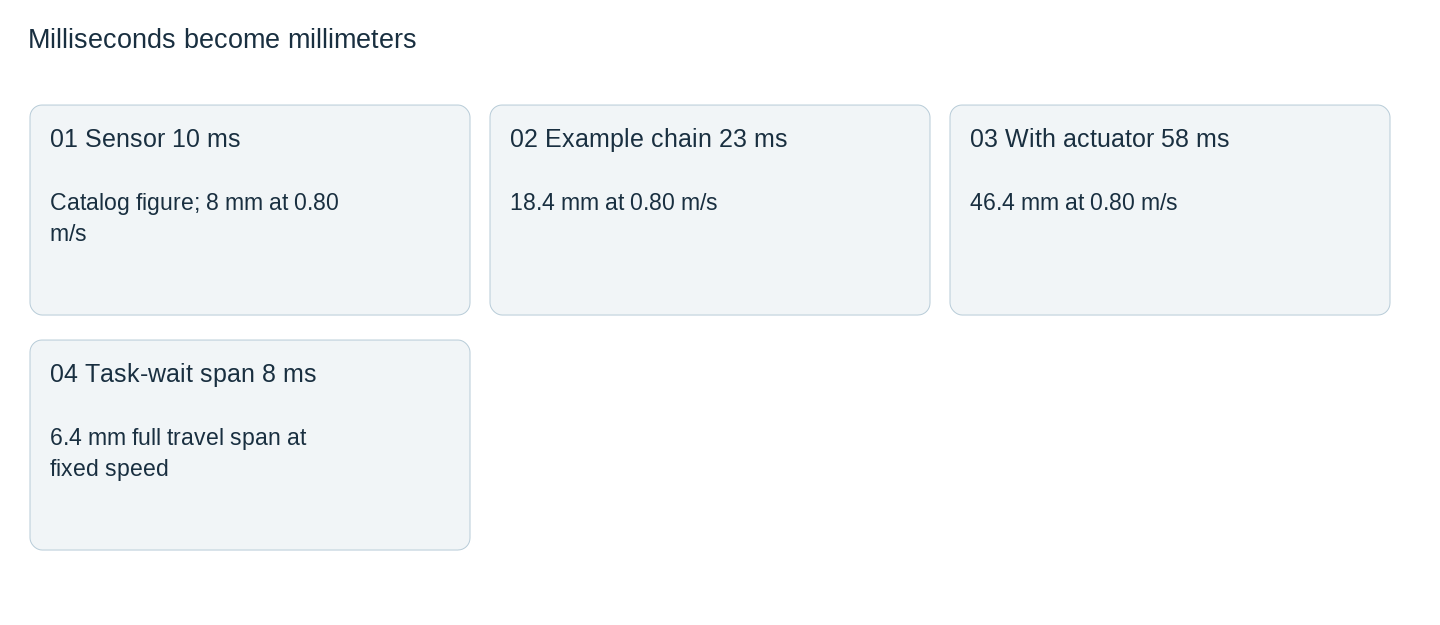

In a hypothetical budget, assume 10 ms sensor response,3 ms input filtering, an asynchronous 8 ms controller task with an assumed 0–8 ms wait and 2 ms command-output delay. With the other example delays held fixed, the electronic delay spans 15–23 ms, corresponding to 12.0–18.4 mm travel at 0.80 m/s. The 8 ms task-wait span alone contributes a 6.4 mm full travel span; it is not an RMS accuracy or a measured jitter specification. If a separate actuator adds 35 ms before the useful mechanical action, total time becomes 58 ms and travel becomes 46.4 mm.
Only the 10 ms entry comes from the cited C3Z table; the others are invented example inputs. Replace them with the actual receiver, controller and actuator evidence. Do not combine average values and maximum values while labeling the result a worst case. A documented task jitter or communication interval may also matter.
A fixed offset cannot remove all uncertainty
Moving a sensor upstream can compensate a repeatable delay at a defined speed. It does not eliminate timing variation. In the preceding hypothetical system, a 15–23 ms electronic-delay range gives 0.80 ×0.008=6.4 mm of full travel spread at 0.80 m/s. Speed variation adds another contribution, and acceleration invalidates a single constant-speed offset unless the motion is otherwise tracked.
For tight registration, record the distribution of edge-to-action position using a suitable measurement method. The acceptance question is whether the complete chain meets the project’s position tolerance across speed, target and operating conditions. It cannot be answered by subtracting one nominal sensor delay from the machine program.
Test the real edge and both transitions
Define the target edge, sensor distance, background and active output transition. Include the shortest target exposure and clear interval to ensure the intended events are not merged or filtered. Record local output, raw input, program event and actuator action where practical. An output indicator viewed by eye cannot establish millisecond timing.
Retain the speed and configuration with the result. A faster conveyor setting, changed input filter, controller task revision or different target surface can change the position budget. If the required tolerance is unsupported, redesign the sensing/position architecture rather than describing an unverified result as precision TOF performance.
Use an accurate TOF4N illustration
The official TOF4 gallery repeats a different sensor visibly marked C3Z-T15P-D. It is not a valid TOF4N product photograph and cannot establish the installed exterior or wiring. Obtain an accurate TOF4N source before making its application cover; editing the printed model would remove rather than solve the identity evidence.
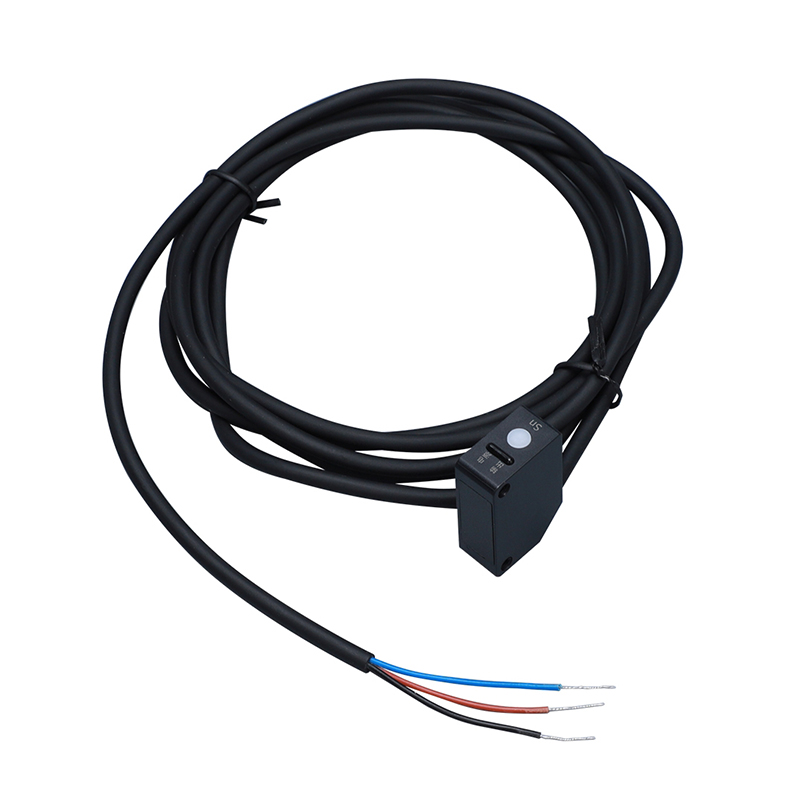
Send WEHO the C3Z-TOF4N candidate, target and background, speed range, required action position, receiving chain and timing budget. Ask for the applicable response conditions and current exact-model information before releasing the trigger architecture.
Trigger timing and travel budget
| سینسر | Timing source/condition | Bound or typical | Travel |
|---|---|---|---|
| Receiver | Filter/sampling | Evidence | Travel |
| Controller/output | Task/command delay | Evidence | Travel |
| Actuator | Command-to-useful-action | Measured evidence | Travel |
| Whole chain | Variation/range | Observed position | Release |
Blank project worksheet. Enter verified project data; example calculations above are not measurements.