Key Engineering Takeaways
- Compare runtime only after defining the battery preparation, AC load profile and stop event.
- Record delivered watt-hours as well as elapsed time; different loads can produce similar runtime with different useful energy.
- Keep battery capacity, inverter conversion loss and equipment shutdown behavior as separate findings.
- Use the WHP-600 family as a product candidate, then test the exact ordered electrical variant.
Why can two apparently identical runtime tests disagree?
A runtime comparison is inconclusive when one run starts with a different battery condition or ends on a different event. An OEM may otherwise reject an inverter because a second battery was colder, less fully charged or stopped by a different load controller.
For a fleet equipment evaluation, define the test as a reproducible system duty. The useful output is a record showing what the AC equipment received before its required service ended. It is not a claim that a battery's nominal ampere-hours will always be available through an inverter.
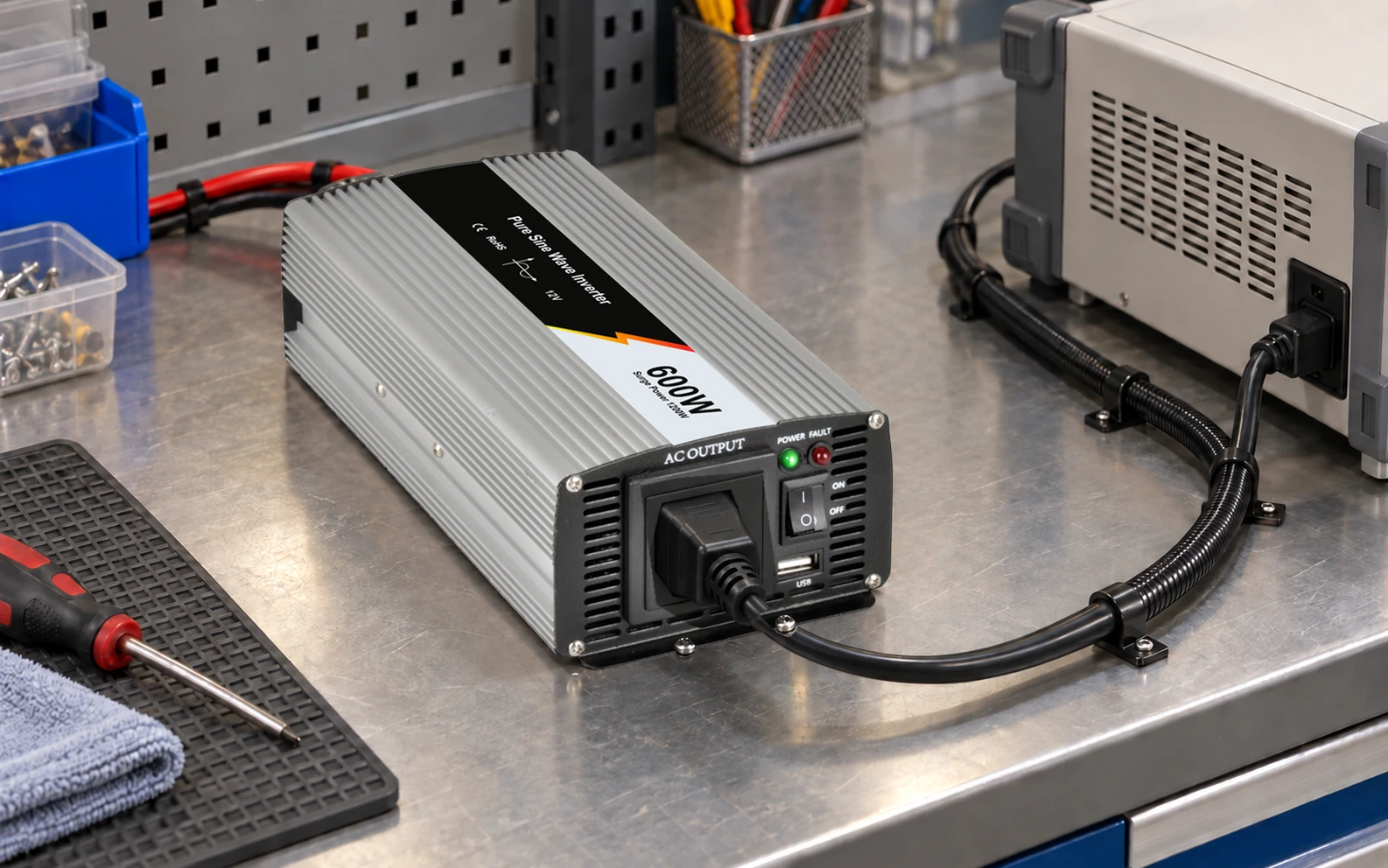
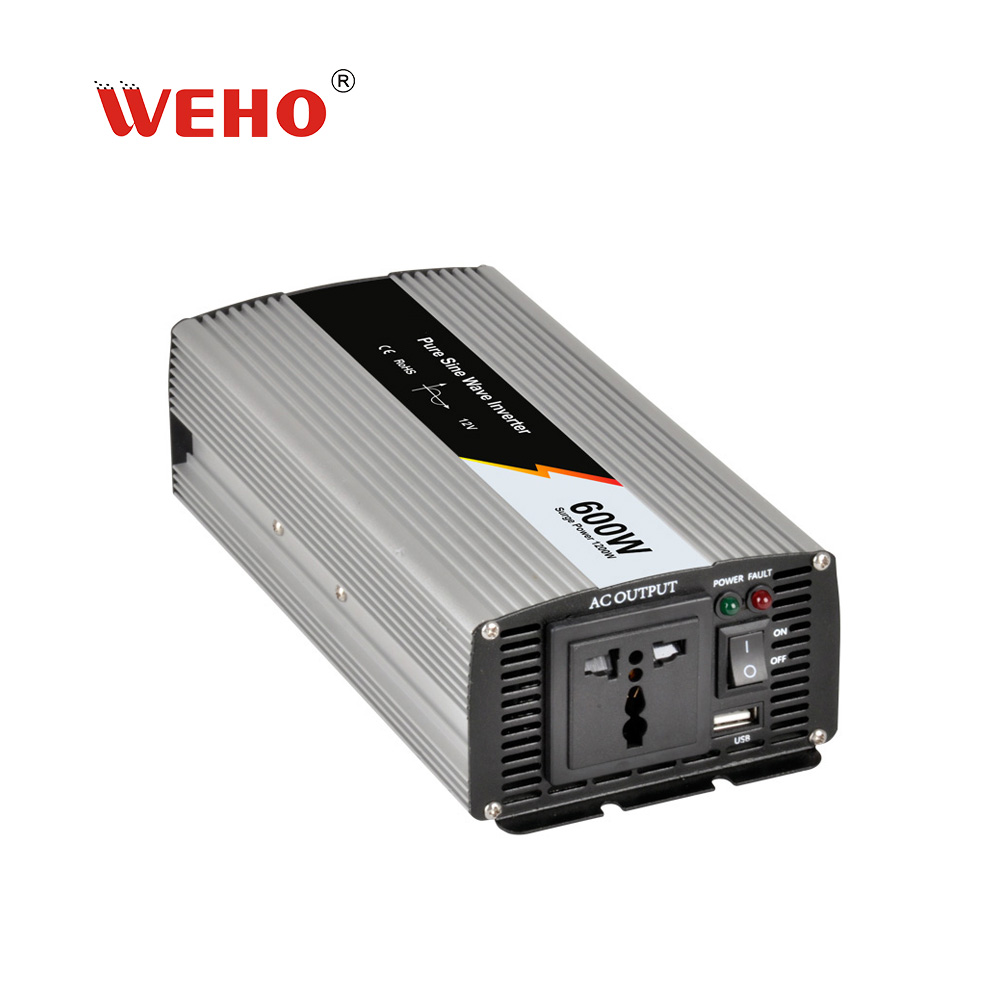
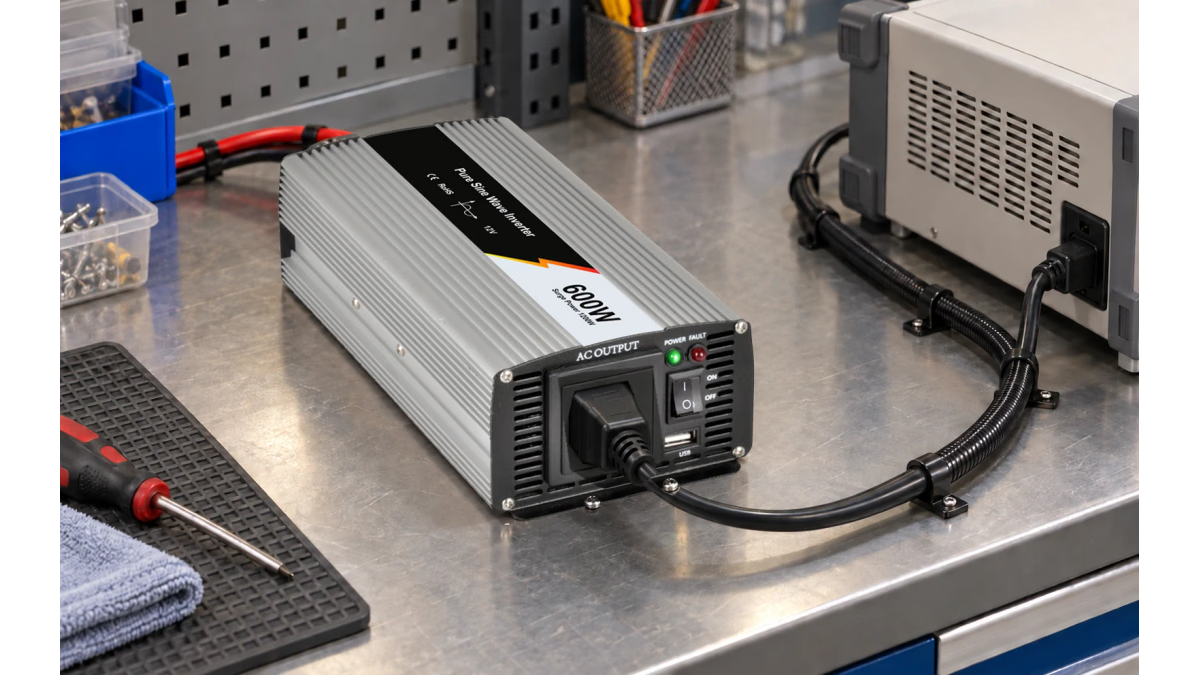
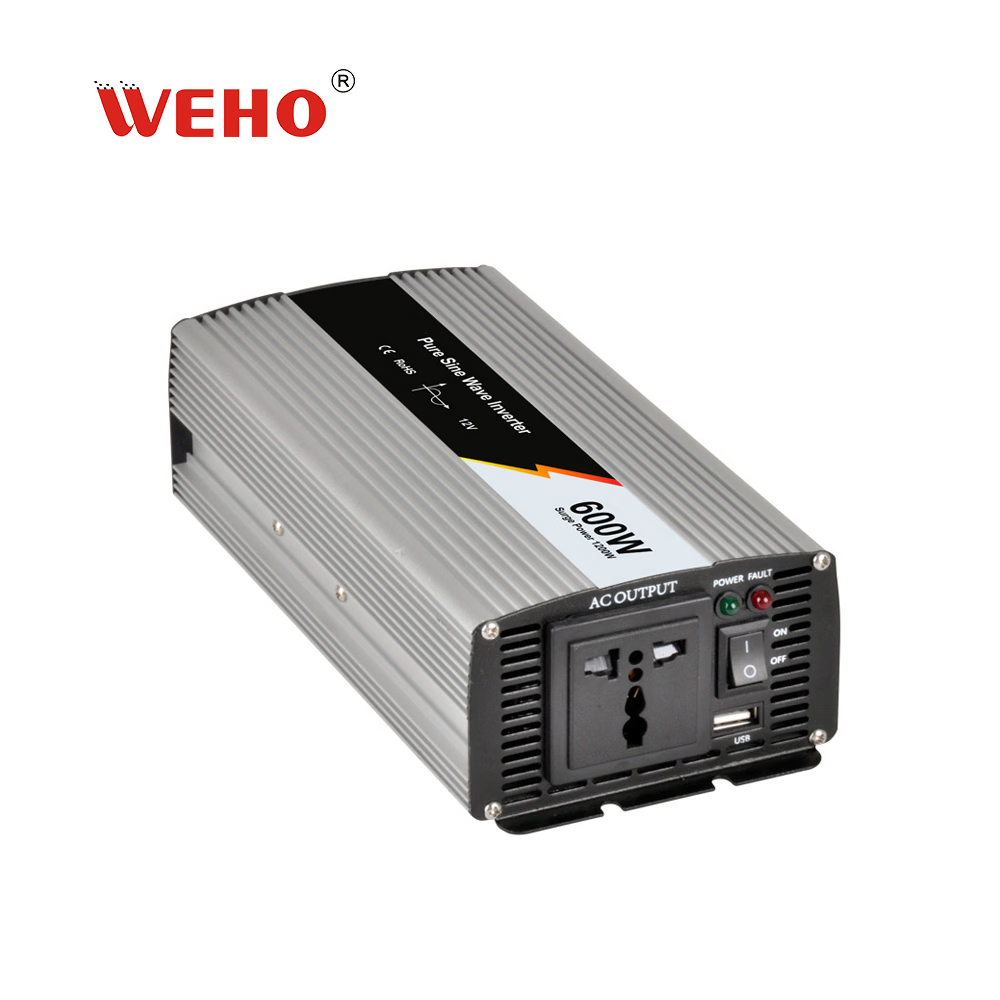
The WEHO WHP-600 family page identifies a 600 W pure-sine inverter family with multiple DC and AC configurations. That makes the exact purchase configuration part of the sample record. A family photograph cannot identify all available output voltages or prove the application's runtime.
What should the engineering model calculate?
Calculate delivered AC energy over the stated interval, then compare it with the same interval's battery-side energy if conversion efficiency is also being investigated. Runtime alone answers a duration question; watt-hours answer an energy question.
For a constant hypothetical AC load, use E = P × t, with power in watts, time in hours and energy in watt-hours. For a changing load, sum the energy of each interval or use an appropriate power analyzer's integrated energy result. Do not multiply a single peak watt reading by the entire shift.
Hypothetical runtime comparison
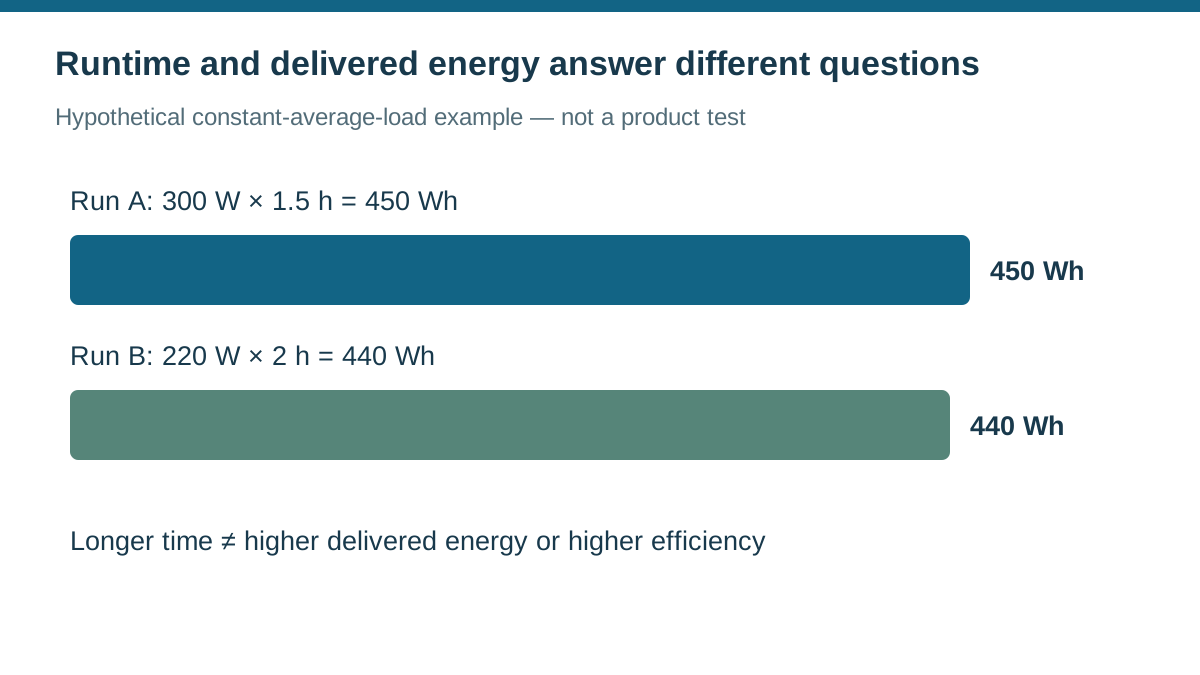
Assume an evaluation load draws a measured average of 300 W for 1.5 hours before the specified service endpoint. Its delivered AC energy is 300 × 1.5 = 450 Wh. A second run averaging 220 W for 2 hours delivers 440 Wh.
The second run lasts 33.3% longer, because (2 − 1.5) ÷ 1.5 = 0.333. It delivers about 2.2% less energy, because (440 − 450) ÷ 450 = −0.0222. Neither result establishes an improvement in inverter efficiency: the load profile and potentially the battery behavior changed.
Suppose the buyer's actual requirement is 280 W for 90 minutes. That is a 420 Wh AC service requirement, before any separate peak-load qualification. It still does not give the required battery capacity by itself. Battery operating limits, usable capacity at the discharge rate, temperature, aging and measured conversion losses affect the battery-side specification.
The off-grid inverter and battery specification guide covers the initial energy budget. This article adds a controlled comparison method for evaluating samples against that budget.
Keep the electrical boundary explicit
Write whether AC energy is measured at the inverter outlet or at the equipment inlet. An extension lead, distribution assembly or auxiliary load between those points changes what is included. Mark any battery-side auxiliary consumption separately.
Yokogawa's electric power measurement fundamentals explain the distinction between electrical power quantities. Use suitable instruments for the waveform and measurement point; nameplate watts and a nominal battery voltage are not a substitute for an actual energy record.
Which conditions belong in the comparison matrix?
The comparison matrix should identify controlled inputs and observable endpoints before the first discharge run. Set project-specific acceptance criteria with the equipment and battery requirements; do not turn one example's values into a universal inverter rule.
| Record | Keep comparable | Evidence to save | Reason |
|---|---|---|---|
| Battery preparation | Charge procedure, rest condition and battery identity | Charger log, timestamps and battery record | Starting energy affects runtime |
| Temperature | Battery and local equipment conditions | Defined sensor locations and trend | Ambient alone may miss battery conditions |
| AC duty | Same operating sequence and auxiliaries | Power or integrated-energy log | A reduced load can extend time |
| Stop event | Same service requirement or approved limit | Event timestamp and reason | Different endpoints are different tests |
| Sample configuration | DC/AC variant, harness and firmware if identified | Unit label and configuration sheet | Family name alone is insufficient |
A battery's open-circuit voltage may be one useful preparation observation, but it does not by itself prove equal state of charge or usable capacity. Follow the battery supplier's characterization method and preserve the preparation history. If one battery is replaced between runs, record that change instead of presenting the results as a controlled inverter comparison.
Record why the run ended: operator-defined duty complete, equipment undervoltage response, inverter protection, battery management action or an unrelated interruption. A single stop timestamp without the reason cannot distinguish these mechanisms.
How should an OEM run and review the test?
Use a written sequence that separates preparation, operation and interpretation. Qualified personnel should establish the protected test setup and approved isolation procedure before measurements; this is a test-record method, not a live battery connection tutorial.
- Identify the exact inverter and battery samples. Photograph their labels and record the actual ordered DC input and AC output options. Do not infer another voltage option from a similar enclosure.
- Complete the battery supplier's preparation procedure. Record the relevant charge completion, temperature and rest information; use the same method for both runs.
- Verify the load program. Include normal cycling, standby intervals and separately powered accessories that belong to the service requirement. Keep a versioned load file or operator sequence.
- Synchronize clocks and define the start. Choose an event such as the first accepted load command, rather than whichever instrument happens to start logging first.
- Run within the approved equipment limits. Record energy and the agreed stop event; do not repeatedly force deep discharge or automatic restarting outside the battery and system procedures.
- Review the comparison before assigning a cause. A changed load, unexpected auxiliary branch or different battery temperature warrants a new controlled comparison, not an immediate inverter-failure verdict.
For example, if Run B stops earlier but its battery temperature differs substantially from Run A, report the observed result and the uncontrolled condition. Do not apply an invented temperature correction to make the results match. Either characterize that effect with an approved method or repeat under comparable conditions.
Also preserve interruptions that invalidate a run. A logger reset or accidental load change should remain in the record. Deleting the interrupted interval can make the final energy total look plausible while obscuring why the comparison is no longer valid.
The inverter shutdown diagnosis article addresses cause separation after an unexpected stop. Use it after establishing the actual event, rather than assuming every short runtime is an overload problem.
What should procurement send WEHO?
Send the required AC service profile, minimum operating duration, exact battery system, starting-condition method and proposed stop criteria with the WHP-600 evaluation inquiry. Include brief high-demand events separately from the average duty.
Ask which offered variant and current documentation apply to the evaluation. A reproducible test plan makes sample results comparable; it does not establish compatibility, runtime or a customer installation before the equipment has actually been evaluated.
Engineering FAQ
Does a longer runtime always mean better inverter efficiency?
No. Longer runtime can result from lower load, different battery preparation or a later stop event. Compare input and output energy over the same interval when investigating efficiency, and retain the battery and equipment conditions.
Can nominal battery ampere-hours predict the result directly?
No. Nominal ampere-hours need their stated discharge conditions and cannot directly predict delivered AC energy. Use the battery supplier's usable-capacity information and an appropriate system energy model, then verify the required duty.
Where should the AC energy meter be placed?
Place it at the boundary the acceptance requirement defines, and record that location. Outlet energy and equipment-inlet energy include different downstream losses when a cable or distribution assembly is between them.
Should the test end when the inverter switches off?
Only if that is the approved endpoint. A project may instead end at completed duty, an equipment service limit or a battery requirement. Define the event beforehand and record any earlier protection or equipment interruption.