Select a pulse-load resistor using its exact pulse-duration, voltage and repetition limits as well as average power. A low duty cycle can reduce average heating while each pulse still exceeds the resistor element's capability. Validate the complete switched fixture before using it to judge a supply.
- Calculate pulse power and energy separately.
- Preserve pulse shape, duration and repetition in the requirement.
- Check voltage limits alongside thermal limits.
- Confirm the delivered load rather than assuming an ideal resistor waveform.
Specify the fixture event before choosing a watt rating
A switched resistor can provide a simple repeatable load for development, endurance or production checks. The resistor's continuous wattage is only one part of its selection. A fixture may spend most of its time idle yet apply substantial instantaneous power to the resistance element during every event.
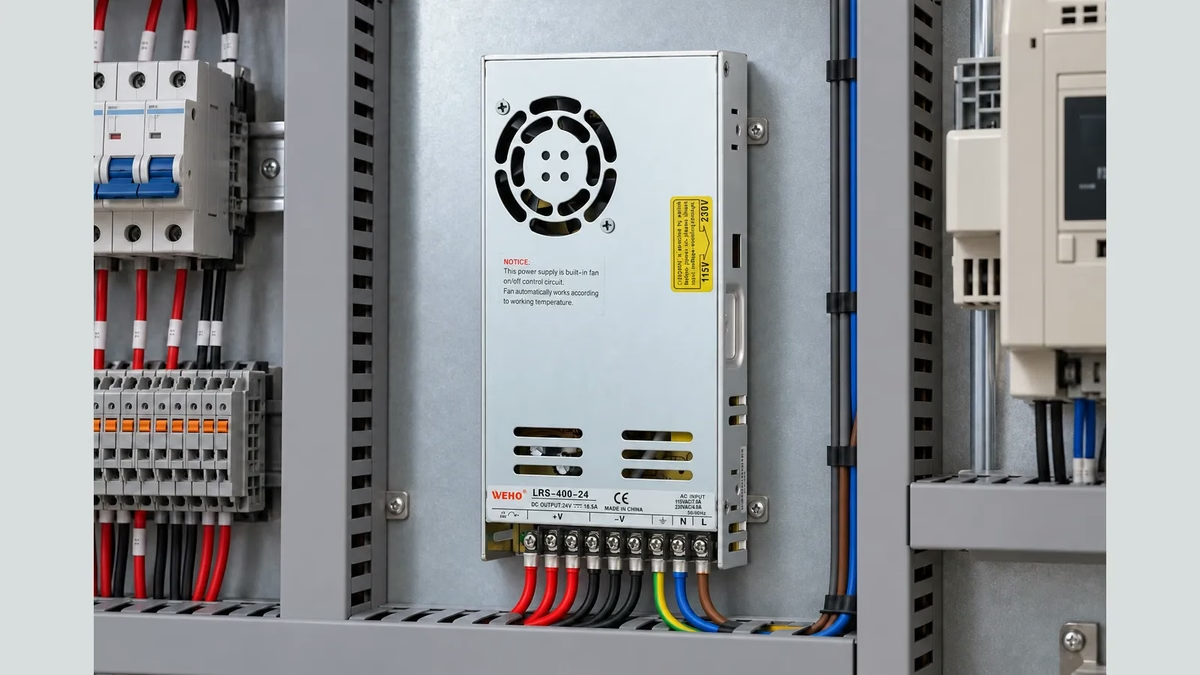
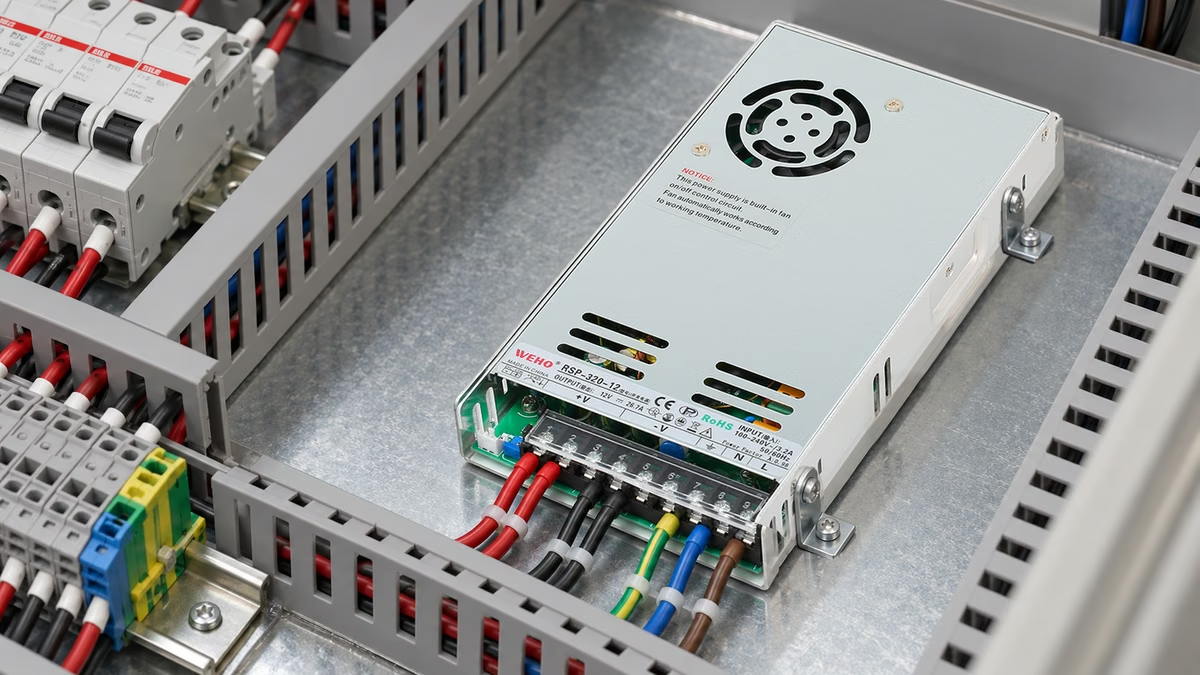
For a fixture powered by the WEHO RSP-320-12 source reference, keep the source documentation separate from the resistor requirement. The example below does not identify an approved resistor or claim that the supply delivers the assumed waveform. Actual source response, switching devices and interconnect remain part of validation.
Define why the pulse is needed. A load-step investigation may need a controlled edge and plateau, while an energy-absorption fixture may need to handle a decaying waveform. Those tasks can produce equal energy but different peak power and voltage. Record the complete event instead of reducing the brief to joules.
Keep power, energy and voltage as separate constraints
For an ideal resistor, instantaneous power is p(t) = v(t)²/R or i(t)²R. Pulse energy is the integral of power over the event. For a rectangular pulse with constant resistance and voltage, this simplifies to E = Ppulse × tpulse. Average repetitive power is the energy per event divided by its repetition period.
Vishay's pulse-load technical note distinguishes the restrictions on pulse peak power, continuous average load and pulse voltage. Apply the actual resistor family's method and conditions; a general equation does not replace the part's permitted pulse curve.
Energy alone cannot describe every failure boundary. Two pulses with equal energy can have very different duration and peak voltage. A resistor suitable for a longer low-power event is not automatically suitable for a much shorter high-power event, even when both calculations produce the same joules.
Also distinguish a single-pulse curve from a repetitive-pulse rating. A repeated event begins from the temperature and stress history created by previous events. Use the supplier's applicable repetitive method rather than assuming that each pulse starts from the original ambient condition.
Calculate a hypothetical 12 V pulse load
Assume a hypothetical ideal 6 Ω resistor is switched directly across 12 V for 50 ms. The current is I = V/R = 12/6 = 2 A. Pulse power is P = V²/R = 144/6 = 24 W. Energy per pulse is 24 × 0.050 = 1.2 J.
If the period between pulse starts is 0.50 s, duty cycle is 0.050/0.50 = 10%. Average power is 1.2/0.50 = 2.4 W. That value describes long-term average electrical dissipation under the assumptions; it does not demonstrate that a 2.4 W continuous-rated resistor can survive the pulse.
Now shorten the period to 0.10 s while retaining the 50 ms pulse. Duty cycle becomes 50%, and average power becomes 1.2/0.10 = 12 W. The energy of each event remains 1.2 J, but the average heat input is five times greater. A timing change can therefore reopen resistor selection without changing pulse amplitude.
Swipe to view the complete diagram, or open full size.

These invented values are arithmetic inputs, not a test record. Resistance can vary with temperature, source voltage can change under load, and the switch can introduce resistance and edge behavior. Measure the voltage across the resistor and current through its actual path to confirm the delivered event.
Do not use the nominal 12 V label when the validated maximum operating voltage is higher. In the same ideal 6 Ω example, power follows voltage squared. A permitted change in the source setting can alter pulse stress enough to require recalculation even when the pulse timing is unchanged.
Build a resistor selection record
The supplier needs the complete stress description to assess a candidate. Include the precise part number and resistance value, because pulse capability can vary across values within one resistor family. Record the mounting and cooling conditions associated with any continuous rating.
Swipe table horizontally when needed.
| Requirement | Record | Release evidence |
|---|---|---|
| Individual event | Waveform, duration, peak power and energy | Applicable pulse curve or supplier assessment |
| Repetition | Period, burst length and longest run | Repetitive rating and thermal conditions |
| Voltage stress | Peak voltage across each resistor | Part-specific operating/pulse voltage limit |
| Physical installation | Mounting, airflow and nearby materials | Validated fixture temperature and construction |
Vishay's wirewound pulse-handling guidance emphasizes that capability depends on the resistor model and value. Its family-specific examples are useful for understanding the required inputs, but their coefficients and acceptance method must not be transferred to an unrelated resistor technology.
When several resistors share the load, calculate each element's stress. Tolerance, wiring and temperature can produce unequal sharing. A bank's total continuous wattage does not prove that the most highly loaded resistor meets its pulse and voltage conditions.
Validate the complete switched load
- Freeze the resistor, switch and interconnect configuration. Record part identities, topology and controlled mounting conditions.
- Apply a justified operating sequence within the equipment limits. Include the maximum repetition, burst duration and credible timing variations required by the task.
- Measure actual resistor voltage and current with sufficient time response. Integrate the appropriate event record to check energy rather than relying solely on the programmed pulse width.
- Record the thermal condition after the defined repetitive sequence. Use the resistor manufacturer's relevant limits and an appropriate temperature measurement method.
- Inspect and remeasure the fixture as required by its qualification plan. A resistance shift or changed waveform calls for investigation before the fixture returns to acceptance testing.
A fixture can fail gradually and still appear to apply a load. For example, a changed resistance may reduce delivered current enough to make a marginal supply look acceptable. Keep a reference check and maintenance rule that detects meaningful changes before subsequent units are judged.
Enclose or guard hot resistors and exposed conductors according to the fixture design. Qualified personnel should control energization and isolation. This calculation does not provide a universal surface-temperature limit, cooling interval or construction approval for an open resistor bank.
Retain abort behavior in the timing review. A controller fault that holds the resistor on can create a different continuous condition from the intended pulse sequence. Evaluate the fixture's protective response separately rather than assuming software duty cycle is an independent hardware limit.
Count the actual pulses in a burst as well as measuring individual width. A command sequence can stop late or restart immediately, changing cumulative energy and cooling history. Keep the sequence log with the electrical capture so a thermal result can be related to the events actually delivered.
Define a reference check before and after the qualification sequence. The check should detect a meaningful change in the resistor network or switching path using a suitable method. Passing the final resistance check supports that particular comparison; it does not replace the original part-specific pulse assessment or prove unlimited future service.
Send the waveform with the source requirements
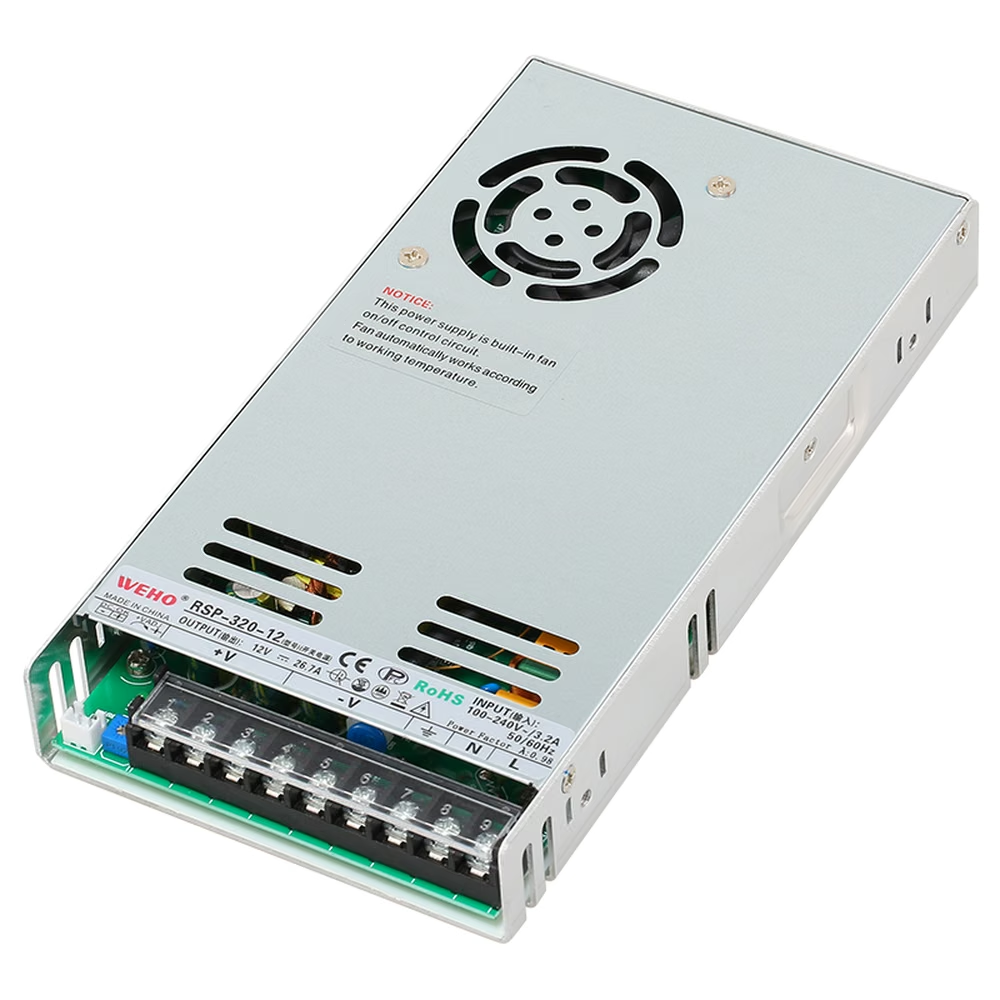
For a review involving the WEHO RSP-320-12 fixture supply, send the actual load waveform, resistor network, input condition, desired pulse sequence and acceptance limits. Ask for the applicable model information while obtaining resistor pulse suitability from the resistor supplier's documentation or assessment.
The release record should connect the selected parts to the delivered event and the intended repetition. An average-power calculation is useful, but it becomes a defensible fixture decision only when the individual event, voltage stress, thermal condition and maintenance evidence also match the task.
Engineering FAQ
Can I select a resistor using average pulse power alone?
Average power alone cannot establish pulse suitability. Check the individual event's duration, peak power, energy and voltage against the exact part data. Repetition and the installation's thermal conditions also matter.
Do equal-energy pulses impose equal resistor stress?
Equal energy does not guarantee equivalent stress. Duration, peak power, voltage and waveform shape can differ. Use the supplier's applicable method for converting or assessing the actual event.
Is a single-pulse curve sufficient for continuous repetition?
A single-pulse curve does not automatically cover repetitive operation. Prior events can change the starting temperature and remaining capability. Obtain the repetitive rating or an appropriate supplier assessment for the intended sequence.
Does a larger resistor bank solve every pulse-rating issue?
A larger bank may help, but each element still needs a verified stress allocation. Check sharing, voltage, mounting and actual waveforms. Total nameplate watts alone cannot approve the network.