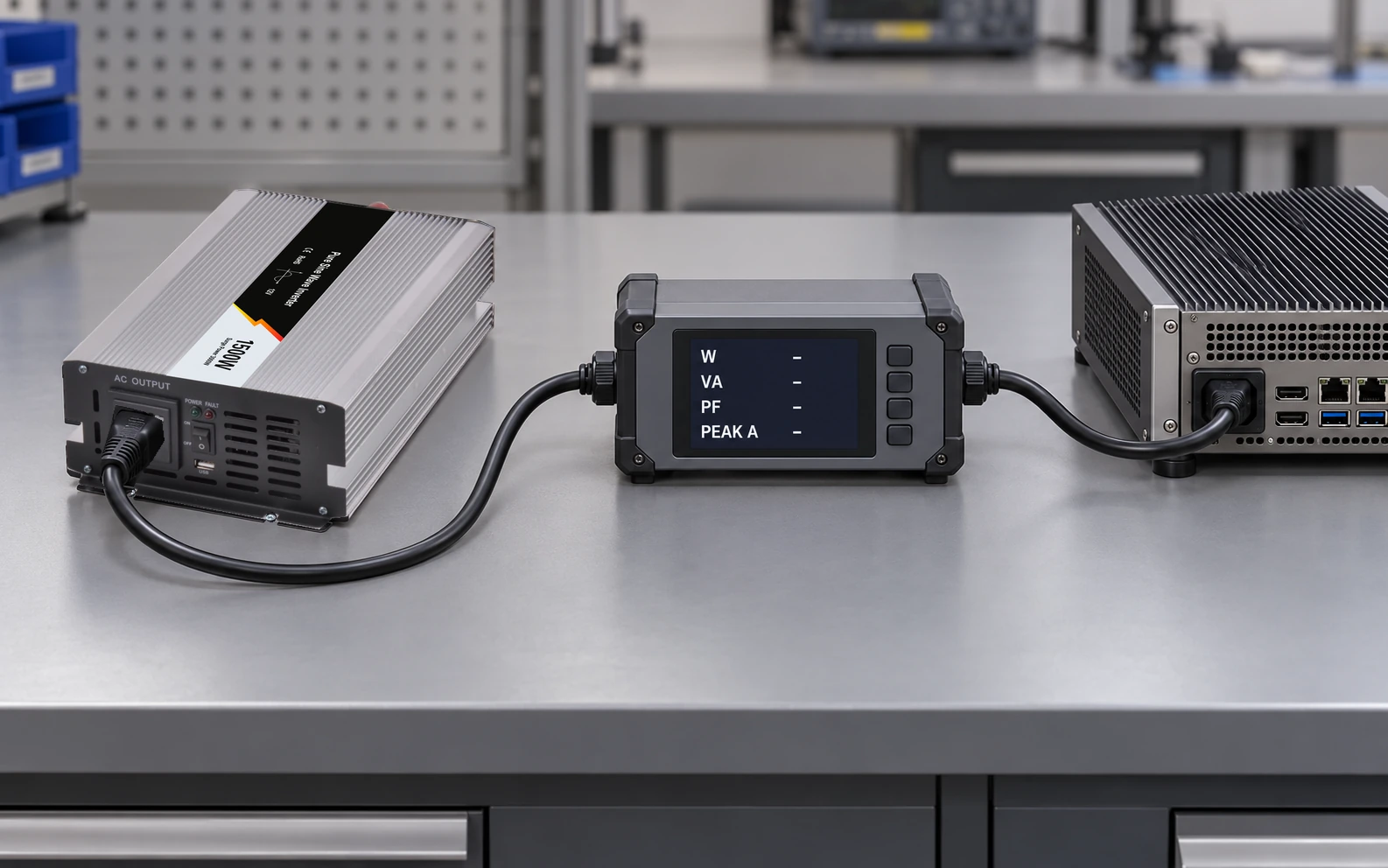
For a nonlinear AC load, record real power, apparent power, RMS current and current peaks separately. A wattage below an inverter’s rating is a useful screen, but it does not establish every current or waveform limit.
This article helps an OEM describe the steady operating demand of electronic equipment before evaluating the WEHO WHP1500W inverter family. The result is a repeatable load-characterization record. Starting events still need their own timing information.
Record four quantities instead of one watt number
| Quantity | Meaning in this review | Record with it |
|---|---|---|
| Real power P, watts | Average electrical power delivered to the receiver | Operating state and measurement interval |
| Apparent power S, VA | RMS voltage multiplied by RMS current | Both RMS values and instrument method |
| True power factor PF | P/S for the measured state | Do not substitute displacement angle alone |
| Current crest factor | Peak current divided by RMS current | Peak definition, bandwidth and time window |
Yokogawa’s power-measurement fundamentals distinguishes real and apparent power and defines true power factor for nonsinusoidal signals. These definitions describe the receiver. They do not assign a VA or crest-factor capability to a WEHO inverter.
Compare two equal-watt loads
Consider two hypothetical 900 W receivers operating at 230 V. At true PF 0.90, apparent power is 1000 VA and RMS current is 4.35 A. At true PF 0.60, apparent power is 1500 VA and RMS current is 6.52 A. Equal real watts therefore do not imply equal RMS current.
If the second receiver’s measured current crest factor were 2.8 in a specified steady state, its instantaneous current peak would be approximately 18.3 A (6.52 A × 2.8). That assumed number is neither a starting surge nor a known WHP limit. Keep the nature and duration of the current demand visible. Retain pulse width and repetition information with the waveform so a single crest-factor value does not stand in for the complete recurring demand.
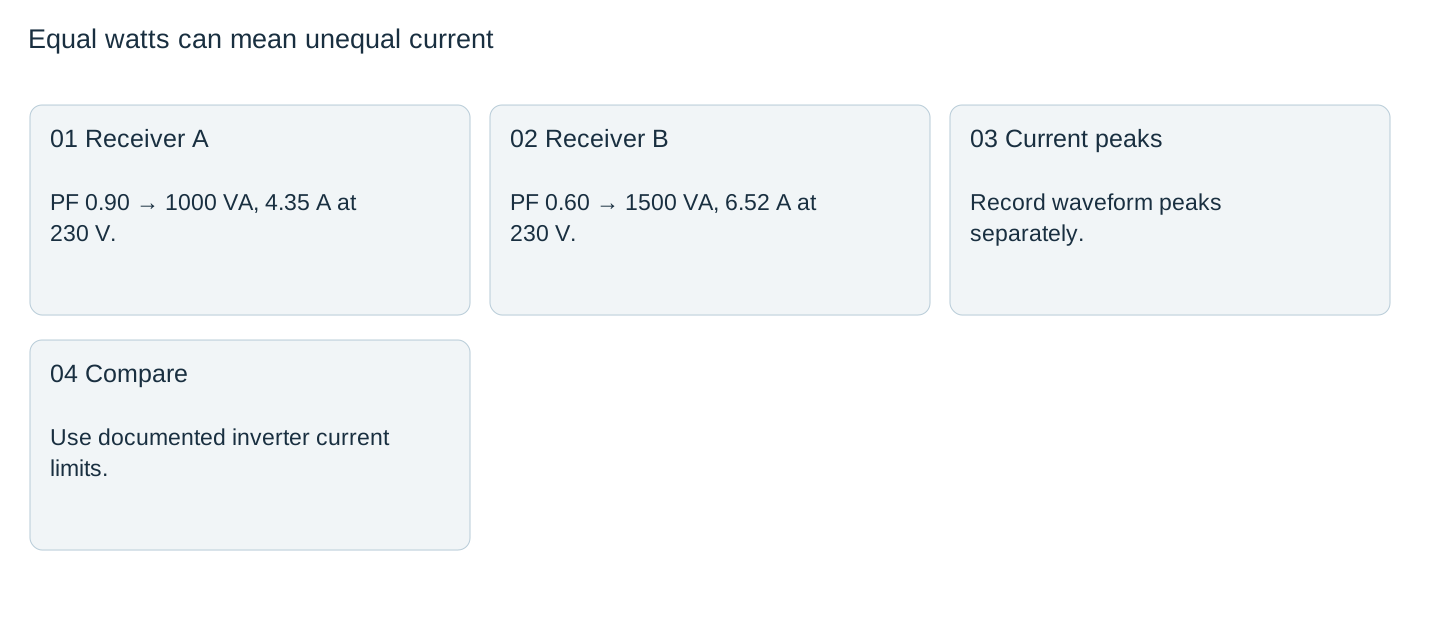

The purpose of this arithmetic is to show which supplier questions remain. It does not approve either receiver or imply that the 1500 W family has 1500 VA or 18.3 A peak-current capability.
Do not turn peak watts into a current specification
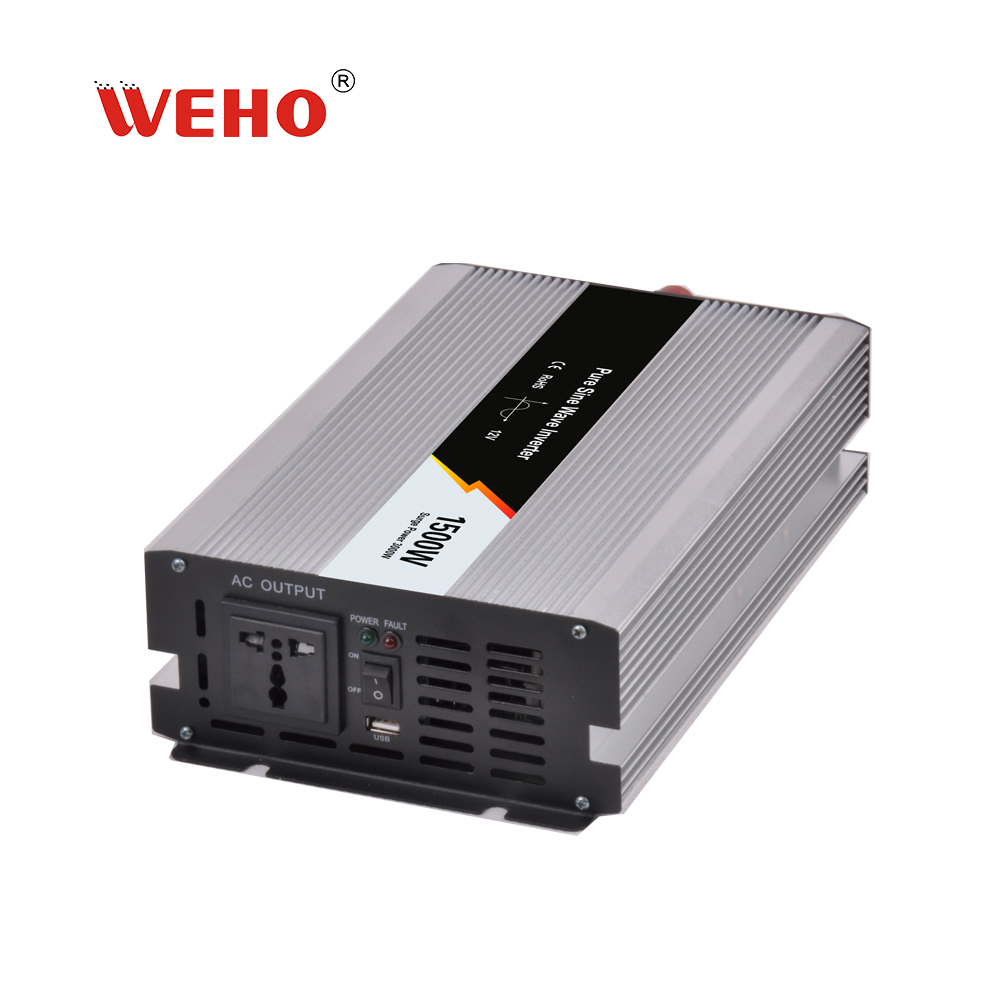
The WHP1500W page lists 1500 W rated power and 3000 W peak power. Its output options and pure-sine waveform description are family information. The peak-watt entry does not state a current crest-factor envelope, a nonlinear-load VA rating or the permitted repetition of a narrow current pulse.
Supply the receiver record when requesting the applicable output-current information. Ask which current quantities, durations and conditions define the unit’s limit. Avoid inventing a universal multiplier between the receiver wattage and the required inverter rating.
A successful resistive-load demonstration is useful for that test condition. It cannot establish the behavior of a receiver that draws short current pulses from each AC cycle.
Capture the actual steady state before discussing a larger inverter
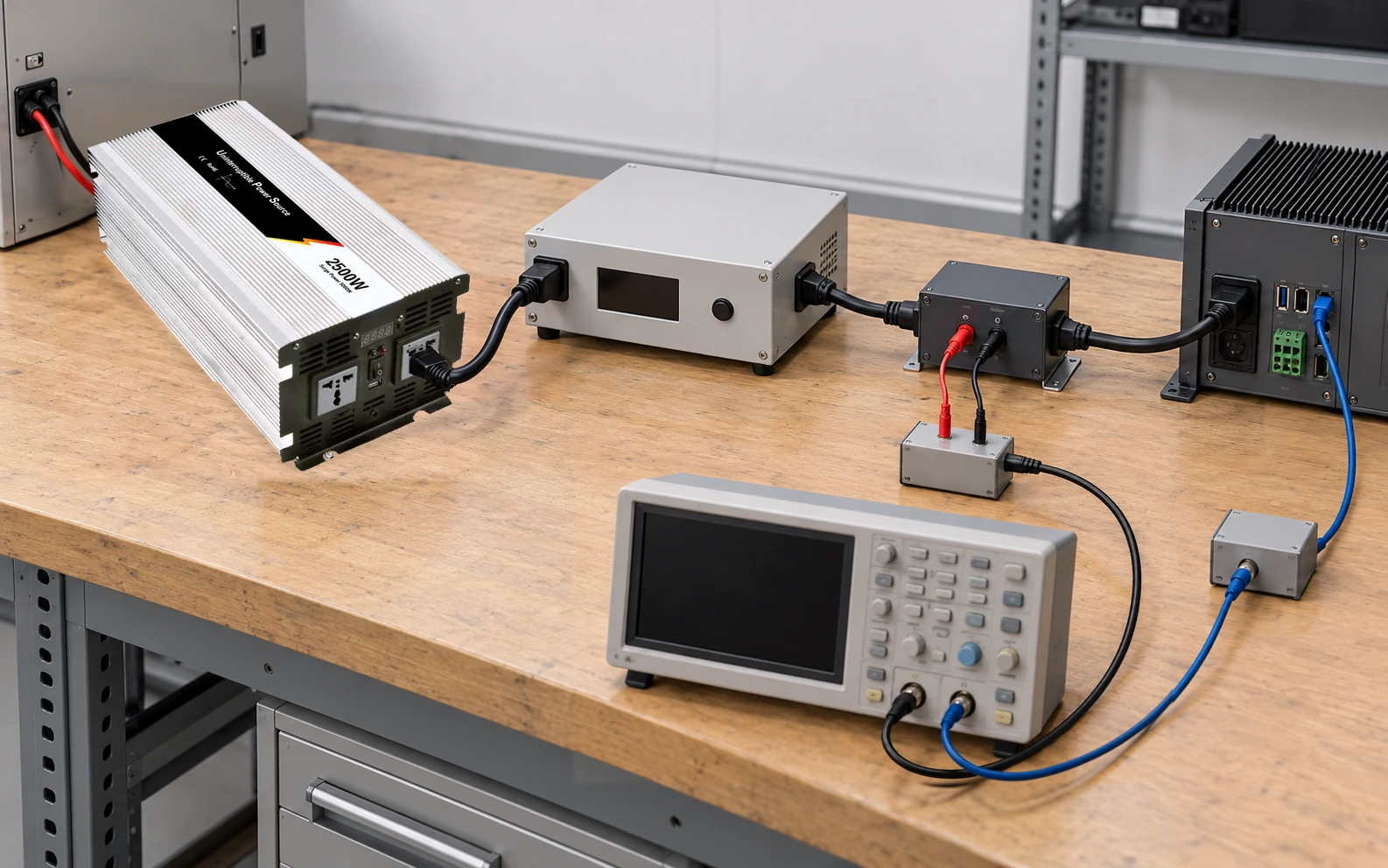
Use a suitable power analyzer or a validated voltage/current acquisition method. Record the exact receiver configuration, supply voltage and frequency, processing or heating mode, and the observation interval. A computer asleep, a charger near completion and a receiver at full workload are different electrical states.
Check instrument range, bandwidth and current-sensor capability so narrow peaks are not clipped or filtered away. Keep the raw waveform or measurement file with the reported summary where available. A screenshot showing 900 W alone cannot reproduce the evaluation.
Separate steady current crest factor from turn-on inrush. A brief startup event and narrow recurring current pulses can impose different demands. Link the startup record where necessary, but do not merge both into an unexplained “peak” cell.
Match the receiver record to a defined output envelope
Compare the measured demand with the inverter manufacturer’s applicable continuous, transient and waveform-related limits. If a required current limit is not documented, keep that comparison open and obtain an agreed evaluation rather than interpreting silence as spare capacity.
Then verify the complete assembly at the agreed input voltage and environment. Record output behavior and receiver function as well as current demand. Battery delivery, AC distribution and cooling still matter; this article isolates the load-description step so those other reviews receive accurate inputs.
Store one row per meaningful steady state, with the raw measurement reference and acceptance basis. A receiver hardware change or firmware mode that changes current shape should reopen the comparison even when its advertised watts remain unchanged.
Send a load record that includes current shape
Provide WEHO with P, S, RMS current, observed current peaks, voltage/frequency, receiver states and startup evidence. Request the WHP1500W output limits and an evaluation against that record.
Steady nonlinear AC load record
| রাজ্য | Real W / VA | RMS A / true PF | Peak A / crest factor | Measurement interval / decision |
|---|---|---|---|---|
Blank project worksheet. Enter verified project data; example calculations above are not measurements.