A thermocouple simulator can check a configured temperature input, but the result depends on the simulator's mode, connection material and reference-junction method. It does not automatically validate the installed probe or the complete thermal process.
- State whether the source delivers thermocouple temperature simulation or a raw millivolt signal.
- Account for reference-junction compensation at the actual connection boundary.
- Keep electrical input checks separate from installed-probe and process checks.
What decision should the simulation test support?
Define the intended check before connecting the simulator. An electrical input comparison can help establish whether the configured channel interprets a known input as expected. It cannot by itself show that a probe sits at the correct process location or responds quickly enough to a changing workpiece temperature.
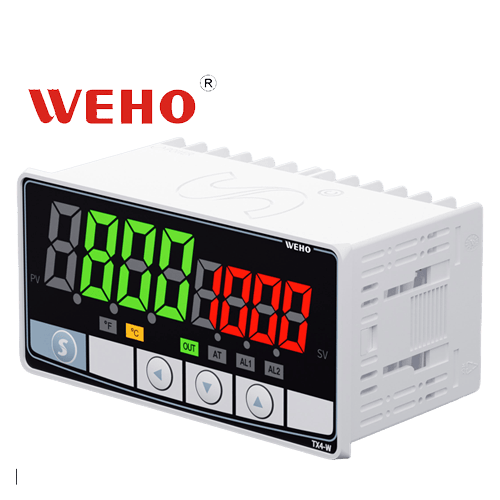
For a TX4-W temperature-controller project, first confirm the supplied variant and its applicable input configuration. Select a supported sensor type and range using the relevant manual. Do not infer an input option from the front-panel appearance or a retained display value in an application illustration.
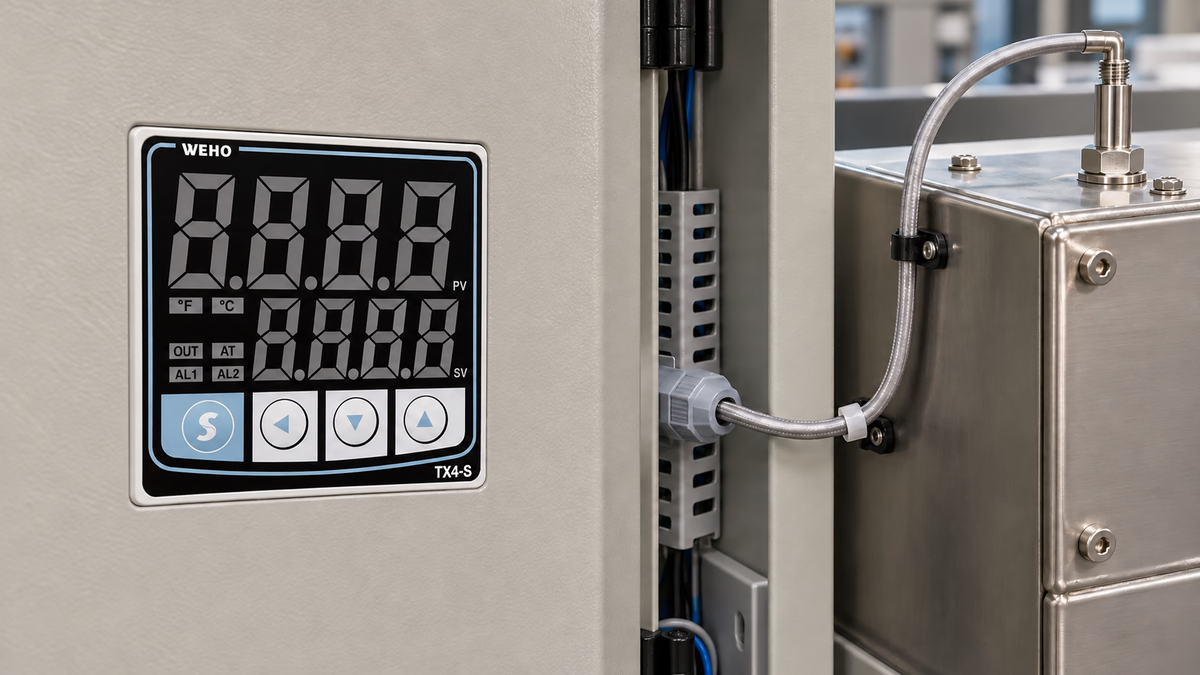
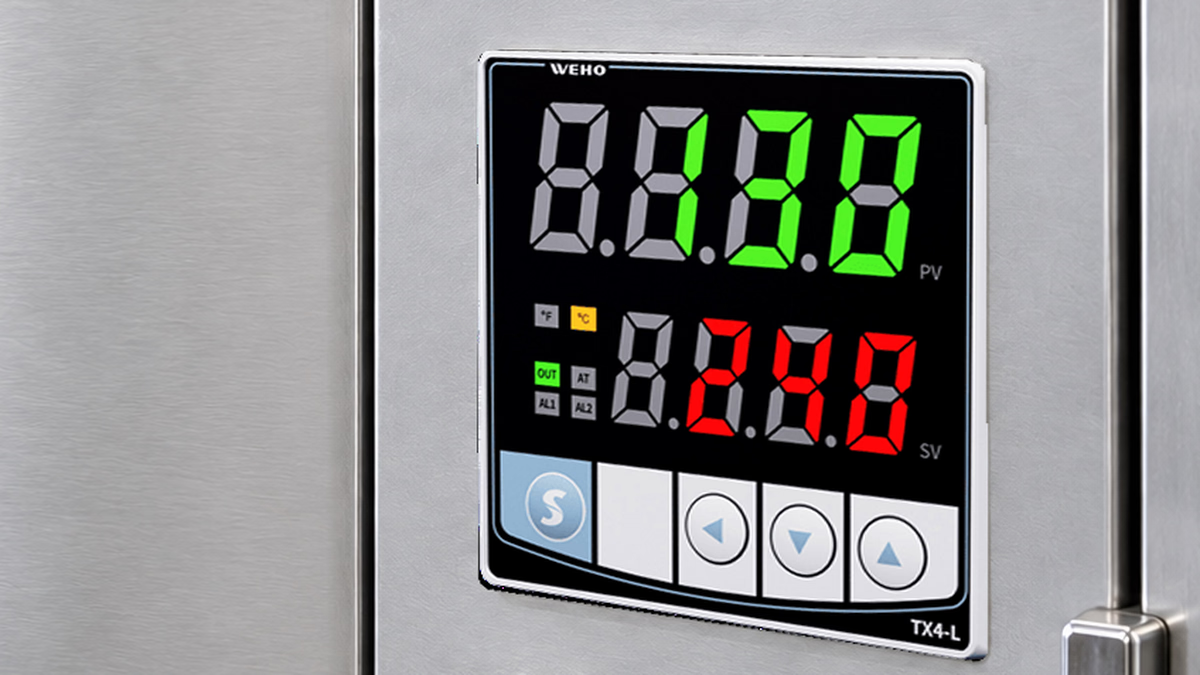
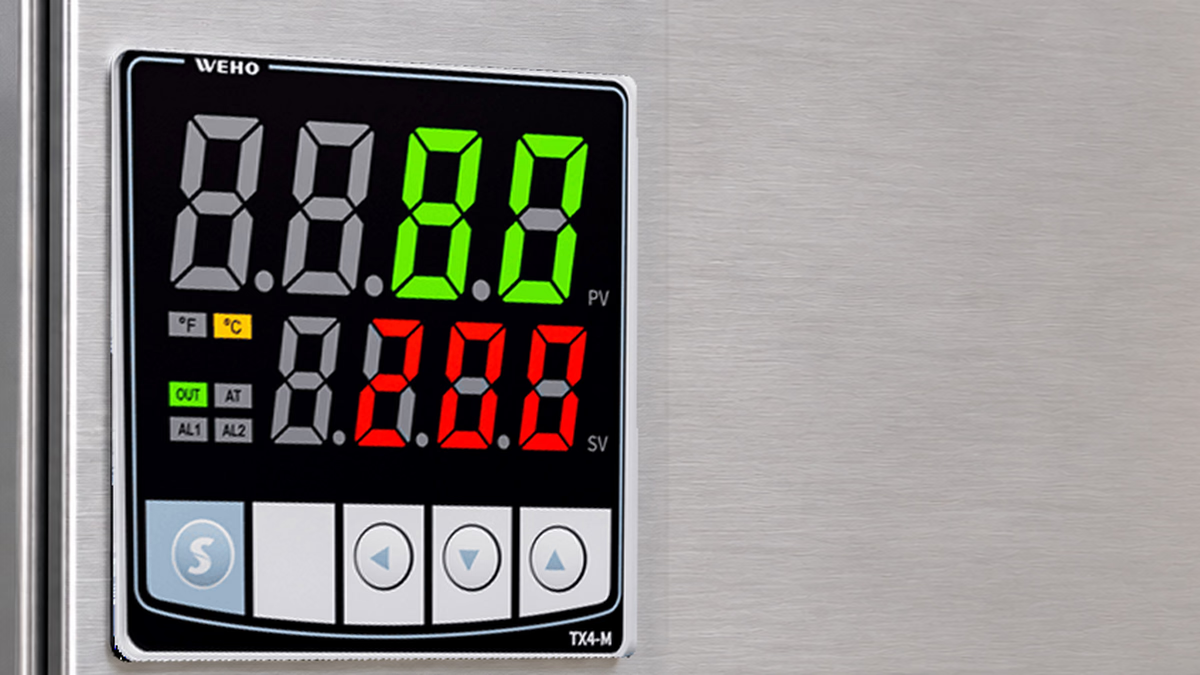
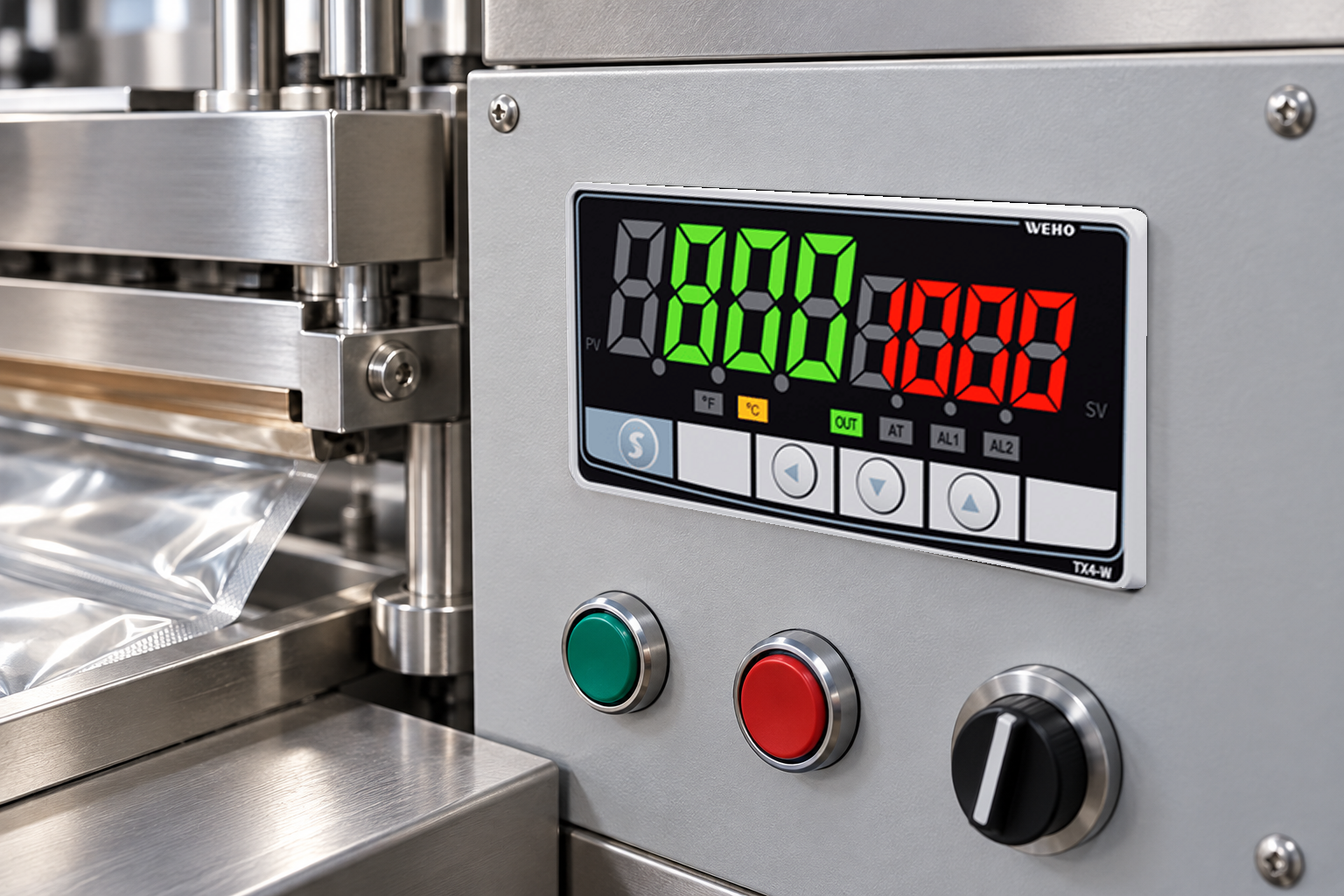
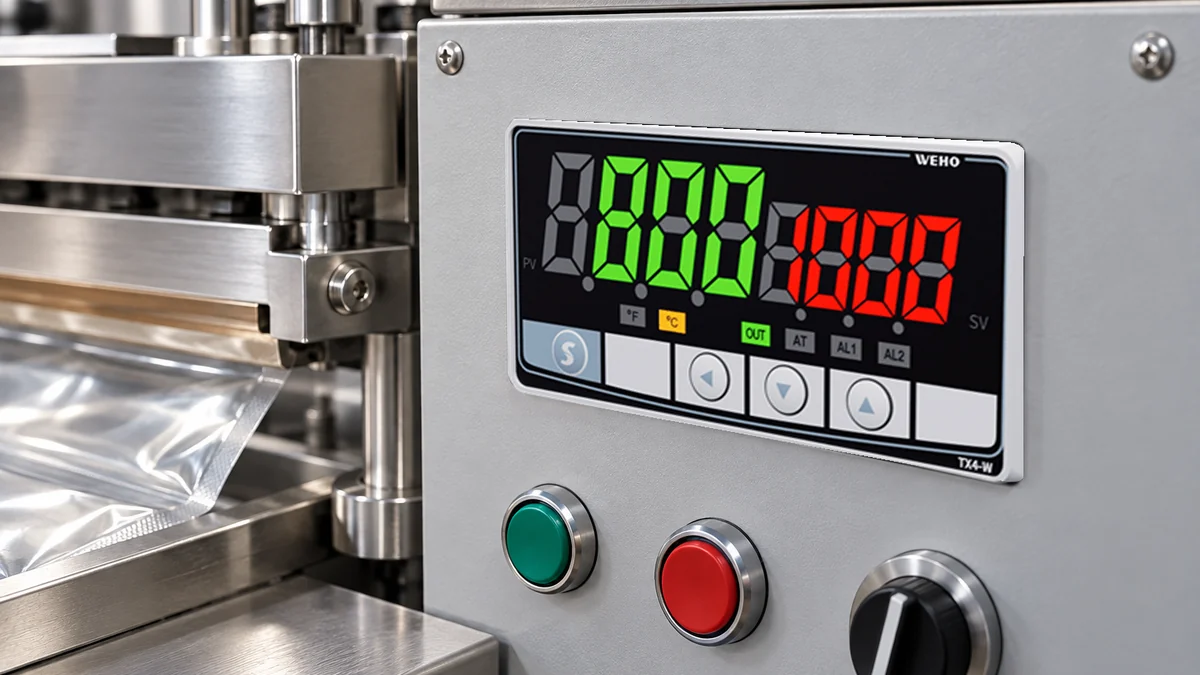
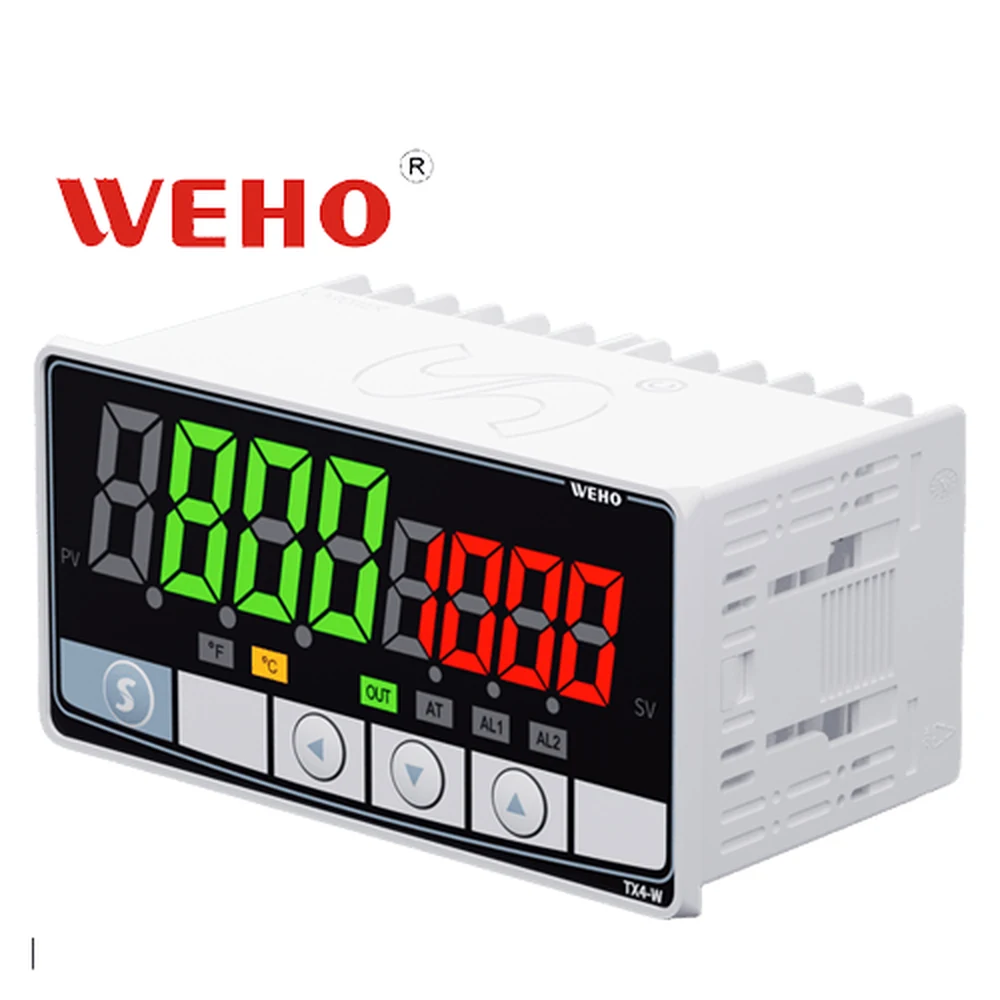
The original product image and application scene serve identification and installation-context purposes. The visible numbers are source artwork, not measurements from the procedure described here. No calibration result, simulator capability or heater condition is established by those pictures.
A useful acceptance record states the simulated input, the expected indication, the allowed difference and the uncertainty considered in that decision. “Simulator connected; display looked right” is too vague to support a repeatable supplier or production-quality discussion.
Why must the reference-junction method be explicit?
A thermocouple's electrical signal depends on junction temperatures. A temperature simulator can account for its terminal conditions according to its design and selected mode, while a raw millivolt source simply applies a chosen electrical signal. Those methods can require different connection arrangements and interpretation.
Check the simulator manual for the required lead material and compensation setup. Thermocouple extension wire and ordinary copper leads are not interchangeable in every test method. Connections at different temperatures can introduce additional thermoelectric effects that the test plan has not accounted for.
দ Analog Devices CN0391 reference design discusses the limits of a simulator-based check in its measurement system, including the need to assess reference-junction behavior separately. It is an external engineering example, not a statement about TX4-W internal circuitry or a universal simulator procedure.
Do not add or subtract an assumed room-temperature correction merely because the reading is unexpected. First establish which junctions and compensation functions are already included. A numerical correction applied without that boundary can count the same effect twice or conceal a connection error.
How should a simple comparison be interpreted?
Consider a hypothetical check in which an appropriate simulator, configured under its documented method, commands 100.0°C. After the defined stabilization criterion, the controller indicates 100.8°C. The observed difference is +0.8°C for that particular configuration and test boundary.
That observation does not prove that the controller's own error is exactly +0.8°C. The simulator, reference-junction arrangement, wiring, display resolution and repeatability also contribute. Treat the result as a measurement-chain comparison until those contributions are addressed.
Suppose the project has established an illustrative acceptance interval of ±1.5°C and a combined uncertainty bound of ±0.4°C for this check. A conservative decision rule might require |observed difference| + uncertainty ≤1.5°C. Here 0.8 + 0.4 = 1.2°C, so that stated rule is met.
The 1.5°C limit and 0.4°C bound are example project inputs, not TX4-W specifications. Other projects may use another justified decision rule. State the rule before testing and apply it consistently rather than changing it after seeing the result.
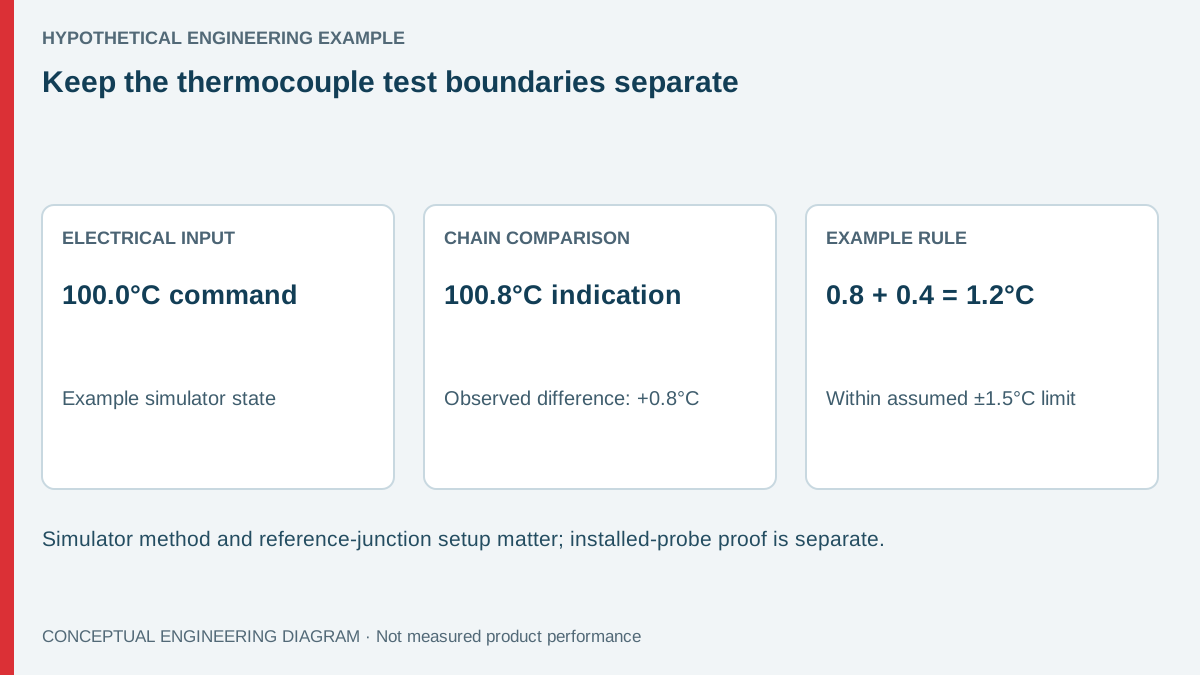
| Hypothetical record | Value or state | What it supports | What remains separate |
|---|---|---|---|
| Simulator command | 100.0°C in documented temperature mode | Defined electrical test input | Installed probe temperature |
| Controller indication | 100.8°C | Observed comparison result | Error assigned to one component |
| Difference plus uncertainty | 0.8 + 0.4 = 1.2°C | Comparison with the chosen 1.5°C rule | Other ranges and environmental states |
| Process validation | Not performed in this example | No process-performance claim | Probe placement, thermal lag and actual control |
How should the test be prepared and executed?
Record the controller identity, sensor setting, input range, simulator identity, selected mode and connection method. Include calibration status and the uncertainty relevant to the actual range. An instrument certificate alone does not determine the uncertainty of the assembled comparison.
- Establish a suitable equipment state under the site's procedure, including control-output consequences.
- Confirm the applicable controller input configuration and simulator connection instructions.
- Apply selected points spanning the project's required operating interval.
- Record stabilization, indication, repeatability and the decision rule at each point.
- Restore the intended sensor and settings, then verify the required handover state.
A simulated temperature can command heating, cooling or an alarm if outputs remain active. Qualified personnel should control those consequences according to the actual equipment design. Do not assume that disconnecting the probe makes the process automatically inactive or that a menu setting substitutes for energy isolation.
Use an ascending and descending sequence where hysteresis, repeatability or procedure requirements justify it. Keep the sequence documented. A single center-range point cannot demonstrate performance across the full operating interval, and rapidly stepping points can mix input filtering with stabilization behavior.
What requires a real probe or thermal reference?
The installed probe, extension path and reference-junction environment need their own checks when they affect the decision. A complete probe comparison should use an appropriate thermal reference and documented immersion, location and stability. It answers a broader question than an electrical simulator connected at the controller.
A process check goes further again. The sensing location may differ from the product or workpiece temperature, and a valid electrical input can coexist with a substantial process gradient. Keep the boundaries separate so a narrow input check is not marketed as full machine calibration.
দ TX4-W product information is the model entry for confirming the relevant configuration and requesting applicable documentation. Do not promise a particular correction feature, simulator interface or accuracy value without matching it to the supplied version.
When results change with cabinet temperature, connection arrangement or test mode, preserve those observations. They may point to different mechanisms and should not be averaged into one unexplained offset. A traceable record lets the responsible engineer decide which additional check would distinguish them.
The physical connection record should show where thermocouple material ends and ordinary conductors begin. That boundary can matter when terminal temperatures differ. Preserve the simulator's documented connection method rather than replacing leads for convenience during a comparison.
If a test point fails, repeat the relevant setup checks before editing controller correction values. A simulator-mode mistake can create a consistent-looking error across several readings. Preserve the failed record and the corrected method so that a later reviewer can distinguish a product issue from a test-configuration issue.
Prepare a TX4-W input-check review
Send WEHO the controller variant, configured input, simulator method and comparison table. Include the actual connection boundary and any relevant temperature conditions. State whether the request concerns electrical input interpretation, the installed sensor chain or process validation so the discussion addresses the correct scope.
Frequently asked questions
Does a simulator check calibrate the complete machine?
No. It checks the defined electrical input arrangement. Probe behavior, placement, thermal gradients and control performance need additional evidence appropriate to the machine's requirements.
Can a raw millivolt source replace a temperature simulator?
It can support a properly designed electrical test, but the reference-junction calculation and connection method must be explicit. A raw voltage does not automatically represent the same boundary as a compensated temperature simulation.
Should an observed offset be entered as a correction immediately?
No. First establish its source and the applicable device capability. A correction based on an unexplained setup error can make the installed system less accurate after the test equipment is removed.
Do the example limits specify TX4-W accuracy?
No. They are stated hypothetical project values used to demonstrate a decision rule. Use the applicable product documentation and a justified uncertainty assessment for an actual acceptance decision.