If a power supply trips a breaker immediately at switch-on, inrush current is one possibility—but the trip is not proof of inrush. First identify the device and protective function that operated. A short circuit, incorrect input connection, sustained branch overload or residual-current event calls for a different response.
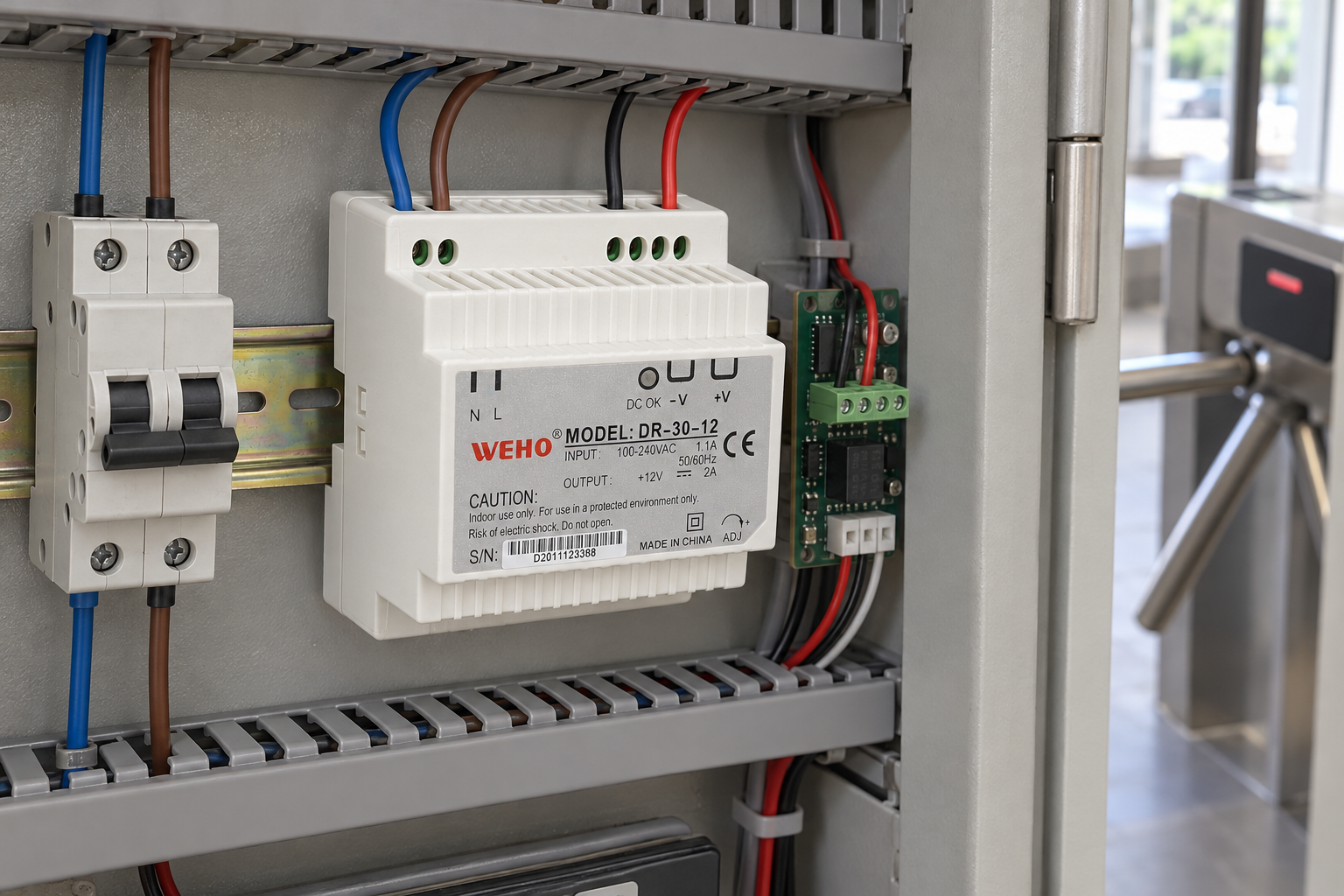
Start with the trip timing and device identity
Record whether the interruption occurs at the switching instant, after a delay, or only when several loads start together. Also record whether it follows a long power-off period or a brief interruption. These observations guide diagnosis; they do not replace inspection of the wiring and supply by qualified personnel.
| Observation | What to investigate |
|---|---|
| Immediate overcurrent trip at switch-on | Input fault, charging current and the protective device’s instantaneous characteristic |
| Trip after sustained operation | Total branch demand, ambient conditions and the device’s time-current behaviour |
| Residual-current protection operates | Leakage and fault-current path; do not treat it as a DC load-current limit |
| Only a group startup trips | Coincident input demand and all equipment sharing that branch |
A combined protective device may contain more than one trip function. Its model and trip indication matter. Repeatedly resetting it or fitting a larger rating without reviewing the circuit can conceal the original problem and change the intended protection.
Why a 12 V, 2 A supply still has input inrush
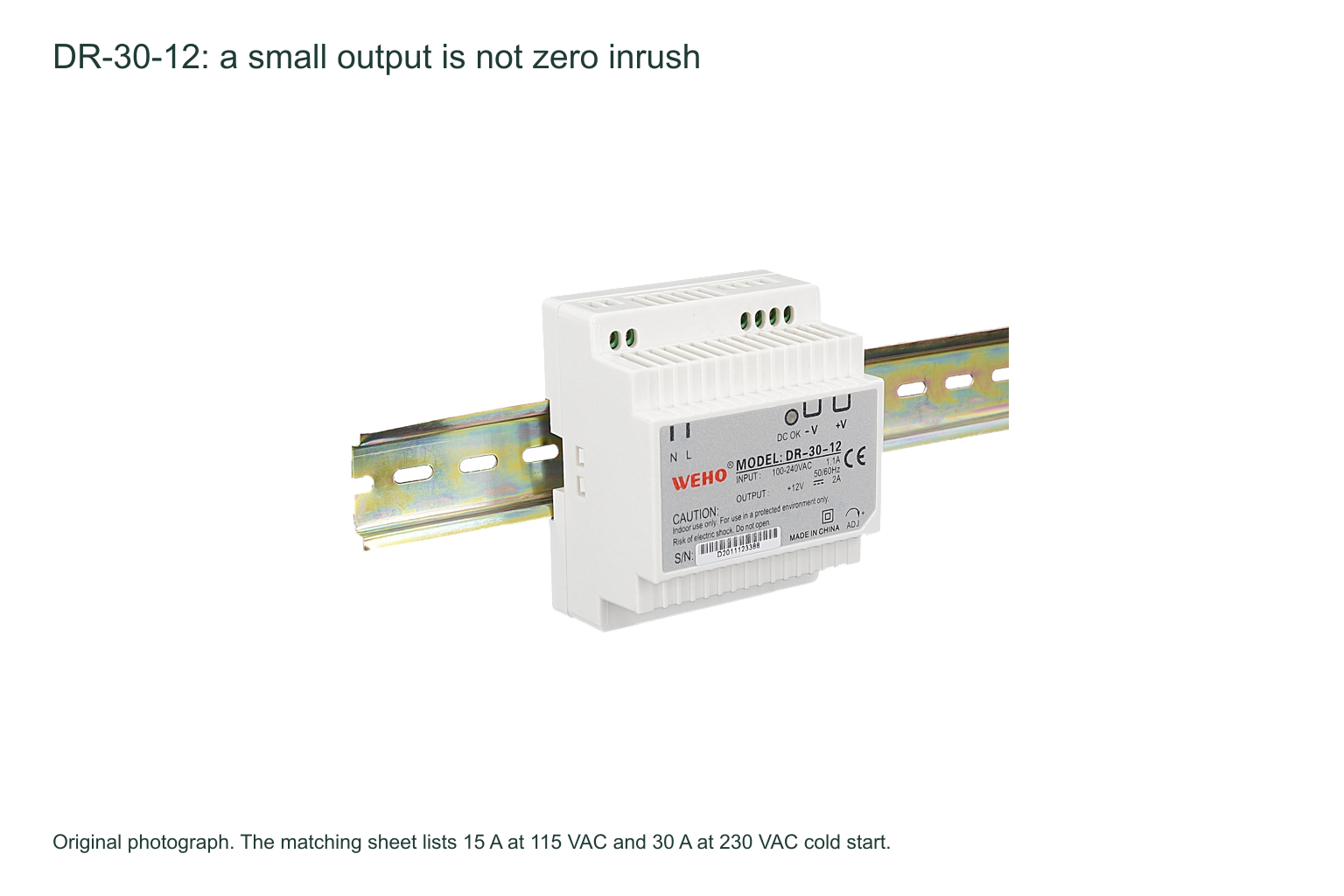
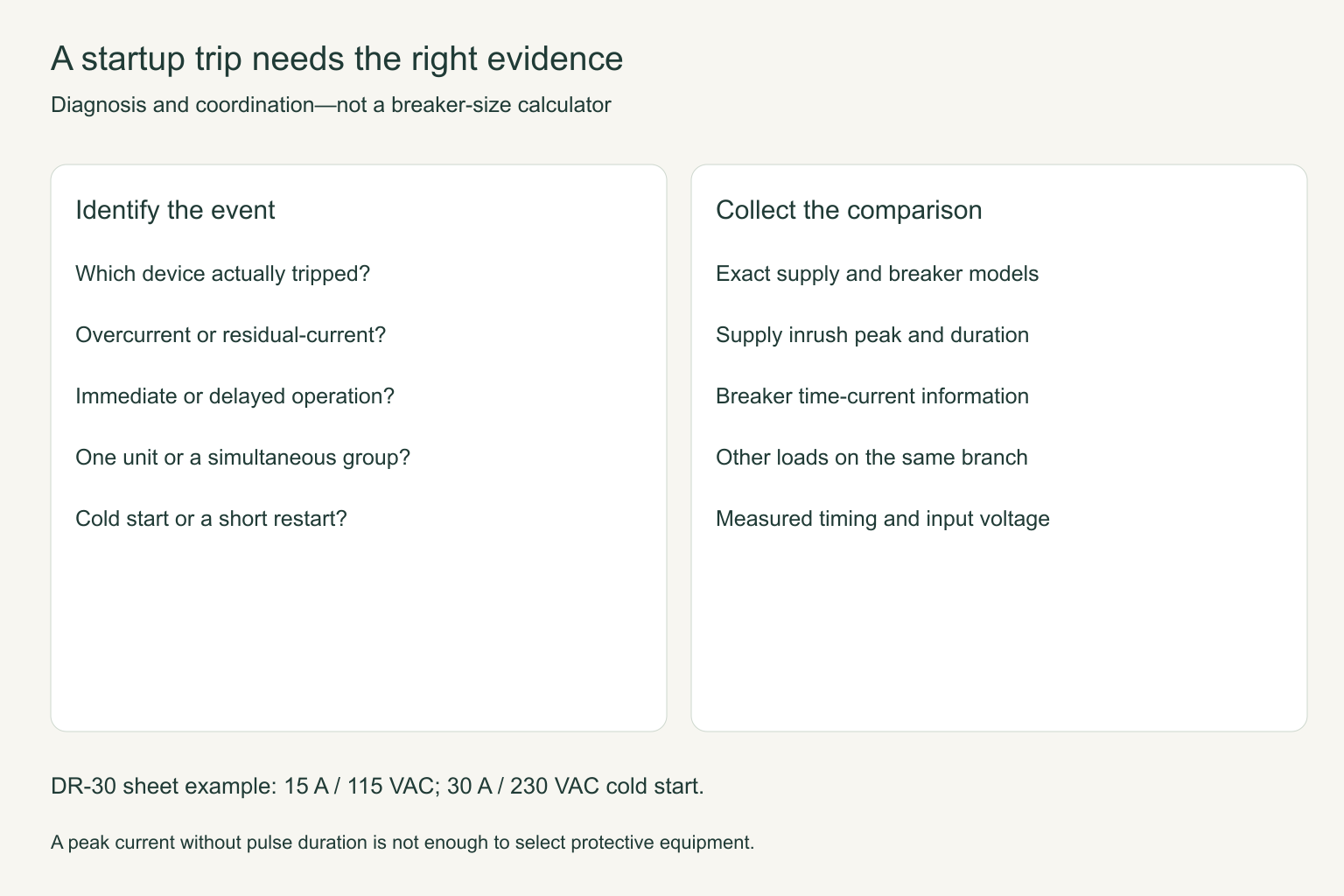
The photographed WEHO DR-30-12 supplies nominal 12 V at up to 2 A. Its matching DR-30 sheet separately lists cold-start input current of 15 A at 115 VAC and 30 A at 230 VAC. These are transient input figures, not a claim that the unit continuously draws that current or delivers it at its output.
At startup, energy is required to charge internal input components. The current pulse can therefore be quite different from steady operation. The input voltage and starting condition are part of the stated value. Do not compare a DC output-current rating directly with an AC breaker’s rating as though they were the same quantity.
A peak value alone cannot choose a breaker
Protection responds over time. To assess switch-on compatibility, the engineer needs the relevant startup waveform or duration as well as the peak, and must compare it with the actual protective device’s information and installation conditions. The matching DR-30 sheet does not provide a pulse-width limit or a universal count of units allowed on one breaker.
For the same reason, dividing a breaker rating by the supply’s inrush peak is not an allowable-unit calculation. Adding peak values may help identify a simultaneous-start concern, but it does not establish the aggregate waveform, wiring impedance or the protective device’s response.
Review the branch before the individual supply
List every supply, drive, transformer and other load energised by the same switching action. Include equipment that has a different normal duty but charges its input whenever the branch is switched on. Check that the observed trip really belongs to this branch and that the installation matches its approved circuit documentation.
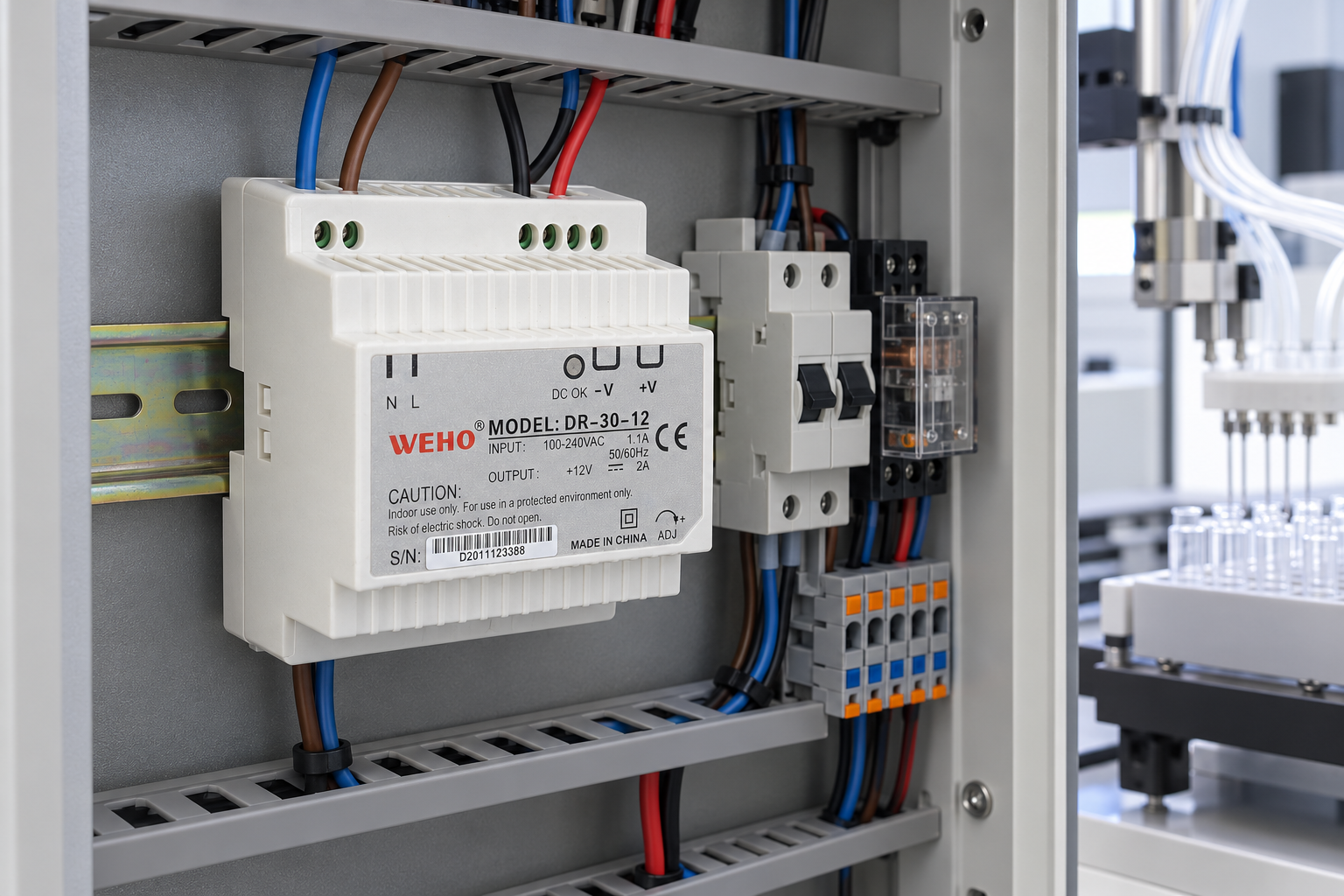
Where startup demand is confirmed as the cause, possible engineering options include appropriately coordinated protective equipment, a documented inrush-limiting arrangement or controlled startup sequencing. Each needs a design review against wiring, fault protection, device ratings and the process restart requirements. None is a reason to bypass the protective device.
Prepare an enquiry that can be answered
For the DR-30 family or another proposed supply, send WEHO the exact input-branch information: supply model and quantity, AC voltage, breaker or fuse model, other simultaneous loads, trip timing, ambient conditions and the available startup measurement. Ask for current revision data and any documented coordination guidance.
Common buyer questions
Does a PFC supply eliminate startup trips?
No. Power-factor performance during operation and the short input charging event are different characteristics. Obtain the startup data for the exact PFC model as well.
Is a successful second attempt proof that the first trip was harmless?
No. The starting condition can differ between attempts. Preserve the observations and investigate the cause instead of treating a later start as acceptance.
Should I replace the supply first?
Only after evidence points to the supply. An input wiring fault, unsuitable branch design or another simultaneous load can remain after the supply is changed.