- RTD thermal hysteresis is a history-dependent indication at the same reference temperature.
- Keep heating-path and cooling-path results identifiable instead of averaging them immediately.
- Separate probe history from source gradients, readout behavior and continuing drift.
- Define the relevant temperature excursion before accepting a calibration result for service.
Ask whether the return path changes the result
A temperature probe can return to the same reference temperature after a hotter excursion and give a different indication. Repeating only an ascending calibration sequence may therefore leave an operating-history contribution unexamined. The engineering task is to establish whether that contribution matters to the required measurement decision.
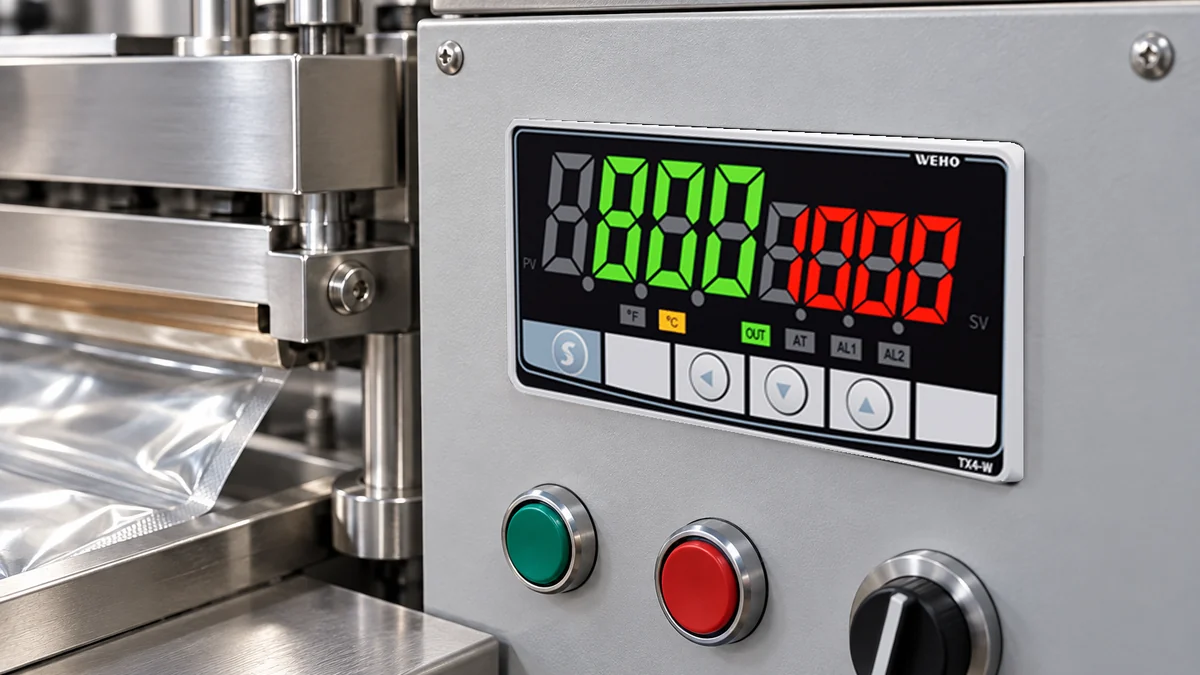
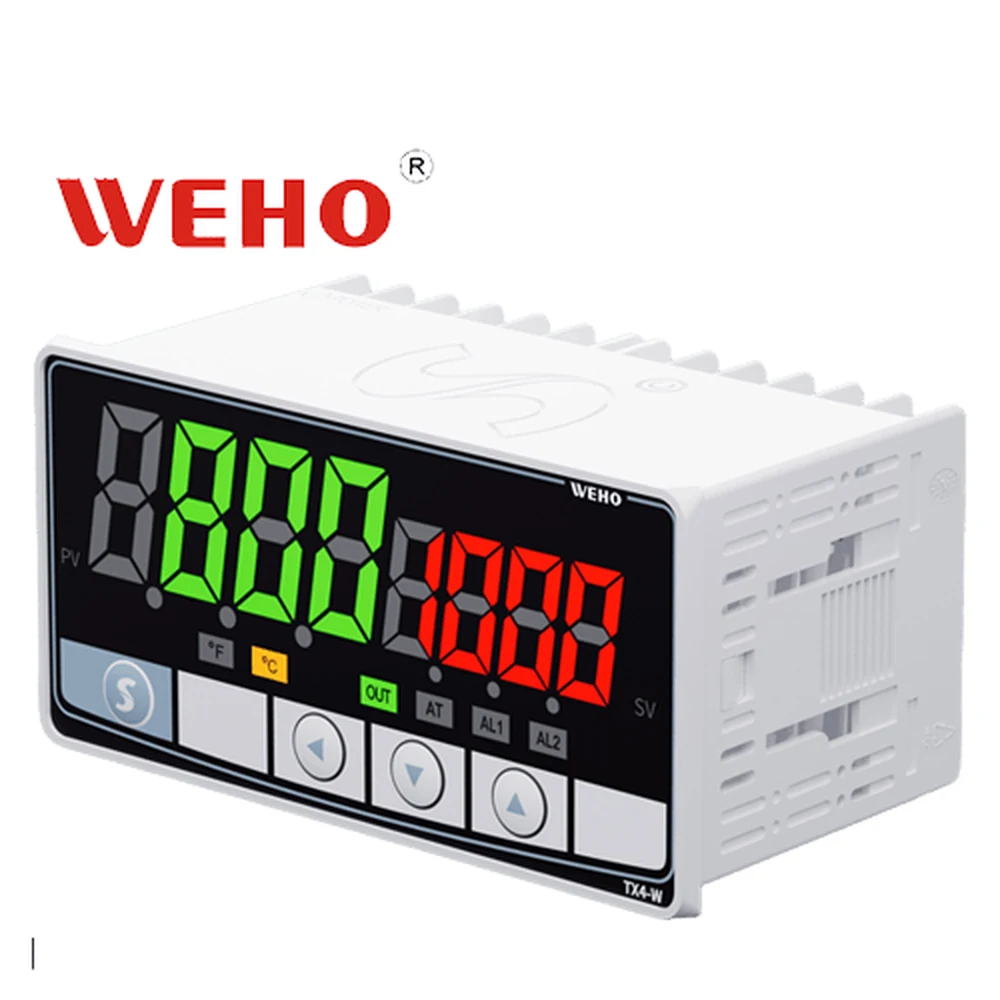
For a sensing chain associated with the TX4-W controller reference, identify the actual RTD, readout configuration and excursion history. A controller model or nominal Pt100 designation does not establish the hysteresis of the installed probe. The relevant evidence belongs to the particular measurement chain and conditions.
Thermal hysteresis here does not mean an ON/OFF controller’s switching deadband. It concerns the thermometer’s temperature-resistance relationship after different thermal histories. Keeping those meanings separate prevents a procurement requirement for probe behavior from being answered with an unrelated controller return-value setting.
An acceptance record should state the range over which the probe is conditioned, the comparison temperatures and the intended use. A result after a small excursion cannot silently establish behavior after a much wider one. Nor should an irreversible change after excessive exposure be relabelled ordinary reversible hysteresis without investigation.
Distinguish history dependence from other contributions
PTB’s DKD-E 5-1 expert report, section 2.2, discusses resistance-thermometer hysteresis as a dependence on thermal history. The report explains that construction and mechanical stresses can influence the effect. Its reported ranges and illustrations are not specifications for an arbitrary probe or a WEHO controller.
This mechanism differs from self-heating, where electrical excitation adds heat to the element. It also differs from an incorrect resistance-to-temperature curve or an unwanted insulation leakage path. Several contributions can coexist, so naming hysteresis does not remove the need to verify the other parts of the measurement boundary.
A sequence that shows rising indications over time is not sufficient to identify hysteresis. The reference source may still be settling, the readout may be drifting, or immersion may have changed. Preserve a stable reference observation and the complete sequence so the apparent path effect can be tested against those alternatives.
Fluke’s dry-well performance discussion also identifies hysteresis in a calibrator’s internal resistance thermometer. That matters because the source can contribute history-dependent behavior of its own. A stable displayed block setpoint is not automatically an independent reference for the probe under test.
Calculate a hypothetical two-path difference
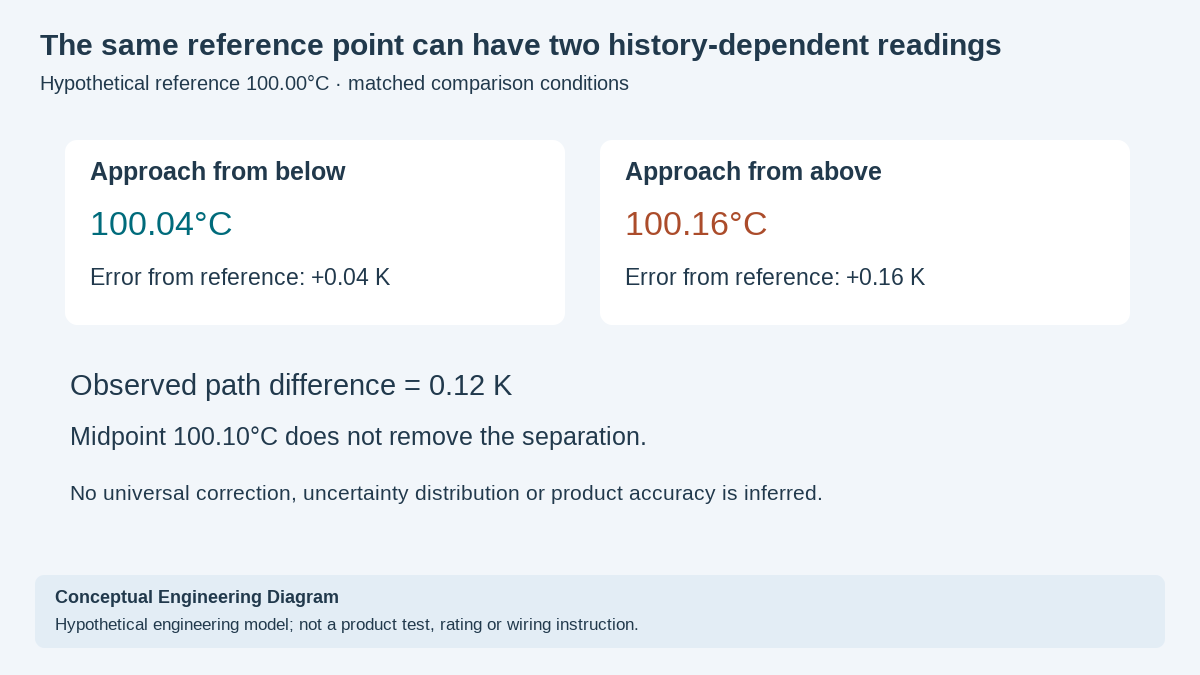
Assume a qualified comparison source and reference establish 100.00°C under the declared conditions. A probe/readout chain is observed at that point after approaching from below and again after approaching from above. The following readings are invented to explain the arithmetic; they are not calibration results for TX4-W or a named RTD.
Suppose the ascending-path indication is 100.04°C and the descending-path indication is 100.16°C. The indication errors relative to the reference are +0.04 K and +0.16 K. The observed difference between the two path results is 100.16 − 100.04 = 0.12 K.
The midpoint of those indications is (100.04 + 100.16) ÷ 2 = 100.10°C. Relative to that midpoint, the observations lie at −0.06 K and +0.06 K. These are descriptions of the two assumed observations, not an automatically valid correction or a statistically established uncertainty distribution.
| Hypothetical result | Indication | Error from reference | Retained meaning |
|---|---|---|---|
| Reference at comparison point | 100.00°C | Reference basis | Defined source condition |
| Approach from below | 100.04°C | +0.04 K | Ascending-path observation |
| Approach from above | 100.16°C | +0.16 K | Descending-path observation |
| Path difference | 0.12 K | Not a new reference error | Difference between observations |
| Midpoint | 100.10°C | +0.10 K | Arithmetic summary only |
Applying a −0.10 K correction would center these two observations around the reference, but it would not remove their separation. More importantly, two observations do not establish that the midpoint applies at other temperatures, excursions or service histories. A correction policy needs its own justification and uncertainty treatment.
Swipe horizontally on a small screen, or open the full-size diagram.
A project could have different dispositions for the two path results under its declared acceptance rule. For example, a narrow allowable indication error could include one observation and exclude the other. State that rule before testing and include measurement uncertainty rather than selecting whichever approach direction gives the preferred result.
Design a history-controlled comparison
Record the conditioning endpoints, direction, dwell criteria and actual sequence. Use endpoint conditions suitable for the probe, source and intended service. Do not deliberately exceed a probe’s limits to force a larger effect; such exposure can damage the sensor and invalidate the intended comparison.
| Record element | Why it matters | Control to retain | Interpretation limit |
|---|---|---|---|
| Prior temperature excursion | Establishes history | Actual endpoints and sequence | Smaller range may not cover service |
| Comparison condition | Establishes common point | Reference, stability and location | Displayed setpoint alone is insufficient |
| Measurement chain | Identifies observed system | Probe, leads, readout and configuration | Does not isolate probe automatically |
| Repetition and timing | Tests consistency | Raw values and timestamps | Two points do not prove a population bound |
Use the same immersion and mechanical arrangement at each comparison where the method requires it. Moving a sensor to a different position can change heat flow or the source gradient. If repositioning is unavoidable, record the change and evaluate its contribution rather than burying it in a reported hysteresis number.
A practical study may repeat ascending and descending sequences or include intermediate checks. The exact plan belongs to the relevant calibration method and intended claim. Do not infer a universal cycle count, endpoint temperature or allowable hysteresis from the simple example in this article.
If a probe’s readings continue to move after each cycle instead of forming a repeatable relationship, preserve that evidence separately. Continuing drift, mechanical damage or another instability may require investigation. A single average can obscure whether the system is repeatable enough for the proposed correction or release method.
Verify and release the relevant measurement use
- Define the service history. Record the intended temperature range, relevant excursions and required measurement limits. Verify that the proposed study represents those conditions without exceeding component limits.
- Establish the comparison boundary. Identify probe, leads, readout and source/reference method. Record configuration and uncertainty contributions; verify that source changes can be distinguished from the chain under test.
- Preserve the approach direction. Follow the defined conditioning and stabilization sequence. Record each raw indication and reference value with direction and time, verifying that opposite-path observations describe comparable reference conditions.
- Evaluate the declared quantities. Calculate path differences, errors and any permitted summaries. Verify the acceptance and uncertainty treatment against the actual method rather than assigning an unsupported distribution to a two-point range.
- Document the approved use. Retain the applicable history, correction policy and conditions requiring reassessment. Verify the affected chain after probe replacement, excessive exposure or a relevant configuration change.
The study is a measurement qualification, not an instruction to alter controller settings until both paths appear identical. Preserve existing correction values and raw results. A changed input correction can hide one offset while leaving the underlying path dependence and other errors unchanged.
Where the temperature measurement influences a protective function, keep that equipment assessment separate from ordinary process indication. The responsible engineering team determines whether the complete sensing and protective arrangement is suitable. This calculation does not establish functional-safety performance or authorize bypassing an interlock.
Give WEHO the history with the controller enquiry
For a TX4-W measurement-chain discussion, include the full controller and RTD identities, configuration, excursion history and paired reference readings. State whether the question concerns controller indication, probe calibration or the installed chain. Request applicable documentation without assuming a calibration service or probe-specific guarantee is available.
FAQ über Ingenieurwesen
Is RTD thermal hysteresis the controller’s deadband?
No. Thermal hysteresis concerns history-dependent thermometer behavior at a reference temperature. Controller switching deadband concerns the separation of control transitions; their units may resemble each other while their meanings differ.
Can one ascending calibration cover both temperature directions?
Only when its applicability to the required service is established. A single direction does not itself quantify the effect of returning from a hotter condition, so preserve the relevant conditioning history.
Does averaging the two readings eliminate hysteresis?
No. It produces a numerical midpoint while the path difference remains. Any correction and uncertainty treatment require a justified method for the actual intended use.
Do the example readings establish TX4-W accuracy?
No. They are hypothetical observations selected to show a path difference. Controller accuracy and probe behavior require their own applicable documentation and actual measurement evidence.