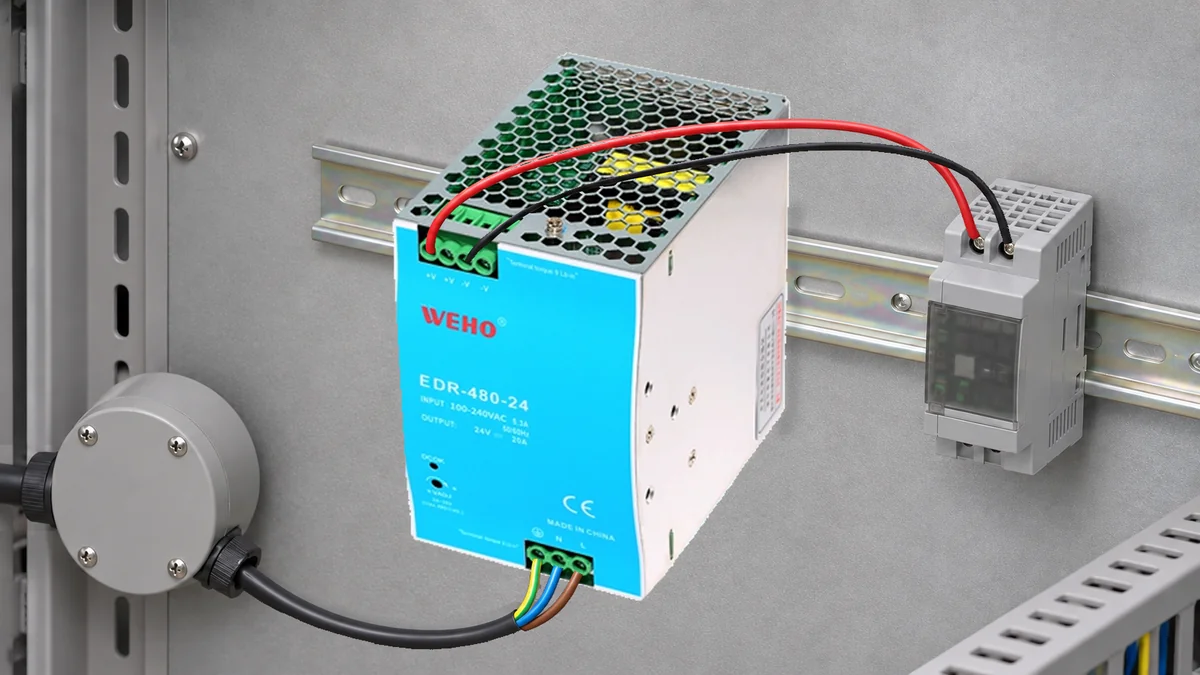
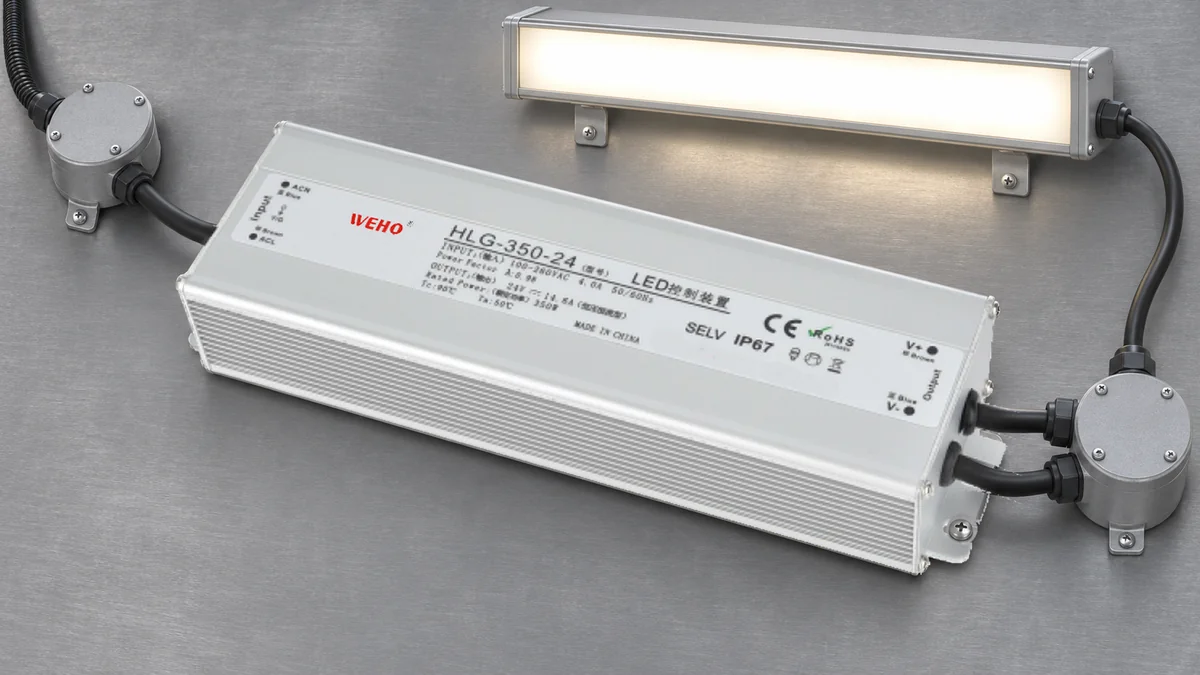
Key Engineering Takeaways
- A matching family name, output voltage or enclosure does not establish a matching dimming interface.
- The reviewed HLG-120-24 product page and datasheet do not identify a dimming connector, protocol or control-wire assignment.
- Missing interface evidence means confirmation is required; it does not prove that every available version lacks dimming.
- Release a replacement against the original controller’s electrical requirements and the exact proposed driver suffix.
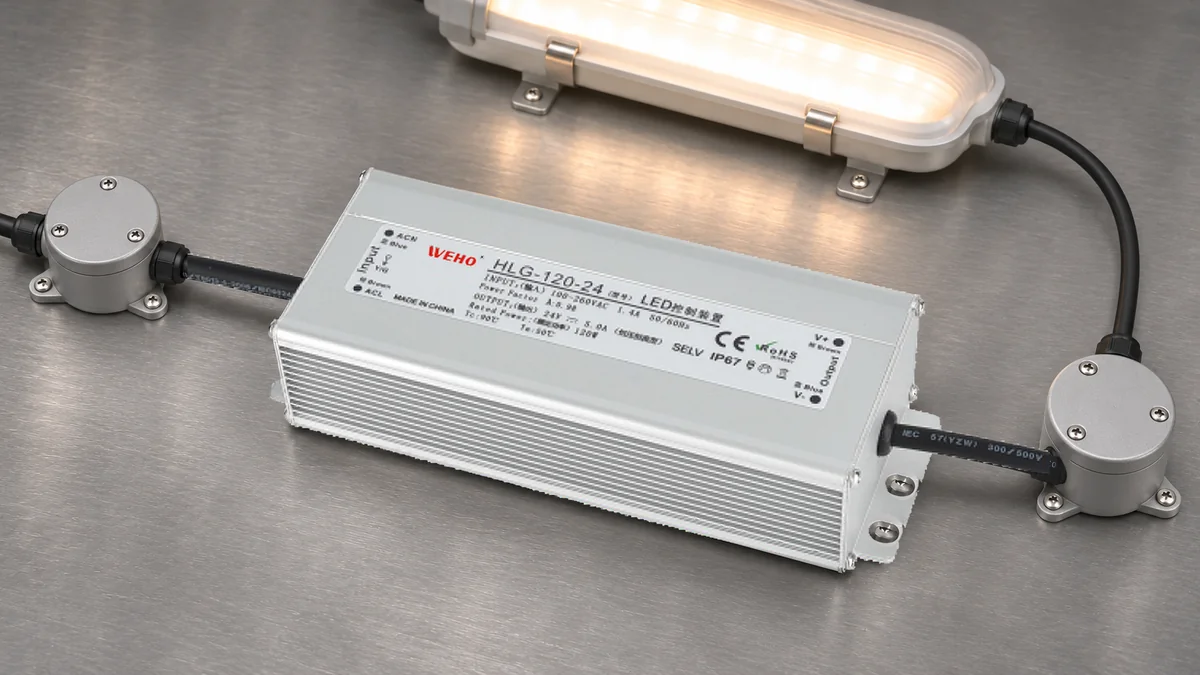
Why a familiar model name can conceal a replacement problem
A maintenance buyer finds a 24 V driver with a suitable current rating and a familiar family name. The old luminaire also has two control conductors, so the replacement request assumes that those conductors can transfer. That assumption can survive purchasing until the installer discovers that no verified interface document identifies where they belong.
Ο HLG-120-24 replacement candidate is published as a 24 V, 5 A unit with a 170 × 69 × 43 mm envelope. Those are useful screening facts. They do not establish support for 0–10 V, 1–10 V, PWM, DALI, a resistance input or any particular controller.
The engineering decision is whether the proposed replacement preserves the existing control function. Close that question before assigning control wires, promising identical dimming behavior or ordering a project quantity. This applies to cross-brand replacements and to suffix or revision changes within one supplier’s range.
Create a control-interface identity record
Begin with the old driver and controller, rather than with the replacement’s wattage. Record complete model and option codes, photographs, the controller manual revision and the old connection diagram. Distinguish a control conductor from protective earth, DC return, a sensing lead or another auxiliary connection.
Next, write the interface requirement in electrical terms. Depending on the original documented system, relevant fields can include signal type, voltage range, who sources or sinks current, required reference, isolation, polarity, permitted cable arrangement and behavior after a broken control connection. Leave inapplicable fields empty with a reason.
Do not infer those details from the number or color of conductors. Two visible control wires do not identify a protocol. A common symbol or near-matching model name is a search clue, not permission to reuse a connection scheme from a different manufacturer.
The replacement record should then point to the exact document that establishes each required function. “The website mentions LED control” is not the same as a model-specific pin assignment and electrical specification.
Hypothetical replacement review
Consider a hypothetical display cabinet whose original driver has a documented analog dimming input. Its controller documentation describes how that input is driven. The cabinet requires both brightness adjustment and a defined response when the control connection opens; these are project requirements, not claimed HLG-120 functions.
The proposed HLG-120-24 candidate meets the initial nominal-voltage screen. However, the reviewed WEHO page and HLG-120 datasheet do not supply a dimming-interface definition. The correct disposition is to hold control-interface approval and request evidence for the offered version. Neither an automatic rejection nor an assumed wiring match is justified.
| Requirement | Original system | Proposed evidence | Disposition |
|---|---|---|---|
| Nominal DC output | 24 V required | HLG-120-24 page: 24 V | Initial screen matches |
| Ρεύμα εξόδου | Measured load required | Published candidate rating: 5 A | Check load and conditions |
| Dimming electrical interface | Old controller manual | No definition in reviewed files | Hold pending confirmation |
| Open-control response | Project requirement | No applicable response record | Define and test offered version |
The table deliberately distinguishes an output match from a control match. Clearing the first two rows cannot close the last two. The same logic applies when a supplier offers an optional control version: identify its complete order code and documents before changing the disposition.

Swipe horizontally on a small screen, or open the full-size diagram.
Separate document absence from an incompatible interface
A useful evidence register has more than “yes” and “no.” It distinguishes a documented supported function, a documented incompatibility and a function whose status has not been established. These states lead to different purchasing decisions.
For example, a current manufacturer document that explicitly states the offered version has no relevant control input can close the question. By contrast, a product page that omits the subject is incomplete evidence. Ask a specific question rather than turning silence into a product capability claim.
| Evidence state | What it establishes | Next action | Release status |
|---|---|---|---|
| Exact interface documented | Defined offered function | Compare controller limits | Electrical review continues |
| Explicit incompatible function | Requirement is not met | Change candidate or architecture | Do not transfer wiring |
| Interface omitted | Evidence is incomplete | Request exact-version confirmation | Control approval on hold |
| Only another model documented | That other model’s function | Obtain offered-model evidence | Do not inherit the pinout |
Ask the supplier to distinguish electrical compatibility from the desired lighting behavior. A recognized signal range alone may not answer the project’s required minimum brightness, off state, startup condition or response to disconnection. Those outcomes belong in the acceptance specification for the actual luminaire and controller.
Verify the offered replacement in a controlled sequence
- Preserve the original evidence. Record the old driver’s full label, controller reference and existing drawing before removal. Keep the original control-wire identification attached to the evidence record, rather than relying on memory or a generic color convention.
- Identify the offered version. Obtain the complete replacement order code and applicable document revision. Ask whether the offered unit provides the required control function and, if so, request its connection assignment and electrical limits. A family-level answer is insufficient when suffixes select different functions.
- Compare the interfaces on paper. Match the original controller’s documented output to the proposed driver’s documented input. Resolve reference, polarity, source/sink behavior and any isolation requirement before connection. If the documents do not answer one of these fields, keep that field open.
- Define functional acceptance. Specify the commands and lighting states the luminaire must reproduce. Include the normal range and any required disconnected-control behavior. Use the fixture and controller requirements to set thresholds; do not invent a universal dimming percentage or response time.
- Test the documented configuration. Use a qualified test procedure and the exact offered sample. Record controller settings, wiring revision, load, input and observed behavior. A test of a manually adjusted brightness level does not establish the full control function.
- Close purchasing with a traceable decision. Link each accepted requirement to a document or test record and identify any approved system change. Keep a control-interface hold separate from commercial quotation status, so an available price is not mistaken for technical approval.
The current files also do not establish a customer-specific wiring arrangement or a system certification. Where replacement changes a luminaire, retain the fixture owner’s applicable approval process and evidence requirements.
Request a model-specific control-interface answer
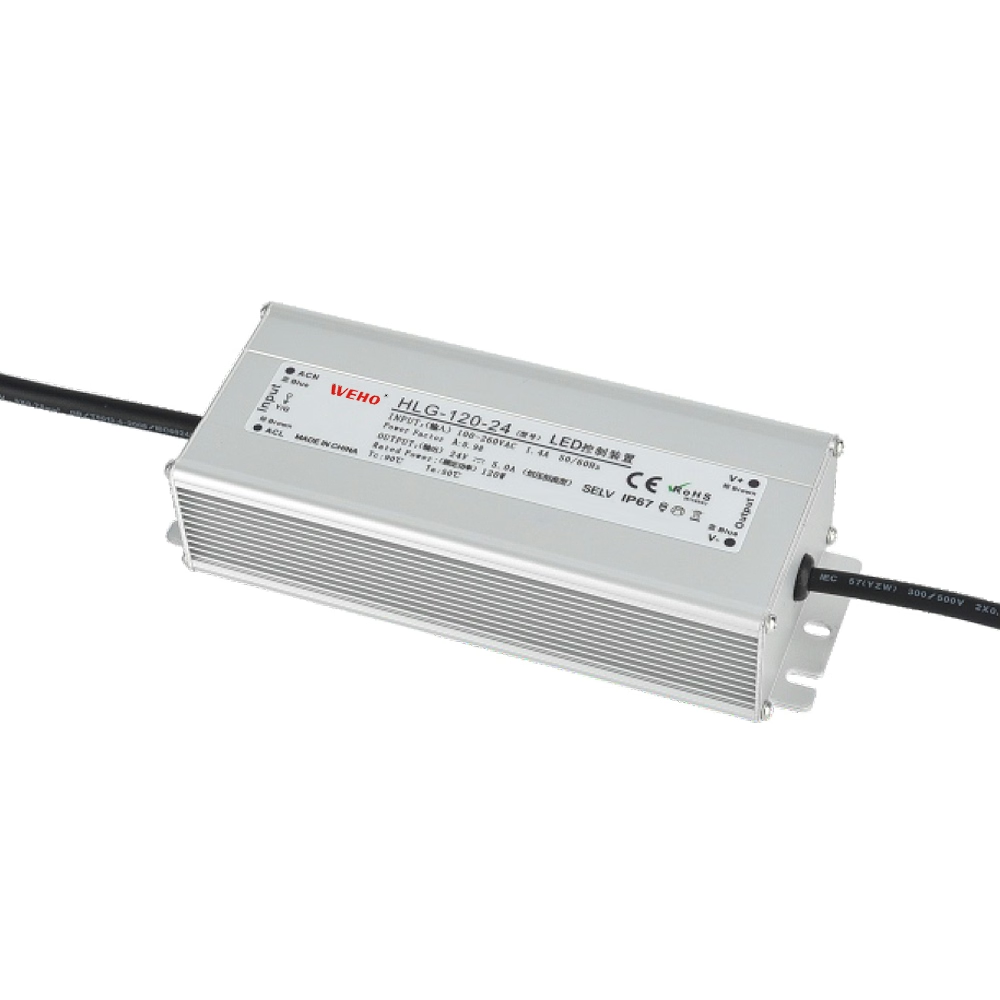
Send WEHO the original driver label, controller manual reference, required output, control-interface description and intended replacement quantity. Reference the HLG-120-24 published specifications and ask whether the exact offered version can meet those requirements, with the applicable documentation. Ask about available alternatives when the required interface is not established.
Use the replacement interface evidence register to keep missing documents, confirmed functions and test decisions separate. It is a working record for the proposed replacement, not a premade approval of control-wire migration.
Engineering FAQ
Does HLG in a model name identify a dimming protocol?
No. A model-family name does not establish a control interface across manufacturers or suffixes. Use the exact offered model’s current electrical and connection documentation when checking 0–10 V, PWM, DALI or another required control function.
Does the absence of dimming information mean HLG-120 never supports it?
No. It means the reviewed documents do not establish the required interface for the offered version. Request a model-specific answer. Do not turn incomplete evidence into an absolute claim about every version or available option.
Can existing control-wire colors determine the replacement connection?
No. Wire colors alone cannot establish electrical function or compatible pin assignments. Preserve the original documentation, identify the proposed interface and compare both sides before connecting the existing control circuit.
What if the replacement matches voltage, current and dimensions?
Those matches support initial screening but do not close the control-function review. The controller interface, required lighting behavior and fixture acceptance process still need their own evidence. Record each requirement separately so one match does not hide another unresolved requirement.