Key Engineering Takeaways
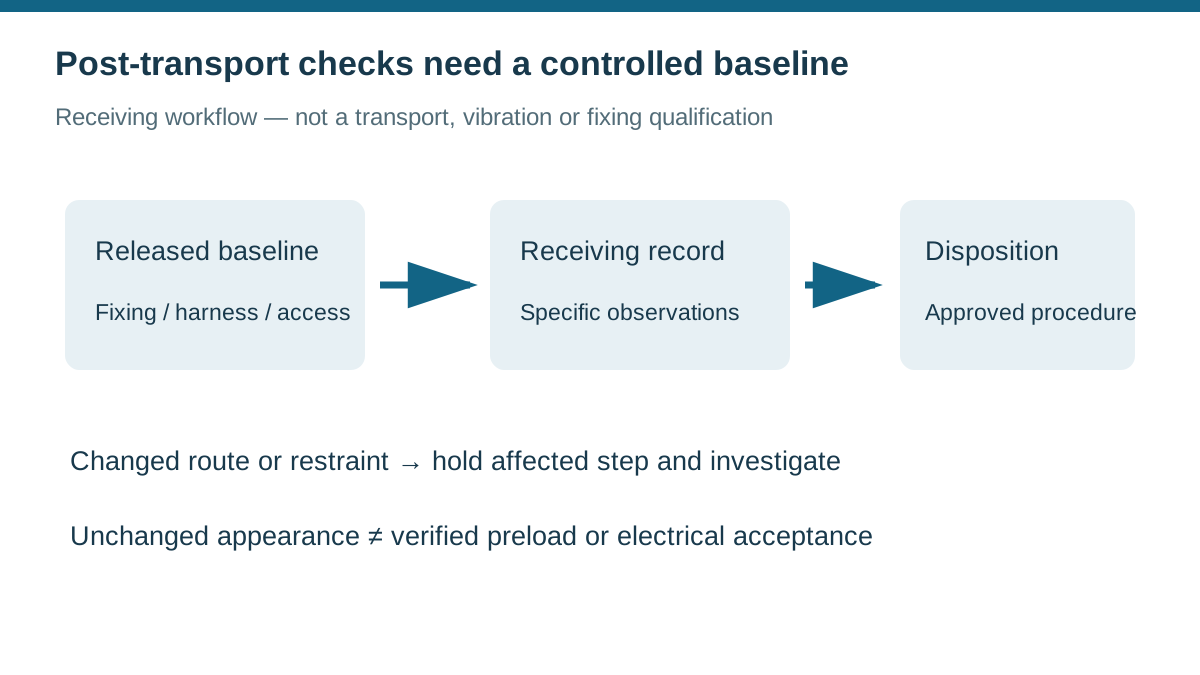
- A unit that operated before transport still needs the system's defined receiving and recommissioning checks.
- Compare product fixing and cable support with the released installation record; do not infer integrity from an intact carton.
- A torque witness mark is an observation, not proof of clamp load or a universal instruction to retighten.
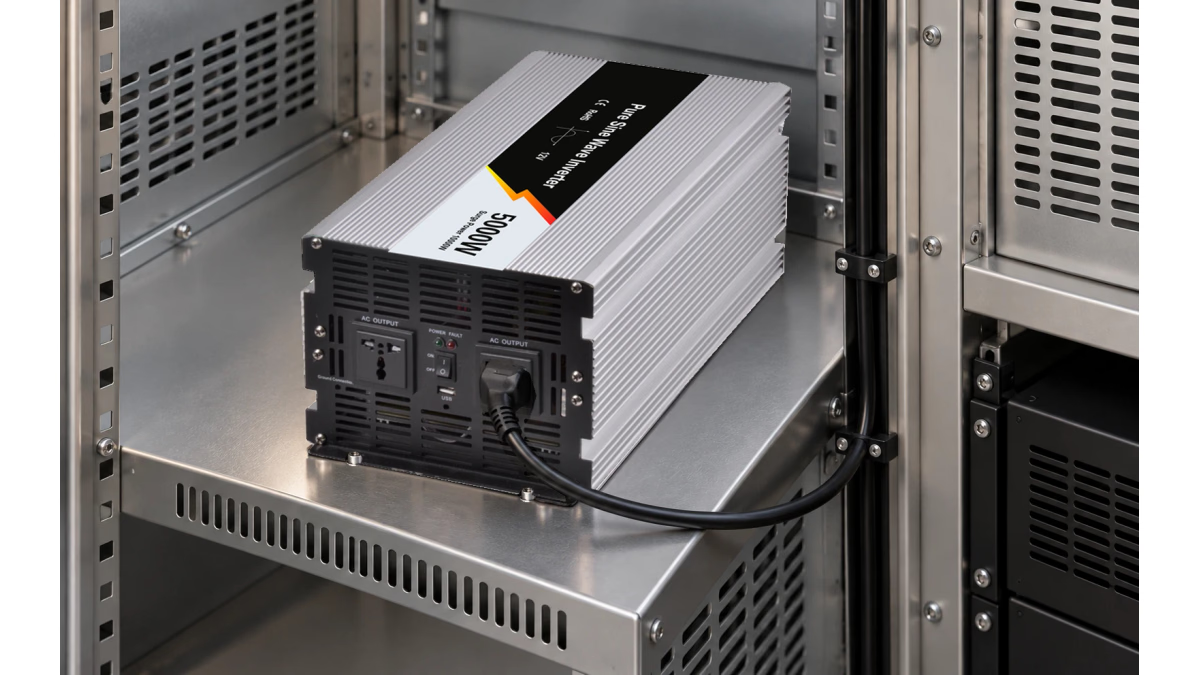
- Treat the WHP-5000 photograph as product identity and application context, without claiming transport or vibration qualification.
Why should transport change the handover checklist?
Transport can change the condition of an installed assembly even when the inverter enclosure looks undamaged. A shifted harness, loose external restraint or reduced access may require correction before the next operating check.
For an OEM shipping mobile or skid-mounted equipment, the practical task is to define which receiving observations release the unit for further commissioning and which require engineering review. This is different from proving a product's vibration rating or simply repeating a no-load output check.
Ο WEHO WHP-5000 family page identifies a pure-sine inverter family with multiple DC and AC options. It does not, by itself, qualify the complete equipment's brackets, harness supports, packaging or transport route.
What should the engineering record distinguish?
Separate a changed visual condition, a mechanical verification and an electrical functional result. A photo may show movement; a controlled drawing establishes the intended fixing; the appropriate inspection or test establishes the specific acceptance result.
Do not replace this evidence chain with a general instruction to tighten every visible screw. Product enclosure screws may serve a different purpose from installation fixings. The approved assembly documents must identify the actual mounting arrangement, fastener specification and verification method.
Hypothetical receiving example
Assume a shipping inspection record shows four external cable restraints and two installation retaining points in a defined camera view. At receiving, three restraints remain as recorded, but one cable has moved from its clamp and is now close to a service edge. Both visible retaining points appear unchanged.
The receiving report contains one observed harness change among four recorded restraint positions. Calling that “25% mounting failure” would be misleading: the record describes a small example's restraint observations, not a failure rate or a verified loss of product fixing strength.
The correct immediate disposition is to withhold the affected commissioning step, inspect the cable and restore the approved restraint arrangement through the equipment procedure. Inspect other affected paths before release. An unchanged visible fixing does not prove an unseen anchor or required preload remains acceptable.
A witness mark has a limited meaning
An aligned witness mark can help compare the visible rotational relationship of marked parts. It does not directly measure clamp load, detect every damaged thread or prove that the original tightening operation was correct. A disturbed mark is a reason to investigate under the defined procedure, not a complete diagnosis.
NASA's Fastener Design Manual discusses fastener design and preload considerations. It is engineering background, not a source of WHP-5000 mounting torque or a permission to substitute aerospace fastener values into an inverter installation.
If the equipment's released documents do not define a required check, refer the condition to the responsible design authority. Do not create a torque, thread engagement, acceleration rating or allowed gap from the photograph.
Which checks belong in the handover matrix?
The matrix should connect each observed condition with its controlled reference and disposition. This makes the receiving record useful to operations, installation personnel and supplier quality without turning it into an improvised repair guide.
| Εκταση | Compare with | Record | Disposition basis |
|---|---|---|---|
| Product position | Released assembly view and fixing drawing | Movement, distortion or changed contact | Approved mechanical criteria |
| External restraints | Harness routing and support record | Missing, shifted or damaged supports | Equipment assembly procedure |
| Connector area | Correct unit/interface documentation | Visible displacement or damage | Specified inspection method |
| Air and service access | Released cabinet arrangement | New obstruction or changed access | Actual installation requirements |
| Functional release | Commissioning plan | Checks performed and exact configuration | Defined electrical acceptance criteria |
Keep the baseline photos clear enough to show the relevant relationships. Include the whole assembly and specific fixing or restraint details, with identifiers that match the drawing. A close-up of one attractive cable tie cannot establish the condition of the complete path.
Also identify removable shipping aids separately from permanent support. A temporary block or transport restraint should not be mistaken for the normal installation method. Removal and restoration steps must follow the equipment's documents, including any associated inspection before energization.

How should receiving and recommissioning proceed?
Begin with the equipment in the approved isolated condition. Battery-fed equipment can retain an energy source after AC is disconnected, so qualified personnel must apply the actual system's isolation and verification procedure before accessing hazardous areas.
- Check identity and transport records. Match the equipment and inverter labels to the shipment record. Preserve reports of impact, water exposure, damaged packaging or other events rather than deleting them after an exterior check looks acceptable.
- Compare the overall assembly with the baseline. Look for changes in product position, the shelf or plate, adjacent equipment and access. Record the exact location of any change with a photograph and drawing reference.
- Inspect the intended fixing points using the approved procedure. Distinguish installation fixings from product enclosure screws. Do not infer a torque value or mounting rating from a similar model.
- Trace external cable restraint and route changes. Check whether a lead is pulled, unsupported or in contact with a new edge according to the assembly criteria. Record what is visible and which areas require access under the approved procedure.
- Resolve discrepancies before the affected energization step. Restore the released arrangement or obtain an engineering disposition; do not merely move the cable out of the photograph.
- Perform the defined commissioning checks. Save the actual electrical configuration, operating conditions and results. Mechanical inspection alone does not establish AC performance, and a short operating test does not qualify the assembly for every future transport event.
If a repeated shipment causes the same restraint to shift, treat it as a design or packaging investigation. Replacing the restraint each time without recording recurrence loses useful evidence. The responsible team may need to review support placement, routing, installation process and packaging under an appropriate validation plan.
Conversely, an unchanged assembly does not justify inventing a transport problem. Record the completed inspection and its actual scope. The goal is a traceable release decision, not a large collection of speculative defects.
If the next operating check shows a shutdown, use a separate electrical investigation. The inverter shutdown diagnosis guide distinguishes input, load and thermal conditions. Transport history is relevant context, but it does not by itself prove which component caused a later electrical symptom.
What should the WEHO inquiry include?
Send the WHP-5000 product inquiry with the actual ordered variant, assembly arrangement, intended transport exposure and the specific documentation being requested. Ask which current unit drawings and installation information apply.
Provide the baseline and receiving observations when a product interface appears affected. Keep the equipment maker's bracket, harness and packaging responsibilities clear. Do not present an AI-assisted cabinet illustration or an unqualified shipment as evidence of WEHO transport testing, vibration compliance or a field installation.
Engineering FAQ
Does an intact package prove the installed inverter is ready to run?
No. Packaging condition is one observation. Follow the equipment's receiving and commissioning plan for fixing, cable support, access and the required functional checks.
Should every visible screw be retightened after shipping?
No. Use the approved procedure for the identified fixing. A general retightening instruction can confuse enclosure screws with installation fasteners and omit required assembly details or inspection conditions.
Does an aligned witness mark prove correct preload?
No. It helps compare visible rotational position but does not directly measure preload or verify every aspect of the joint. Interpret it only within the specified inspection procedure.
Does a successful power-on test prove transport qualification?
No. A power-on result covers its actual test conditions. Transport or vibration qualification requires a defined assembly, exposure and acceptance program; it cannot be inferred from a short operating check.