














Last updated: October 10, 2026
Quick answer: A remote-sense requirement is not satisfied by an R.C. marking. The retained SP-100 sheet identifies optional CN3 as Remote ON/OFF, with RC− and RC+ assignments. It does not assign sense terminals. Confirm the ordered interface before approving a harness; the sample’s optional print does not prove a fitted connector.
When an OEM request says “remote sense power supply,” establish the intended function before choosing a connection. A drawing labelled remote control may concern a different requirement. For this SP-100-12 review, the decisive question is whether the applicable ordered documentation supports the requested interface—not whether two nearby marks look like a pair of sense connections.
Remote sense and remote on/off answer different questions
Remote sensing uses a specified measurement point to account for voltage drop in the output leads. The referenced guide to remote sensing explains this general principle. It is not evidence that SP-100-12 provides that function. A supported sense interface requires its own model-specific assignments, conditions and limitations.
Remote on/off concerns a documented output-control function. The WEHO SP-100 page lists optional remote control, while the complete SP-100 specification and mechanical sheet calls the optional CN3 interface Remote ON/OFF. Neither title permits a reviewer to rename RC− and RC+ as sense contacts. This article gives no jumper, actuation-level or energized connection procedure.

Keep the photographed sample and the interface document together
The authentic sample carries SP-100-12, DC OUTPUT 12V 8.5A, and AC INPUT 100–240VAC 50/60Hz 1.7A. Its front strip has seven physical contacts: two +V, two −V, protective earth, N and L, seen left to right. The R.C. +/− (OPT.) print occupies a separate region beside the adjustment marking. Do not invent additional populated pins in that region.
The formal CN3 table assigns RC− and RC+ under the optional on/off heading. That assignment and the photographed print are useful evidence of the documented function, but they do not establish that a particular purchase includes the option. A family name, a catalogue image and an order-specific configuration are different records.
| Review object | Available evidence | Unresolved question |
|---|---|---|
| Front power contacts | Actual seven-contact strip and formal power-pin table | Approved equipment harness and operating conditions |
| Optional CN3 | Remote ON/OFF title; RC−/RC+ assignments | Ordered option, supplied hardware and applicable interface instructions |
| Requested remote sensing | No sense assignment in the retained SP-100 sheet | Supplier confirmation or another appropriately documented selection |
Write the requirement as a function, not an abbreviation
Separate the buyer’s need from the sample’s markings. If the requirement concerns voltage at a remote receiving point, state that requirement explicitly and ask for the relevant supported interface. If it concerns component output control, identify that duty separately. Do not combine them under an unqualified “remote” checkbox.
A useful supplier question names the full model and order revision, describes the required function, and asks which document establishes it. Request confirmation of whether the option is included, the supplied connection hardware, its permitted electrical conditions, and the handling of unspecified states. Leave unresolved answers visible in the review record instead of deriving them from another SP model.
- Requirement: what function is needed, and at which equipment boundary?
- Authority: which exact ordered document supports the assignment?
- Configuration: is the option included in the delivered unit?
- Disposition: who resolves missing evidence before harness release?

Use the layout to identify the review location, not to prove a function
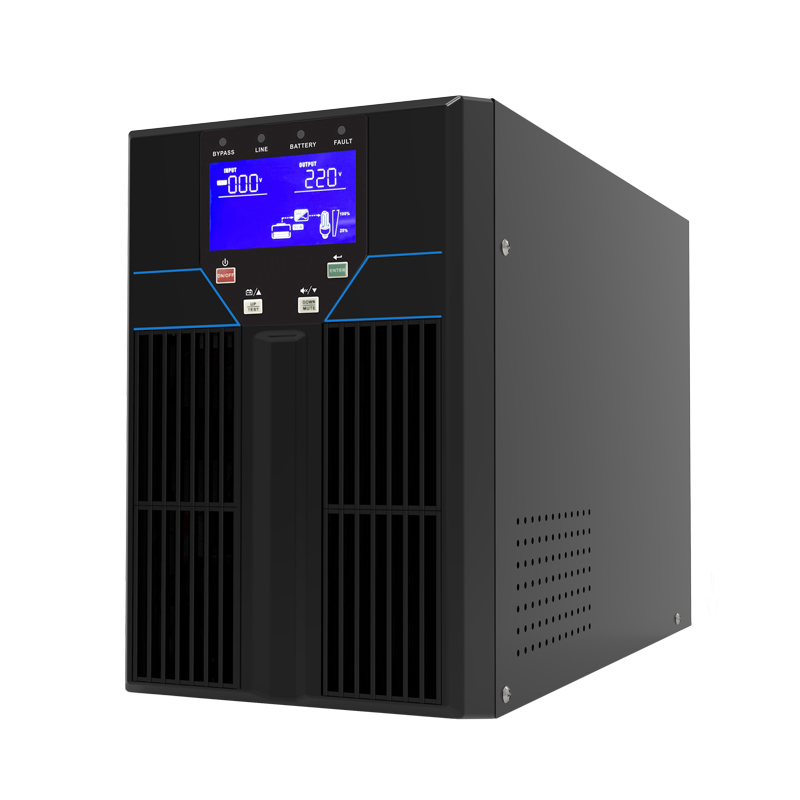
The new signal-routing bay illustration places the sample on a continuous electronics plate with separate receiver hardware. The second illustration uses an inkjet coding-station service drawer with a different mechanism and composition. That second view preserves the authentic product photograph rather than reconstructing its housing or labels. These views make the handover location concrete; neither supplies a missing CN3 specification, establishes a receiver load, or demonstrates a remote-sense or on/off test.
The retained body drawing is 179 mm front-to-rear depth, 99 mm terminal-front width and 45 mm height. Its 119 mm mounting envelope is separate from the body width. The complete underside and side mounting details belong in the mechanical review; this chassis is not a DIN-rail product. No universal clearance, screw torque, thermal orientation or equipment fit is inferred from the illustrations.

Close the evidence gap before the harness is released
If only R.C. (OPT.) is visible and ordered hardware is unconfirmed, record the optional interface as unconfirmed. If the supplied document identifies Remote ON/OFF but the requirement asks for remote sensing, record a function mismatch pending clarification. Do not convert either result into a connection experiment.
A supplier response can resolve the review only when it is tied to the purchased configuration and the required function. The electrical owner still checks the equipment interface against that response. A confirmed optional interface is not, by itself, machine safety authorization or permission for an equipment action.

Σύναψη
For a remote sense power supply request, confirm the function first and the ordered hardware second. The SP-100-12 R.C. marking and retained optional CN3 on/off table do not establish a sense interface. Keep unresolved assignments on hold and ask WEHO for order-specific documentation before releasing the relevant harness.