C3Z-D100N for Paper and Label Edges: Define the OEM Sample Acceptance Test
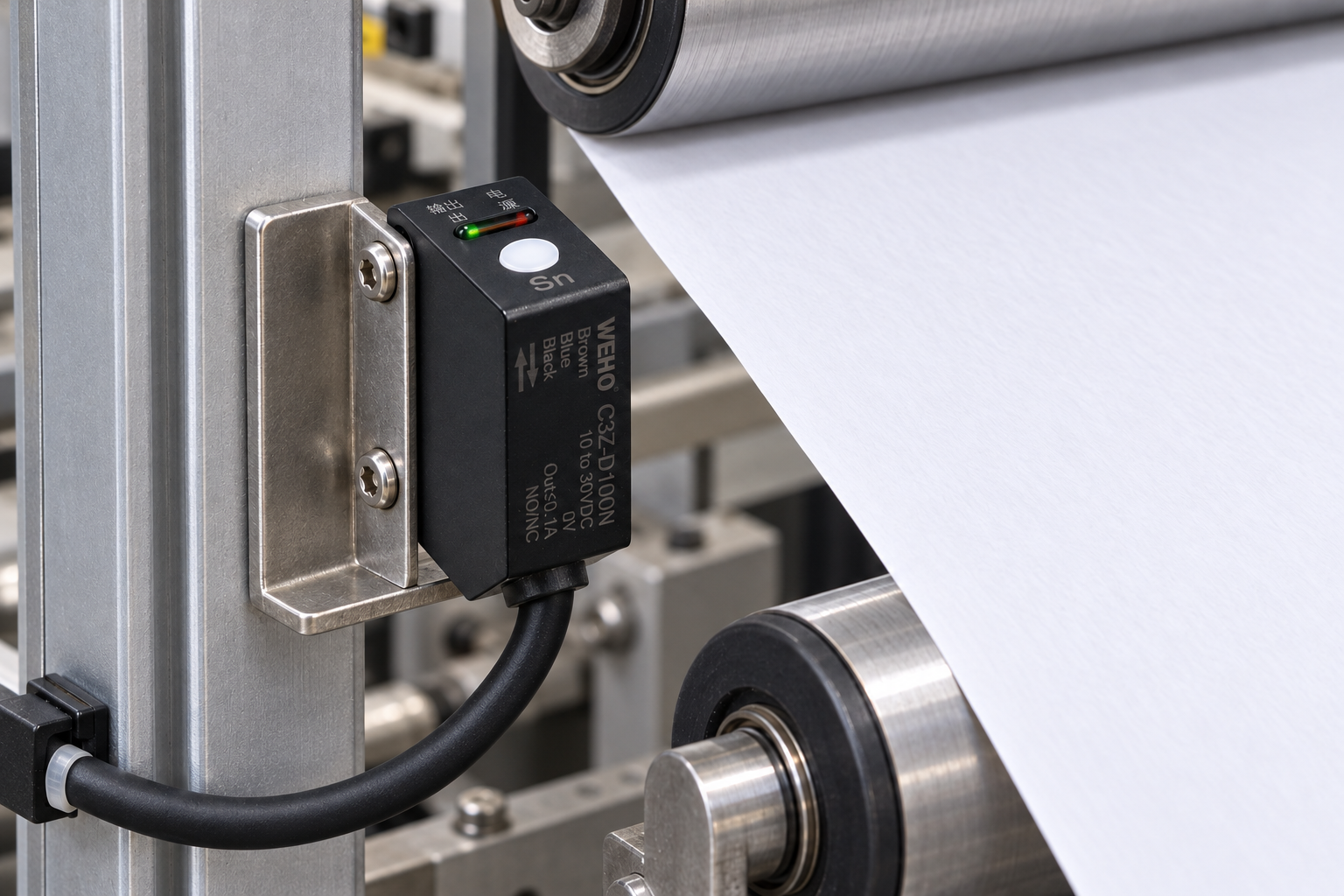
For an OEM paper or label machine, specify edge detection as two repeatable states—material present and material absent—under the real background and production tolerances. The C3Z-D100N is a diffuse-reflective sensor: its result depends on returned light, so detecting opaque paper over a gap is a different task from distinguishing a printed label on a reflective liner.
Use the actual roll stock and mounting geometry for sample qualification. Do not accept a successful demonstration with a large white card as proof that every label finish, width or backing will produce a reliable registration signal.
Describe the edge the machine must recognize
Record whether the application is web-presence detection, a loose-sheet leading edge, a gap between separate labels, or print registration on continuous material. Include minimum material width, edge wander, distance to the background, finish and color range, curl and expected contamination. These details determine the test samples and the useful sensing arrangement.
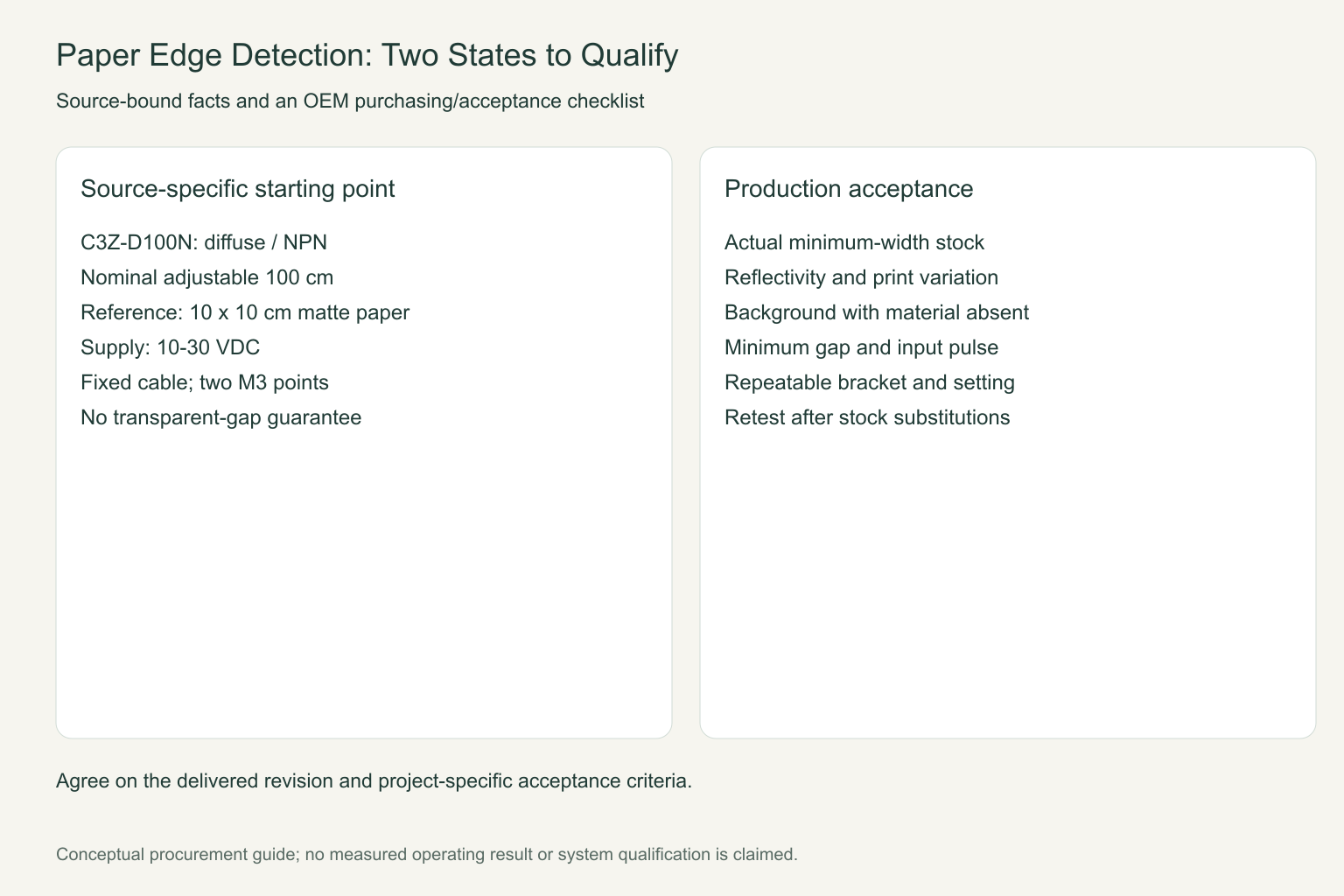
The matched C3Z sheet lists an adjustable nominal 100 cm range for D100N using a 10 × 10 cm white non-glossy paper reference target. That reference does not establish a maximum working distance for narrow labels, black printing or metallic stock. A smaller or different target needs its own qualification at the proposed setting.
Build a target/background acceptance matrix
| Test condition | What the OEM records | Release decision |
|---|---|---|
| Minimum-width material at both lateral extremes | Present/absent output at the planned position | The edge stays detectable across allowed wander |
| Light and dark print areas, glossy and matte stock | State stability over the actual sample set | A material change does not create a false edge |
| Material absent with the background exposed | Background response throughout the mechanical travel | The empty path is distinguishable from the material |
| Machine speed and minimum gap | Observed pulse width and receiving-input capture | The complete input path records the required event |
Keep the optical and electrical decisions separate
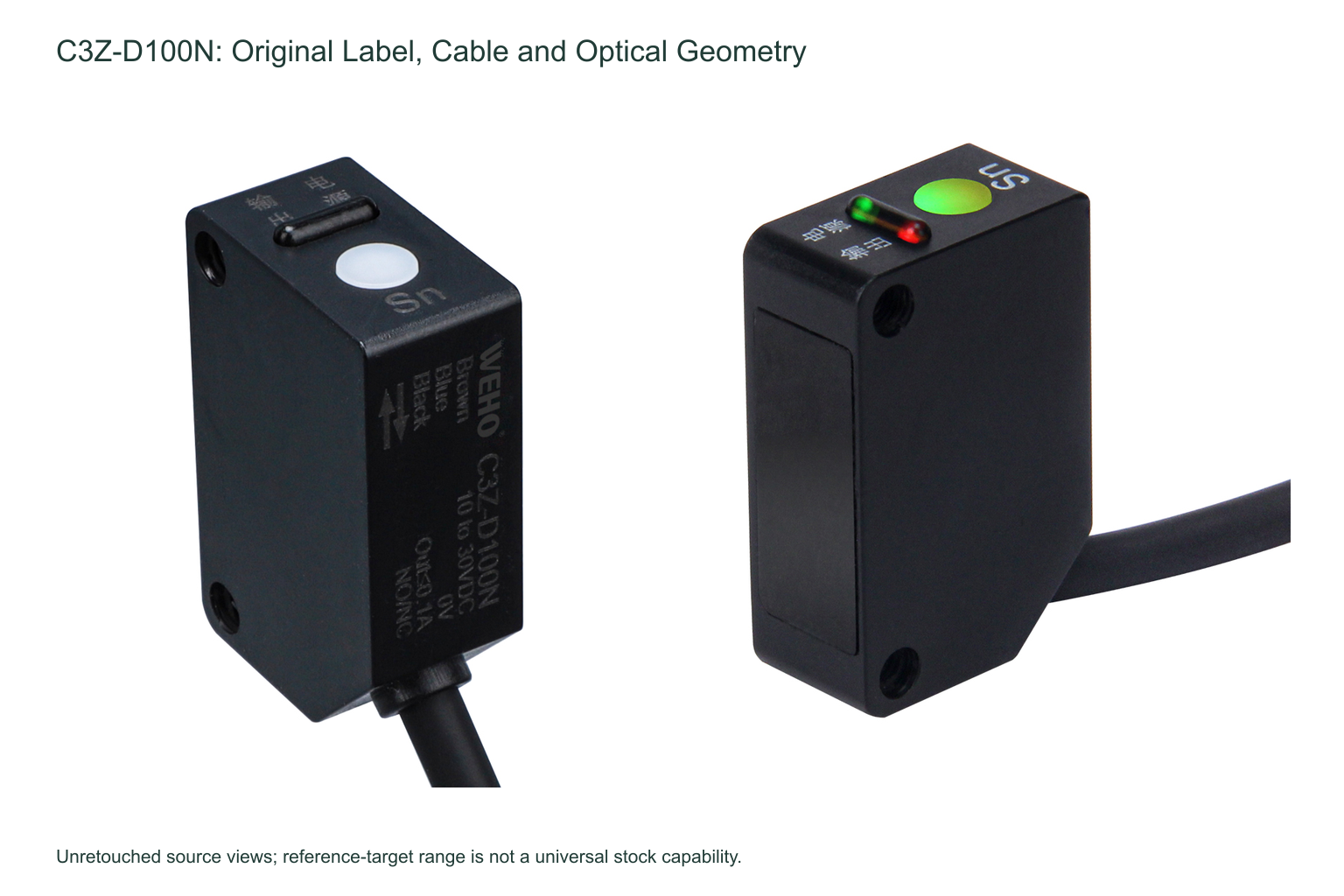
The D100N is the NPN version; the C3Z table lists 10–30 VDC supply and load current no more than 100 mA. Match the receiving input and common reference to the specified output circuit. A correct supply voltage alone does not make NPN and PNP interfaces interchangeable.
The sheet lists a 2 ms response time with measurement conditions tied to the standard target and setup. The available edge pulse also depends on material speed, optical geometry, receiving-input filtering and scan behavior. Specify the minimum pulse the machine must recognize; do not convert the sensor’s isolated response figure into an unverified production-rate guarantee.
Document a repeatable installation and setting
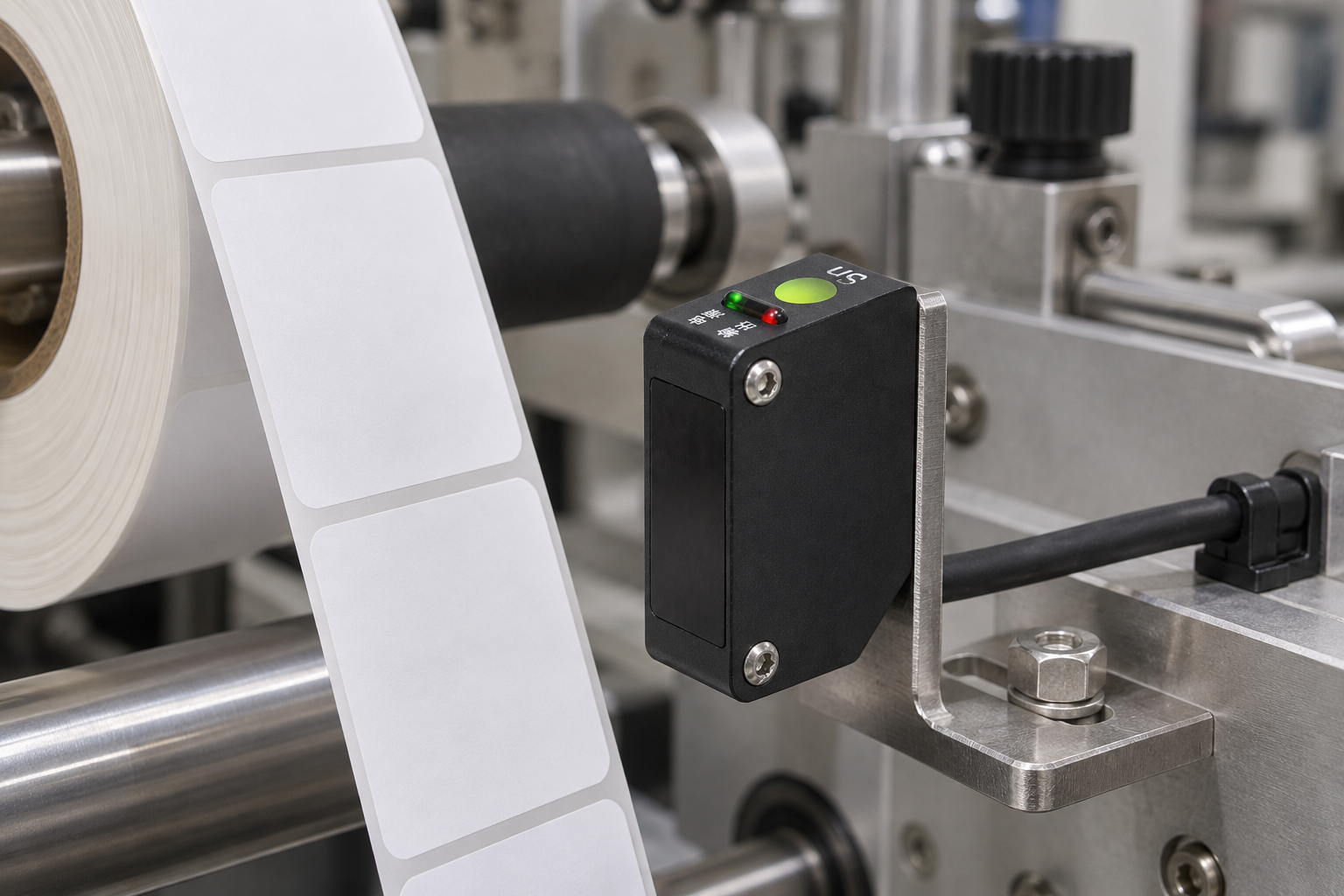
The original unit has a fixed cable, a top setting button and two M3 mounting points. Keep the bracket position and cable support repeatable so servicing does not change the optical relationship. Leave the sensing face unobstructed and prevent nearby moving material from pulling on the cable entry.
The source describes one-touch sensitivity setting and five button presses to change NO/NC action. It does not provide a complete teach-duration sequence in the matched sheet. Obtain the delivered operating instructions, record the accepted setting procedure, and retest both material states after a setup change; do not invent a press duration for a production work instruction.
Control substitutions across a production batch
Approve the full D100N model, cable arrangement, bracket revision, receiving-input configuration and representative stock set together. When replacing a sensor, compare its literal label and output suffix with the approved sample. A replacement that is physically similar can still require a different electrical interface or optical requalification.
Store the acceptance results with the machine revision. If a new label supplier changes reflectivity, backing or minimum width, update the material matrix before treating the old sensor setting as transferable.
Prepare a useful sensor RFQ
Send sample-stock photographs and dimensions, edge/gap definition, mounting distance, background arrangement, line speed, minimum required pulse, PLC input type, cable requirements and expected order quantity. Review the C3Z-D100 product information και ask WEHO to review the intended sensing task.
Buyer questions
Will this diffuse sensor detect transparent label gaps?
The matched D100N evidence does not establish that capability. Define the transparent target and liner before selecting a detection method; a different optical principle may be necessary.
Can the 100 cm value be written into the machine’s operating specification?
Only with the source’s reference conditions and a separate qualification for the actual stock. It is not a universal distance for every label material.