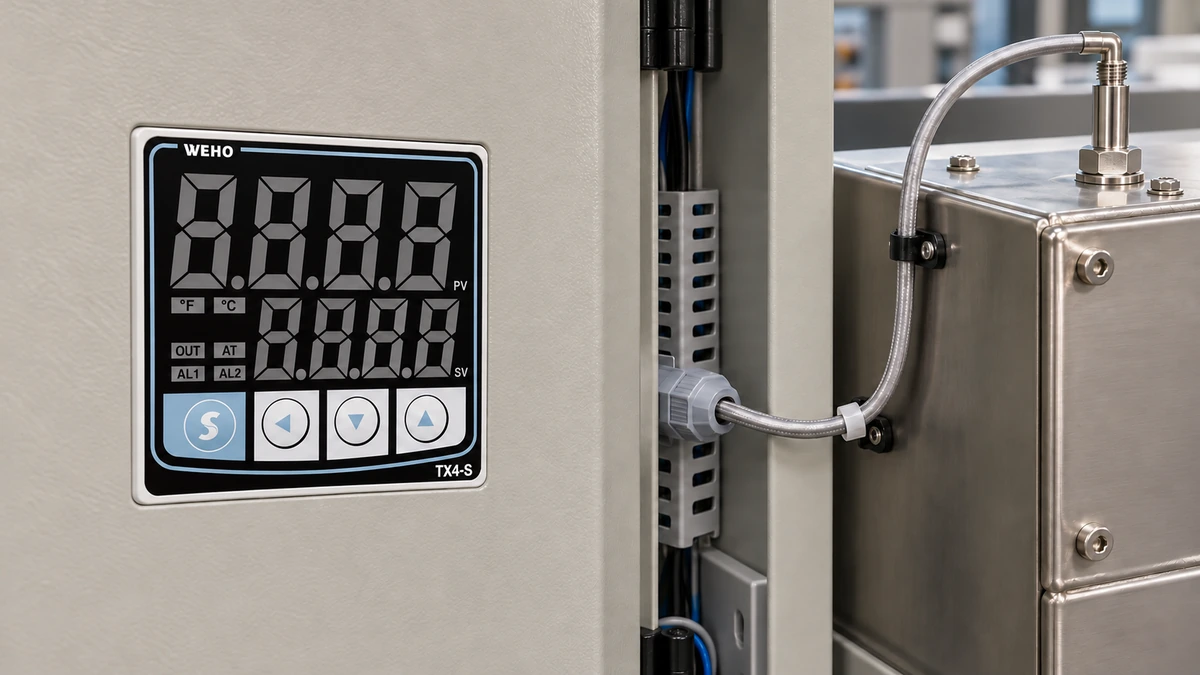
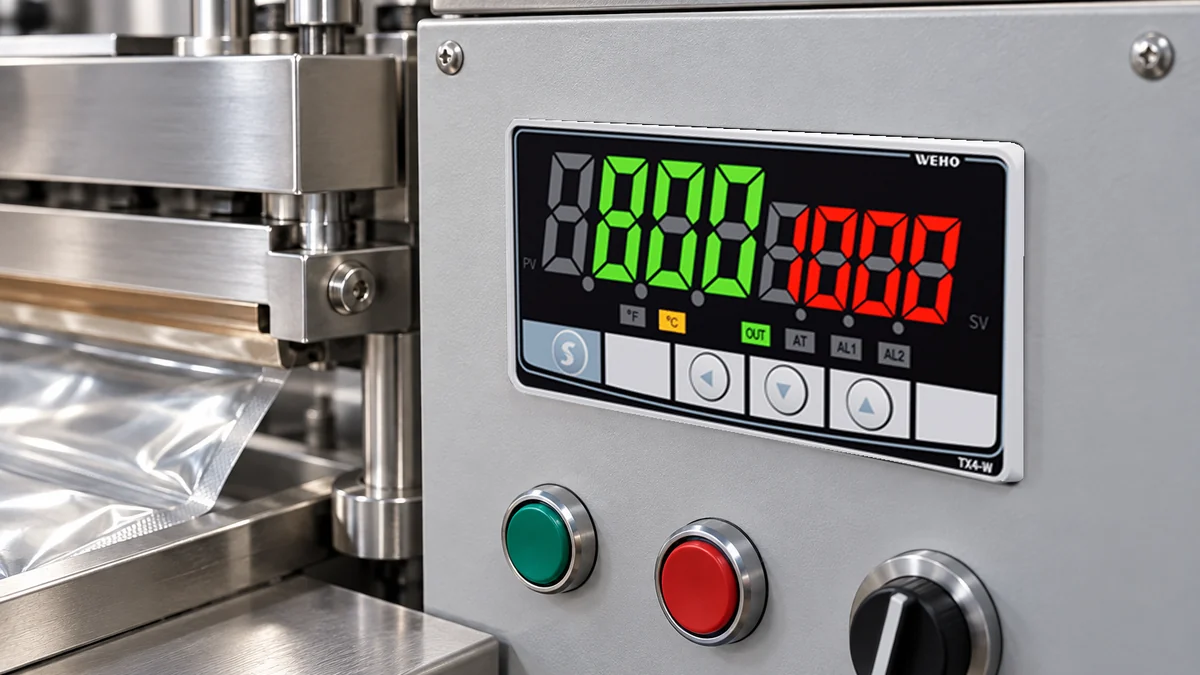
Key Engineering Takeaways
- TX4-H ON/OFF return value defines a temperature switching band, not a time interval.
- The TX4 manual shows the oH parameter only when control type Pid is OFF.
- In the manual's HEAT diagram, the nominal ON boundary is SV − oH and the OFF boundary is SV.
- Keep control hysteresis, PID control cycle and alarm return difference separate.
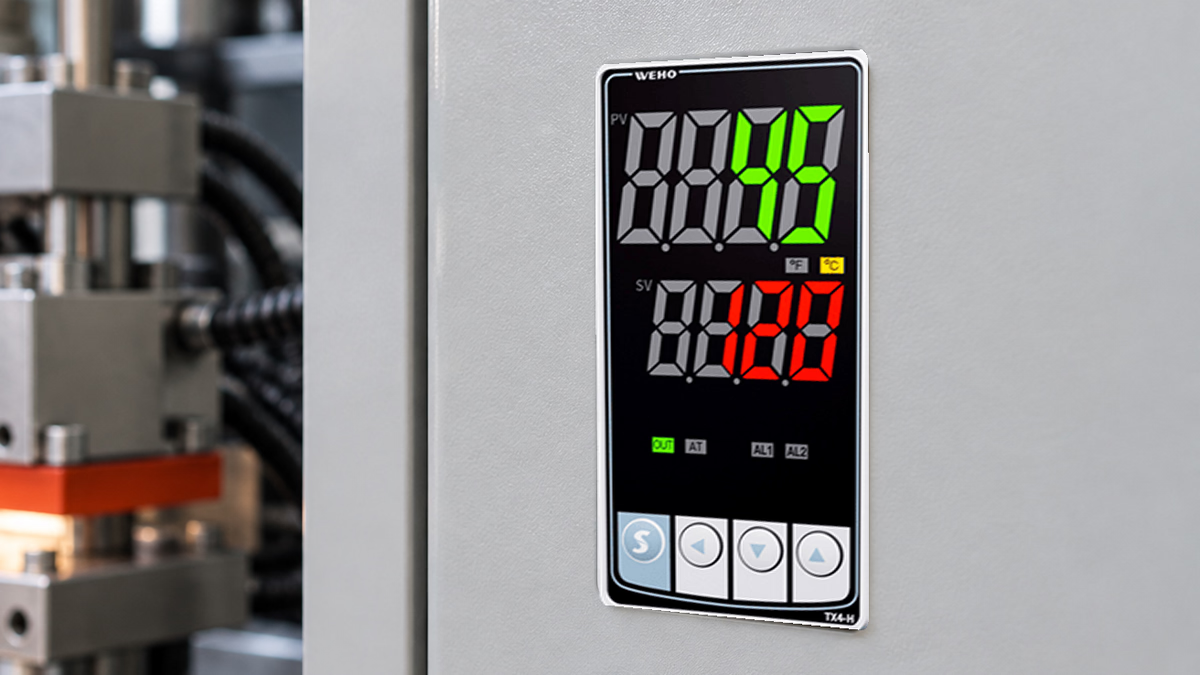
Why can the return-value setting disappear?
The setting can be hidden because the controller is configured for PID rather than ON/OFF control. The missing parameter is therefore a reason to check the selected control type before assuming a display problem or restoring factory settings.
For an OEM using the TX4-H temperature-controller settings, the task is to establish the required ON/OFF switching band and verify its behavior. A temperature band answers a different question from the duration of an output cycle. Confusing them can produce a setting that has the right-looking number but the wrong physical meaning.
Record the actual input, units, control type and heating/cooling selection before changing anything. A parameter that is appropriate for one configuration may be hidden or serve a different purpose in another.
What does Pid = OFF mean in this context?
را TX4 instruction manual, revision TX4 230808EN, identifies control type Pid with ON for PID control and OFF for ON/OFF control. Its ON/OFF Return Value section states that oH is displayed when Pid is OFF.
Here, OFF refers to the PID-control selection. It does not mean that the controller is electrically isolated, that its output is permanently disabled or that the process load cannot operate. ON/OFF control remains an operating mode with a switching response.
The manual describes oH as setting the interval between ON and OFF. Its HEAT diagram places the OFF boundary at SV and the ON boundary below SV by oH. Use that documented heating relationship for the example below; do not transfer it to an unverified cooling configuration.
The front form alone does not establish the complete electrical option. Match the installed controller code, output selection and applicable connection information before testing the receiving circuit.
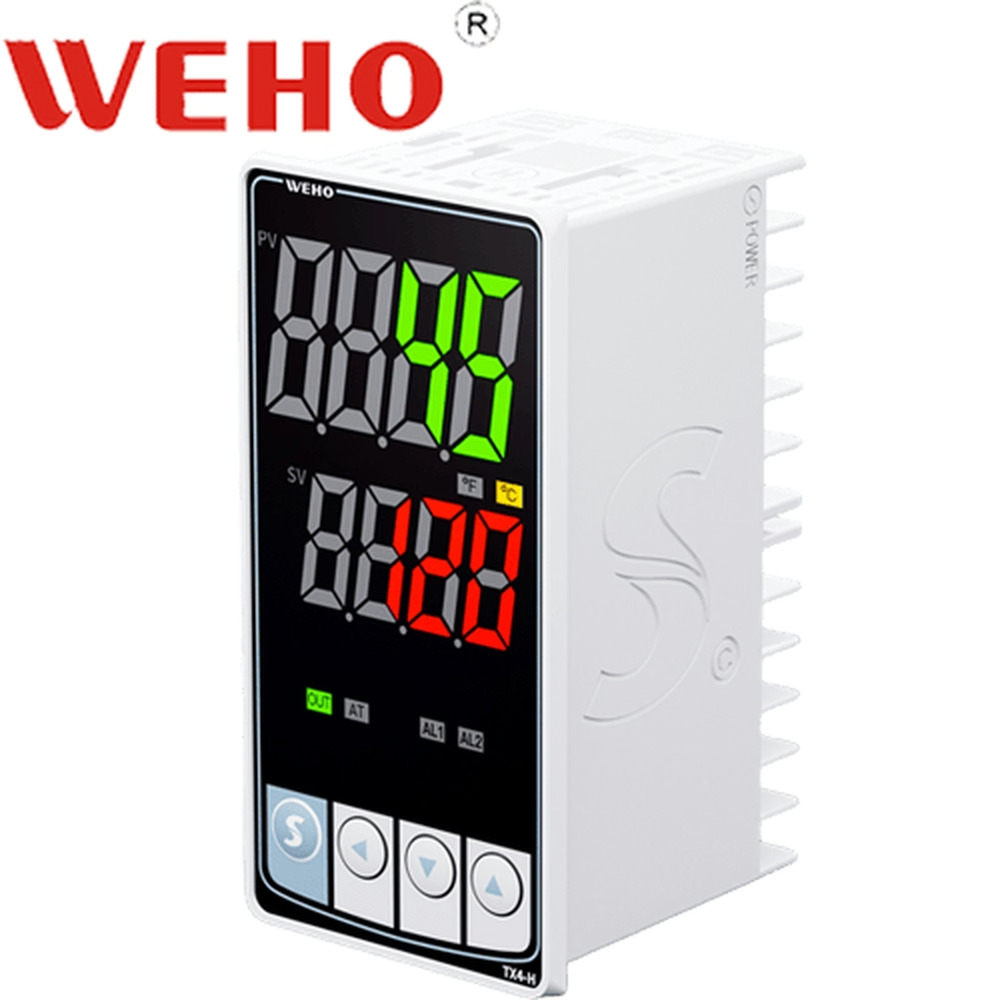
How does the temperature band affect switching?
A band separates the point that turns heating OFF from the lower point that turns it ON again. Between the boundaries, the output state depends on the direction of travel and the preceding state. That state memory distinguishes hysteresis from a single instantaneous comparison with SV.
Use a Hypothetical Heating-Band Example. Assume SV is 100°C and oH is 2°C. Following the manual's HEAT diagram, the nominal boundaries are:
ON boundary = SV − oH = 100°C − 2°C = 98°C.
OFF boundary = SV = 100°C.
These are illustrative diagram calculations, not measured TX4-H switching points or an approved process tolerance. Measurement accuracy, thermal lag and the complete equipment response still affect the actual process behavior.
If heating was ON while temperature rose from below the lower boundary, the diagram keeps it ON until the upper boundary is reached. If heating was OFF while temperature fell from above the upper boundary, the diagram keeps it OFF until the lower boundary is reached. A reading of 99°C can therefore coexist with either prior state in this idealized example.
That is not a contradiction. The 99°C reading lies within the band, where the preceding state matters. The commissioning record should include the direction of temperature travel rather than treating one static reading as a complete switching test.
Which TX4 parameters should not be confused with oH?
Use the parameter's physical quantity to identify its purpose. Similar terms such as cycle, return and difference do not make the settings interchangeable.
| Parameter | Role | Relevant condition | Separate verification |
|---|---|---|---|
| oH, ON/OFF return value | Temperature band between ON and OFF | Shown when Pid is OFF | Switching boundaries and direction of travel |
| t, control cycle | Time basis of PID output cycling | Applicable PID configuration | Output timing and receiving-device suitability |
| AH1/AH2 | Alarm return differences | Applicable alarm configuration | Alarm action and release behavior |
| SV | Requested control setpoint | Configured unit and permitted range | Effective recipe value after changes |
Do not enter a number of seconds into a temperature-band decision. A 2°C return value and a 2 s control cycle have different units and functions even though the displayed numeral can look similar.
An alarm that releases at a different temperature also does not prove the control output uses that same band. Test the controller output and the relevant alarm as their own functions when the equipment requires both.

Swipe horizontally on a small screen, or open the full-size diagram.
How can the band be verified without inventing a process tolerance?
- Record the complete controller marking, manual revision, input, unit, SV, control type, heating/cooling selection and output selection.
- Obtain the required process band and permissible switching behavior from the equipment specification. Confirm that ON/OFF control is the intended method before selecting Pid = OFF.
- Read the oH setting and calculate the nominal heating boundaries from the applicable diagram. Keep the calculated values separate from measurements.
- Use an approved simulated input or controlled thermal sequence. Observe output changes during both rising and falling conditions, including the actual receiving device where appropriate.
- Record the input or reference value, direction, output transition and relevant measurement uncertainty. Compare them with the stated acceptance requirement.
- Restore and read back the released configuration. Resolve unexpected behavior before normal process operation resumes.
Avoid changing an active process from PID to ON/OFF solely to reveal a menu item. That change alters the control method. Manage output permission and process energy through the machine commissioning procedure, using qualified personnel for electrical work.
A narrow band can produce frequent changes when the measured temperature fluctuates across its boundaries. A wider band changes the permitted control behavior. Neither observation supplies a universal best setting; the process, receiver and required temperature performance determine the acceptable choice.
What should be retained for maintenance and replacement?
Retain control type with the oH value. A maintenance record that lists only “return value = 2” leaves out its units, applicable mode and intended behavior. Include SV, heating/cooling selection, output interface and the observed rising/falling sequence.
را TX4-H control-mode information is the relevant product reference for this review. The parameter record and actual installed code should accompany a replacement so a similar front panel does not conceal a different configuration.
Use the ON/OFF hysteresis worksheet to keep nominal boundaries and actual observations separate. The blank fields require commissioning evidence; the worked 100°C/2°C example does not qualify a particular machine.
What information should be sent to WEHO?
Send the complete TX4-H marking, manual revision and settings for Pid, HC, SV, oH and output selection. If oH is not visible, describe the current mode and the menu sequence. If switching is unexpected, include the direction of temperature travel, actual transitions and receiving-device behavior.
Contact WEHO about the TX4-H return value with that record. Ask for clarification of the applicable parameter behavior while keeping the process band and machine acceptance criteria with the responsible engineering team.
Engineering FAQ
Does Pid = OFF disable the control output?
In the cited TX4 parameter table, Pid = OFF selects ON/OFF control. It is not an electrical isolation instruction or a guarantee that the output remains inactive.
Why can the same temperature have two output states?
Inside a hysteresis band, the preceding state and direction of travel matter. In the hypothetical 98–100°C heating band, 99°C can occur while heating remains ON during a rise or OFF during a fall.
Is oH the same as the PID control cycle?
oH defines an ON/OFF temperature interval, while the PID control cycle concerns output timing. Keep the physical quantities and units separate when writing the machine parameter record.
Can a published band replace an actual switching check?
A diagram establishes the intended relationship. Verify the actual configured controller, receiving device and process requirements using the appropriate measurement conditions. A calculated band is not a test result.