- Solder-tinning a stranded wire end changes the conductor preparation; a tidy appearance does not establish clamp compatibility.
- Solder deformation and thermal cycling can reduce a screw connection's retained pressure after an initially firm assembly.
- Distinguish a solder-consolidated end, factory-plated strands and a crimped ferrule instead of calling all three “tinned wire.”
- Use the exact terminal's documented conductor preparation and assembly process; no NDR-75-24 termination approval is inferred below.
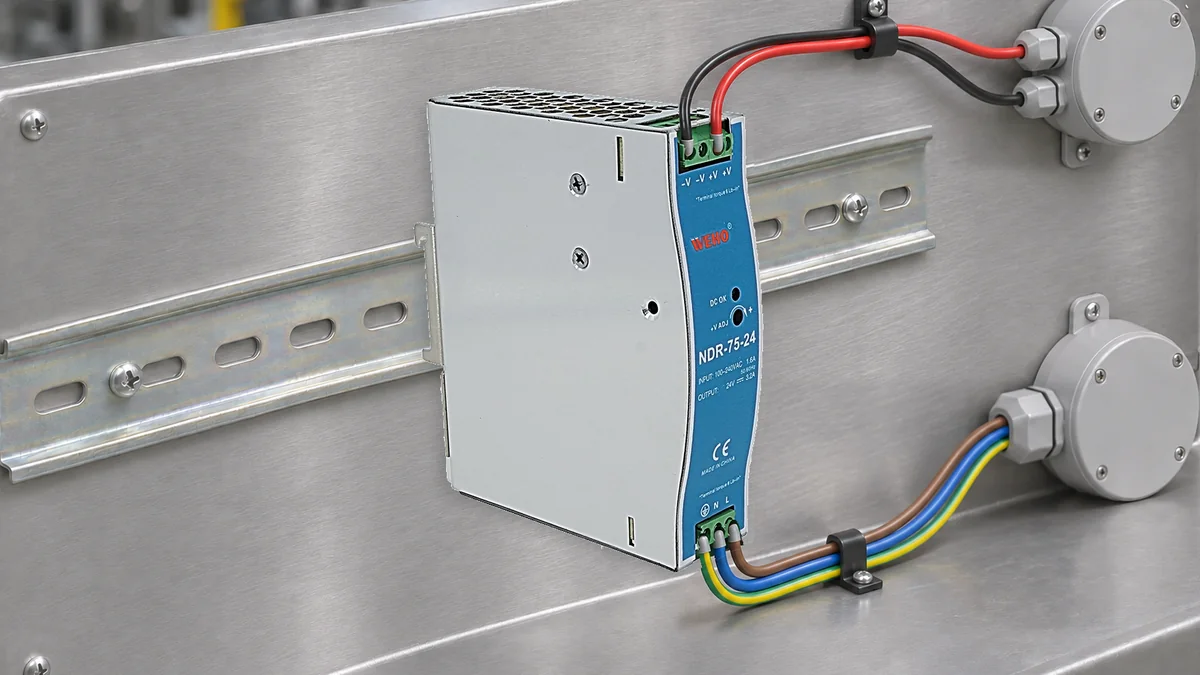
Resolve wire preparation before freezing the harness
A harness supplier offers solder-dipped wire ends to keep strands together during insertion. The ends look clean and can feel secure after tightening, but that does not answer whether the terminal was designed and evaluated for that preparation. The OEM drawing must define an acceptable connection combination before production treats the substitution as routine.
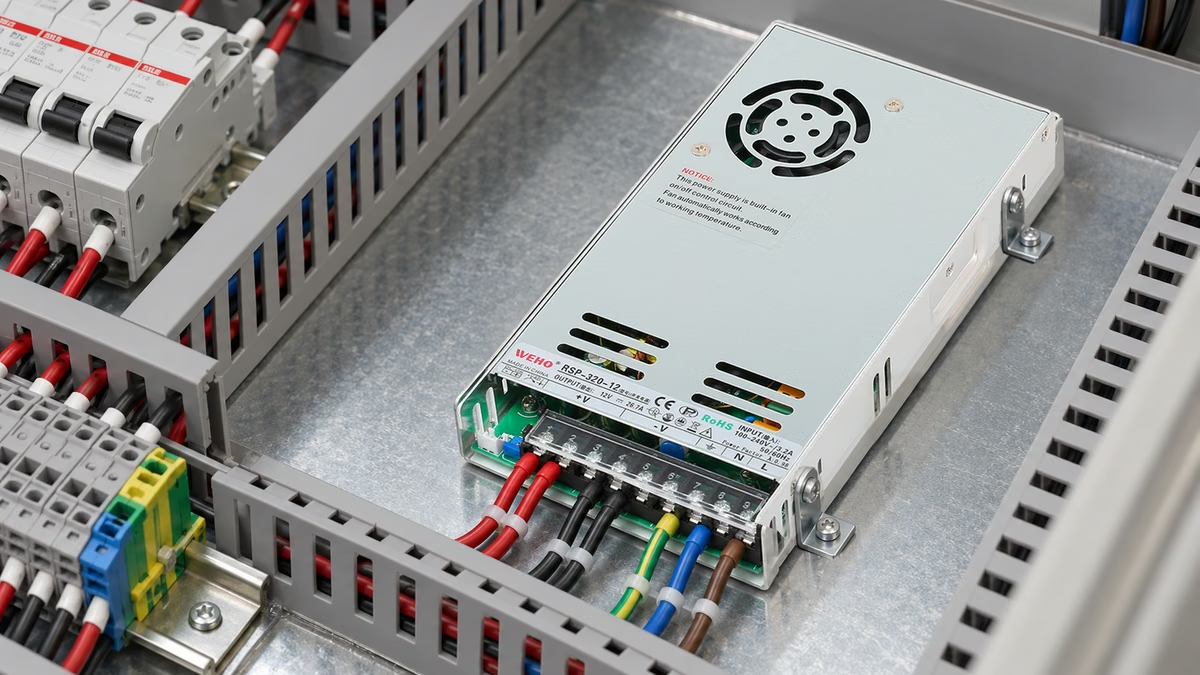
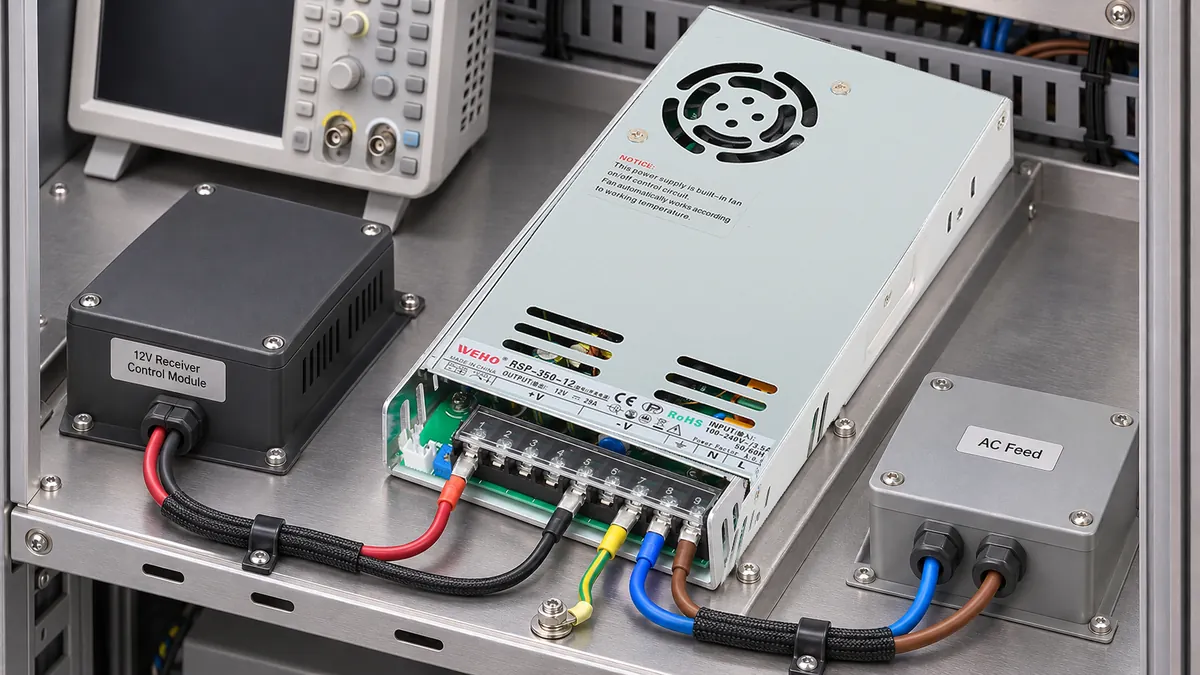
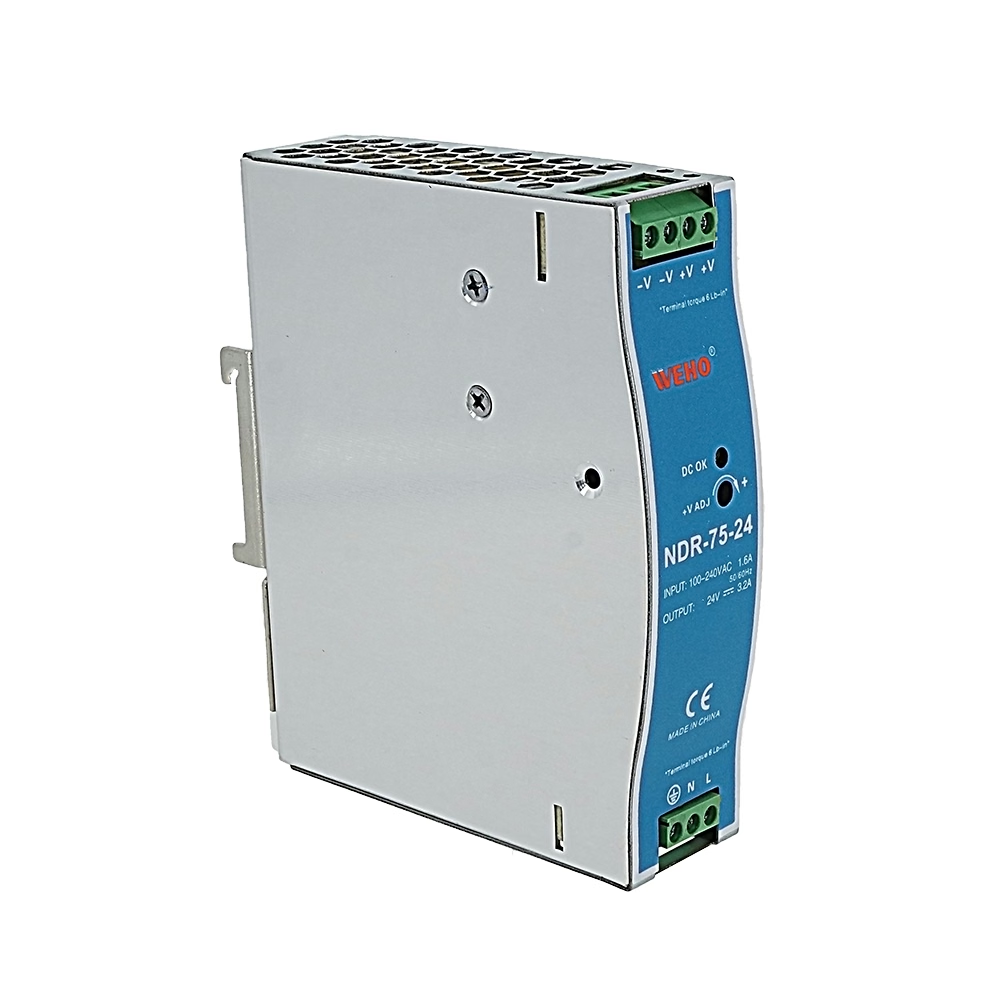
Le WEHO NDR-75-24 product reference identifies the supply used as this article's cabinet context. Its picture does not authorize solder-tinned ends, a particular ferrule or a conductor size. Request applicable connection instructions for the actual supplied terminal version before specifying a preparation.
Name the construction that will enter the clamp
An untreated stranded end, a bundle filled with solder and a crimped sleeve are mechanically different contact constructions. Factory tin plating on individual copper strands is also different from solder joining those strands into a mass. Describe the actual construction in the BOM rather than relying on the ambiguous word “tinned.”
Phoenix Contact's technical note on wire tinning addresses solder-dipped ends in screw-style terminal blocks. It explains how the solder-filled bundle can deform, develop voids and lose effective clamping as the connection experiences operation and temperature changes. That mechanism is not removed by making the end look smooth.
A tin-plated copper ferrule contains a copper sleeve with its own dimensions and crimp requirements. It is not a solder-filled wire bundle merely because its surface contains tin. Equally, identifying a ferrule correctly does not establish approval for every terminal; the complete combination still controls.
Separate initial tightening from retained contact pressure
Initial torque controls an assembly input under defined conditions. The joint must then retain a useful contact interface through the specified service environment. A connection that feels tight immediately after assembly has not demonstrated resistance to later settling, deformation or thermal-cycle effects.
The tinning issue is sometimes described broadly as cold flow or creep. Those terms should lead to a review of the actual material and clamp behavior, rather than an invented lifetime calculation. Without applicable data, do not assign a universal settling percentage, a safe temperature or a retightening interval to a soldered end.
Increasing torque is not an evidence-based cure for an unapproved preparation. It can change strand deformation or damage the terminal and does not establish long-term behavior. Use the specified assembly process; obtain a permitted corrective action when the received harness differs from that process.
Work a hypothetical harness-change disposition
Consider a fictional OEM cabinet drawing that specifies a particular flexible copper conductor and preparation A. Supplier documentation for the selected terminal version explicitly lists preparation A, its conductor range and assembly conditions. A harness batch instead arrives with solder-consolidated ends designated preparation B, for which no terminal authorization has been supplied.
The correct initial disposition is to hold preparation B for review, even if a few samples can be inserted and tightened. The evidence gap concerns the contact construction, not whether the wire physically fits once. A visual sample cannot replace the terminal manufacturer's applicable instructions.
Assume the approved production run contains 120 prepared ends and incoming inspection identifies 18 solder-consolidated ends. The mismatch is 18/120 × 100 = 15% of the inspected ends. That is a batch containment count, not a predicted electrical failure rate or a quantified creep effect.
| Record item | Required state | Observed example | Disposition |
|---|---|---|---|
| Contact construction | Documented preparation A | 18 of 120 ends use soldered preparation B | Identify and contain the mismatch |
| Applicable terminal evidence | Exact version and preparation listed | No B authorization supplied | Hold B pending resolution |
| Physical insertion | Meets documented geometry | A few B samples fit | Fit alone does not close approval |
| Release record | Approved BOM and process | Supplier change not incorporated | Resolve before equipment release |
If the responsible supplier and equipment review establish that another preparation is permitted, update the controlled connection record and its inspection method. Otherwise, use an authorized retermination or replacement process. Do not cut, re-strip or rework conductors without checking that the remaining length and assembly condition stay acceptable.
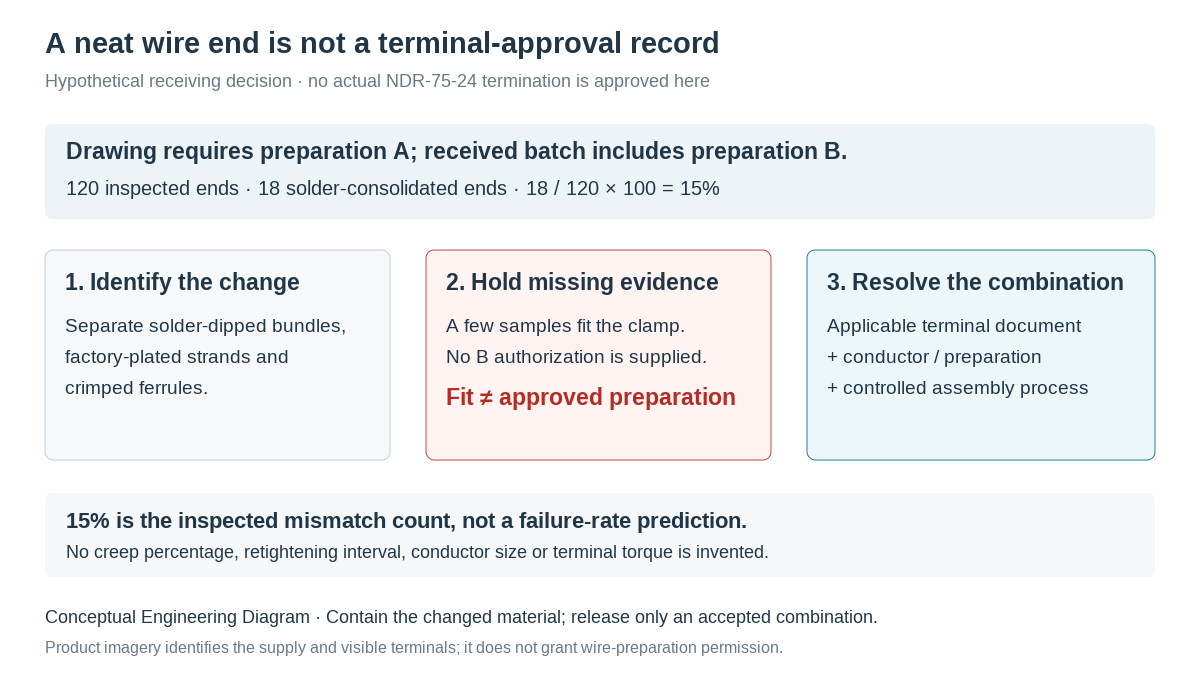
Swipe horizontally on a small screen, or open the full-size diagram.
The fictional 15% count serves one decision: how much inspected material requires containment. It says nothing about whether the other ends were correctly stripped, inserted or tightened. Those checks remain part of the existing assembly acceptance process rather than being waived by the preparation review.
Evaluate ferrules as a separate connection combination
A ferrule can improve strand handling when the terminal and processing system permit it. It also changes the end's diameter, stiffness and effective insertion geometry. The terminal's allowed cross-section for a ferruled conductor can differ from its untreated-wire range, so select from the applicable preparation-specific data.
WAGO's guidance on using ferrules explains why blanket ferrule approval is not possible. Its identified connection requirements include length, insertion and crimp-related considerations. Apply the actual connector's instructions instead of copying another manufacturer's strip length or maximum conductor size.
Phoenix Contact's ferrule construction and processing reference also treats the sleeve, conductor and crimp process as related components. A plating or ferrule standard does not automatically approve the completed WEHO terminal connection. Keep the actual terminal and processing documentation together.
| Construction | What changed | Evidence needed | Avoid this shortcut |
|---|---|---|---|
| Untreated stranded end | Insulation removed; strands remain separate | Conductor class, size and preparation instructions | Every flexible wire is accepted |
| Solder-consolidated end | Solder joins the bundle | Explicit applicability to the identified clamp | Initially tight means durable |
| Factory-plated strands | Surface treatment of individual strands | Actual conductor and terminal specification | Equivalent to solder-dipping |
| Crimped ferrule | Sleeve and crimped geometry added | Ferrule, tool/process and terminal combination | One ferrule fits all clamps |
Control the preparation through assembly and service
- Identify the terminal version. Record the supply label, terminal position and applicable connection document. Confirm that the instruction actually covers the received hardware rather than a similar-looking connector.
- Describe the conductor end. Record conductor construction, size, plating and any solder or ferrule processing. Use a drawing or sample identification that lets incoming inspection distinguish the permitted preparation from a substitution.
- Verify the complete combination. Record allowed preparation, stripping/insertion conditions and assembly requirements from applicable documents. Keep unsupported options on hold; do not borrow another connector's permission.
- Inspect the controlled assembly. Record preparation identity, strand containment, insertion and the specified assembly-process evidence under the equipment procedure. A continuity indication or a hand pull is not a substitute for the required qualification.
- Close supplier changes. Record authorized correction, affected quantities and revised BOM/process documents. Release only the accepted combination, and ensure replacement harness instructions preserve that same preparation.
For the separate question of conductor count, consult the WEHO two-conductor terminal review. That article addresses permission for multiple conductors in one clamp. This review concerns what each conductor end is made into before insertion, even when only one wire is fitted.
Send the connection combination to WEHO
Use the NDR-75-24 terminal documentation enquiry with the received hardware identification, conductor construction, intended preparation and equipment conditions. Ask which applicable connection instructions govern that combination. Include the supplier's proposed change so that soldering, plating and ferruling cannot be mistaken for the same process.
Engineering FAQ
Does solder-tinning prove a stranded end is suitable for a screw clamp?
No, solder-tinning does not establish clamp suitability. The preparation changes the contact construction and may affect retained pressure. Use the identified terminal's applicable instructions.
Is a tin-plated ferrule the same as a solder-dipped wire end?
No, a tin-plated copper sleeve and a solder-consolidated bundle are different constructions. Each needs the appropriate terminal and processing evidence. The word “tin” alone does not establish equivalence.
Can extra tightening compensate for an unapproved preparation?
No, extra tightening is not an approval method. It can damage components and does not demonstrate retained connection behavior. Follow the specified process and resolve the unsupported preparation.
Does this article approve a ferrule for NDR-75-24?
No, the article approves no specific ferrule or soldered preparation. It defines the evidence needed for the actual terminal version. Product photographs establish identity, not conductor-preparation permission.