Key Engineering Takeaways
- Restored battery voltage, restored AC output and permitted machine operation are separate events.
- Record the offered inverter's actual protection and recovery behavior instead of assuming every fault restarts the same way.
- Test the load controller's retained run request and reset behavior as part of the complete system.
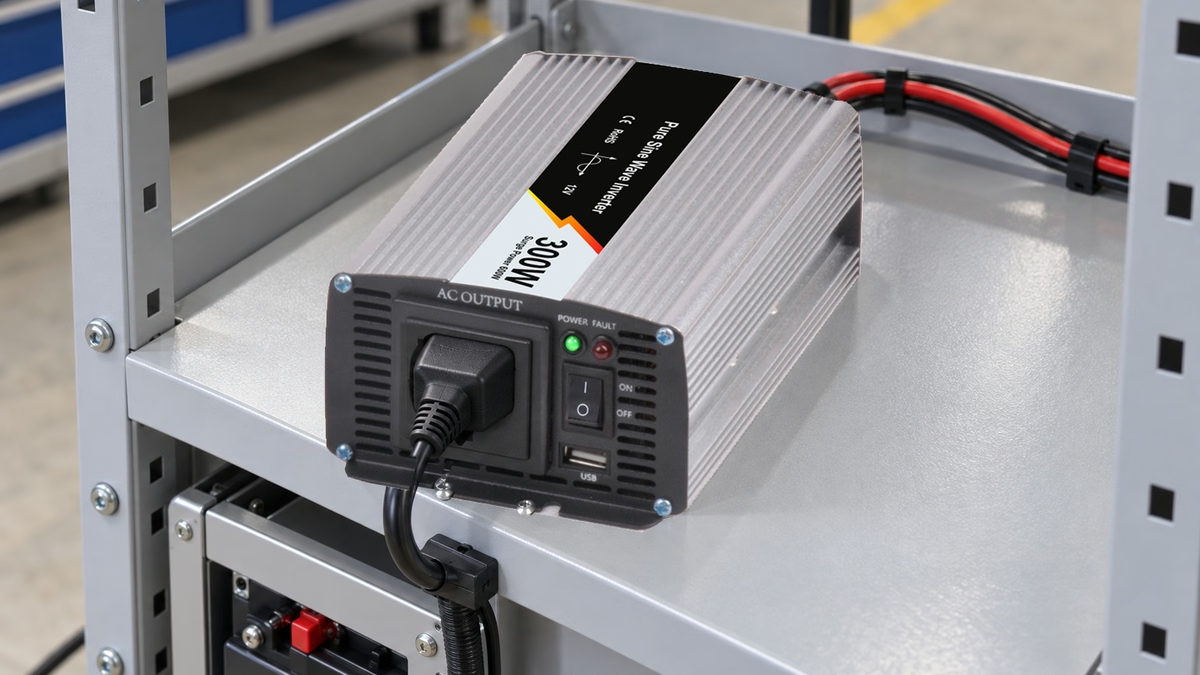
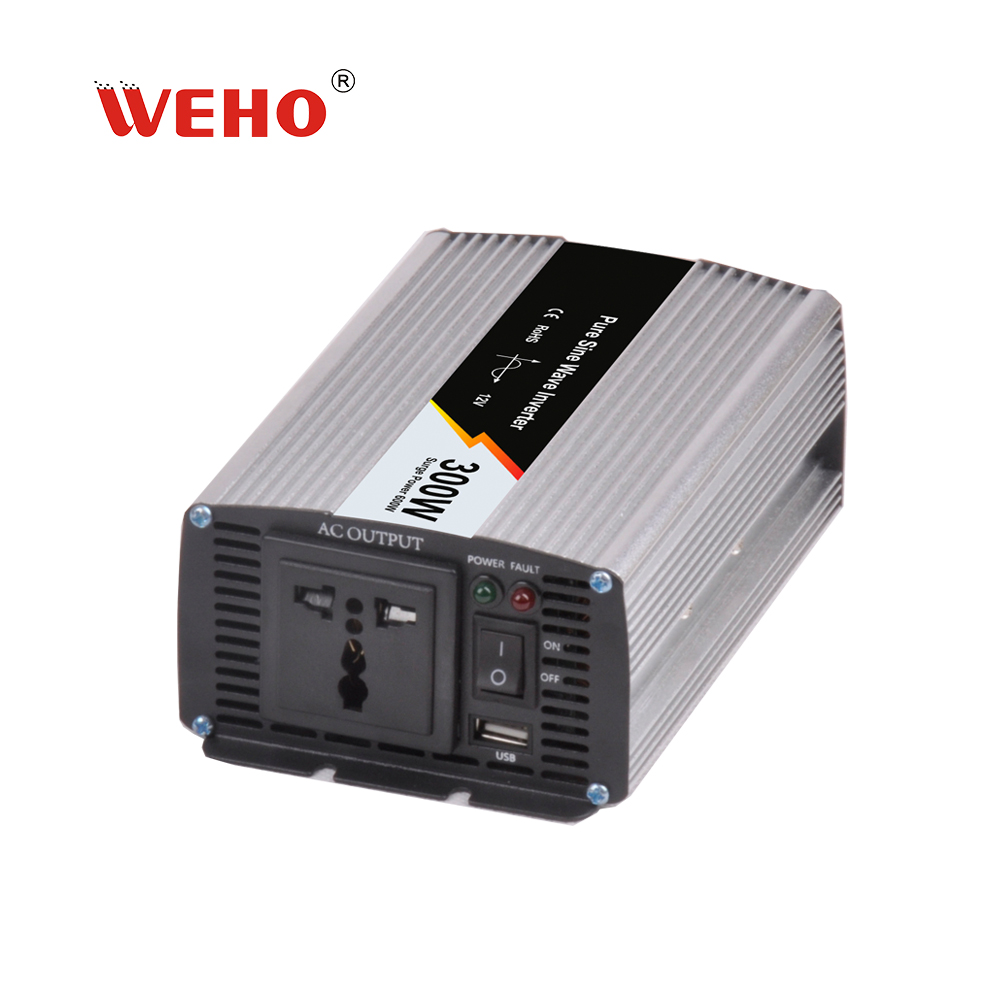
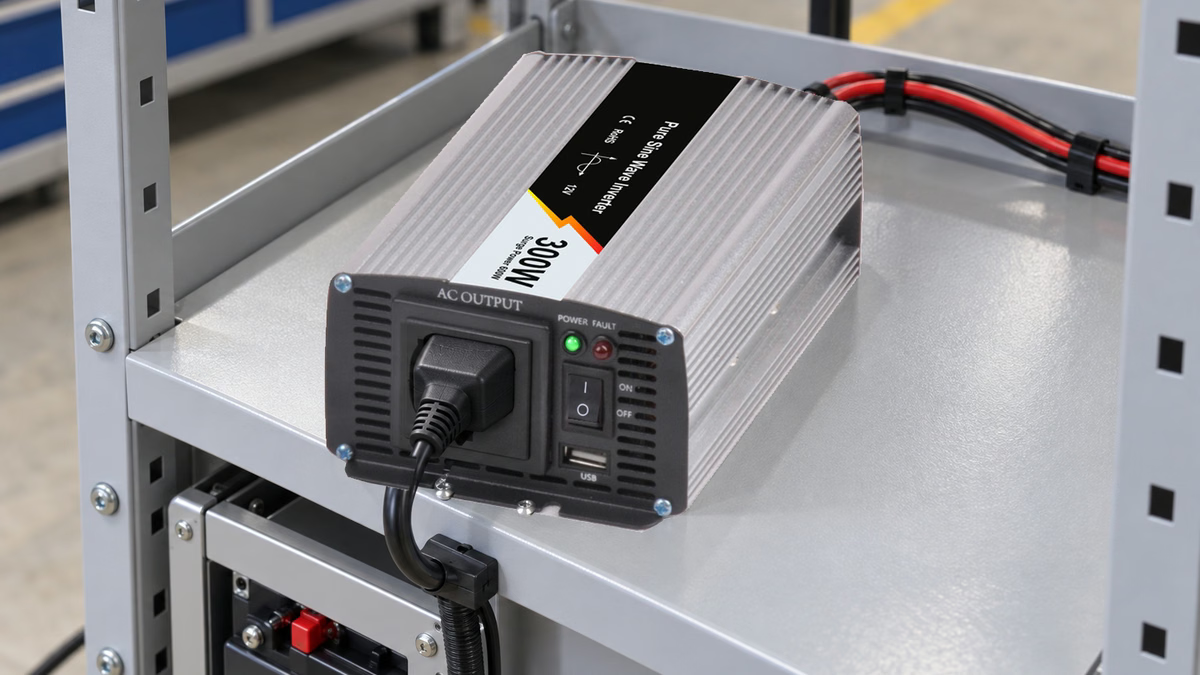
- The WHP-300 family is an evaluation candidate; its enclosure photograph does not prove a restart policy.
Why does power restoration need its own acceptance test?
A machine can remain stopped after AC returns, or it can resume because a run request remained active. Neither outcome can be deduced from an inverter's nominal power or the fact that its power indicator lights again.
An OEM integrating battery-fed equipment needs to specify the required restoration behavior before acceptance. The important decision is which conditions allow the equipment to run after a supply interruption, and which events require an operator or control-system action.
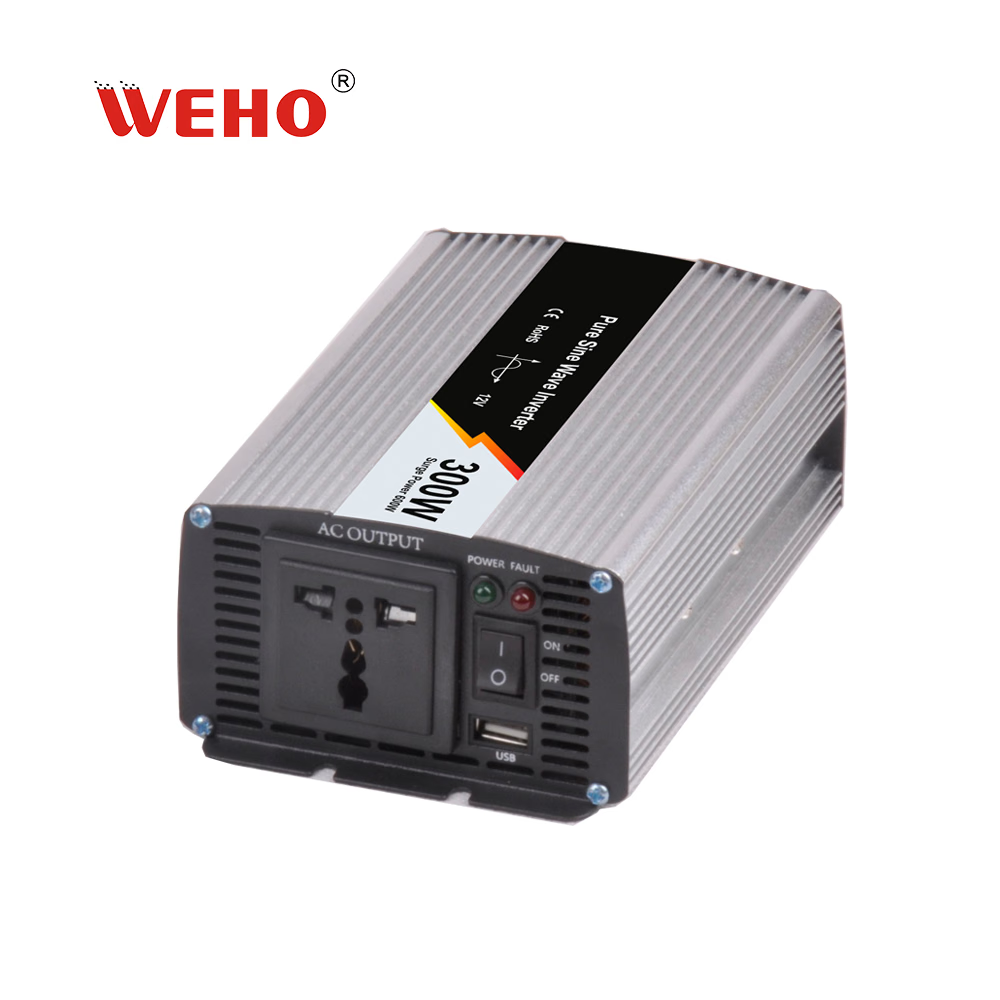
The WEHO WHP-300 family page establishes the product family and its available electrical configurations. It does not establish the complete machine's restart permission. Confirm the exact ordered unit's documented behavior, then evaluate the independent load-control response.
What event model should the project use?
Use an event sequence that distinguishes electrical availability from a run command. A recovered battery terminal voltage may be observed before the inverter restores acceptable AC, while a load controller may need additional startup time or an explicit reset.
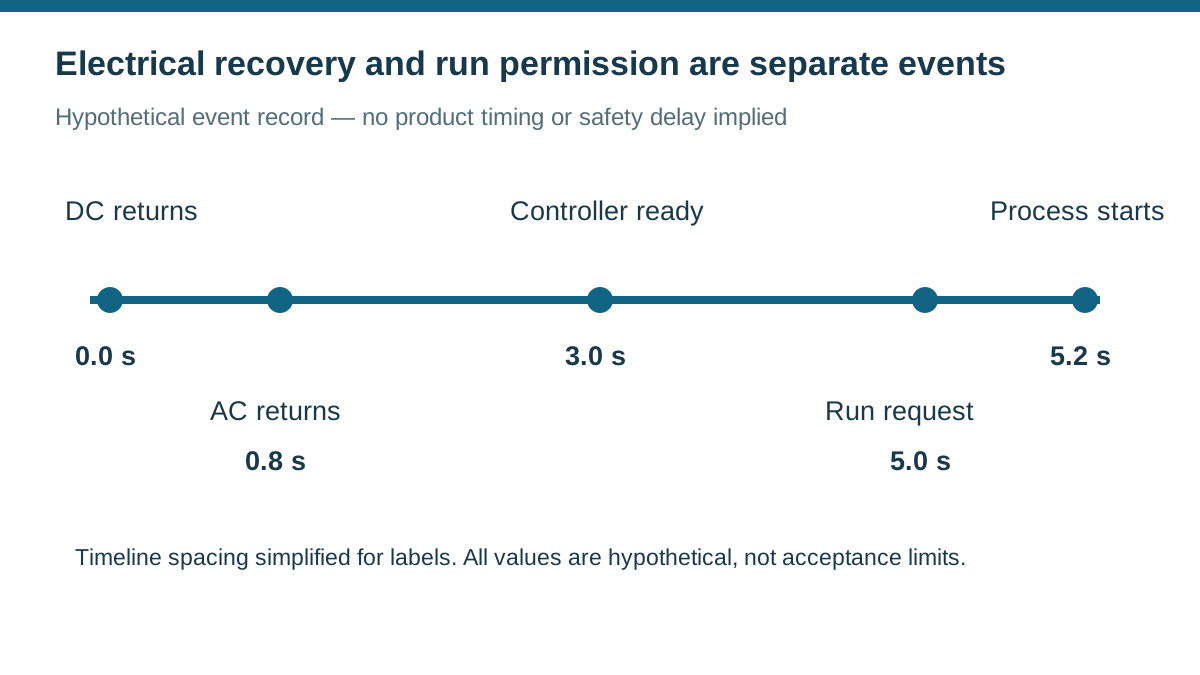
Define tV as the observed return of the required DC supply condition, tAC as the return of acceptable AC at the defined measurement point, and tREADY as the equipment controller's readiness indication. Define tRUN separately as the actual start of the commanded process.
These labels describe a system test, not built-in WHP-300 signals. The available observations and instrumentation depend on the offered product and the equipment. A controller's “ready” indication also needs a project definition; it should not silently mean that every field device is ready.
Hypothetical event record
Assume a controlled evaluation records required DC availability at 0.0 s, acceptable AC at 0.8 s and controller readiness at 3.0 s. An authorized run request is then issued at 5.0 s, and the defined process begins at 5.2 s.
The observed controller-readiness delay after AC return is 3.0 − 0.8 = 2.2 s. The process response after the authorized request is 5.2 − 5.0 = 0.2 s. Calling the entire 5.2 s interval “inverter restart time” would attribute controller startup and a deliberate waiting interval to the wrong device.
These times are invented to explain the record structure. They are not WHP-300 specifications, minimum safety delays or approved machine response times. Apply the actual equipment's requirements and the current unit documentation.
A related inverter shutdown diagnosis can help separate an unexpected loss of AC from input or load conditions. This restart test begins after identifying the interruption and adds the equipment-permission decision.
What should the state matrix cover?
The matrix should describe expected and observed behavior for each relevant combination of power availability and control state. It should also distinguish an ordinary supply interruption from a latched protection event where the product's documented recovery sequence differs.
| Test condition | Observe separately | Expected system decision | Save as evidence |
|---|---|---|---|
| DC supply returns | Actual AC availability | According to offered unit’s documented recovery | DC and AC event timestamps |
| Controller starts | Ready, fault and retained command states | Project-defined startup state | Controller event log and configuration |
| Run request remains active | Process response after restoration | Approved restart policy | Command and actual-operation record |
| Reset is required | Reset source and subsequent permission | Approved reset sequence | Operator/control event and outcome |
| Power becomes unstable again | Repeated interruption and state changes | Defined handling of repeated events | Complete, untrimmed event sequence |
Do not set the expected behavior by copying what one sample happens to do. The equipment's operating and risk requirements define the acceptance decision. A convenient automatic restart is not automatically appropriate for a machine, and a manual restart is not automatically required for every nonhazardous load.
Keep emergency functions and normal operational commands distinct. The EU machinery legislation information provides regulatory context, while the applicable machine requirements, jurisdiction and implementation date still need to be determined for the actual project. This article does not certify compliance or assign a safety function to a general inverter.
How should the system test be conducted?
Perform a planned acceptance test under the machine's approved procedures. Qualified personnel should establish isolation, protected observation points and a controlled test condition; do not provoke battery faults or bypass protective functions to create an event.
- Release the requirement first. State whether normal power restoration may resume operation and identify the conditions required for permission. Record the applicable equipment configuration and control-software version.
- Identify the exact inverter configuration and documented recovery behavior. Include the actual DC and AC options, protection type under evaluation and any required action described for that unit.
- Define observable events and their limits. Select measurement points and named controller states. Keep electrical return, readiness, reset and actual operation as separate entries.
- Prepare a controlled interruption case. Use an approved test method suited to the equipment, battery and source; an improvised live disconnection is not a valid acceptance procedure.
- Run the defined state combinations. Where the project permits it, evaluate both a cleared run request and a retained run request. Do not assume one case represents the other.
- Review repeat events and abnormal outcomes. If the supply returns briefly and disappears again, retain every transition. Agree on corrective action before releasing the complete system.
For example, a controller may retain a production command but clear its motion-enable state. Another may restart its communication link before its field outputs are valid. The test should record the actual relevant states instead of treating a lit display as permission for the process.
An event log also needs time resolution appropriate to the decision. If a recorded order is within the combined timing uncertainty, mark it as unresolved rather than inventing an exact sequence. The purpose is to identify a defensible state transition, not to make the log look more precise than the instrumentation.
After a correction, repeat the affected cases using the released configuration. A successful test before a software change does not automatically approve the new program, and a product replacement should be checked against the same defined behavior rather than a remembered bench observation.
What should the WEHO inquiry include?
Send the WHP-300 evaluation request with the DC source range, AC load, required restoration behavior and the fault or interruption cases being considered. Ask which current offered-unit documents describe protection and recovery.
Keep the load-controller restart requirement in your system specification. A product supplier can clarify the offered inverter; it cannot establish the behavior of an unspecified machine controller, retained command or downstream actuator merely from the inverter's family name.
Engineering FAQ
Does recovered battery voltage mean the machine may run?
No. Battery recovery is one electrical condition. AC availability, controller readiness and the equipment's approved run permission remain separate conditions that must be specified and checked.
Can every inverter protection event use one restart test?
Not automatically. Different protection events may have different documented recovery requirements. Identify the offered unit and each relevant event, and evaluate the corresponding system response.
Is a power indicator enough to timestamp acceptable AC?
Not unless its meaning and timing satisfy the test requirement. Use an observation method suited to the actual electrical availability being evaluated; an indicator does not independently prove voltage quality at the load.
Does a passed test approve later controller-software changes?
No. A change affecting retained commands, readiness or reset handling needs review and affected-case verification. Bind the acceptance record to the actual released hardware and control configuration.