Key engineering takeaways
- A production test configuration includes limits, dependencies and reporting, not just its main program.
- Assess each change against affected requirements and release paths.
- Execute regression evidence on the installed station before releasing the change.
- Preserve historical results under their original versions; do not silently rewrite them.
A production test-station update needs a documented impact assessment and evidence that the installed configuration still makes the intended acceptance decisions. Revalidation can be targeted when dependencies and unchanged functions are justified. A file-copy success message, unchanged screen or passing reference alone cannot define that scope.
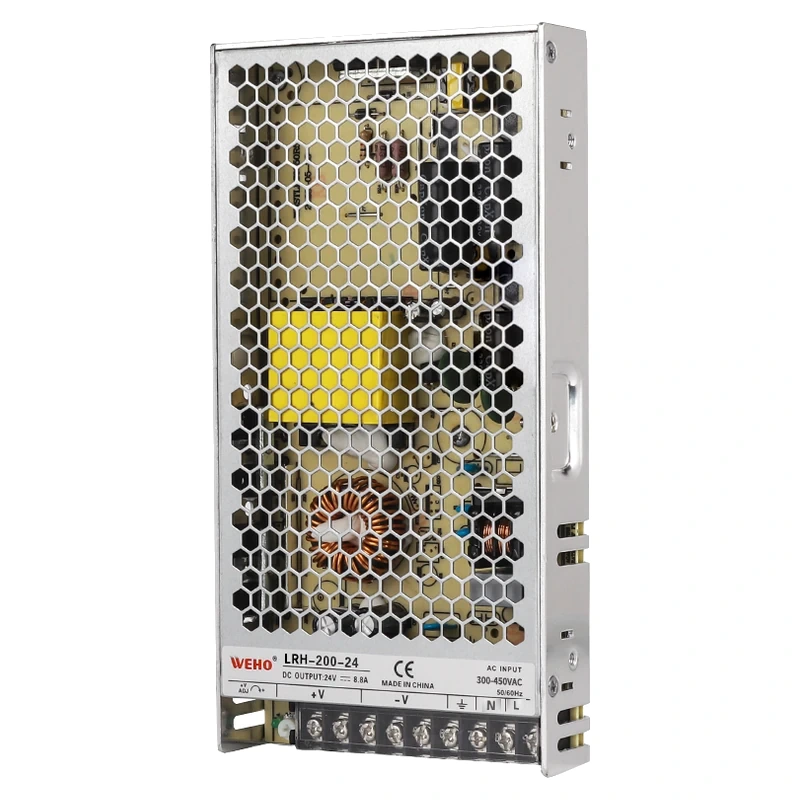
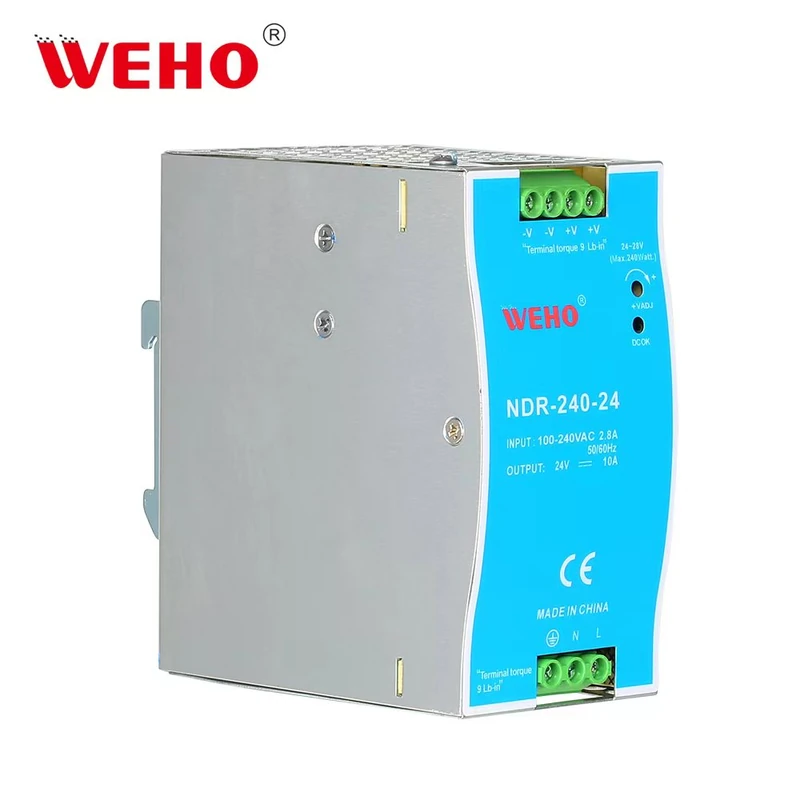
For a panel using the WEHO NDR-240-24, this is an OEM test-system change-control task. The product image identifies a possible purchased item; it does not establish the supplier's station software, factory limits or validation procedure. Define the actual configuration with the organization responsible for acceptance.

Inventory the complete decision configuration
A test sequence may call compiled measurement modules, load limits from an external file and delegate reporting to shared components. An unchanged sequence can therefore behave differently after another file or driver changes. Inventory what is actually loaded at runtime, including variant selection and configuration overrides.
NI's deployment guidance distinguishes test code, framework files, drivers and runtimes. It also warns that dynamic and implicit dependencies need explicit attention. Treat an automated dependency list as an input to the assessment, not proof that every relevant file has been identified.
An installation manifest should identify both intended files and effective settings. A configuration digest can reveal byte changes in captured files, but it cannot prove the correctness of their contents. Instrument state, hardware routing and environmental conditions may require additional recorded checks outside the software digest.
Keep the product requirement separate from the software implementation. A changed limit is not automatically an authorized product requirement change. Approval must establish the applicable specification, units, variant, boundary convention and decision rule before software behavior is judged against it.
| Changed element | Possible effect | Focused evidence | Release record |
|---|---|---|---|
| Limit or variant file | Different acceptance interval | Correct identity and boundary cases | Approved requirement and installed digest |
| Measurement module | Scaling, units or acquisition behavior | Known inputs across affected paths | Module and interface versions |
| Driver or hardware route | Resource selection or measurement change | Actual station acquisition checks | Driver, hardware and routing identities |
| Result processing | Wrong status, unit association or release | PASS, FAIL and invalid end-to-end cases | Stored record and release authorization |
Make the impact assessment explicit
A bounded change assessment explains what changed, what could be affected and why proposed exclusions are credible. Naming a component as unchanged is insufficient when that component consumes a modified input. Trace data and control dependencies through the final release decision.
NI's validation guidance discusses verifying requirements and considering the effects of changes. Use that principle to choose regression cases, while retaining the actual rationale in the local change record. The article does not supply a universal number of cases or a WEHO validation policy.
Some updates warrant broad regression because dependency knowledge is weak, multiple components change or a critical error path is affected. Other updates can justify a narrower set with clear interfaces and retained prior evidence. The scope decision belongs to the accountable engineering and quality functions, not the convenience of the installation window.
A rollback plan needs more than a copy of the old executable. Preserve the compatible configuration, dependencies and relevant station settings as a coherent package. Define how to identify units tested during an interrupted or unsuccessful change, since restoring software does not automatically resolve their dispositions.
Work through a fictional limit-file change
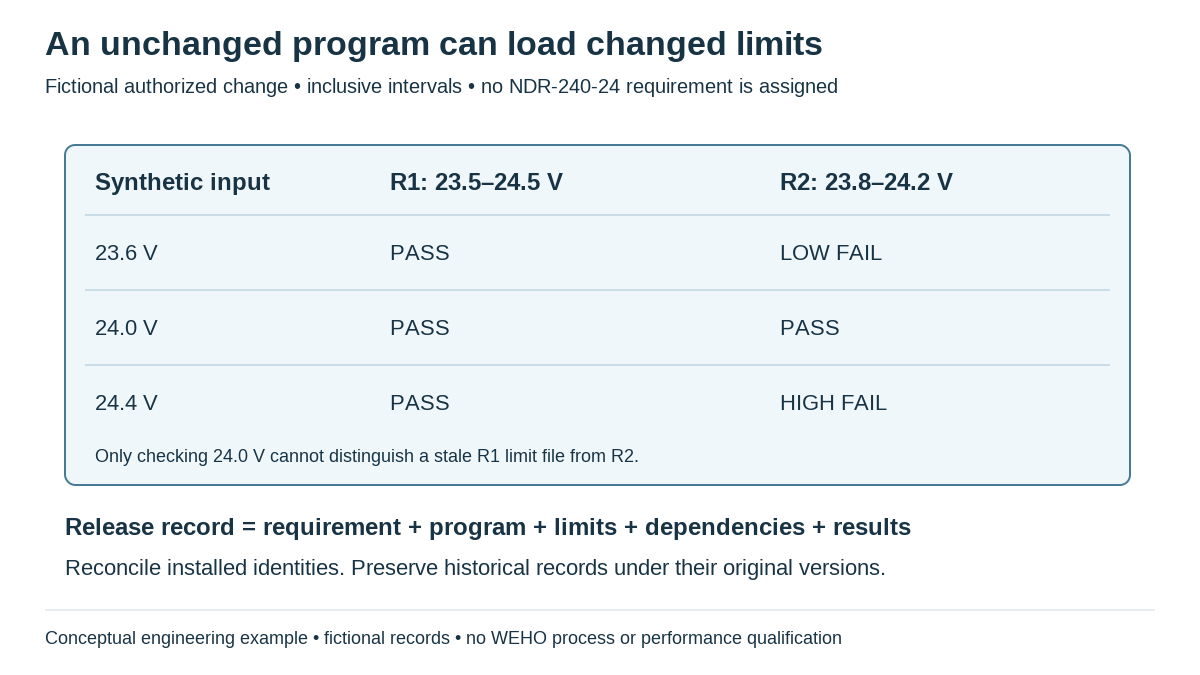
Assume a fictional test requirement changes, with proper authorization, from revision R1's inclusive 23.5–24.5 V interval to R2's 23.8–24.2 V interval. The software sequence remains S7, but the limit file changes from L1 to L2. These are synthetic validation inputs, not NDR-240-24 specifications or test limits.
An input of 23.6 V is accepted by R1 because 23.6 ≥ 23.5 and 23.6 ≤ 24.5. The same input is rejected by R2 because 23.6 < 23.8. An input of 24.4 V similarly changes from PASS to HIGH FAIL; 24.0 V remains within both intervals.
A station still loading L1 would pass all three values and could appear healthy if validation used only 24.0 V. The two changed-outcome cases expose the incorrect configuration. Retain these cases alongside any additional approved boundary, uncertainty, identity and error-path tests required for actual release.
| Synthetic input | R1: 23.5–24.5 V | R2: 23.8–24.2 V | Change-check purpose |
|---|---|---|---|
| 23.6 V | PASS | LOW FAIL | Detect stale lower limit |
| 24.0 V | PASS | PASS | Retain an accepted-state check |
| 24.4 V | PASS | HIGH FAIL | Detect stale upper limit |
| No valid reading | No acceptance | No acceptance | Retain invalid-execution release control |
A complete fictional change record identifies requirement R2, sequence S7, limit file L2 and the actual installed digests. It names the station, approver, case results and effective release time. The manifest should fail reconciliation if the station reports L1, even when the main program is correctly identified as S7.
Swipe horizontally on a small screen, or open the full-size diagram.
Historical units tested under R1 retain their original records. If the requirement change has retrospective applicability, handle that through a separate approved assessment with traceable decisions. Replacing an old limit file and regenerating reports without preserving the original evidence can obscure which requirement was actually applied.
Verify deployment at the point of use
A development computer and a production station may resolve paths, defaults or dynamically selected files differently. Test the installed package in its intended execution context. Include the actual operator interface and record destination where those affect identity, permissions or disposition.
NI's configuration file reference explains that selected global configuration files must be explicitly included in the described TestStand deployment workflow. The practical lesson is to verify effective settings rather than assume that a successful installer includes every customized option. Apply the documentation for the actual software version in use.
A record-processing check should reconcile the displayed result with the stored record and the release permission. Use a deliberately invalid execution to verify that a missing result is not exported as an accepted unit. Protect challenge assets and simulator modes from accidental use on ordinary production records.
The WEHO first-article approval checklist addresses product and assembly evidence. A station change assessment adds the configuration and regression evidence behind subsequent acceptance records. A previous product approval does not independently approve a later software or fixture change.
Execute a controlled change release
- Record the baseline. Capture the current approved requirement, installed software, limits and dependencies. Save representative original records; verify that the baseline can be identified and restored coherently.
- Trace the delta. List changed files, settings, hardware and affected functions. Record justified exclusions and unresolved dependencies; verify that shared reporting and variant selection were considered.
- Approve the regression plan. Define expected PASS, FAIL and invalid outcomes before execution. Record the requirement basis; verify that cases can distinguish the new configuration from a plausible stale one.
- Test the installed package. Execute on the intended station and reconcile raw values, stored results and release controls. Record actual file identities; verify every planned acceptance criterion without silently suppressing failures.
- Authorize and monitor. Record approver, effective time, rollback conditions and affected unit range. Verify the initial production records against the released configuration and retain the superseded evidence.
A concise release dossier can consist of the change request, dependency map, installed manifest, completed regression matrix and approval. Additional evidence depends on the product risk and agreed quality plan. Avoid treating the amount of paperwork as a substitute for a clear requirement-to-result chain.
Prepare a configuration-evidence enquiry
Send WEHO the exact NDR-240-24 enquiry identity, intended acceptance checks and required record fields. State which test station is yours and which evidence you request from the supplier. Agree any version-identification or change-notification requirements explicitly; this fictional example does not establish a standard WEHO software service.
Frequently asked questions
Does every test-software change require a full repeat qualification?
No universal scope can be assigned without an impact assessment. Targeted regression needs justified dependency boundaries and retained evidence; uncertain or extensive changes may require broader testing.
Is an unchanged main program enough to retain approval?
No. Limits, dependencies, drivers, shared processing and effective settings can change the decision while the main program remains identical. Verify the complete installed configuration relevant to acceptance.
Can the central passing value validate a narrower limit file?
No. In the fictional example, 24.0 V passes both revisions and cannot distinguish them. Include approved cases whose expected outcomes exercise the changed decisions.
Should old test records be regenerated under the new limits?
Not silently. Preserve the original requirement and configuration associated with each record. Any retrospective reassessment needs its own authorization, scope and traceable disposition.