

Key Engineering Takeaways
- A setpoint-step test and a load-disturbance test answer different commissioning questions.
- Hold the TX4-L setpoint constant when assessing recovery from a defined production load change.
- Record the product temperature, disturbance timing, temperature excursion and recovery rule together.
- A hypothetical 120-second recovery requirement is a project criterion, not a TX4-L specification.
Why Can an Empty Machine Pass While Production Fails?
A stable display on an unloaded machine does not establish recovery after material enters the process. Cold incoming parts, airflow changes or a permitted door-opening event can remove heat while the temperature target remains unchanged. The OEM needs a controlled disturbance record to decide whether the complete machine maintains the required product condition.
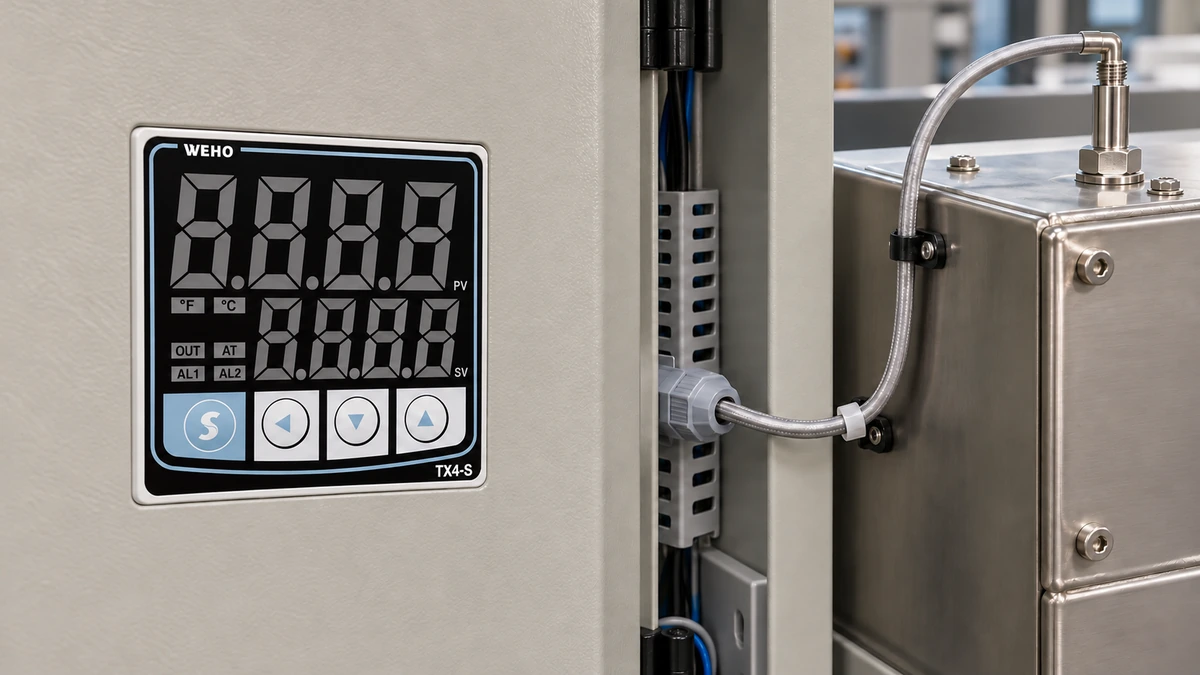
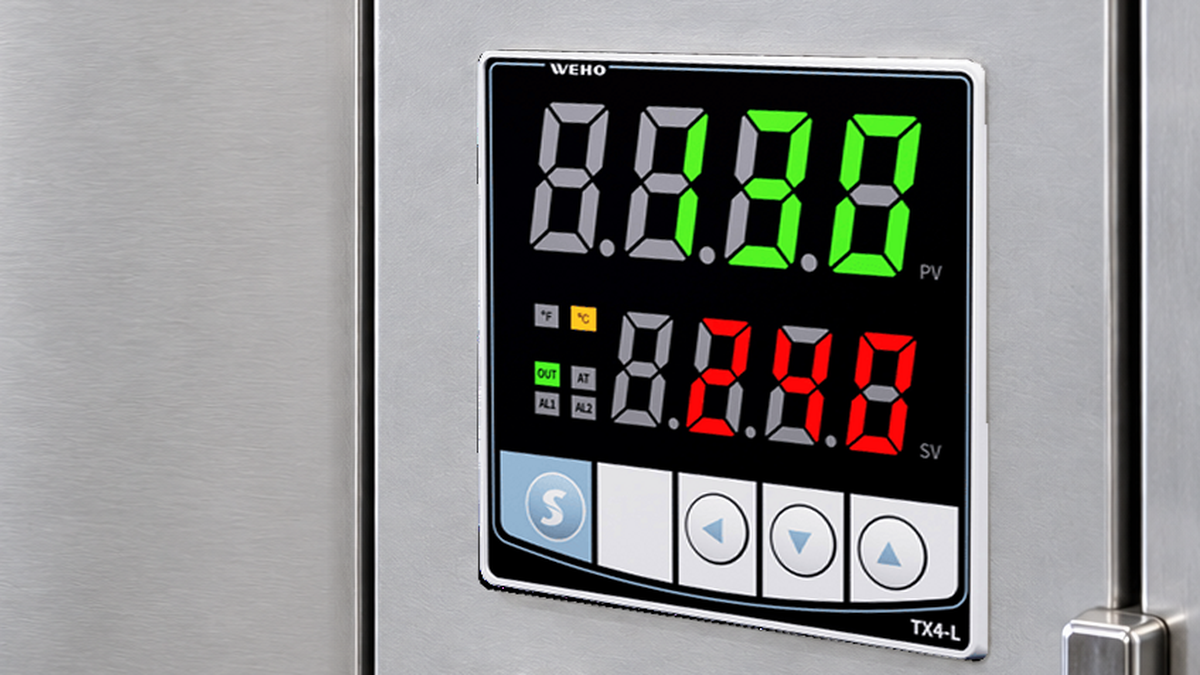
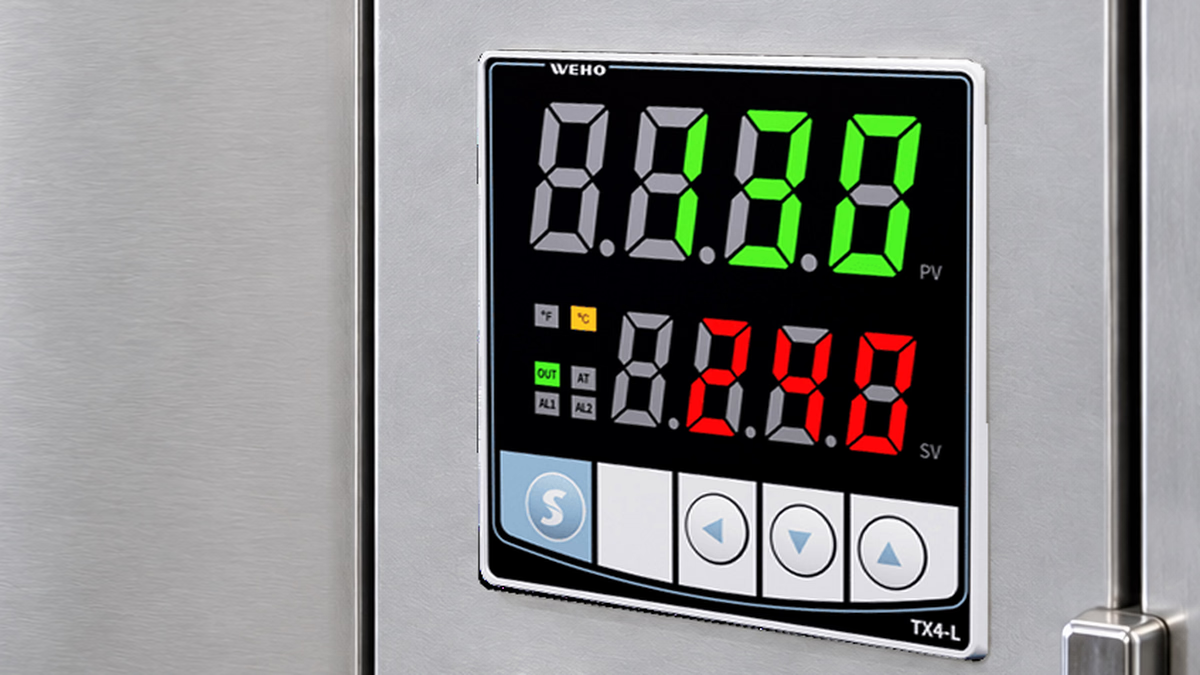
Use the TX4-L temperature controller as the identified controller in that record. The relevant decision is machine acceptance under a representative load change. This article provides a test-planning method, not a measured TX4-L response or a universal PID setting.
What Should Stay Constant During a Disturbance Test?
Keep the commanded temperature target constant and document what changes physically. This separates rejection of a load disturbance from tracking of a new temperature command. Both tests may be useful, but their results should not be mixed in one recovery figure.
A setpoint step changes the requested temperature. A disturbance test changes an external condition such as the amount or starting temperature of incoming material. If an operator changes the setpoint while loading the machine, the resulting trace includes both effects. The record cannot identify disturbance rejection alone without further analysis.
Confirm the actual control mode and relevant settings using the TX4 series instructions. Preserve the supplied unit's configuration rather than assuming that a front-panel appearance identifies the complete output option. The machine's heater, switching device, sensor and mechanical process all contribute to the observed response.
Standard Engineering Evaluation Example
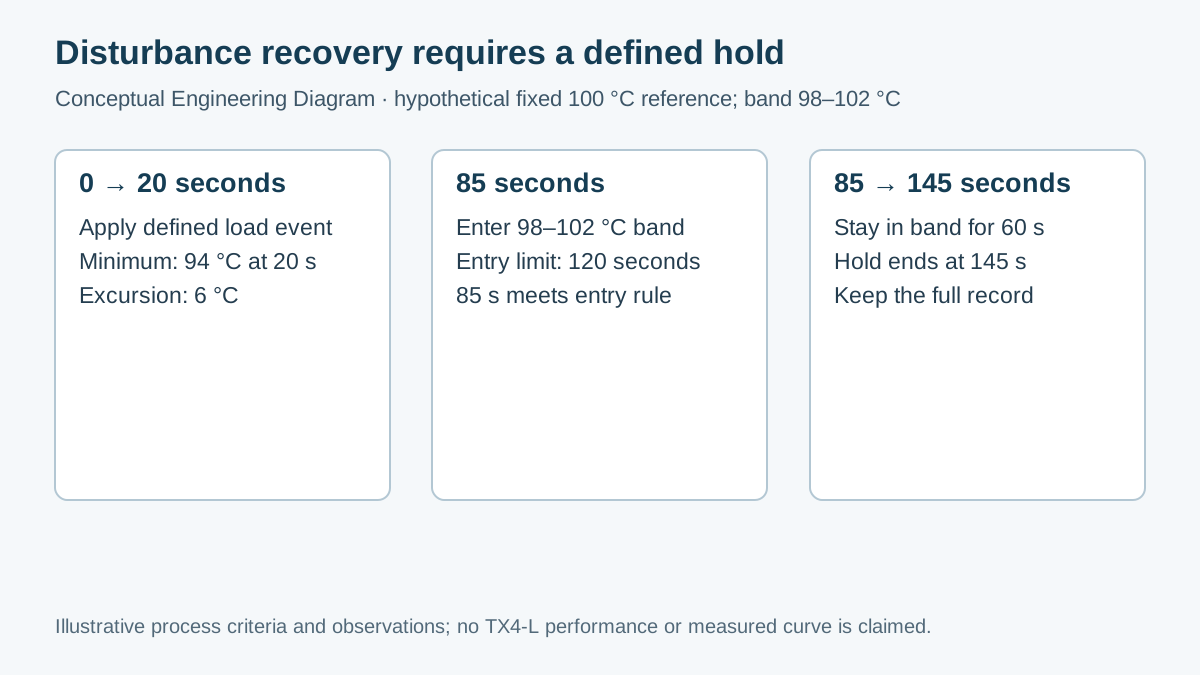
Assume an OEM defines a hypothetical process reference of 100 °C and an acceptable product-temperature band of 98–102 °C. Its written acceptance plan requires recovery within 120 seconds after a specified material-loading event, followed by 60 continuous seconds inside the band. These values belong to this example; they are not WEHO ratings or a recommended process recipe.
Suppose the event begins at time zero. A suitable independent product sensor reaches a minimum of 94 °C after 20 seconds and enters the acceptable band at 85 seconds. It stays inside the band through 145 seconds. Under this stated rule, entry occurs within 120 seconds and the subsequent 60-second observation is complete at 145 seconds.
The downward excursion from the reference is 100 − 94 = 6 °C. The recovery entry time is 85 seconds. The acceptance record should retain both values and the sustained-in-band observation; a single phrase such as “recovered in 85 seconds” can hide the hold requirement.
| Example item | Defined value | Purpose |
|---|---|---|
| Unchanged reference | 100 °C | Separate disturbance rejection from setpoint tracking |
| Product acceptance band | 98–102 °C | Define the process result to assess |
| Minimum observed value | 94 °C at 20 s | Record the downward excursion |
| Band entry | 85 s | Compare with the 120 s entry limit |
| Sustained observation | 85–145 s | Verify the specified 60 s hold |
If the temperature leaves the band during the hold, the rule must state whether the hold restarts, the run fails or an investigation is required. Decide this before viewing the trace. Do not reinterpret the rule afterward to make a preferred controller setting appear acceptable.
Which Conditions Make the Comparison Repeatable?
Define the disturbance in terms another engineer can reproduce: material mass, initial temperature, loading pattern, event duration and the machine state immediately beforehand. A nominally identical part can create a different disturbance if its starting temperature or contact with the heated surface changes.
Record the ordinary production conditions that influence the result. Include the operating load, relevant airflow, ambient state, line or supply condition where applicable, and the time since startup. Restrict the comparison to conditions the machine is approved to operate under; an acceptance test is not permission to bypass guards or exceed equipment limits.
Use a common time reference for the TX4-L display observations, independent product measurements and event marker. Record the actual sampling interval. A data record taken only once every minute cannot locate an 85-second band entry accurately. Select a method with enough time resolution for the decision, and retain the interval as a limitation of the result.
The product measurement point matters as much as the controller value. A controller can recover at its sensor while a heavy workpiece remains colder. Define which measurement supports product release and which describes the control loop. Measurement location, probe attachment and reference uncertainty belong in the record rather than in an informal note after the run.
How Should a Commissioning Team Run the Test?
- Identify the TX4-L unit, configured input, output arrangement, sensor, relevant settings and machine revision. Save the baseline configuration.
- Agree on the production disturbance, acceptance point, band, timing rule and repeat count. Obtain the machine owner's approval for the method.
- Establish the approved initial operating state. Confirm that the independent measurement system is suitable and synchronized with the event record.
- Apply only the planned, permitted disturbance. Capture controller observations, product temperature and the event timing without changing the setpoint.
- Calculate excursion, band-entry time and sustained recovery according to the prewritten rule. Keep unsuccessful runs as well as successful ones.
- Investigate causes before changing settings. After an authorized change, repeat the affected test under comparable conditions and preserve both versions.
Electrical changes, sensor relocation and work near hot or moving equipment require the machine's approved procedures and qualified personnel. Keep independent protective functions active throughout the test. Ordinary process regulation does not replace a separate high-temperature shutdown function.
What If One Setting Passes Only the Lightest Load?
Do not release a broad production envelope from one favorable run. Compare the specified load cases separately and identify the limiting condition. A setting that produces a small excursion at light load may behave differently with a heavier incoming part or a different starting temperature.
The next action depends on the evidence. Inadequate heater capacity, poor thermal contact, sensor lag, output saturation or an unsuitable operating sequence may limit recovery. Adjusting PID parameters cannot establish that these other conditions are adequate. The machine designer should determine which cause deserves a controlled follow-up test.
For a TX4-L application review, send WEHO the complete ordering code, input and output configuration, process range and the disturbance record. Ask for the instructions applicable to the supplied revision. Include the required recovery behavior so the technical question concerns a defined machine condition rather than a generic request for “faster PID.”
Engineering FAQ
Is a setpoint step the same as adding cold material?
No. A setpoint step changes the command, while cold material changes the thermal load. Keep the command fixed when the purpose is to assess recovery from that defined load disturbance.
Should recovery be measured from PV or product temperature?
Use the measurement specified by the acceptance plan. Controller PV describes its input chain; a product requirement may need an independently measured product location. Record both when their relationship matters.
Does a faster recovery time always mean better control?
No. Evaluate the required band, overshoot, sustained stability and product constraints together. A short band-entry time is insufficient if the temperature then leaves the permitted range.
Can the example's 120-second limit be used for every TX4-L machine?
No. The limit is hypothetical. The process owner must set a requirement appropriate to the material, equipment, measurement method and production outcome, then verify it on the actual machine.
Should PID settings change after every unsuccessful run?
No. Preserve the run and investigate the disturbance, heater capacity, sensing and output conditions first. Change a setting only with a stated reason and a repeatable follow-up comparison.