A controller retaining its settings after a power cycle does not establish that the machine should resume heating automatically. Verify the stored configuration against a recorded map, then assess restart behavior as a separate equipment decision.
- Record the relevant settings before interrupting power.
- Compare the restored values and operating state separately.
- Keep parameter retention, process readiness and restart permission distinct.
What should a retention check establish?
A retention check establishes whether the required configuration remains available after a defined interruption. It should identify which settings were checked, how power was interrupted and what the controller did after restoration. It is not a general reliability demonstration or a prediction of memory lifetime.
For a TX4-M temperature-controller assembly, use the supplied variant and applicable parameter documentation. The TX4 manual describes nonvolatile memory and several parameter groups, but an OEM still needs to verify the settings and behavior relevant to its actual machine.
A setpoint that remains visible can conceal a different input type, unit, output arrangement or control direction elsewhere in the configuration. Conversely, retained parameters do not prove that the external process conditions are ready. Treat configuration identity and operating permission as separate entries in the commissioning record.
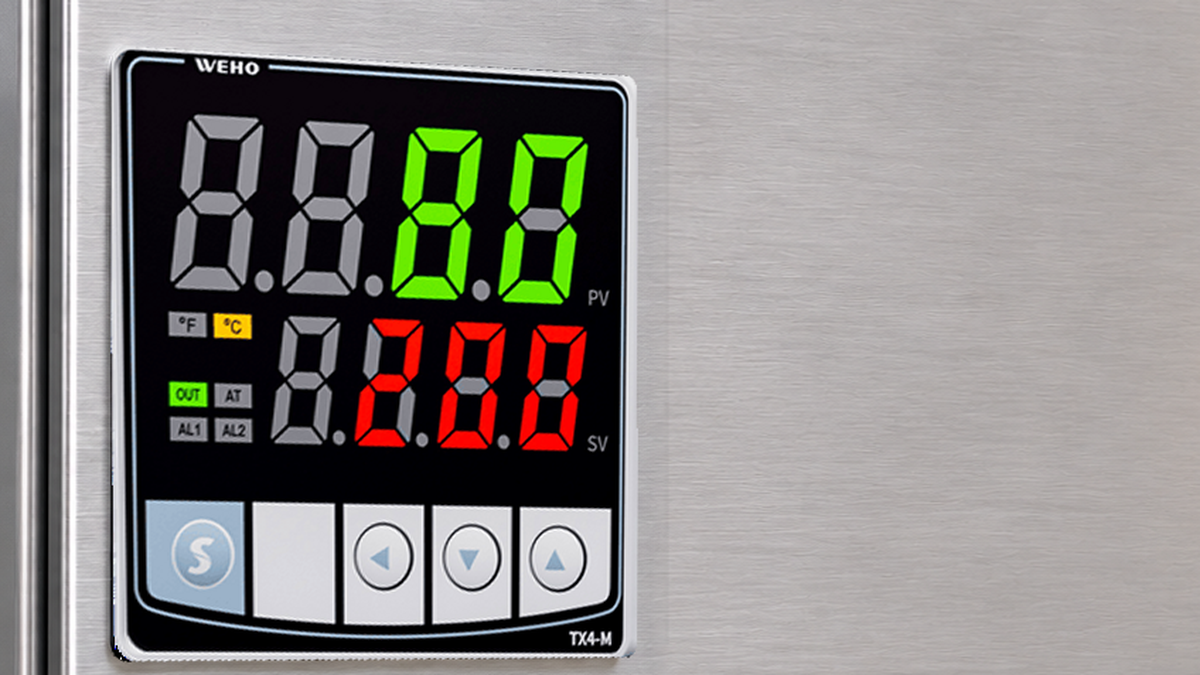
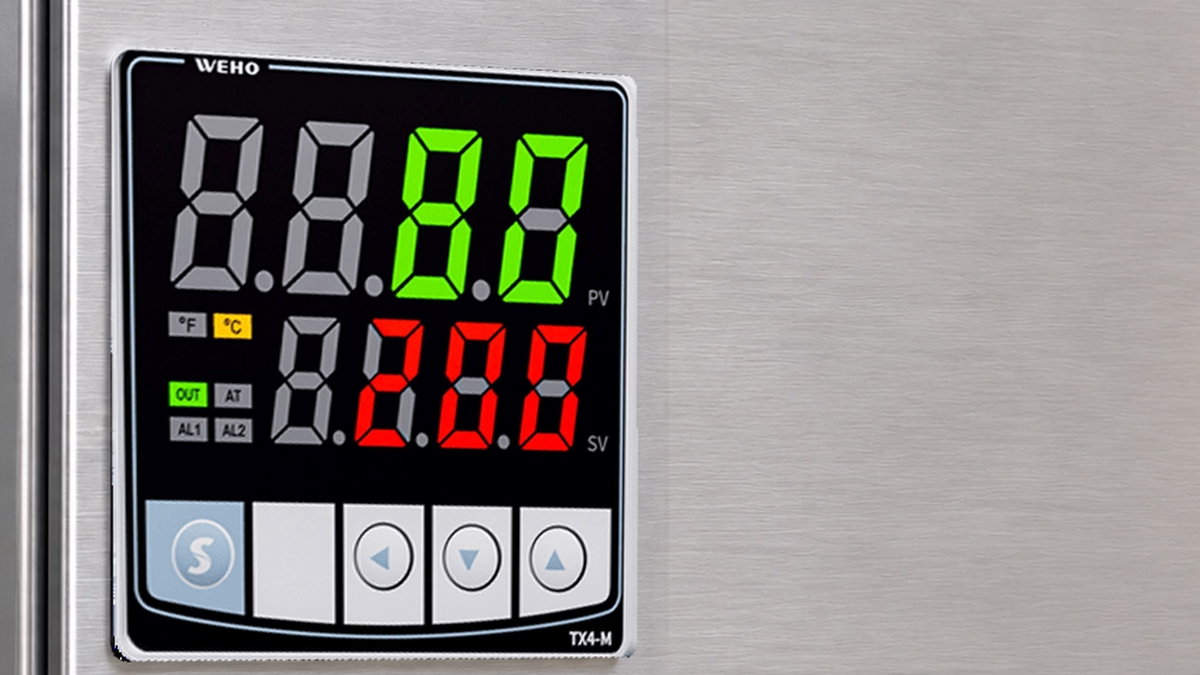
The application image identifies a TX4-M panel context. Its display values are retained source artwork, not an observed restart. Do not use the photograph as evidence that a particular parameter persisted or that the heater output remained inactive during an interruption.
Which settings belong in the baseline map?
Build a map around the actual control task. Include the sensor/input setting, temperature unit, relevant decimal display, setpoint boundaries, control mode, output-related settings and alarms where applicable to the supplied configuration. Do not populate unsupported options simply because they appear in a generic ordering diagram.
Record values with their units and meaning. A numeral without its unit can be restored correctly in memory and still be interpreted incorrectly by the technician. Distinguish a parameter value from a displayed process value, which should change with the actual sensor condition.
The official TX4 manual is the primary starting point for matching parameter names and supported arrangements. Confirm the document's applicability to the delivered version. Do not transform a general memory-retention statement into a guarantee for every interruption pattern or an instruction to bypass the equipment's restart controls.
Include the baseline's version and approval context in the internal record. A later setting change may be intentional, so the test needs the correct reference version. Comparing current settings with an obsolete photograph can produce a false failure even when the approved machine configuration has changed.
How can a small example show the required distinctions?
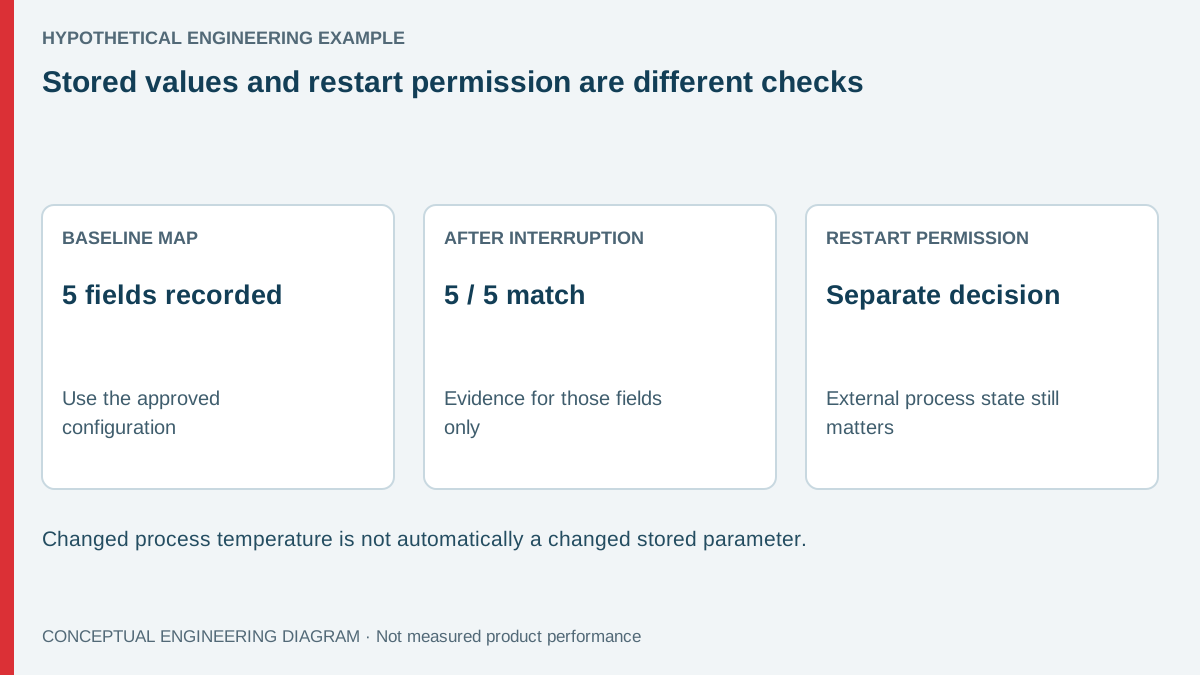
Consider a hypothetical machine record with five required configuration fields. Before interruption, the baseline lists input selection, temperature unit, setpoint, control direction and alarm threshold. After restoration, all five match. The configuration comparison is 5/5 for those stated fields, not proof that every controller parameter was checked.
Assume the process is cold after a prolonged outage and the controller's indicated temperature differs from its pre-outage value. That changed process reading is not a retention failure. It represents a different measured condition unless a separate input or sensor problem is demonstrated.
Now suppose the external machine sequence still requires an operator release before heating. Correctly retained settings do not remove that requirement. The restart record should therefore have separate columns for parameter match, observed controller state and external permission state.
A sample of three interruptions with three successful checks is simply three observed cases. It does not establish a failure probability, memory life or performance under untested brownout profiles. State the interruption durations and conditions rather than replacing them with an unsupported “power-cycle proven” claim.
| Hypothetical check | Observation | Decision supported | Separate question |
|---|---|---|---|
| Five selected configuration fields | 5/5 match the approved baseline | Those fields retained in this test | Unexamined parameters |
| Process indication | Lower after a long outage | Changed measured condition | Whether the input chain is correct |
| External heating permission | Not yet released | Machine remains in its intended hold state | Controller memory identity |
| Three defined interruptions | Three observations recorded | Evidence for those cases | Lifetime or statistical reliability |
How should the power-cycle test be controlled?
Plan the interruption using the actual equipment procedure. Heating, motion, stored energy and other outputs can respond to a changed input or restored power. Qualified personnel should establish the required safe test state and determine which outputs can remain connected during the check.
- Confirm the approved parameter-map version and exact controller identity.
- Record selected values and the pre-interruption operating state.
- Apply the defined interruption without changing other variables unintentionally.
- Compare restored values before authorizing any required process restart.
- Record the resulting machine state and close the handover with the responsible person.
Use observation timing appropriate to the actual startup and measurement requirements. The manual's applicable warm-up guidance concerns measurement conditions; it should not be confused with permission to resume a process. Avoid inventing a universal delay that supposedly makes every machine ready.
If a value appears different, preserve the initial observation before editing it. Check whether the field was read correctly, whether a different parameter group was entered and whether the approved baseline changed. Re-entering every value immediately may erase the evidence needed to understand a genuine retention or configuration problem.
What should production handover include?
Provide the current parameter map and the verified restart observations as separate records. Identify who controls subsequent setting changes and how the internal baseline is revised. A front-panel lock can help manage access where supported, but a lock is not a substitute for a configuration record or a machine restart assessment.
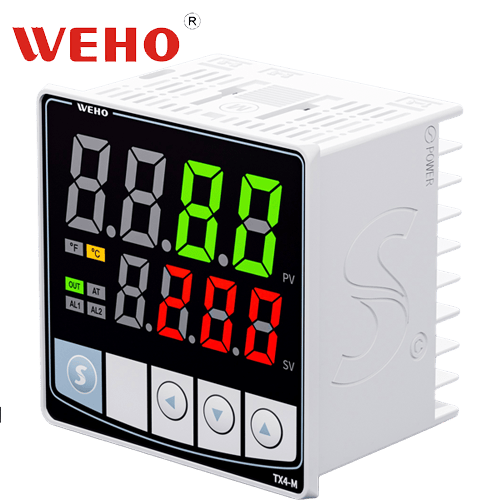
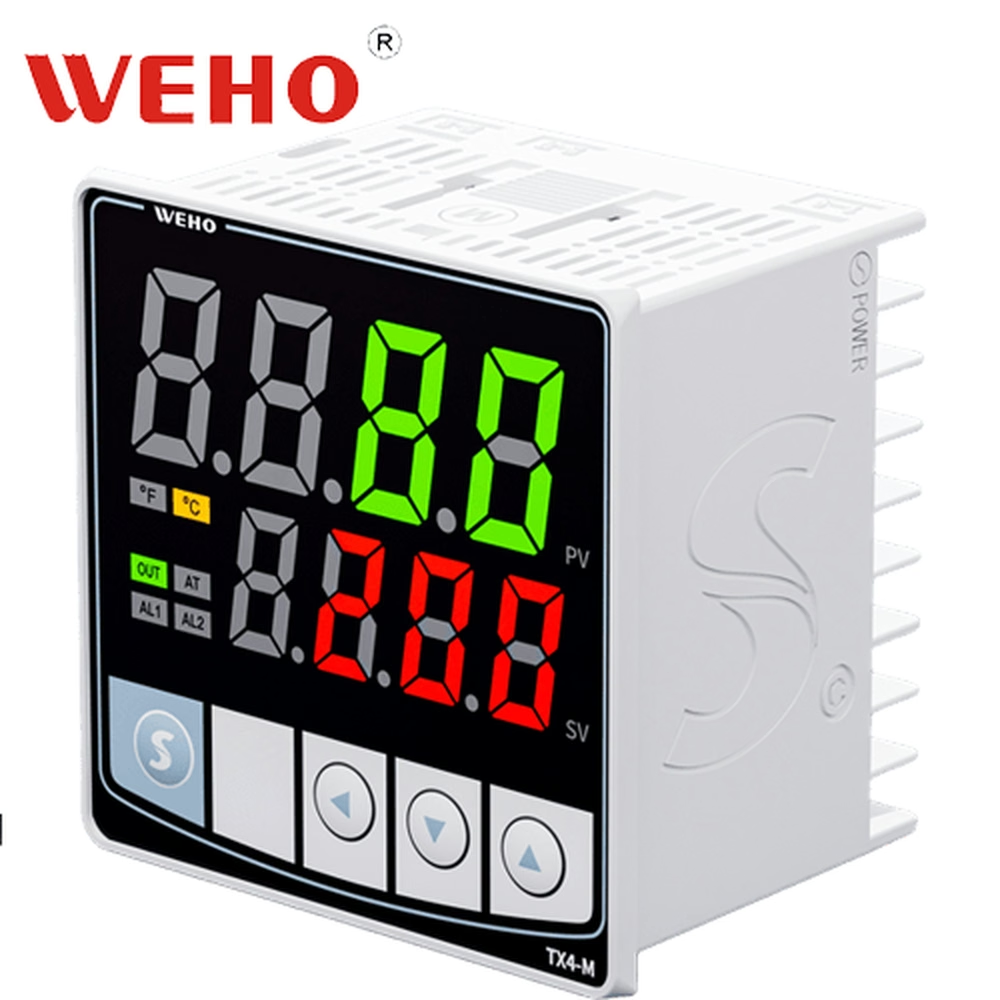
The TX4-M product information provides the model entry for confirming the supplied configuration. Ask for applicable documentation where the ordered variant's options are unclear. Do not infer communication, automatic backup or remote export functions from the panel shape.
A photograph can support a record of visible values, but many settings are not visible simultaneously. Use a structured table with parameter name, value, unit and source version. If images are included, label their actual state so an old screen cannot later be mistaken for the current configuration.
Repeat affected checks after a documented parameter change, controller replacement or relevant equipment modification. The necessary scope depends on what changed. A setpoint revision may not require repeating every commissioning test, while an input-type or control-direction change can affect much more than memory retention.
Record whether the interruption occurred during an ordinary steady state or immediately after an intended setting change. Those are different test conditions and should follow the controller's applicable instructions. Do not invent a universal save delay or interrupt a write operation deliberately without a justified test purpose.
For a replacement unit, compare the approved parameter definitions as well as their values. A different supplied option or document revision may require a configuration review before the old map can be used. Matching visible numbers alone does not establish that the replacement has the same input and output arrangement.
Prepare a TX4-M restart review
Send WEHO the supplied variant, applicable manual, selected baseline fields and the observed interruption record. State whether the question concerns stored values or a different startup behavior. Keep external machine permissions in the equipment designer's review so a correct retention result is not mistaken for approval of automatic heating restart.
Frequently asked questions
Does a retained setpoint prove all settings were retained?
No. Check the selected parameter map and state its coverage. Input, unit, output and alarm-related settings can matter even when the visible setpoint appears unchanged.
Is a changed process temperature a memory failure?
Not by itself. The actual process may have cooled or changed during the interruption. Separate stored configuration from the measured process value and investigate the input chain when evidence indicates a problem.
Do three successful cycles establish long-term reliability?
No. They document those three conditions. A lifetime or reliability claim requires an appropriate evidence basis, not a small demonstration converted into a probability.
Should the machine restart whenever the settings match?
Only if the equipment's documented design and current conditions permit it. Configuration match and restart permission are different decisions; this article does not authorize bypassing external controls.