To use a 110 V AC-only device on a 220 V AC supply, select a suitable AC-to-AC step-down transformer or other converter only after checking the device’s voltage and frequency requirements, load characteristics, plug, grounding and the converter’s ratings. If the device or its power supply already accepts the local supply voltage and frequency, voltage conversion may not be needed; a compatible plug connection may still be required.
A plug adapter changes the physical connection. It does not, by itself, reduce voltage or change frequency. A DC/DC converter and an AC/DC power adapter have different input and output functions; neither should be chosen as a 220 V AC to 110 V AC converter just because it is called a “power supply.”
Key engineering takeaways
- Check the equipment’s accepted AC voltage and frequency before buying a converter.
- A conventional transformer lowers AC voltage but does not change frequency.
- Size for the actual load, startup duty and site conditions; check grounding where required.

Buyers should assess the complete combination of supply, converter, protective arrangement and equipment for the intended duty.
Understand your equipment before selecting a converter
Find the equipment’s input nameplate or the manufacturer’s specification. Record the AC input voltage or range, frequency, rated current or power, plug type, grounding requirement and operating environment. For equipment powered through a separate adapter, check the adapter’s AC input label as well as the equipment’s DC requirements.
For example, an input marking of 100–240 V AC, 50/60 Hz covers nominal 220–240 V supplies within that stated range. Check the exact unit’s documentation, plug and protective-earth requirements before connecting it. A plug adapter changes the physical connection only; it does not establish that the equipment is suitable for the local supply.
By contrast, equipment marked only for 110 V AC needs an appropriate supply within the manufacturer’s accepted range. Do not assume that 100 V, 110 V and 120 V are interchangeable for every device. Similarly, verify whether the equipment accepts the local frequency. Standard US household outlets commonly supply 120 V at 60 Hz; Japan generally uses 100 V, with 50 Hz or 60 Hz depending on the region. Local supplies and equipment markings must still be checked for the actual site.
Learn more about choosing an AC/DC adapter
Compare the available approaches
| Approach | What it does | What to verify before use |
|---|---|---|
| Compatible input range | The equipment or its existing power supply accepts the local AC voltage | Frequency, plug, grounding, local supply and manufacturer instructions |
| AC-to-AC step-down transformer | Reduces AC voltage within its specified input and output ratings | Input/output range, VA or current, startup demand, frequency, grounding and installation |
| Electronic voltage converter | Changes the supply using a circuit designed for a particular load and duty | Output waveform, rated load type, continuous duty and manufacturer compatibility |
| Permanent installation | Provides a suitable supply as part of a designed electrical installation | Whether the supply exists; required equipment, protection and local rules; qualified electrician |
| Plug adapter | Changes plug-to-socket fit | Physical fit, current rating and earth continuity where required; it does not convert voltage |
Some electronic appliances are not suitable for particular electronic travel converters. Confirm compatibility with the converter and equipment manufacturers rather than assuming that all low-power loads are alike. A transformer and a converter can also have different continuous-use ratings.
Equipment already accepts 100–240 V AC? Then the fix is usually a wide-input AC/DC supply rather than a transformer — see the enclosed switching power supplies
Using a step-down transformer: check voltage, frequency and load
A suitable step-down transformer takes AC at its specified higher input voltage and supplies a lower AC output. Match the transformer’s input range to the actual supply and its output to the equipment’s accepted input range. Check its nameplate and instructions for the rated frequency, maximum output current, ventilation, grounding and protective arrangement.
A conventional transformer does not change the supply frequency. If equipment requires 60 Hz only and the available supply is 50 Hz, reducing the voltage does not resolve that frequency mismatch. Motors, timing devices and other frequency-sensitive loads require particular care. Ask the equipment manufacturer about the intended supply; do not assume a transformer makes every device compatible.
Also distinguish AC-to-AC conversion from supplies that produce DC. An AC/DC adapter supplies DC to equipment designed for a DC input; a DC/DC converter changes one DC level to another. Neither is an interchangeable substitute for an AC-to-AC step-down transformer. The product label, current datasheet and actual input/output markings determine which function a specific unit provides.
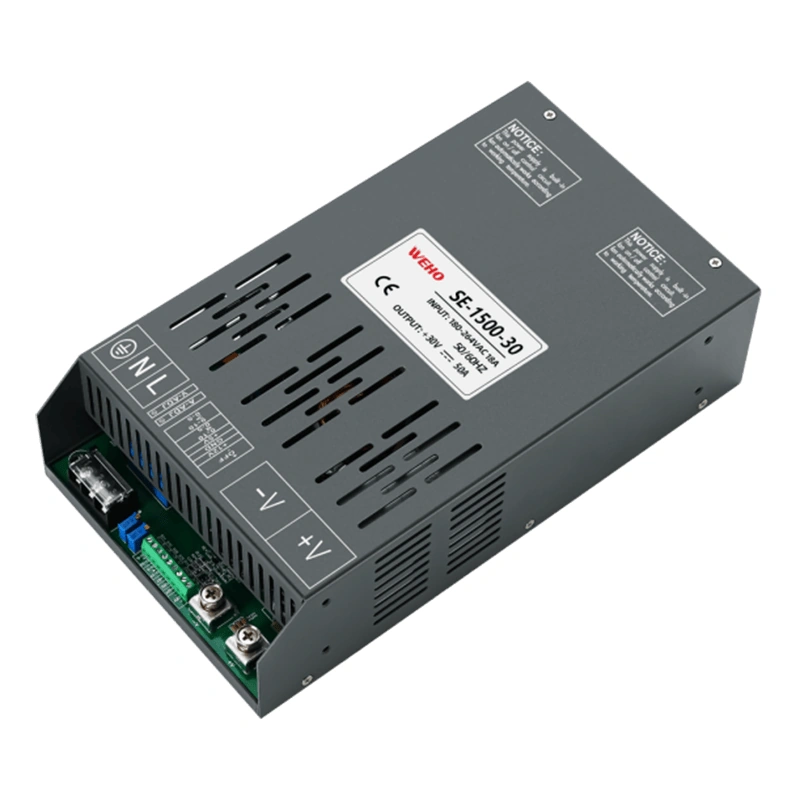
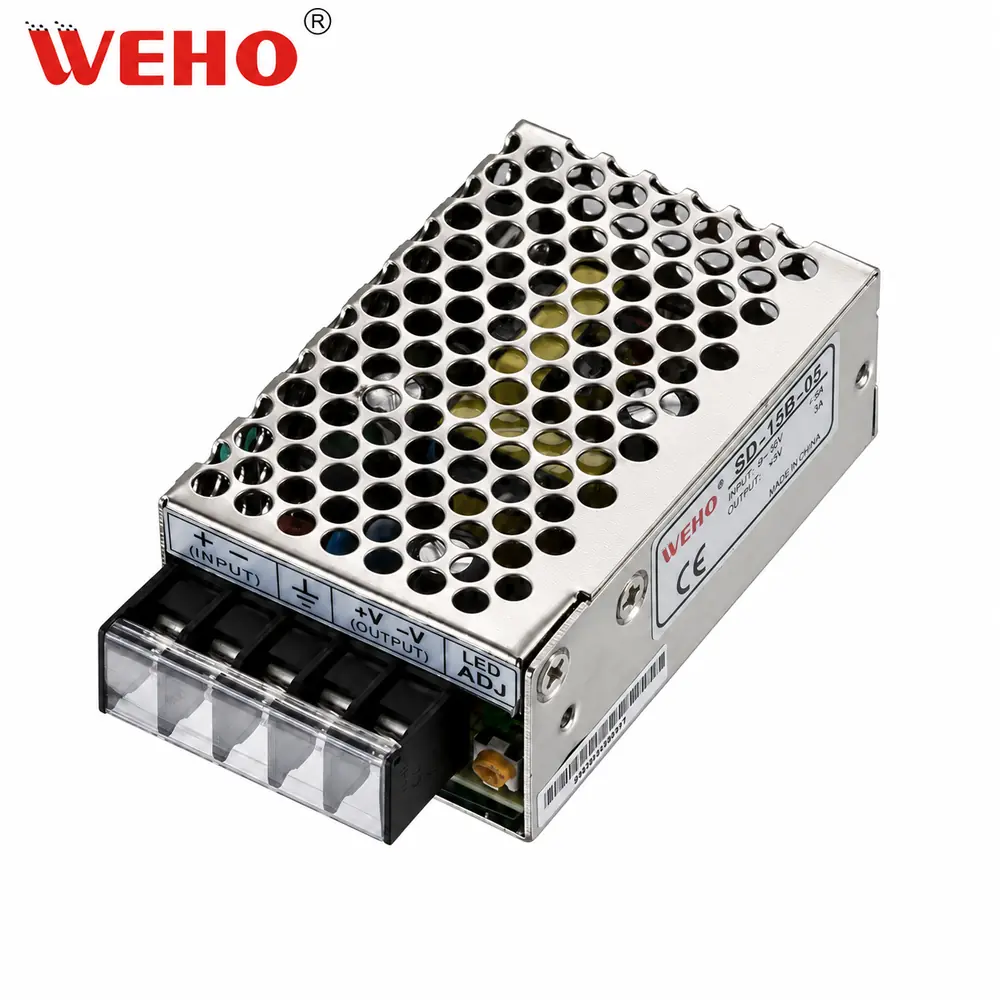
For an explanation of the component and supply types, see Electrical Transformer and Is the Power Supply and the Transformer the Same Thing?.
Size the transformer for continuous and starting demand
Start with the equipment’s rated input, not an estimate based only on its physical size. A transformer may be rated in volt-amperes (VA), amperes or watts; use the manufacturer’s rating method and conditions. For a single-phase load, apparent power can be estimated as VA = RMS input voltage × RMS input current. Real power in watts also depends on power factor, so VA and W should not be treated as automatically equal.
Worked example: a 110 V load
Assume a single-phase device nameplate states 110 V AC, 2 A at the intended operating condition. The apparent power calculated from those nameplate values is:
110 V × 2 A = 220 VA
This is a calculation example, not a specified WEHO product or a complete transformer selection. It does not establish the device’s startup current, power factor, required duration, ambient derating or maximum permissible supply voltage. Obtain those details and follow both manufacturers’ instructions before choosing a transformer. Do not use a fixed “extra percentage” as a substitute for missing startup and duty information.
Startup demands may differ from steady-state ratings. Confirm whether the transformer supports the peak and duration without excessive voltage drop or overheating; assess simultaneous starts when there are several loads.
Rewiring or retrofitting: establish the supply first
For a permanent installation, a qualified electrician should assess the existing electrical system and local requirements. A suitable 110 V supply may not already be available. Changing a receptacle or altering a plug does not itself reduce a 220 V supply to 110 V; a suitable source or properly designed conversion arrangement may be needed.
The design must address protective devices, wiring, grounding where required, load, enclosure, identification and applicable rules for the site. This is not a do-it-yourself wiring guide. Isolate and verify the electrical system using the site’s procedures, and leave installation, testing and changes to qualified personnel.
Using plug-in converters and adapter plugs
A travel plug adapter may be useful when the equipment already accepts the local voltage and frequency, but it only adapts the connection. Check the current rating, socket fit, earth contact where required and the manufacturer’s instructions. Do not defeat a protective earth or assume that every plug adapter accommodates an earthed appliance.
An electronic voltage converter is a different product. Check that it is specifically rated for the local input, the equipment’s required AC output, the load type, power and duration. Its output waveform can matter to electronic equipment. A surge-protection feature is not evidence that a plug adapter converts voltage. If the documentation is unclear, obtain confirmation from the equipment and converter manufacturers before use.
Troubleshooting and safety checks
If the equipment does not start, check the nameplate requirements and whether the chosen converter is rated for the input supply and the load’s continuous and starting needs. Frequency incompatibility, plug contact, incorrect wiring, unsuitable waveform or a protection trip may also require investigation. Do not assume that a higher nominal wattage solves all of them.
If there is unusual heat, a burning smell, damage or abnormal buzzing, stop using the equipment. Disconnect power only when it is safe to do so, and have a qualified person inspect the equipment and installation. Do not open or repair live electrical equipment. For damp environments, use equipment and protective arrangements suitable for the location; a lower nominal voltage alone does not make contact with electricity safe.
Before purchase, request the applicable model documentation and confirm its scope. A CE mark is the manufacturer’s declaration under applicable EU rules; it does not by itself mean that a public authority approved the product or prove fitness for every installation. Check the documentation required in the destination market and for the exact model.
What information should a buyer provide?
For an equipment evaluation or supply inquiry, prepare the following:
- Local source: actual nominal voltage, frequency, phase and site location.
- Equipment input: nameplate voltage/range, frequency, rated current or power, and manufacturer documentation.
- Load profile: continuous demand, startup or peak demand, duration and simultaneous loads.
- Interface and installation: plug/socket, grounding, cable length, ventilation and ambient conditions.
- Required evidence: model-specific datasheet, safety documentation and any applicable installation requirements.
For questions about selecting a suitable power supply for a DC-powered device, contact WEHO with the equipment’s requirements. Confirm availability and compatibility for the exact model; an AC/DC or DC/DC product must not be assumed to provide 110 V AC output.
Frequently asked questions
Can a 220 V plug adapter convert the supply to 110 V?
No. A plug adapter normally changes only the physical fit. If the equipment does not accept the local voltage, use an appropriately rated voltage-conversion solution after checking all input requirements.
Do I need a transformer if my power supply says 100–240 V AC?
Not for voltage conversion when the local voltage is within that stated range. Still verify frequency, the plug, grounding and the exact manufacturer’s instructions.
Will a 220 V to 110 V transformer change 50 Hz to 60 Hz?
A conventional transformer changes AC voltage, not frequency. If the equipment needs a different frequency, obtain an appropriately specified solution and manufacturer confirmation.
Is a DC/DC converter the same as a 220 V to 110 V transformer?
No. A DC/DC converter accepts DC and provides DC, while the transformer discussed here takes AC and supplies a lower AC voltage. Always verify the exact input and output ratings.
How much transformer capacity does my equipment need?
At minimum, the chosen unit must support the equipment’s required continuous and startup load under the actual conditions. Check VA, current, duty, ambient derating and the manufacturer’s rating method rather than relying on one generic margin.
Confirm the supply before you commit to a converter
Send the equipment nameplate: input voltage or range, frequency, rated current and plug type. WEHO will tell you whether a wide-input AC/DC power supply, a DC/DC converter or an on-site conversion arrangement is the correct route for that unit.
Sources
- Electrical Safety First: Travel advice
- US Department of Energy: Electricity system overview
- Japan National Tourism Organization: Electricity
- OSHA: Electrical safety-related work practices (US workplaces)
- European Commission: CE marking
- Schneider Electric: Industrial Control Transformers selection
- ACUPWR: Voltage transformer and frequency