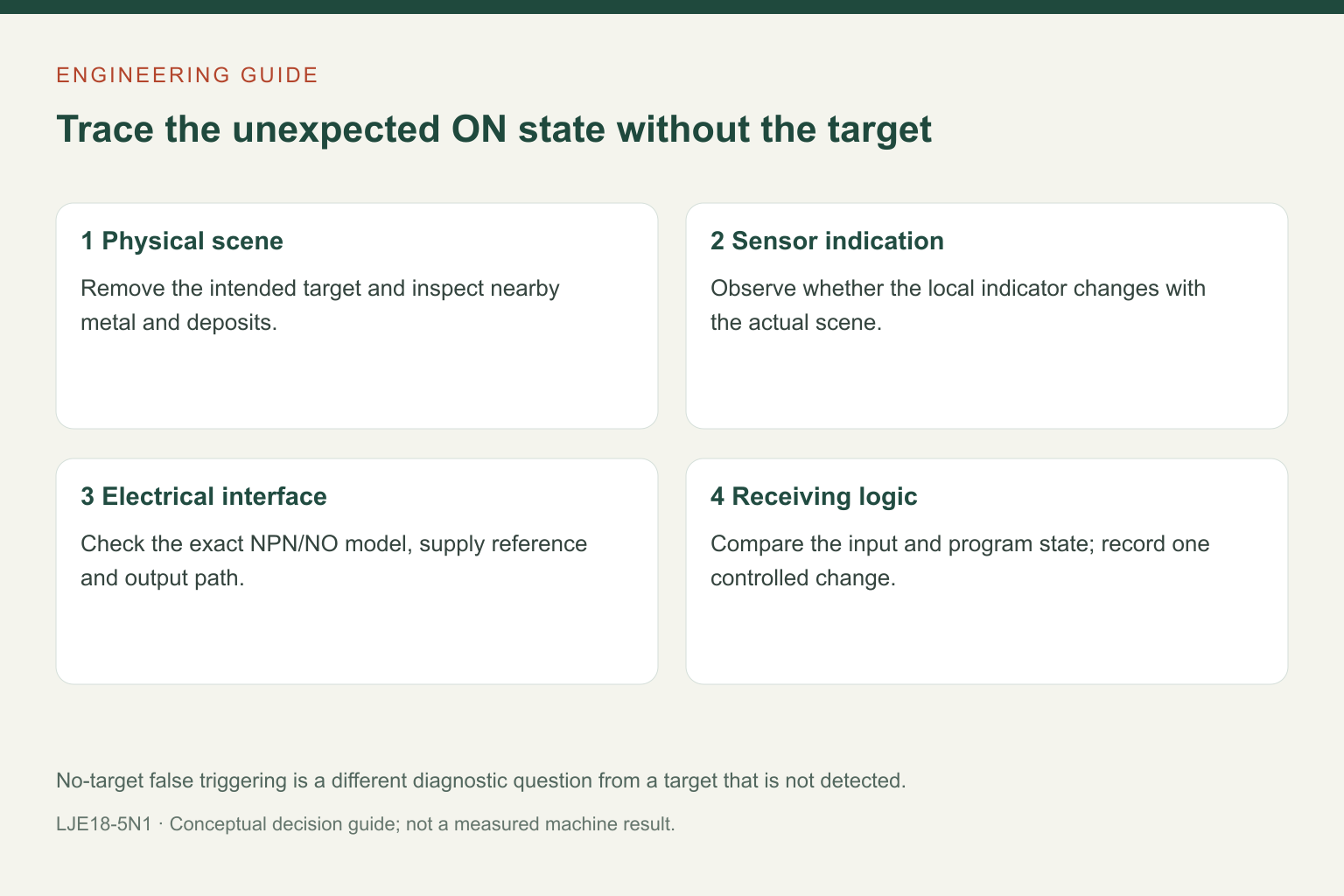
An inductive proximity sensor false trigger means the control system reports detection when the intended target is absent. Start by establishing where that unexpected state appears: at the sensor, at its electrical output, at the receiving input, or only in the machine program. These are different fault paths, and replacing the sensor immediately can leave the real cause untouched.
Confirm the exact model and expected empty state
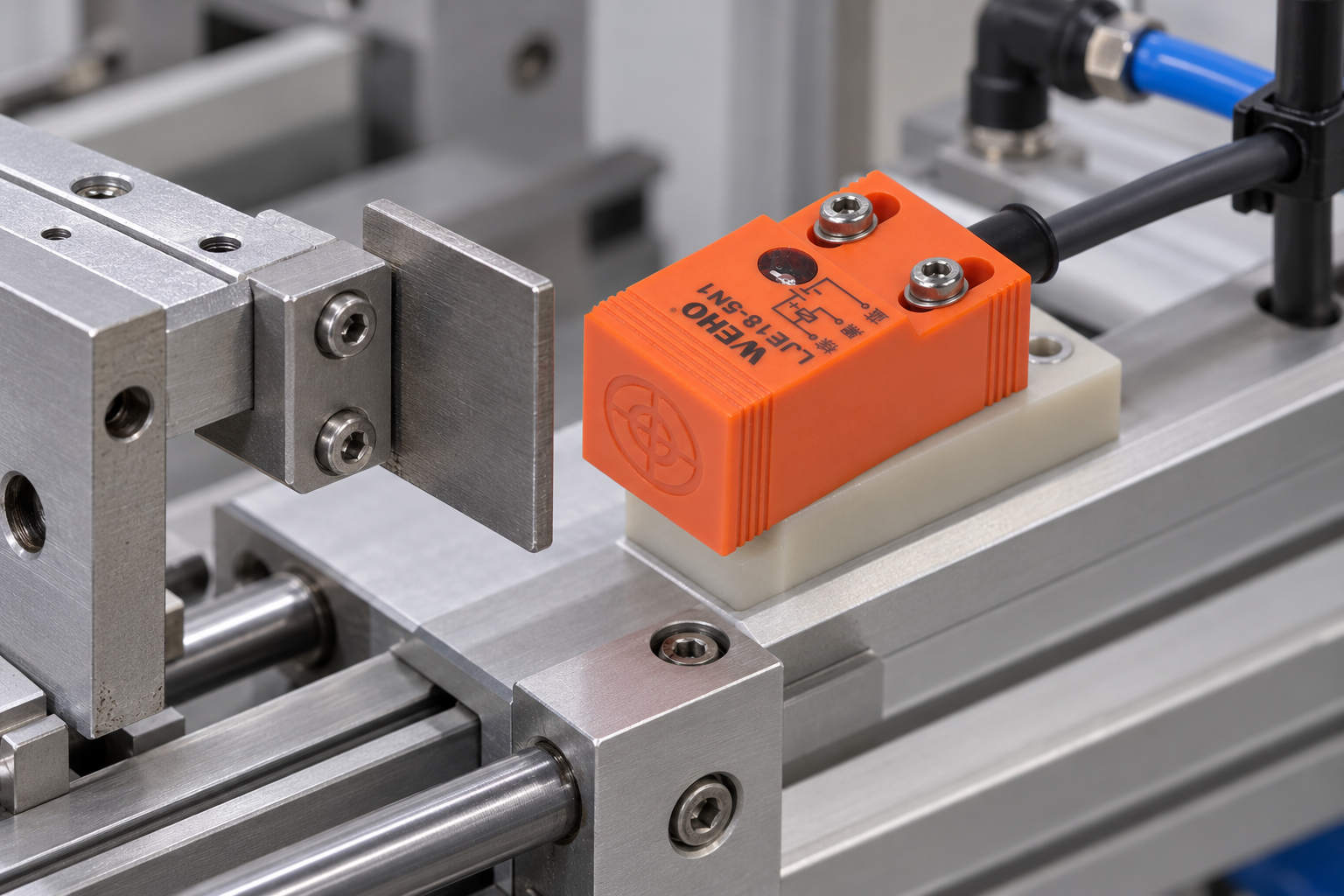
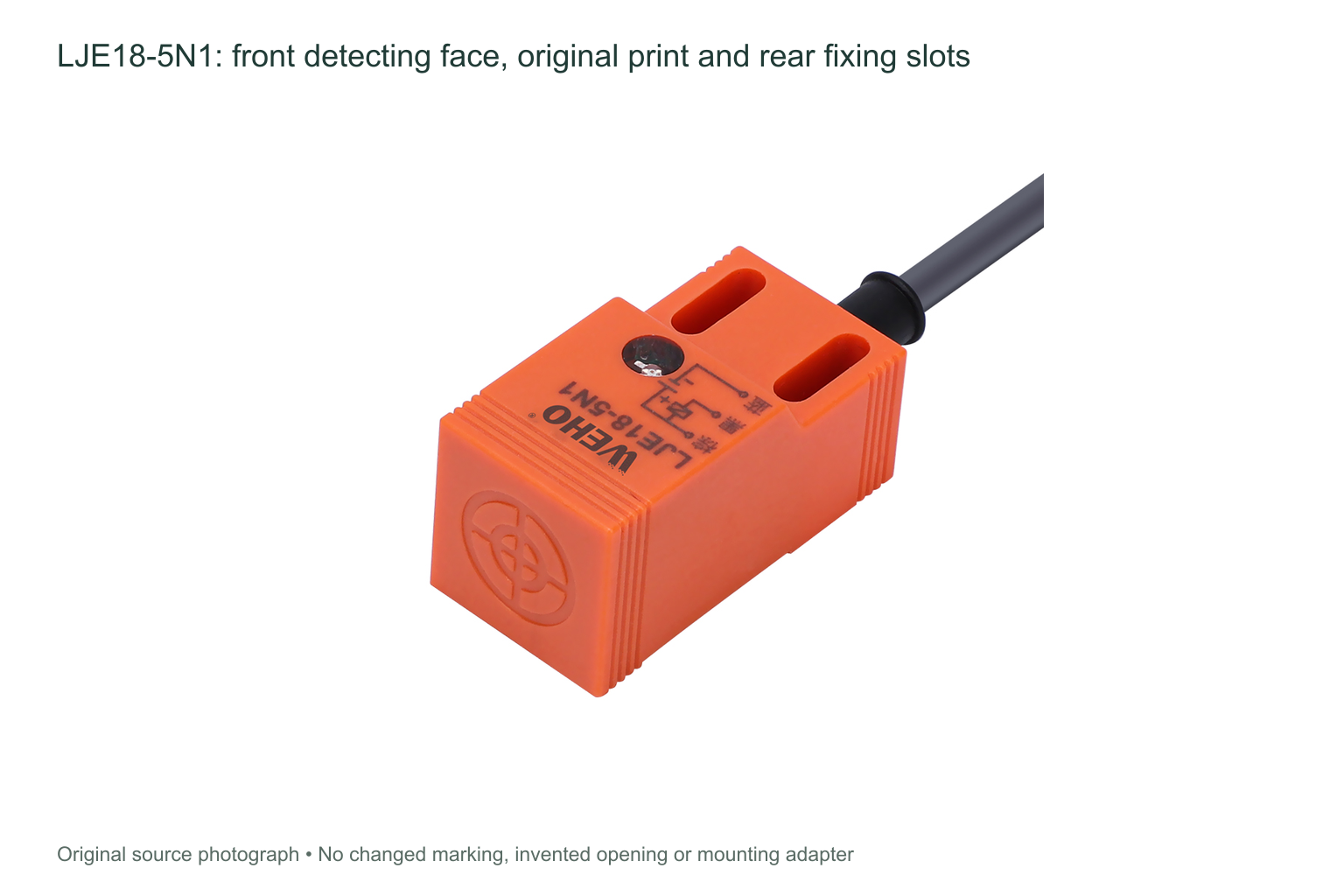
The source-photographed example is the WEHO LJE18-5N1, a front-detecting, three-wire NPN normally-open model. The LJE-W upward-detecting arrangement and normally-closed variants are not interchangeable with it. Read the complete delivered marking before deciding what should happen with the target removed.
A program variable named “part present” may be inverted, retained or derived from several inputs. Do not assume its name describes the raw sensor output. Record the local indication and the input-channel state alongside the program state so that the first disagreement can be found.
Is the sensing area really empty?
Move the intended target safely clear using the machine’s approved procedure, then inspect the forward sensing area and its surroundings. A steel flag, loose fastener, metal deposit or part of the support may remain closer than expected. The LJE18-5N1 reacts to metal; it does not know which item the machine designer intended it to detect.
The sheet lists a 5 mm nominal distance and a 0–4.25 mm setting range with a 20 × 20 × 1 mm iron reference target. These values do not specify a universal mounting clearance from all surrounding metal. They also should not be applied to every target material and size. If the support or neighbouring sensor geometry is uncertain, obtain the applicable installation guidance instead of inventing a fixed separation rule.
Compare indication and receiving state
| Observation with intended target absent | Next question |
|---|---|
| Sensor indication changes when nearby metal is moved | Is an unintended object entering the sensing field? |
| Local indication is stable but the receiving input changes | Does the electrical interface or cable path explain the difference? |
| Input is correct but the program still reports a part | Is inversion, memory or sequence logic responsible? |
| Changes coincide with another machine event | Can a controlled comparison separate motion, supply and switching effects? |
A correlation with a motor or solenoid starting is a useful clue, not proof of electromagnetic interference. Motion may move a flag or cable at the same time. Keep observations specific enough to distinguish physical movement from electrical events.
Check the NPN interface without changing the product identity
The matched source gives a 10–30 VDC supply and shows brown to positive, blue to 0 V and black as the NPN output. Confirm the receiving input’s compatible circuit and reference from its own documentation. Do not treat an NPN output as a positive voltage source or infer compatibility from cable colours alone.
Inspect for damaged insulation, crushed cables, poor connections and an unintended output path. Have qualified personnel perform any electrical measurements or disconnection under the applicable isolation procedure. Review sensor routing alongside switched-load cables, but do not add an unspecified suppressor, filter or program delay as a universal cure.
Make one controlled change, then restore the full cycle
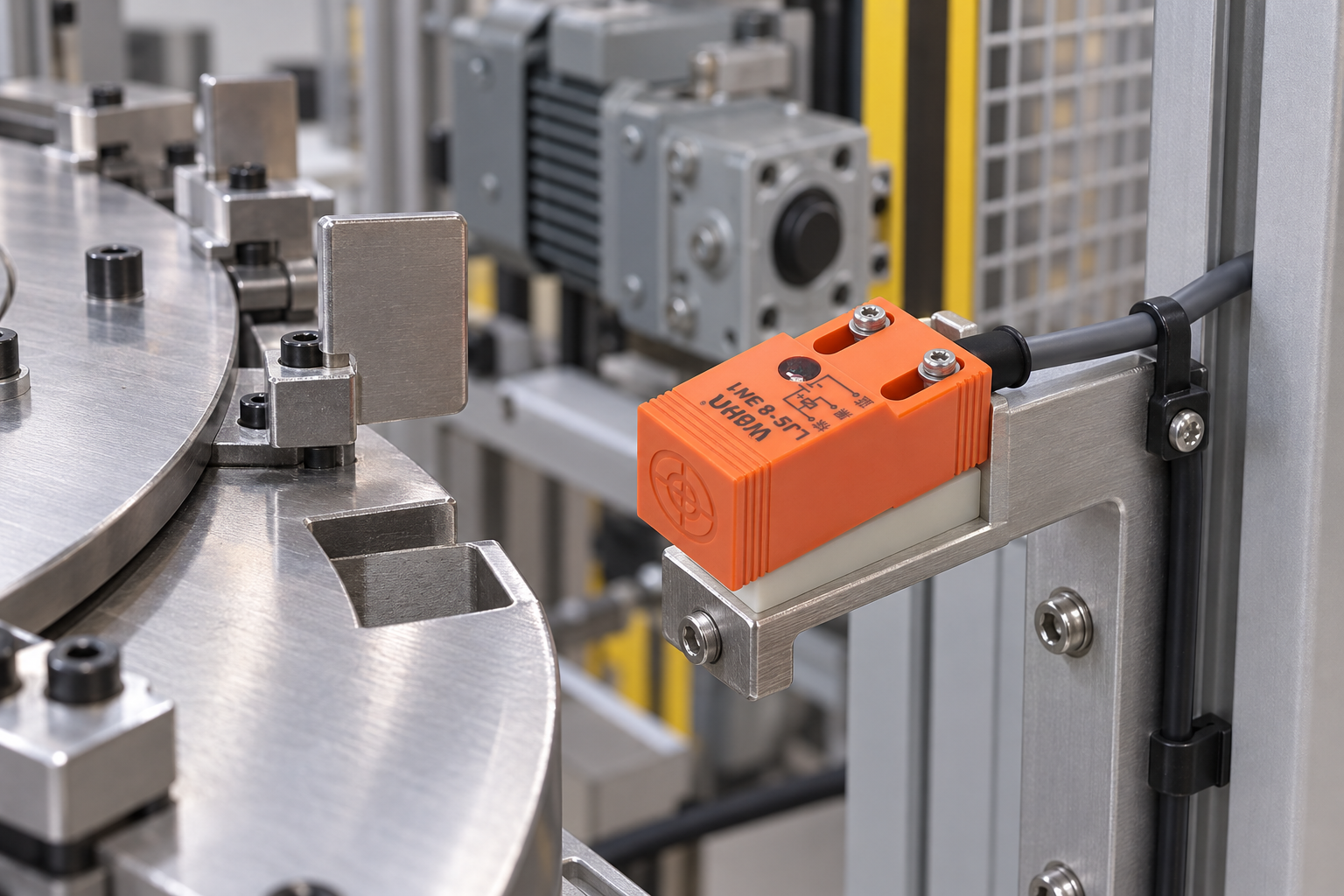
Keep a short record of the empty-area condition, local indication, receiving input and associated machine event. Change one relevant condition at a time, such as removing an unintended metal object or correcting the documented input connection. This makes the result interpretable and avoids losing a repeatable fault behind several simultaneous adjustments.
After correction, verify both target-absent and target-present operation through the intended machine sequence. Check that a change which removes an unwanted signal has not also removed genuine detection. This diagnostic sensor must not be represented as a safety-rated protective device without separate evidence.
Frequently asked questions
Does an ON controller bit prove the sensor is faulty?
No. The bit may reflect wiring, input configuration or program logic. Compare it with the local indication and electrical interface before deciding which component is at fault.
Can a longer delay solve every false trigger?
No. A delay can hide a short symptom and can also suppress valid events. Establish the cause and the required response before changing filtering or timing.
What to send for an application review
Use the WEHO product navigation to identify the correct sensor family, then provide the full model, target and support photographs, supply details, receiving-input model and the observations above. Ask WEHO to confirm the relevant installation requirements where nearby metal or sensor spacing is not resolved by the matched sheet.