Choosing a waterproof DC-DC converter requires an installation boundary, not just a sealed-looking housing. Specify the exposure and the exact assembly being assessed: converter body, lead exits, joints, connectors, cable entries, mounting surface, and enclosure. Obtain evidence for that configuration. A component description does not establish the protection of every interface around it.
This matters when an OEM places a non-isolated converter in outdoor equipment, a mobile enclosure, or a location subject to cleaning. The relevant decision is which parts of the installed power path must remain protected, under which conditions, and who supplies the supporting evidence. An installation acceptance matrix makes that decision concrete.
Article sections
Define the real environmental exposure
Replace a general request for “waterproof” with an exposure description. Record whether the assembly faces occasional splashes, directed cleaning, standing water, condensation, or another defined condition. Include duration, orientation, water characteristics where relevant, operating state, and access during servicing. Those are requirements to agree, not capabilities established for the converter by this article.
Keep other environmental stresses separate. A water-ingress claim does not, by itself, answer questions about salt exposure, cleaning chemicals, ultraviolet light, vibration, or temperature cycling. Record the applicable project requirements rather than treating one enclosure label as a complete environmental qualification.
IEC 60529 addresses degrees of protection provided by enclosures through the IP Code. For procurement, request the exact claimed code, applicable product/configuration, and supporting test conditions. Do not invent an IP number from potting, a metal body, or descriptive waterproof wording.
Map the installed sealing boundary
Follow the power path from the equipment entry to the load. Give each interface a named owner and a defined evidence requirement. This prevents a converter supplier’s body description from being silently extended to a joint assembled elsewhere.
| Interface | What to define | Evidence to request |
|---|---|---|
| Converter body | Exact model, construction revision, exposed faces, mounting state | Applicable environmental claim and report or other agreed verification record |
| Lead exit | Cable type, supported routing, movement and strain at the exit | Installation limits and qualification scope for that cable/body interface |
| Joint, terminal or connector actually used | Location, specific parts, wire sizes, seals where required, and assembly state | Instructions and environmental evidence for that actual termination arrangement |
| Equipment enclosure entry | Gland, gasket, cable diameter and mounting arrangement | Requirements for the complete entry and enclosure configuration |
| Service access | Disconnected, capped, opened, cleaned and reassembled states | Permitted conditions and inspection or replacement criteria |
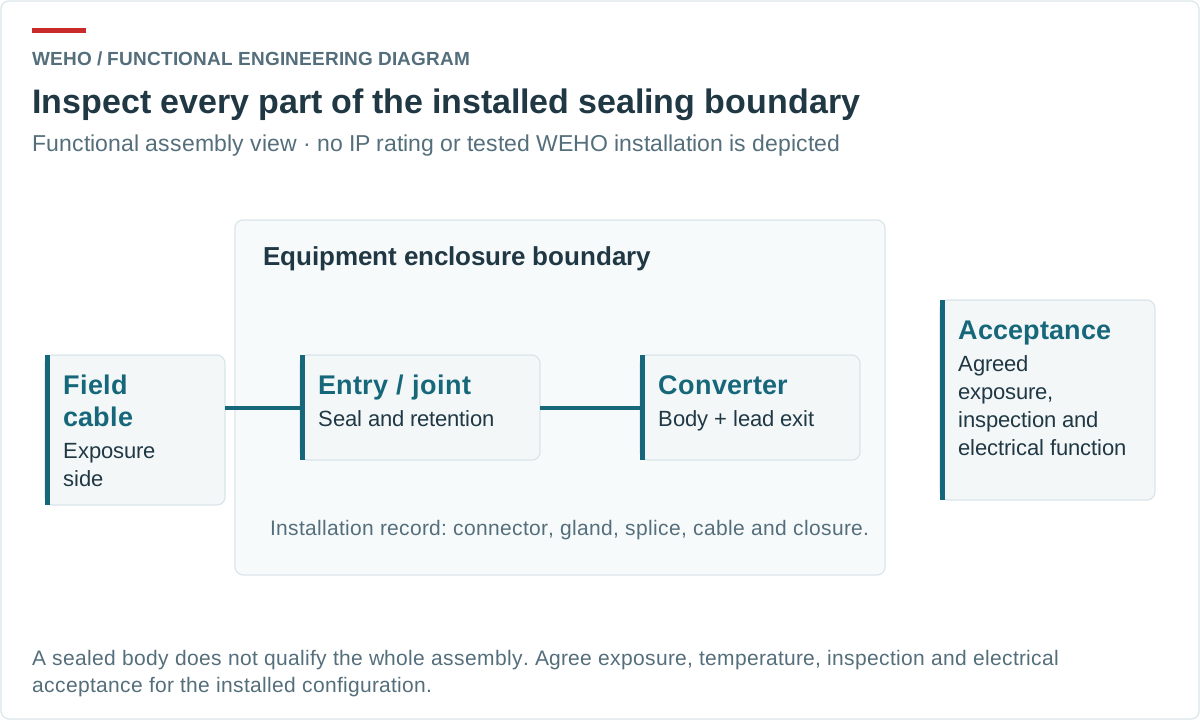
The drawing should distinguish the converter body from the actual termination. Flying leads may terminate inside an enclosure, at an equipment terminal, or through a separate splice or connector; an external inline connector is not mandatory. Define the arrangement used and what becomes exposed during service.
Read the WH-C241210 sealing claim precisely
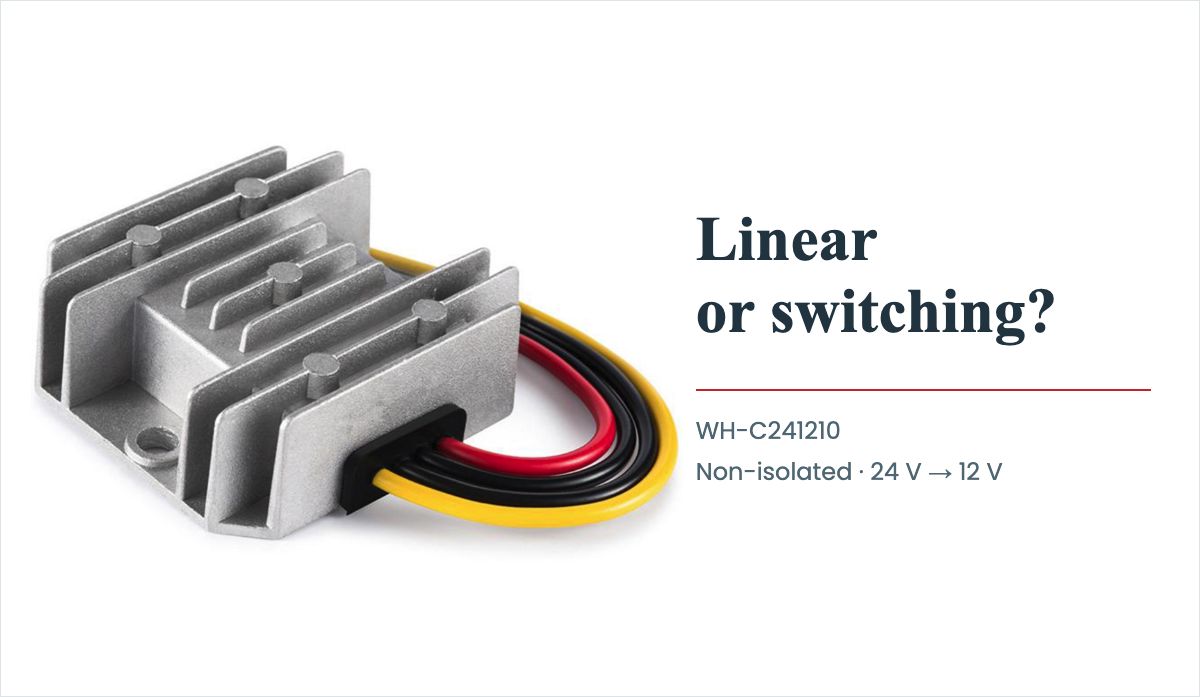
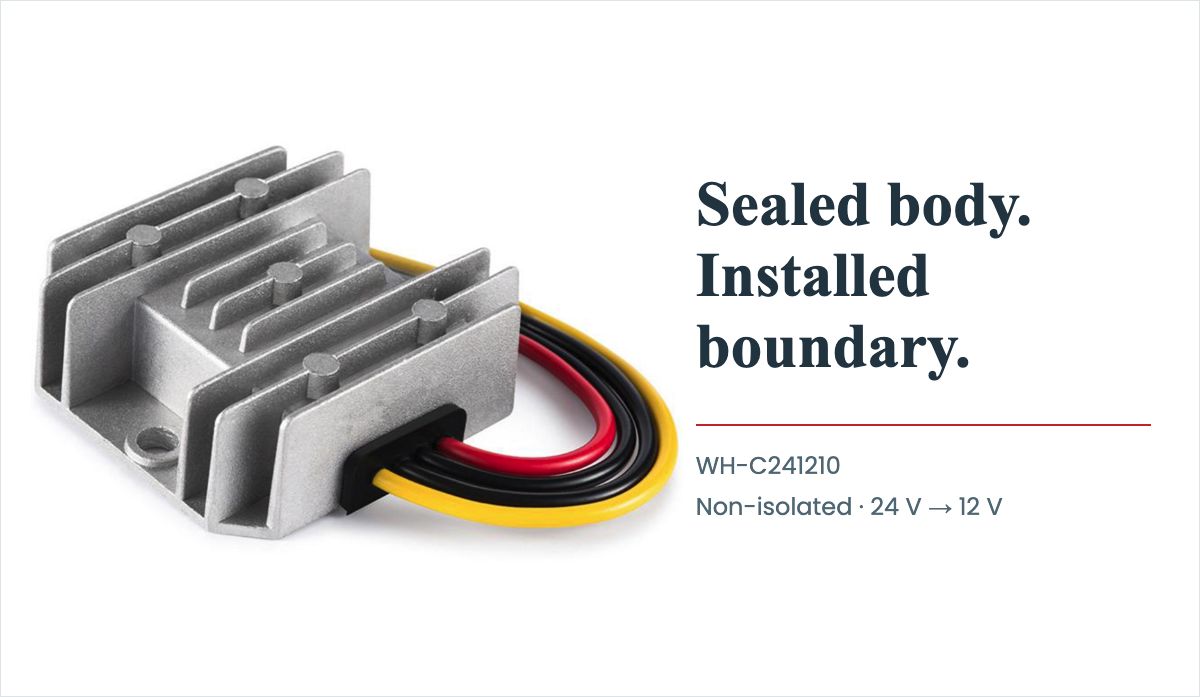
The WEHO WH-C241210 product detail and its model specification identify an 18–32 V input, 12 V, 10 A, 120 W converter with a common input/output negative. The public information describes fully sealed, waterproof construction. The reviewed material does not establish an IP67 or IP68 rating or the required configuration and test conditions for such a claim.
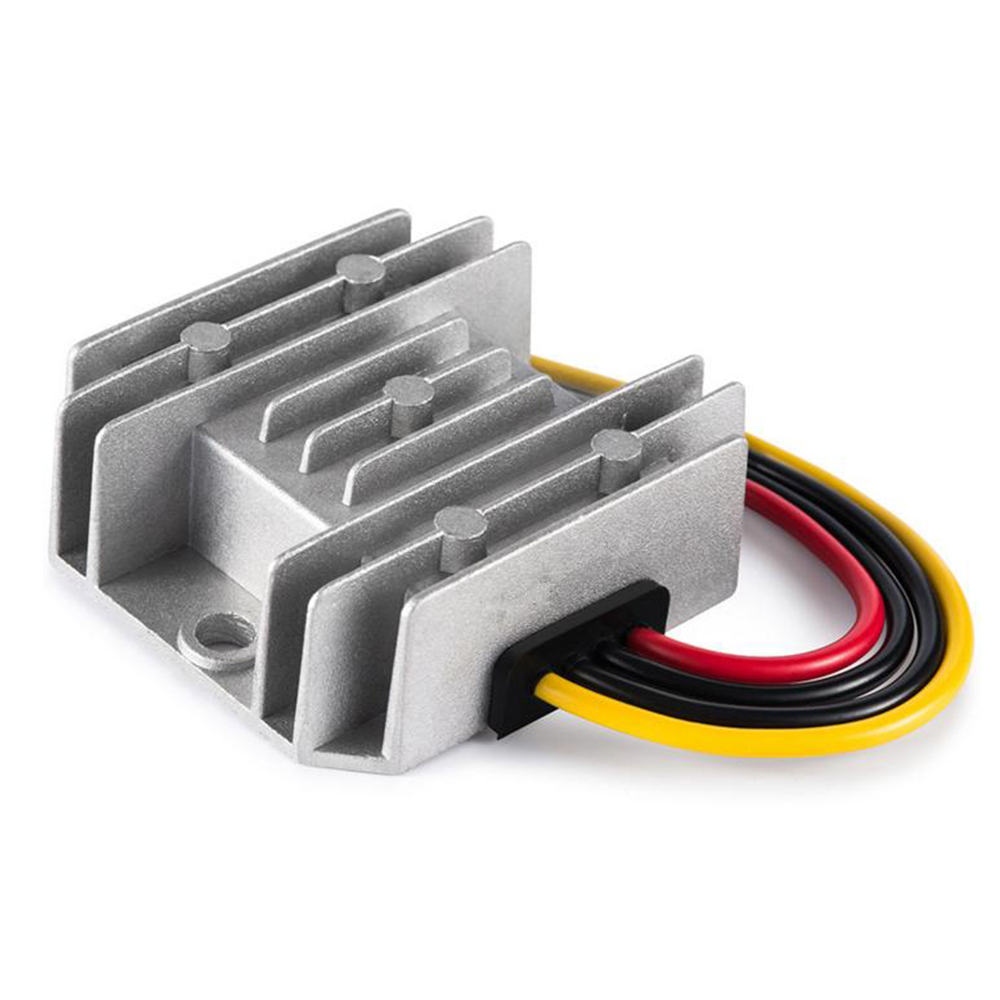
Use that distinction in the project specification: the product can be an appearance and documentation reference while its proposed installation remains subject to an environmental review. Do not label it “IP67” in the article, drawing, purchase description, or image caption without the applicable supporting evidence.
Non-isolated is an electrical property, separate from environmental sealing. This converter does not provide a galvanic isolation barrier between input and output. Its sealed construction must not be presented as an electrical separation function. If external signals share that reference, also plan the common-negative return paths.
Qualify the harness in its actual assembly state
Connector claims can depend on conditions that are easy to lose during assembly. For example, TE’s AMPSEAL 16 documentation describes an interface seal, individual wire seals, and plugs for unused cavities. That is an illustration of configuration-dependent sealing, not a recommendation or compatibility claim for this WEHO converter.
For the selected harness components, verify the permitted wire and insulation sizes, termination process, sealing parts, mating requirements, strain relief, and handling of unused positions. Record required lead length, conductor size, insulation material and routing; confirm these against the offered build and termination instructions. Changing a sleeve or connector does not automatically preserve the original claim.
Define the service condition too. If an interface is normally mated but may be disconnected outdoors, specify how it is kept protected and inspected before reconnection. Instructions for the normal operating state should not leave the maintenance state undefined.
Review sealing and heat on the same installation drawing
An added enclosure or a different mounting surface can change the converter’s thermal environment. Record ambient conditions, load state, orientation, mounting contact, surrounding parts, and relevant temperature measurement points. Agree thermal limits from the applicable model documentation and project requirements before interpreting a sample result.
The WH-C241210 specification’s 45 °C entry is rated temperature rise, not an ambient operating limit, allowable case temperature or derating curve. Request its baseline input voltage, load, ambient, mounting and cooling conditions, measurement location, and stabilization criterion. Obtain the applicable case, lead-exit or other temperature limits for the offered construction before setting acceptance thresholds.
If the project requires thermal cycling, include the lead exit, cable support and termination in that configuration’s inspection and functional checks. This is a proposed qualification boundary, not an assertion about the product’s internal materials or a proven failure mechanism.
Similarly, a cooler surface does not establish ingress protection. Keep the thermal record and environmental record connected through the same build identity, while judging each against its own agreed acceptance criteria.
Create an installation acceptance matrix that can fail
The following is a proposed record structure, not a test report or a claim that an installation has passed. Set the actual exposures, procedure, sample configuration, and limits before testing.
| Review item | Record before evaluation | Acceptance question |
|---|---|---|
| Assembly identity | Converter revision, harness drawing, connector parts and enclosure build | Does the evaluated assembly match the intended production configuration? |
| Exposure boundary | Defined wetting/cleaning condition, duration, orientation and operating state | Does the available evidence cover this condition and every exposed interface? |
| Electrical operation | Input/output limits, representative load states and required recovery | Are the specified functions maintained or recovered as required? |
| Thermal condition | Ambient, load, mounting and agreed measurement points | Are the applicable component and equipment limits met? |
| Post-exposure inspection | Agreed inspection points and unacceptable findings | Does the assembly meet the defined inspection criteria? |
| Service/reassembly state | Disconnect procedure, seals, caps and replacement instructions | Can the specified protected condition be restored and checked? |
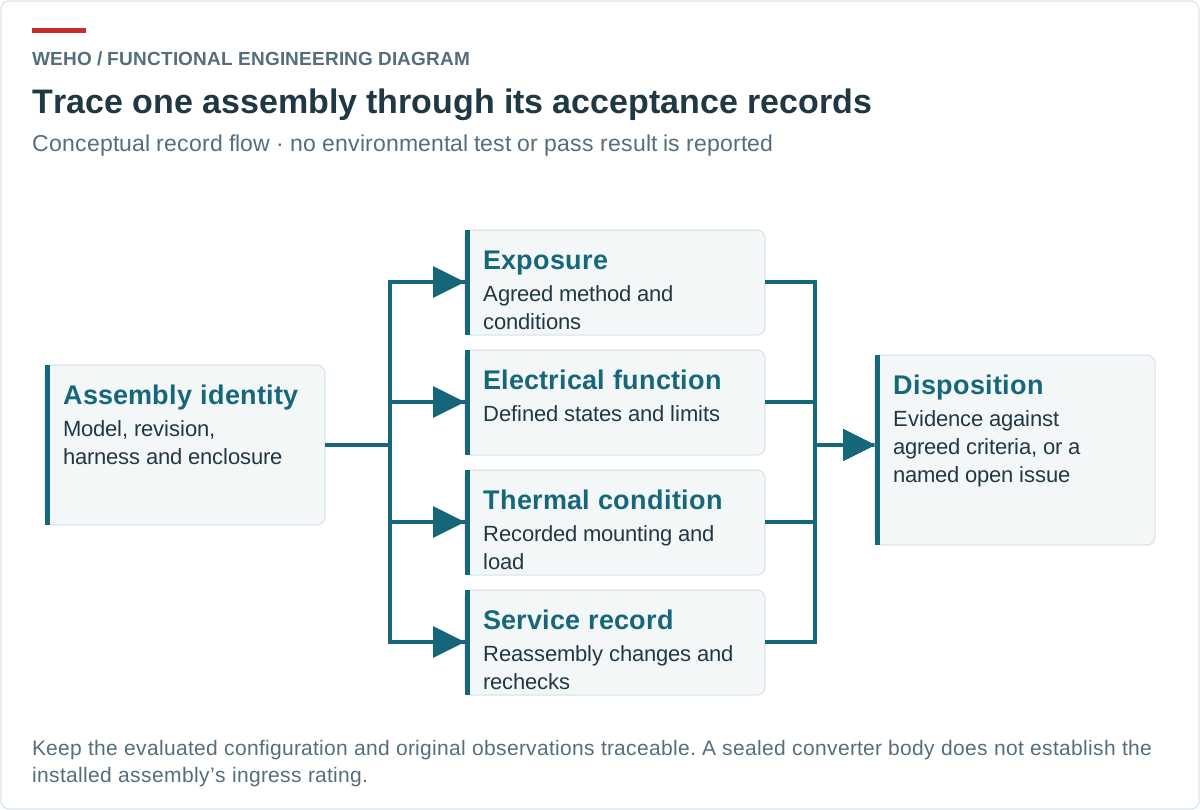
A missing report, undefined mating condition, or unreviewed harness change is a specific open issue. Recording it is more useful than marking the whole assembly waterproof on the strength of the converter body.
Request an installation-specific review
Send WEHO your sealed DC-DC installation requirements, including:
- Input/output and load states, with the defined environmental exposure.
- Enclosure and mounting drawing, with the actual termination location.
- Lead length, conductor and insulation requirements, plus thermal conditions.
- Required evidence and the offered construction’s applicable limits and qualification scope.
Keep environmental claims attached to the configuration and conditions they cover. That creates a usable purchasing boundary for the converter, harness supplier, equipment designer, and final assembly team.