Key Engineering Takeaways
- A difference between factory and site readings does not establish driver deterioration when the operating conditions differ.
- Compare input, load, temperature state, measurement location and instrument method before calculating a change.
- Use a factory–site–return record to identify which observations are comparable and which need another test.
- The HLG-350-24’s published 24 V, 14.5 A rating is a candidate specification, not an acceptance threshold for every installed circuit.

A changed reading needs a comparable reference
A driver leaves the factory with a recorded output voltage. Months later, a technician measures a lower voltage at the far end of an installed lighting branch. The two numbers differ, but so do the sensing point, connected load and operating conditions. Replacing the driver on that comparison alone can leave the actual cause unresolved.
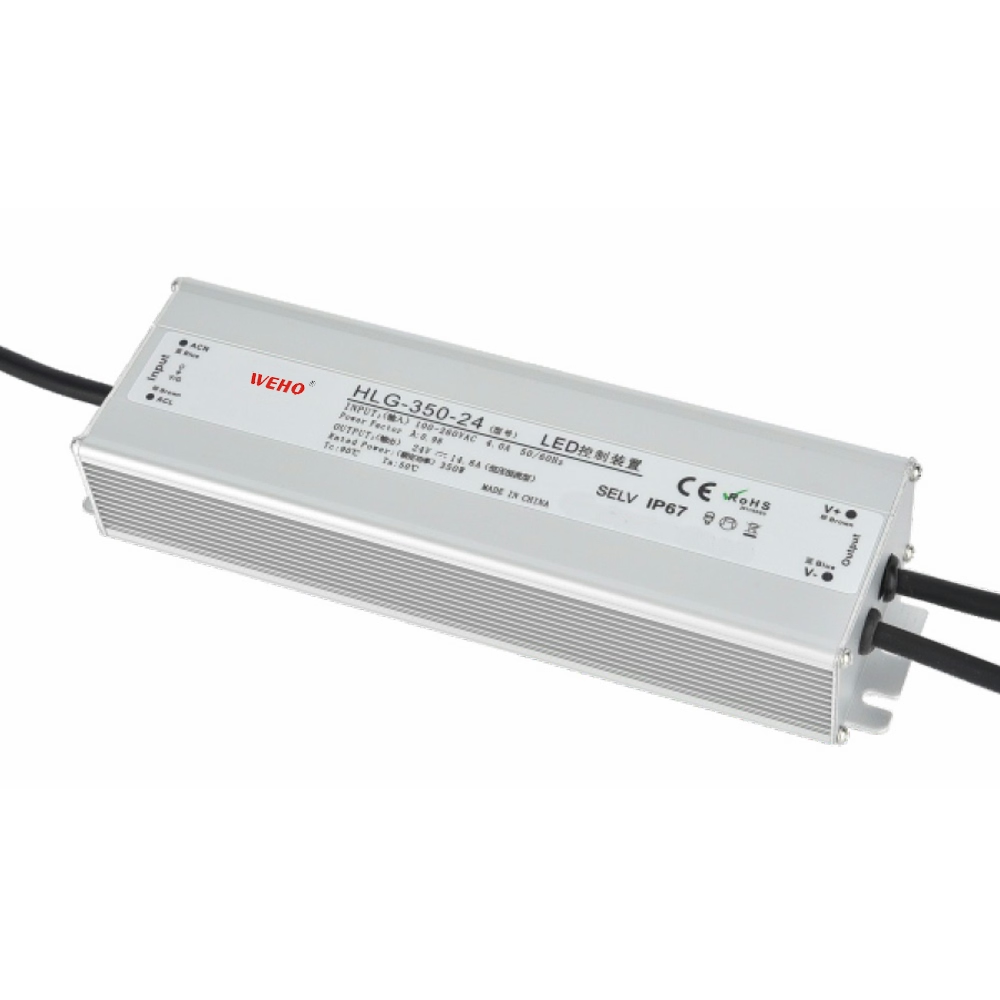
The HLG-350-24 LED driver specifications list 24 V, 14.5 A and a 240 × 69 × 43 mm envelope. The following method uses that candidate to organize evidence. It does not present a WEHO service case or establish that a particular installed load is compatible.
The decision is whether a reported change is attributable enough to justify a driver disposition. A useful record can also conclude that the comparison is inconclusive and identify the single additional measurement needed to resolve it.
Define the operating point as more than a voltage number
An operating point includes the conditions that can change the observation. At minimum, identify input voltage, connected load, output-current state, sensing location and temperature state. Where the output is changing with a controller, record the command and when the reading was taken relative to that command.
Keep the physical measurement point specific. “24 V output” could mean the driver leads, the distribution block or the far end of a branch. Label these locations in a simple circuit-location sketch and keep the same labels across factory, site and return records.
Temperature also needs a defined meaning. Ambient air, enclosure air and an identified point on the driver case are different observations. A case reading from one position cannot automatically be compared with air temperature from another visit.
Record the instrument, range and method beside the result. If a second instrument is used, establish whether the apparent difference is meaningful within the comparison’s measurement uncertainty. More decimal places on the display do not create a more accurate diagnosis.
Hypothetical factory–site–return comparison
Assume a hypothetical lighting assembly has a factory reading of 24.0 V at the driver output with 8.0 A load. At site, a technician reports 23.4 V at the distant load with 12.0 A connected. On return, the driver is checked at the original output point and original 8.0 A load, giving 24.0 V again.
These are invented instructional observations, not product test results. They illustrate why the original 0.6 V difference cannot be assigned to driver deterioration: both load and sensing point changed. The return observation narrows the investigation under its recorded conditions; it does not prove that every field operating condition is acceptable.
| Record | Load | Sensing point | Observed voltage | Comparable? |
|---|---|---|---|---|
| Factory example | 8.0 A | Driver output | 24.0 V | Baseline |
| Site report | 12.0 A | Distant load | 23.4 V | No: two conditions changed |
| Return example | 8.0 A | Driver output | 24.0 V | Potentially, after other checks |
The next useful site measurement is at the driver output while the reported load state exists, with the other conditions recorded. That observation helps separate driver-side behavior from the installed distribution path. It avoids treating a cable-and-connector observation as a driver-only test.

Swipe horizontally on a small screen, or open the full-size diagram.
Decide which differences require another measurement
Normalization does not mean mathematically adjusting every result to an imagined standard condition. Without an applicable validated correction model, a temperature or load correction can introduce another unsupported assumption. The practical alternative is to reproduce the required operating point or state why reproduction is not possible.
Use the following disposition matrix when reviewing a service report. It keeps a missing condition visible instead of hiding it inside a broad “passed” or “failed” label.
| Diferença | What it prevents | Resolving record | Disposition |
|---|---|---|---|
| Different sensing point | Driver-only voltage comparison | Same-point reading at site | Hold attribution |
| Different load state | Matched-load comparison | Current and command record | Reproduce or separate cases |
| Unknown thermal state | Temperature-matched comparison | Named points and time history | Record condition before retest |
| Different measurement method | Meaningful small-change claim | Instrument/method comparison | Assess uncertainty |
The HLG-350 datasheet supplies published ratings and dimensional information. It does not replace the project’s acceptance specification or supply a retrospective correction formula for mismatched field observations. Quote a published parameter only with its applicable definition and conditions.
Build a repeatable three-stage field-check record
- Preserve the original baseline. Keep the exact model and revision, date, load configuration and measurement-location sketch with the factory record. When a baseline omits a condition, mark it unknown. Do not reconstruct a missing historical value from a later measurement.
- Capture the reported symptom before changing the system. Record when the effect appears, which branches are active and where the reported reading was obtained. Changing the load or reseating a connector can change the observation, so document the initial state before approved troubleshooting actions.
- Match the measurement point. Obtain driver-output and load-end readings for the same recorded operating state when the test plan permits. Identify whether the readings are simultaneous. If they are sequential and the load varies, preserve that limitation rather than calling the difference a precise distribution loss.
- Match input and load conditions. Record actual input and output current, controller state and the named temperature observations. Compare conditions with the baseline. Where they differ, decide whether a controlled repeat is required instead of applying an unsupported correction.
- Define the return check before removal. State which field condition the return test must reproduce and which baseline it will compare against. A convenient bench load can answer a different question from the one raised by the reported installed symptom.
- Assign a bounded conclusion. Use dispositions such as “changed at matched point and load,” “difference located between sensing points,” or “insufficient matched evidence.” Add the exact acceptance requirement used. Avoid a broad life or reliability conclusion from one voltage observation.
Keep photographs, sketches and raw records attached to the same case identifier. The useful output is a reviewer-readable chain from symptom to conditions to evidence to disposition. A collection of unlabelled meter photographs does not provide that chain.
If a replacement restores operation, record what else changed during the replacement. Different lead lengths, connector handling or load states can affect the comparison. Restoration is relevant evidence, but it does not automatically identify the mechanism that produced the original symptom.
Send comparable conditions with the technical inquiry
Reference the HLG-350-24 published output rating and send WEHO the factory, site and return records with exact sensing locations. Include the load state, actual input, time history and applicable project requirement. Ask which additional model-specific checks are appropriate before assigning a product disposition.
The matched operating-point record provides separate columns for observations and comparability. Its illustrative rows show how to flag a mismatched comparison; they are not acceptance limits or actual WEHO measurements.
Engineering FAQ
Does lower voltage at site prove that the driver has aged?
No. The comparison must first account for load, measurement point, input, temperature state and measurement method. A lower far-end reading can be a system observation without establishing a driver-only change. Obtain comparable evidence before assigning a deterioration claim.
Should field measurements be corrected to the factory temperature?
Only with an applicable validated correction method. Otherwise, reproduce the required conditions or identify the comparison as unmatched. Inventing a temperature correction can make the conclusion less reliable than reporting the original difference and its limitations.
What does a satisfactory return test establish?
It establishes the result under the recorded return-test conditions. It may narrow the investigation, but it does not automatically reproduce an installed symptom. Compare the actual load, sensing point and other conditions before closing the field case.
Can a successful replacement identify the failed component?
Not by itself. Replacement may also alter connections, lead routing or operating conditions. Record those changes and retain the original evidence. Use controlled comparisons to support a component-specific conclusion rather than treating restoration alone as proof of mechanism.