Introdução
Você acabou de terminar uma instalação de CCTV de 16 câmeras. As câmeras são unidades 4K premium, as lentes são nítidas e o DVR é de nível empresarial. Mas quando você revisa a filmagem, vê que o vídeo é de alta qualidade. Bandas horizontais rolando através de cada quadro, À noite, a iluminação Pulso dentro e fora. As câmeras estão bem. O cabeamento está bem. O problema é quase sempre o mesmo: Uma fonte de alimentação que está injetando ondulação elétrica no barramento DC.
Para integradores de sistemas, instaladores de segurança e equipes de compras que fornecem energia para projetos de vigilância, Fontes de alimentação de baixa ondulação não são um luxo-são um requisito de especificação. Este guia explica o que é o ripple, como ele degrada a qualidade da imagem do CCTV e quais especificações exigir do seu fornecedor de fonte de alimentação.
Por que a qualidade da energia afeta a qualidade da imagem do CFTV
Uma câmera de CFTV é, em sua essência, um instrumento analógico-digital de precisão. Dentro de cada câmera-seja uma cúpula de orçamento, uma unidade de imagem térmica ou uma bala IP de 12 megapixels-há um sensor de imagem, um filtro de corte de IR, um ISP (processador de sinal de imagem) e matrizes de LED IR que todos operam a partir de um trilho DC rigidamente regulado, normalmente 12V ou 24V.

Quando a tensão CC fornecida a essa câmera contém até mesmo pequenas quantidades de ondulação CA, as consequências em cascata através de toda a cadeia de sinal:
- A leitura de pixels do sensor de imagem capta a ondulação como uma variação periódica de brilho, que aparece como Bandas horizontais ou “barras de hum” ao longo do frame.
- O circuito do driver de LED IR interpreta a ondulação como um sinal de modulação, fazendo com que o Iluminação de visão noturna para flicker em uma frequência relacionada à frequência de comutação da fonte de alimentação.
- O mecanismo da auto-íris reage à flutuação da tensão, causando Instabilidade de exposição e brilho inconsistente de frame para frame.
- Stress térmico de longa duração de uma fonte mal regulada encurta a vida útil dos capacitores eletrolíticos na câmera, levando a Fracasso prematuro em campo.
Para uma única câmera de nível de consumidor, o efeito pode ser cosmético. B2B surveillance deployment — a logistics warehouse, a city-center traffic monitoring network, a perimeter security system at a critical facility — the same ripple issue becomes a liability. Evidence-quality footage cannot contain artifacts. Forensic detail cannot be obscured by noise. That is why dedicated security power supplies with low-ripple, regulated outputs are engineered specifically for these environments.
O que é Ripple e como ele causa interferência de vídeo
Ondulação is the residual periodic AC component that remains on the output of a DC power supply after rectification and filtering. Every power supply — whether linear or switching — produces some amount of ripple. The question is how much, and at what frequency.
For CCTV applications, ripple is typically specified as Ripple e ruído in millivolts peak-to-peak (mVp-p), measured across a 20 MHz bandwidth with the supply at full rated load. The lower this number, the cleaner the DC output.
In a switch-mode power supply (SMPS) — which is what nearly every modern CCTV power supply is — ripple is dominated by the switching frequency (typically 65 kHz to 150 kHz in well-designed units). This high-frequency ripple can:
- Couple into the video signal through the camera’s power input, especially when the camera shares a ground reference with the video coax or twisted pair.
- Beat against the camera’s internal clock frequencies, creating moiré-like patterns or aliasing artifacts that no amount of in-camera DSP can fully remove.
- Modulate the current through the IR LED array, producing visible flicker at night that is often mistaken for camera or DVR failure.
WEHO’s enclosed switching power supply families — including the LRS, SP, and S series — are designed with multi-stage LC filtering and high-quality Japanese-grade electrolytic capacitors specifically to keep ripple below the threshold that CCTV electronics can tolerate.
Sintomas da má fonte de alimentação Ripple em imagens de CCTV
Before you blame the camera, the DVR, or the cable run, learn to recognize the two most common symptoms of an underspecified or failing power supply. These symptoms are the field-level fingerprint of ripple contamination.
Bandas horizontais ou ruídos em vídeos
This is the textbook symptom. One or more faint, evenly-spaced horizontal lines — sometimes stationary, sometimes slowly drifting up or down the frame — appear across the entire image. The bands are typically more visible in low-light scenes when the camera’s gain is boosted, which amplifies the ripple signal along with the image signal.
Distinguishing features:
- Bands are evenly spaced and run edge-to-edge horizontally.
- They are more visible in darker areas of the frame where the AGC is working harder.
- Switching to a known-good bench supply makes the bands disappear immediately.
If the bands drift up or down, the ripple frequency is not synchronous with the camera’s frame rate — a classic sign of an unfiltered or under-filtered SMPS output.
Flicker de iluminação à noite
Many installers first notice a ripple problem because the night-vision image goes bright, then dim, then bright again in a rhythmic pattern. This is not the camera’s day/night mechanism failing — it is the IR LED array being modulated by the supply ripple.
IR LEDs are driven at a current that is set by a regulator on the camera board. When the input voltage dips and peaks with the supply ripple, the current through the IR LEDs also dips and peaks, producing a visible brightness oscillation. On most cameras this oscillation falls in the 50–500 Hz range — slow enough for the human eye to detect, fast enough that an observer will describe it as a “strobe” effect rather than a steady illumination.
This symptom is particularly damaging in evidence-gathering scenarios because it washes out facial and license-plate detail on every other frame.
Diagnose the Root Cause — Not Just the Symptom
Horizontal banding and IR flicker are symptoms of ripple, but they are often misdiagnosed as camera or DVR failure. The fastest field test: power the suspect camera from a known-clean 12V bench supply. If the artifact disappears, your CCTV power supply is the culprit — and it is time to spec a replacement with a verified low-ripple output.
Principais especificações para procurar em uma fonte de alimentação de CFTV de baixo Ripple
Not every power supply on the market is suitable for CCTV, and not every “CCTV” labeled supply delivers clean power under real load. When you evaluate a power supply for a security installation, these are the specifications that matter:
| Especificação | What to Look For | Why It Matters for CCTV |
|---|---|---|
| Ripple & Noise (mVp-p) | ≤ 100 mVp-p for 12V/24V output, measured at 20 MHz bandwidth | Lower ripple = cleaner image sensor readout, no banding, no IR flicker |
| Tolerância de Tensão | ±1% to ±2% | Tight tolerance prevents camera brownouts and IR power fluctuations |
| Line & Load Regulation | ±0.5% or better | Holds output stable as cameras draw varying current in day/night transitions |
| Protections | Short circuit, over-current, over-voltage, over-temperature | Protects the entire downstream camera chain from fault conditions |
| Temperatura de trabalho | -10°C to +50°C minimum; -20°C to +70°C for outdoor enclosures | Prevents thermal derating in unconditioned security closets and outdoor cabinets |
| Isolation & Withstand Voltage | I/P-O/P ≥ 3 kVAC, I/P-FG ≥ 1.5 kVAC | Protects cameras and DVRs from surge events on the AC input side |
| Certificações | CE, RoHS, ISO 9001, FCC (where applicable) | Confirms the unit meets published electrical and safety benchmarks |
For reference, the WEHO SP-150 PFC CCTV power supply delivers 100 mVp-p ripple on its 12V output and 150 mVp-p on its 24V output at full rated load — with active power factor correction, universal 85–264 VAC input, and a full protection suite (OVP, OCP, SCP, OTP). For higher-density multi-camera installations, the LRS series scales the same low-ripple design philosophy up to 600W in a slim 30 mm profile.
Referência rápida: Ripple aceitável por classe de câmera
| Camera Class | Typical Output | Max Acceptable Ripple | Recommended WEHO Series |
|---|---|---|---|
| Consumer dome / bullet | 12V / 1–2A | ≤ 150 mVp-p | WH-96 / LRS-150 |
| Professional IP / 4K bullet | 12V / 2–3A | ≤ 100 mVp-p | LRS-200 / SP-150 |
| PTZ / thermal imaging | 24V / 3–5A | ≤ 150 mVp-p | SP-150-24 / LRS-350-24 |
| Industrial / perimeter | 24V / 5–15A | ≤ 200 mVp-p | LRS-350 / RSP series |
Source: WEHO engineering guidelines based on 20+ years of switching power supply design and feedback from CCTV integration partners worldwide. Ripple values are measured at 20 MHz bandwidth, full rated load, 25°C ambient.
Melhores práticas para alimentar sistemas de CFTV multi-câmera
How you distribute power across a multi-camera CCTV system matters as much as which power supply you choose. Three field-proven best practices from large-scale commercial and industrial installations:
Use uma fonte centralizada multicanal para câmeras bem agrupadas
When cameras are within a 30–50 meter radius of a single equipment closet — typical in retail, office, and warehouse deployments — a single multi-output security power supply with individually fused channels is more reliable and easier to maintain than dozens of wall adapters. Each channel’s fuse isolates a fault to a single camera, and the central supply can be backed up by a single UPS unit for outage protection.
Use energia distribuída com adaptadores de alta eficiência para longos cabos
For perimeters, parking lots, and campuses where cable runs exceed 50 meters, voltage drop becomes the dominant problem. At 12V, a 100-meter run of 18 AWG cable will drop more than 1.5V under load — enough to cause camera instability. The standard solution is to use 24V at the source and step down to 12V locally at each camera, or to use a PoE midspan if the cameras support it. For local step-down, a compact CCTV-rated adapter such as the WEHO 96W 12V/8A CCTV power supply adapter (80 mVp-p ripple) is a reliable choice.
Plano Headroom e Deratação
Never load a CCTV power supply above 80% of its rated capacity. Cameras draw significantly more current at night when the IR LEDs activate and when the heater element (in outdoor cameras) energizes. A supply running at 95% continuous load will run hot, derate its output, and shorten its service life. As a rule of thumb:
- Sum the worst-case current draw of every camera on the circuit.
- Multiply by 1.25 to account for inrush and IR-on surge.
- Select the next-standard supply wattage up from that figure.
For example, eight 12V/1.5A professional IP cameras require 12A at 12V. Multiply by 1.25 = 15A. The next standard supply is 12V/15A (180W) — a good match for the WEHO LRS-200-12 with its 100 mVp-p ripple spec and 200W continuous rating.
Need Help Sizing Your CCTV Power Supply?
WEHO’s engineering team can review your camera count, cable run lengths, and load profile and recommend a supply or a multi-channel distribution solution from our LRS, SP, or SC series. Evaluation samples are available for qualified OEM projects.
Perguntas frequentes
Uma fonte de alimentação ruim pode causar ruído no vídeo CCTV?
Yes. A power supply with excessive output ripple is one of the most common — and most misdiagnosed — causes of horizontal banding and grain in CCTV footage. The ripple couples into the image sensor’s power rail, modulating the pixel readout and producing visible artifacts that look like camera or DVR problems. The fastest field confirmation: power the suspect camera from a clean bench supply. If the noise disappears, the original power supply needs to be replaced with a low-ripple model.
Qual nível de ondulação é aceitável para câmeras de CFTV?
For most consumer and prosumer CCTV cameras running on 12V, a ripple of 100 mVp-p or less at the camera’s power input is considered clean. For 24V professional and PTZ cameras, 150 mVp-p is the practical target. For thermal and high-sensitivity industrial cameras, push for 50 mVp-p or less. These targets assume ripple measured at 20 MHz bandwidth with the supply at full rated load — not the no-load number, which is always misleadingly low.
Por que as câmeras de CFTV piscam à noite?
Night-time flicker in CCTV footage is almost always caused by the IR LED array being modulated by power supply ripple. The IR LEDs draw a constant current, but if the input voltage dips and peaks with the supply ripple, the IR brightness oscillates. In a color/monochrome day/night camera, this shows up as a rhythmic bright-dim-bright pattern on the IR-illuminated scene. In a true day/night camera with an IR-cut filter, the same effect appears as a slow strobe on the night-vision image. The fix is a CCTV power supply with verified low-ripple output and a stable voltage regulation loop.
Cada câmera deve ter sua própria fonte de alimentação?
Not necessarily. A centralized multi-channel power supply with individually fused outputs is more reliable and easier to maintain than one wall adapter per camera — as long as the cameras are within reasonable cable run distance and the supply has enough wattage headroom. The exception is when cameras are spread across a large site with long cable runs; in that case, a distributed power architecture with local adapters or PoE midspans is more practical.
Como saber se o meu sistema de CFTV está falhando?
The warning signs of a failing CCTV power supply are: (1) horizontal bands or rolling hum appearing in footage that was previously clean, (2) IR illumination flicker at night, (3) cameras randomly rebooting or losing connection, (4) visible bulging or leakage on the supply’s electrolytic capacitors, and (5) the supply running noticeably hotter than at installation. Power supplies in continuous 24/7 service typically last 5–7 years; after that, capacitor aging is the most common failure mode.
Posso usar um adaptador de 12V para câmeras de CFTV?
You can, but you take on the risk of higher ripple and shorter service life. A generic 12V/2A wall adapter typically delivers 150–300 mVp-p of ripple, no surge protection, and minimal thermal design for 24/7 operation. For a single home camera, this is often acceptable. For commercial, industrial, or any evidence-quality installation, a CCTV-rated supply with verified low ripple, full protection suite, and industrial-grade temperature rating is the only defensible choice.
Qual é a diferença entre fontes de alimentação lineares e chaveadas para CFTV?
Linear power supplies are larger, heavier, and generate more heat, but they inherently produce very low ripple (often below 10 mVp-p) because they regulate by dissipating excess voltage as heat. Switching power supplies are compact, efficient, and cool-running, but they require careful output filtering to keep ripple low. For most modern CCTV installations, a well-designed SMPS is preferred because of its efficiency, size, and cost — but the design must be specifically engineered for low ripple, not just for general-purpose use.
Quanto tempo deve durar uma fonte de alimentação de CFTV?
A quality CCTV power supply from a reputable manufacturer should last 5–7 years in continuous 24/7 service, and often longer when properly derated and operated within its temperature rating. WEHO backs its security and enclosed switching power supply lines with a 3-year standard warranty and has units in continuous service in installations dating back to 2014. The most common failure mode after year 5 is electrolytic capacitor aging — audible as a faint high-pitched whine, visible as a slight increase in ripple on a scope.
Still Not Sure Which Power Supply Fits Your CCTV Project?
Talk to WEHO’s engineering team. Send us your camera count, voltage, current draw, and installation environment, and we will spec a turnkey supply or multi-channel distribution solution within one business hour. Evaluation samples and OEM/ODM customization available.
Conclusão
Image quality in a CCTV system is the product of every link in the chain — the lens, the sensor, the ISP, the cable, the DVR — and the power supply that ties them all together. A power supply with excessive output ripple will degrade every one of those links simultaneously, producing the horizontal banding and IR flicker that installers encounter on real job sites every week.
For B2B buyers sourcing power for surveillance projects, the takeaway is straightforward: spec the power supply as carefully as you spec the cameras. Demand a published ripple and noise figure measured at 20 MHz bandwidth and full load. Demand tight voltage tolerance, a full protection suite, and industrial-grade temperature rating. Demand the certifications (CE, RoHS, ISO 9001) that prove the published numbers are real.
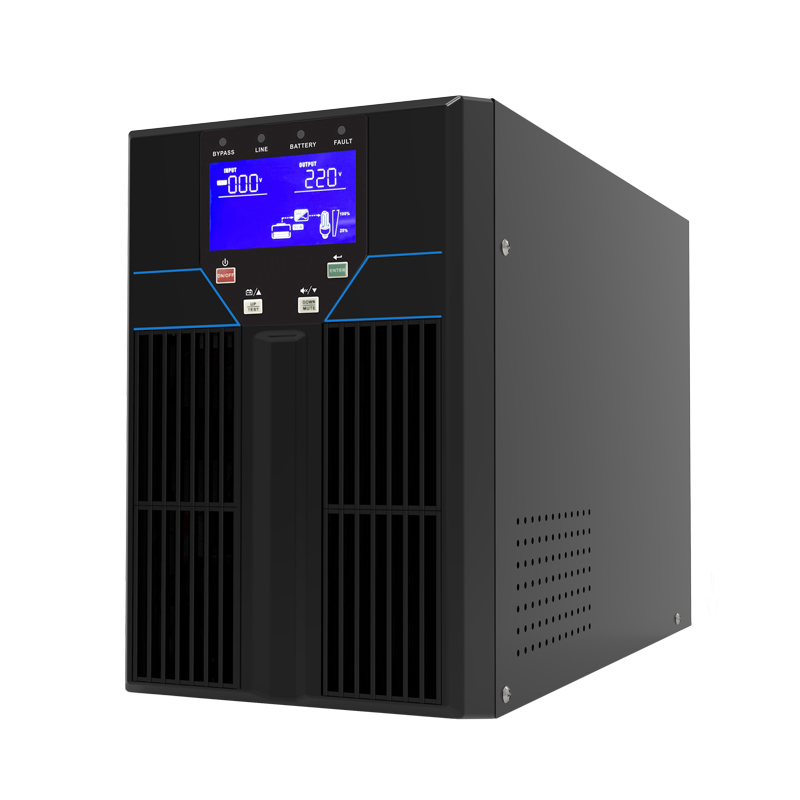
WEHO Power has been designing and manufacturing low-ripple enclosed switching power supplies for security, industrial, and LED applications since 2007. Our security power supply family — the SC series battery charger, AD series UPS, and our LRS and SP series enclosed SMPS — covers the full range from a single-camera 35W unit to a 350W multi-channel distribution panel. Every unit ships after 5 rounds of burn-in testing, with a 99.7% first-pass rate, and a 3-year warranty.
Ready to spec your next CCTV project? Talk to WEHO’s engineering team for sizing, samples, and OEM/ODM pricing — or browse the full WEHO security power supply catalog online.
Start Your CCTV Power Supply Project with WEHO
As an ISO 9001-certified manufacturer with 20+ years of switching power supply experience, 1,000+ standard models, and full OEM/ODM capability, WEHO is the one-stop power supply partner for security system integrators worldwide. Evaluation samples, custom voltage options, and responsive engineering support on every project.
Related Resources: