UL Listed and UL Recognized Component identify different certification scopes; neither label alone proves that an LED power supply is suitable for your finished luminaire. Match the exact ordered model to the certification record, identify the relevant application and conditions, and preserve that evidence with the integration decision.
For a lighting OEM or procurement team, the task is not to rank two logos. It is to establish what was evaluated, which unit the evidence covers and which end-product questions still need to be closed. This article does not assert UL certification for any WEHO model.
On this page
Read the certification scope before comparing suppliers
UL Solutions’ component-recognition explanation describes Recognized Components as parts intended for integration into a larger product. Their use is subject to conditions of acceptability. Relevant conditions can concern the enclosure, wiring or temperature, depending on the evaluated component.
UL Solutions separately explains in its lighting certification guidance that Listed products and Recognized Components have different intended evaluation scopes. Do not convert this distinction into “Recognized means unsafe” or “Listed means unrestricted use.” Review the actual category, record and instructions for the proposed application.
Also avoid using “UL Approved” as a substitute for a precise designation. The information needed for a buying decision is the actual certification identity and scope, not a broad marketing phrase on a quotation.
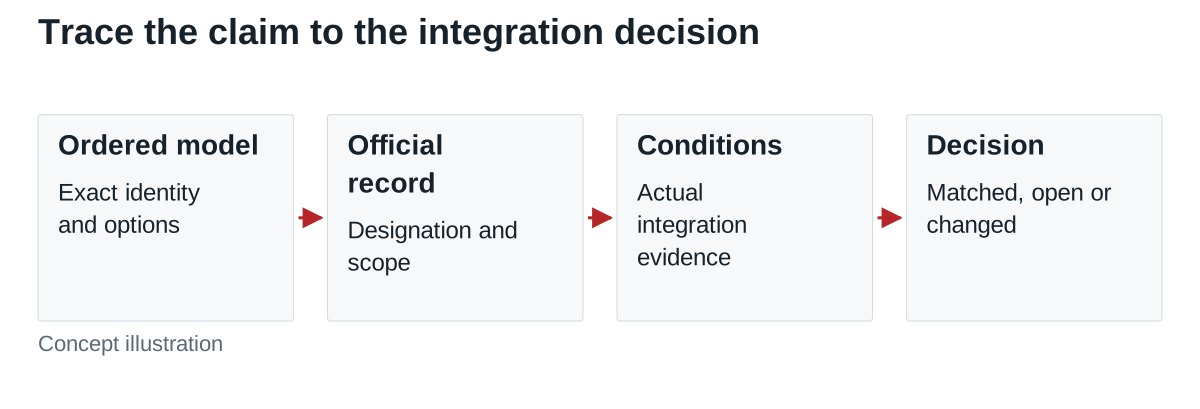
Link the delivered identity to the record
Start with the ordered part number, suffixes, input/output version and supplier identity. Compare the quotation, label photograph and applicable certification information. Similar family names are not enough when an option changes the evaluated construction or operating conditions.
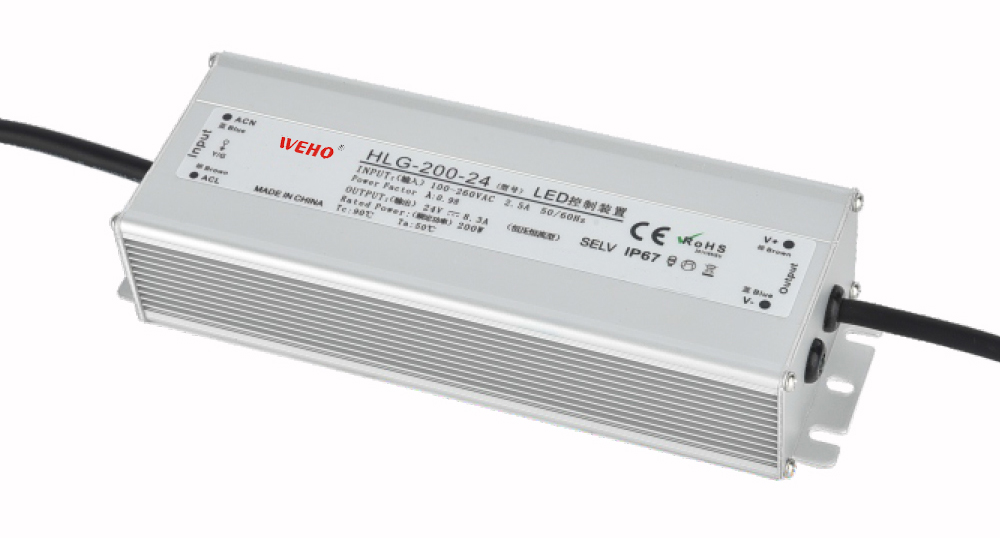
The photograph of WEHO HLG-200-24 below illustrates the model-identity step. Keep that exact variant with the applicable public WEHO HLG-200 specification and the ordered construction. A catalogue photo and an electrical data sheet are different records from a UL certification entry. Establish any claimed Listed or Recognized status, scope and integration conditions through the applicable official record; the product photograph is not presented as that evidence.

Use UL Solutions’ Product iQ information to locate the official certification database and search using available identifiers such as file number, model or category. Keep the search date and the record that supports the decision. Do not treat a distributor screenshot or an old PDF alone as proof of current applicability.
A supplier name and manufacturing name may legitimately differ, but the relationship must be traceable. If the record uses a different identity or the exact suffix is unclear, obtain the explanation and supporting documents. Do not resolve the gap by dropping inconvenient characters from the orderable model.
Build a procurement record that engineering can use
| Record field | What to preserve | What remains open without it |
|---|---|---|
| Orderable identity | Exact model, suffixes, options, supplier and label evidence | Whether the evaluated item matches the proposed order |
| Certification identity | Actual Mark/designation, file, category and dated source record | Which certification claim is supported |
| Объем | Applicable product description, ratings and referenced standard information | Whether the record concerns the requested function and market |
| Integration conditions | Available conditions of acceptability and relevant instructions | What the luminaire design must still provide or verify |
| Installation evidence | Enclosure, wiring, thermal and environmental requirements that apply | Whether the actual construction satisfies the documented conditions |
| Disposition | Reviewer, matched evidence, exceptions and next action | Who owns unresolved certification and integration questions |
Keep safety scope separate from electrical fit. A record associated with the right product identity does not replace the LED load’s current and voltage requirements, dimming compatibility or thermal review. Conversely, passing an electrical sample test does not establish an undocumented certification claim.
Two document-review examples
Hypothetical case A: the quotation identifies “Model X-24, option B,” while the submitted certificate page lists a different option and provides no mapping. The item should remain unresolved in the procurement record until the supplier or certification source establishes applicability. A similar output voltage does not close the identity gap.
Hypothetical case B: the official record matches the proposed Recognized Component, but an integration condition refers to an enclosure requirement that the luminaire drawing does not address. The next action is to obtain and review the required construction evidence. The correct file number alone does not close that condition.
These cases are editorial examples, not actual certificates, customer projects or judgments about a manufacturer. They show two different reasons a record can be incomplete: uncertainty about which component was evaluated, and uncertainty about whether the final assembly meets the applicable conditions.
Handle missing information without inventing a result
If a search produces no clear match, check spelling, identity, category and the supplied identifiers. If access or interpretation remains limited, request the applicable documentation from the supplier or use UL Solutions’ official support route. Mark the field unresolved; absence from one search attempt does not, by itself, prove that a product is uncertified.
Some information may need to be obtained through the manufacturer or the project’s certification team. Record what was actually reviewed and what is still required. Do not claim that the conditions have been checked when only a public summary was available.
For a replacement or sourcing change, compare the exact new record with the existing integration baseline. A different terminal arrangement, mounting condition, thermal limit or option can matter even when nominal watts and voltage match. The responsible project reviewer should decide which evidence needs to be reopened.
Request documents for the exact WEHO proposal
Provide the proposed model and suffix, destination market, luminaire application, electrical requirements and the certification documentation requested by your project. Ask for evidence applicable to that orderable configuration, together with any conditions the equipment design must address. Do not infer UL status from the WEHO brand, an unrelated series or another manufacturer’s certificate.