Key engineering takeaways
- A known-good reference checks acceptance; controlled known-bad cases check specific rejection paths.
- A station error must not silently become a product PASS.
- Identify each challenge, expected result and configuration before execution.
- Challenge coverage applies to documented fault mechanisms, not every possible defect.
A production-test challenge should prove that an identified station accepts a qualified reference and rejects selected, controlled nonconforming conditions. A green result from one reference cannot establish the sensitivity of every limit, connection check or error handler. The useful output is a challenge matrix with expected outcomes, actual records and explicit gaps.
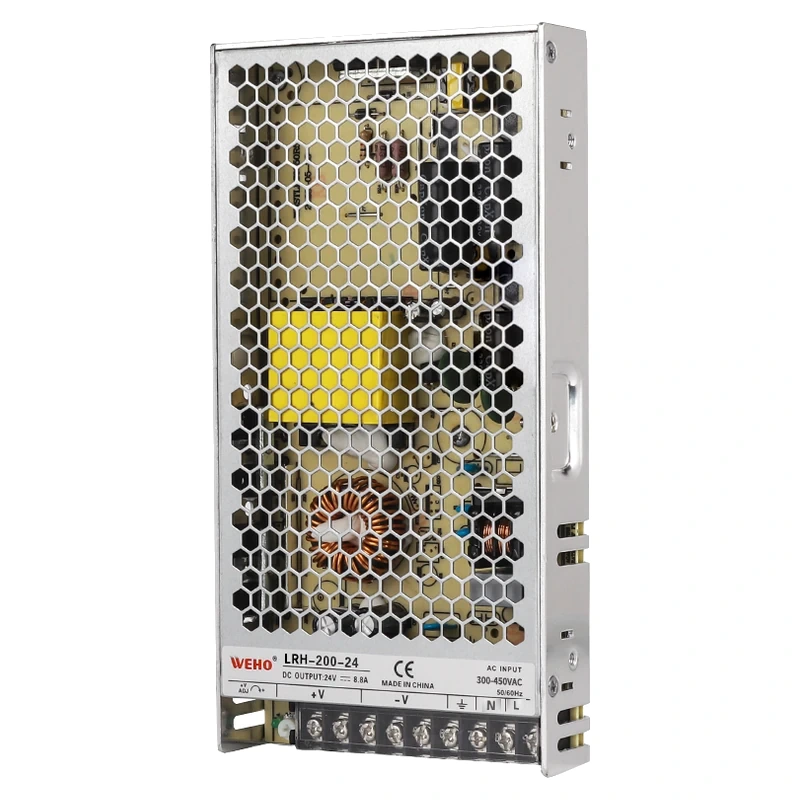
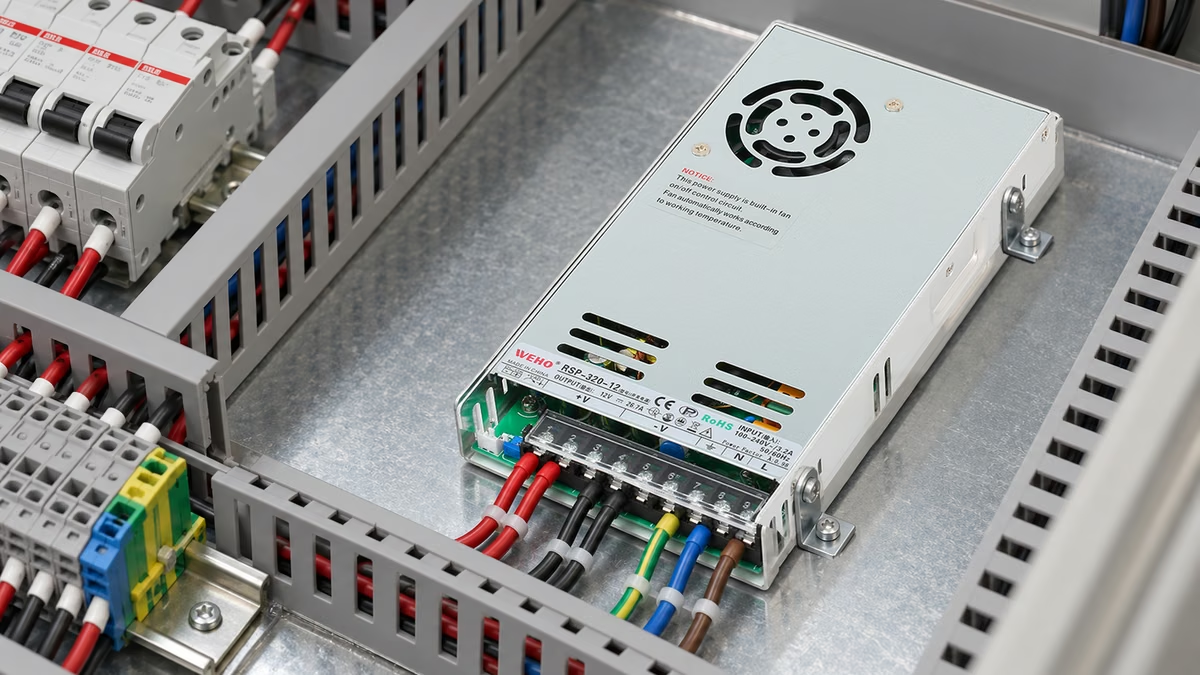
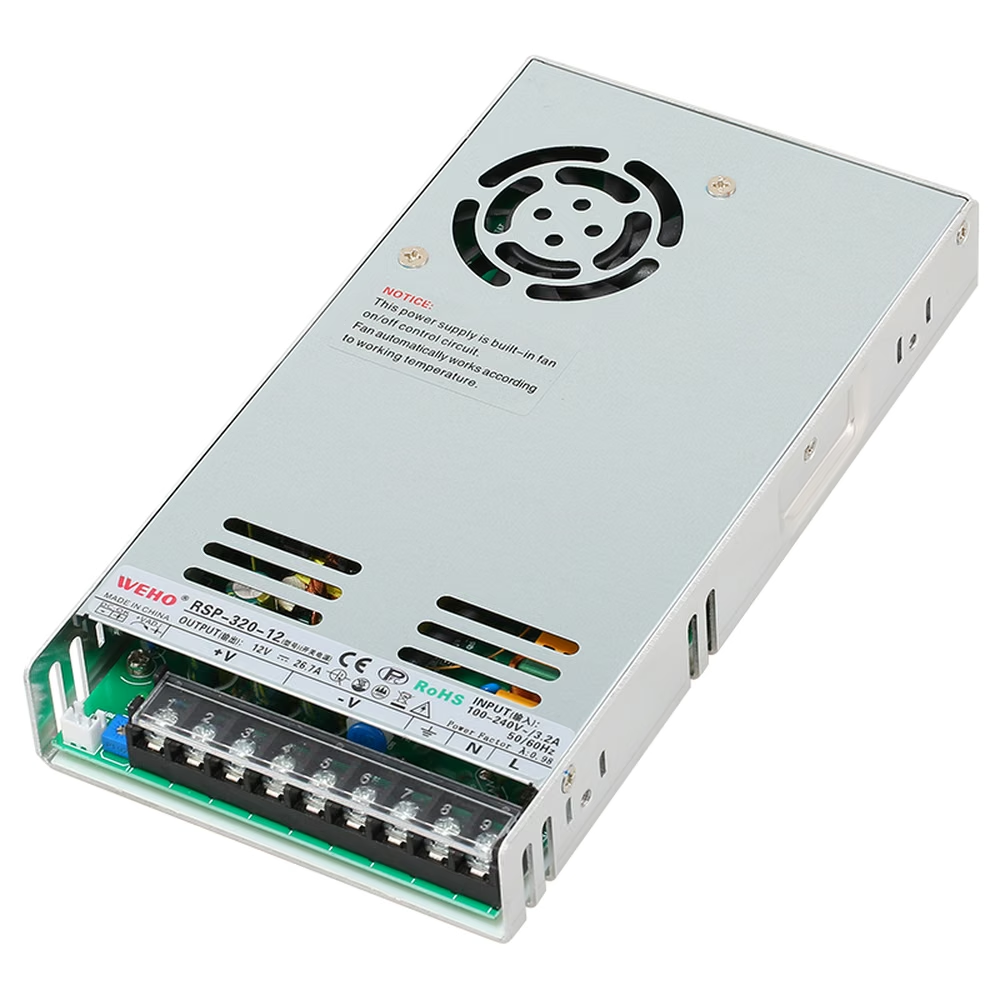
For an OEM evaluating the WEHO RSP-320-12 product family, keep that matrix separate from product specifications. The selected model provides purchasing context; the synthetic voltages below are not its acceptance limits, factory test plan or measured output. An authorized test engineer must define the real requirements and safe challenge method.
Define what each challenge can establish
A known-good sample must have a controlled identity and an independently justified expected state. A previously accepted unit may be convenient, but its old label does not prove that the present fixture, measurement path or sample remains suitable. Record the reference's qualification basis, storage conditions, review interval and limitations.
A known-bad challenge represents a specific reason that the station should reject or stop. Examples include a simulated value below a required limit, an incorrect identifier, or an instrument communication error injected through an approved test interface. Changing live power wiring or defeating protective functions is not a suitable shortcut for this exercise.
NI's verification and validation guidance describes checking test-system behavior with known inputs and expected outcomes. The engineering implication is to connect each challenge to a requirement. A sample containing one fault supports that fault's detection path; it does not establish detection of unrelated faults.
A near-limit challenge needs more care than a clearly separated simulated value. Measurement uncertainty, source uncertainty and actual decision rules can make an expected outcome ambiguous. Either define the boundary case with the relevant metrology evidence or begin with well-separated values and document that exact boundary performance remains untested.
| Challenge state | Intended question | Expected record | Important limit |
|---|---|---|---|
| Qualified good reference | Can the station accept the defined conforming state? | PASS with complete measurements | Does not prove all rejection paths |
| Defined low or high condition | Is the intended requirement enforced? | Named limit FAIL | Only the challenged requirement is covered |
| Wrong product identity | Is the wrong recipe prevented? | Blocked or invalid execution | Does not establish electrical performance |
| Resource unavailable | Can an incomplete test escape as accepted? | Error/invalid and controlled disposition | Do not confuse station failure with product failure |
Keep product status separate from station validity
A complete production record needs an execution-validity decision as well as a product disposition. A missing instrument response does not establish that a product exceeds its voltage limit. It establishes that the required measurement was not obtained, and the unit cannot be accepted on that incomplete evidence.
Software may expose several statuses, including pass, fail, error, skipped and terminated. Define how the manufacturing system maps those statuses into release permissions. A status that looks harmless in an operator display may have a different meaning in a database export or downstream label-printing rule.
NI's runtime-error guidance explains that error presentation and handling are configurable. An OEM should therefore challenge its own configured result path, including the recorded outcome and release interlock. A screenshot of an error dialog alone does not show what the shipping database accepted.
A recurring reference check and initial station validation serve different purposes. A short start-of-shift check may detect selected changes efficiently, while a broader qualification establishes more of the original coverage. Determine the recurring challenge set from actual risks and validated dependencies rather than claiming that one daily sample replaces the original validation.
Build a recomputable synthetic challenge matrix
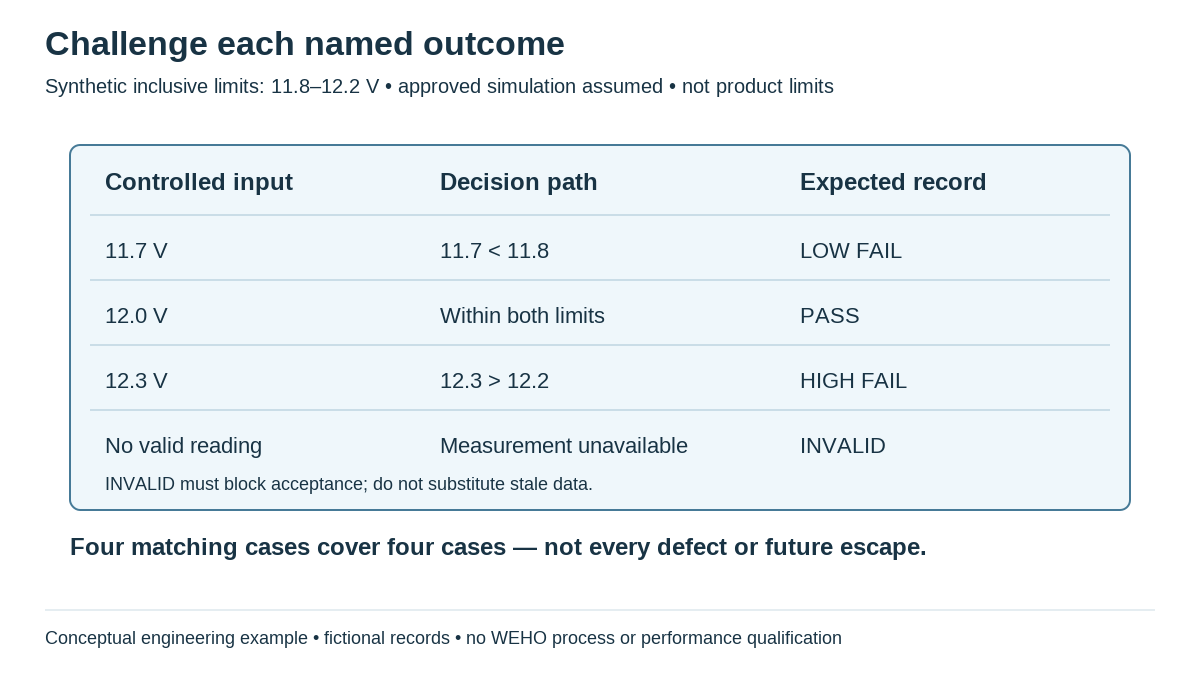
Assume a fictional software channel requires an inclusive interval from 11.8 V to 12.2 V. The input is an approved simulator with negligible uncertainty for this deliberately simplified example. These numbers test a decision path; they do not specify the RSP-320-12 or authorize a real electrical setup.
For input 11.7 V, the lower-limit distance is 11.7 − 11.8 = −0.1 V, so the expected result is LOW FAIL. For 12.0 V, both comparisons are satisfied. For 12.3 V, the upper excess is 12.3 − 12.2 = 0.1 V, so the expected result is HIGH FAIL.
Add a fourth case in which the simulator interface reports no valid measurement. The expected result is INVALID, with acceptance blocked and the resource problem retained. Replacing that missing value with zero, a stale reading or a previous passing result would conceal a different failure mode.
| Case | Controlled input | Expected result | Required evidence |
|---|---|---|---|
| C01 | 11.7 V | LOW FAIL | Measured value, lower comparison and case identity |
| C02 | 12.0 V | PASS | Both limits, valid execution and full record |
| C03 | 12.3 V | HIGH FAIL | Measured value, upper comparison and case identity |
| C04 | No valid measurement | INVALID; no release | Resource error and blocked acceptance |
Four matching results would mean that these four challenge cases behaved as expected under the recorded configuration. Reporting a 100% challenge match is acceptable only with that denominator and scope. Reporting 100% defect detection, or translating four cases into a field escape rate, would be unsupported.
Swipe horizontally on a small screen, or open the full-size diagram.
A useful result record preserves the station identifier, software package and configuration digest alongside each case. Keep raw values and error details, not just a final colored indicator. When a challenge fails, stop the relevant release process and investigate the station before using subsequent product results as acceptance evidence.
Control the challenge assets and configuration
Physical challenge samples can age, loosen, become contaminated or be repaired accidentally. Give each sample a durable identity and a defined inspection or requalification method. Mark deliberately nonconforming assets so they cannot enter saleable inventory, while retaining the controlled information needed for technicians to use them correctly.
A simulated challenge avoids some physical sample drift but introduces software and routing dependencies. Confirm that the simulator actually enters the same relevant decision path as the production measurement. A test that writes directly into a final PASS field does not exercise measurement acquisition, scaling or unit conversion.
NI's process-model documentation shows that reporting and other common operations can sit outside an individual product sequence. Include those shared functions in the coverage assessment. A correct voltage comparison can still produce an incorrect release record if common result processing changes.
The existing WEHO first-article approval checklist addresses broader product and assembly evidence. A challenge matrix adds a narrower station question: whether named accepted, rejected and invalid states reach their intended dispositions. Neither record should be used to replace the other.
Release a controlled challenge record
- Map the requirements. List each intended acceptance, rejection and invalid state, with its source requirement. Record uncovered states; verify that coverage language does not exceed the listed cases.
- Qualify the assets. Identify references, simulators and controlled faults with expected outcomes and safe use instructions. Record approval and validity; verify that a technician can select the correct case without improvisation.
- Freeze the configuration. Capture software, limits, fixture and result-processing identities. Record the installed versions; verify that the challenged station matches the configuration intended for production.
- Execute and reconcile. Run the approved cases and compare raw results with the predetermined matrix. Record every mismatch; verify that an invalid execution cannot authorize a product release.
- Define recurrence and reaction. Set review triggers from risk, changes and sample stability. Record who stops and restores production; verify closure with the relevant challenges before resuming affected acceptance.
A buyer can request this evidence without prescribing a supplier's confidential source code. Agree the required observable outcomes, traceable version information and disposition records in the quality plan. Decide which records accompany deliveries and which remain available for a controlled review.
Prepare a test-evidence enquiry
Send WEHO the exact RSP-320-12 enquiry identity, ordered configuration, critical acceptance requirements and the evidence you need from the agreed test arrangement. Identify any challenge matrix you intend to use at incoming inspection. Ask which records and test conditions can be provided; do not assume that the illustrative four-case plan is a standard WEHO service.
Frequently asked questions
Does a passing known-good unit validate every test?
No. A known-good reference supports acceptance of its defined state under the recorded setup. Selected known-bad and invalid cases are needed to assess different rejection and error-handling paths.
Can a failed instrument communication be recorded as product failure?
Not as evidence of the missing measured characteristic. Record the execution problem and prevent acceptance until an authorized disposition or valid test resolves it. Preserve the original error rather than replacing it with a fabricated measurement.
Should every challenge use a damaged power supply?
No. An approved simulator or controlled reference may provide safer, clearer coverage for a specific decision path. The method must exercise the relevant production logic and remain separate from saleable inventory.
Does four out of four matching cases mean zero escapes?
No. Four matching cases establish agreement for those four defined inputs and configuration only. They do not estimate all fault coverage, future station stability or the product's field defect rate.