Panimula
This article classifies and introduces different industrial power module types for various industrial control scenarios.To run industrial equipment, electricity is an indispensable link. The incoming power is AC, but the circuit board uses DC; The voltage and power levels are different. The power module is designed to turn electricity into a usable form for the device. Don’t be fooled by the small size of the module, if there is a problem with the selection, the entire machine will collapse. Some can withstand high temperatures, while others cannot; Some can isolate interference, while others cannot. I chose the wrong one. Mild cases have severe heating, while severe cases directly burn the board. This article categorizes common industrial power modules into five types and explains them one by one. It’s not a sophisticated textbook, just a list of several points that will be encountered during selection, which is convenient for comparison when making plans.
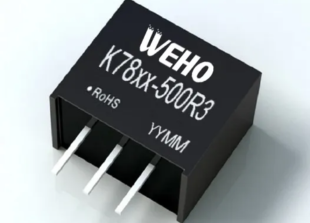
WEHO Industrial Power Module Portfolio Overview
There are many manufacturers of power supplies, and WEHO is one of them, with the full name Zhejiang WEHO Electronics, specializing in switch mode power supplies. The product line is relatively wide, with power ranging from tens of watts to several kilowatts, from small auxiliary power supply for control boards to large main power supply for industrial automation, corresponding models can be found. Its modules are roughly divided into two lines, an AC to DC enclosed suplay ng kuryente and a DC to DC module power supply. The input voltage range is wide, and the operating temperature can also cover the common range of industrial sites. The EMC performance is acceptable. The application scenarios are widely covered, including industrial automation, instrumentation, charging stations, LED lighting, power equipment, the Internet of Things, and even healthcare. The five types to be discussed below are classifications extracted from their product lines, not the only definitions in the industry, but for ease of understanding.
5 Main Types of WEHO Industrial Power Modules
AC-DC Isolated Power Module
This type is the most common. The front end is connected to the mains power, 220V AC is input, the back end outputs DC, and the middle is electrically isolated by a transformer. The input and output grounds are not connected together. Typical input is 85-264V AC, covering common global power specifications. The common output voltages are 5V, 12V, 24V, and 48V, with power ranging from a few watts to several hundred watts. High power models can achieve up to kilowatts. Used in industrial control boxes, PLC peripherals, instruments and meters, LED drivers, and communication equipment, it can be seen in almost all situations where AC power is required and stable DC output is needed. Selection Attention: Is the input range wide enough? Wide input is more stable when the power grid is unstable; The common isolation withstand voltage values are 1500V and 3000V, with higher values selected for those with safety requirements; If the working temperature is high, leave enough margin for derating.

DC-DC Isolated Power Module
This input itself is DC. It converts one DC voltage into another with isolation in between. Typical inputs include 12V, 24V, 48V DC, but there are also wider ranges, such as 2:1 or 4:1 wide voltage models with 9-36V and 18-75V. The output is commonly 5V, 12V, 15V, ± 12V, ± 15V, with power ranging from 1W to 100W, and even several hundred watts for high power. Used in situations where the system already has a DC bus, different chips require different voltages, or the front and rear stages need to disconnect the ground to eliminate interference. It is widely used in communication equipment, vehicle electronics, and industrial data acquisition modules. Selection precautions: Isolation voltages are commonly 1000V, 1500V, and 3000V, choose according to your needs; The wide voltage model is suitable for voltage fluctuations, but the cost is higher; The packaging should be aligned with the PCB, otherwise it cannot be soldered on.
Non-isolated Step-down DC Power Module
Non isolated means that there is no transformer between the input and output, and the ground is connected together. It mainly does voltage reduction, lowering the higher DC to lower DC. Typical inputs include 24V DC, with outputs of 5V and 3.3V; Alternatively, input 12V and output 5V. The power is generally not large, ranging from a few watts to tens of watts, and the efficiency is usually higher than that of isolated types because it saves transformer losses. Used in situations where there is already a main power supply on the circuit board, and the subsequent digital chips require lower voltage and relatively low current. Small size and affordable. Selection precautions: The input and output pressure difference should not be too large, as a large pressure difference can cause severe heating; The output current margin should be sufficient; Because there is no isolation, the front-end and back-end are common. When there is interference, you need to filter it yourself, don’t expect the module itself to block it.
High Power Plug-in Power Module
This type of power has gone up. There are several hundred watts, several kilowatts, and even several thousand watts. Plug in type refers to a device that is not directly soldered onto a PCB, but is connected through a socket or screw terminal for easy disassembly and maintenance. The typical input is still AC, 100~240V adaptive, or 195~265V full power operation. The output is mostly DC, commonly 48V, 24V, and the current can reach tens of amperes. Models with PFC function can achieve a power factor of 0.95 or above. Used in industrial automation main power supply, communication cabinets, charging stations, and large equipment interiors, multiple modules can be expanded in parallel if one module is not enough. Models with intelligent communication can report voltage and current data through Modbus. Selection precautions: Calculate the power margin clearly and do not use it at rated power; Heat dissipation must be considered, high-power heating is not small, and a good air duct should be designed in a closed cabinet; Can the parallel use confirm the current sharing capability.
Custom Compact Special Power Module
When the standard model cannot meet the requirements, customization is necessary. This type can be negotiated based on customer requirements, including voltage, power, packaging, and external dimensions. The so-called compact type means that the board space is particularly tight, and the standard size cannot fit in. The module needs to be made small, thin, or modified into a shaped package. The input and output voltage is also determined according to actual needs, and may not necessarily follow the conventional gear. Used in devices with limited space, such as handheld instruments, portable devices, medical equipment interiors, or in situations with special safety requirements. Selection note: The customized development cycle is longer than the standard product. Before placing an order, clearly state the requirements at once to avoid wasting time; The minimum order quantity is usually higher than the standard product, and a small quantity is not cost-effective; Conduct multiple rounds of testing during the sample stage to confirm that there are no issues with the actual working conditions before mass production.
How to Select the Suitable Power Module
Key selection indexes: input voltage, rated power, working environment
Select the module first and look at the input. Is the front-end AC or DC? What is the voltage range? Is there much fluctuation in the power grid? Once these questions are clarified, the input type will be determined. Then look at the output. How many routes are needed? Single route or dual route? What is the voltage? What is the current? Multiply it to get the power, leave a margin of 20% to 30%, and don’t get stuck at the rated value. The work environment cannot be ignored either. What is the temperature on site? Is there any dust or moisture present? Is it installed in a cabinet or outdoors? If the temperature is too high, choose a wide temperature model or use it with a reduced rating. If there is corrosive gas, we need to ask the manufacturer if they can do the three proof paint treatment.
Common mistakes to avoid during module selection
The most common mistake is to only look at the power without considering the input range. When the on-site voltage is low, some modules do not start directly or the output is unstable. The second error is the confusion between isolated and non isolated. The place that should be isolated was chosen as non isolated, but as a result, interference from the ground loop came in and the signal was completely chaotic. The third mistake is taking heat dissipation for granted. I think the module’s built-in shell is enough, but when it is placed in a sealed box, the temperature rises and the actual lifespan is greatly reduced. Another issue is placing an order without clear communication regarding customized requirements. A slight difference in voltage and packaging will cause a complete delay in the project timeline.
Mga FAQ
Q1: Is isolated module a must for all industrial control equipment?
A1:No. Isolation mainly addresses two issues: safety and anti-interference. The system itself is floating on the ground, or there is not much difference in ground potential between the front and rear stages. Choosing non isolation is completely feasible, and the cost is also low. But in situations involving personal safety, mixed strong and weak electricity, or weak sensor signals, isolation is almost necessary.
Q2: Can non-isolated power modules be used for high-power equipment?
A2:Can be used, but it depends on the power level and topology. Low power non isolated modules are common and have high efficiency. There are also high-power non isolated solutions in terms of technology, but the heat dissipation and reliability design are difficult, and there is no isolation. Safety protection needs to be done at the system level. In situations with particularly high power, isolation schemes are more commonly used because safety and fault isolation are easier to handle.
Q3: How long is the delivery period of customized power modules?
A3:If the standard product is in stock, it will be shipped quickly in a few days. Customization is different, from scheme confirmation, drawing, sampling, testing to small batch production. If everything goes smoothly, it takes four to eight weeks, and it’s not uncommon for complex projects to take two or three months. It depends on the extent of the changes and the manufacturer’s schedule. For urgent projects, try to find standard products to replace them first, and don’t put the progress on customization.
Q4: Does WEHO supply all five types of standard and custom power modules?
A4:From its publicly available product line, it can be seen that AC/DC power supplies, DC/DC modules, and high-power switching power supplies are all involved, and the power coverage is also wide enough. Customization is generally accepted by manufacturers, but the depth that can be achieved depends on specific technical coordination and sending the requirements for evaluation by the other party.
Konklusyon
The power module is both complex and simple. The core is to align the parameters of input, output, power, and environment, while the rest are details. Isolation or non isolation, standard or customized, high power or low power, there is no absolute good or bad, only whether it is suitable or not. When selecting, leave more margin and don’t buy based on parameters, as there will be much less trouble in the later stage. In the field of industrial power supply, manufacturers like WEHO have a relatively complete product line, from standard modules to customized solutions, which can be matched and included in the comparison range when selecting. For cost-limited projects with proper insulation protection, engineers can choose a DC-DC non-isolated power module to simplify circuit design.