Define the actual storage state and measure its battery draw; do not assume a front-panel off position physically isolates the battery. A no-load operating-current figure describes a different condition unless the manufacturer says otherwise.
This article helps a fleet or OEM team evaluate the WEHO WHPU-600 inverter/charger family for equipment left unused between work periods. The deliverable is a state-specific current and storage-energy record, rather than an unsupported runtime or battery-life claim.
Describe storage as a complete system state
Record the panel-switch position, AC input availability, permitted charger state, connected output loads and DC accessories. Include remote controls, monitoring devices and a battery-management system that may remain energized independently of the inverter.
Use the exact unit instructions to identify which states exist. Terms such as “off,” “standby” and“search mode” are not interchangeable across products. Do not invent a low-power mode because another manufacturer offers one.
Where service isolation is required, specify the approved disconnection arrangement separately. A low reading is an energy observation, not proof of isolation or permission to work on the equipment.
Do not copy the no-load figure into a storage budget
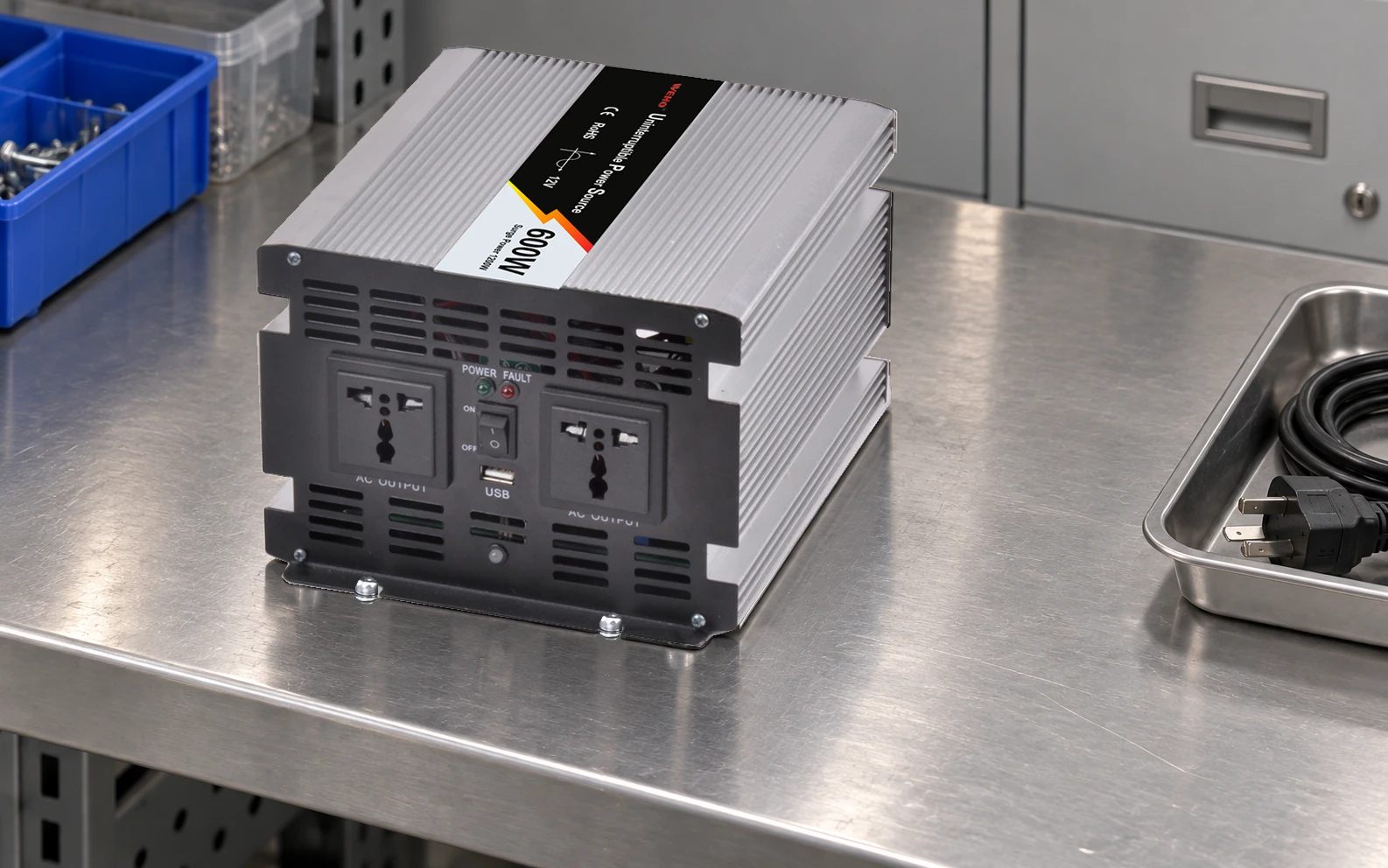
The WHPU-600 family table lists“unload current less than” 0.6 A for 12 V columns and 0.4 A for 24 V columns. That entry does not say the same current applies with the front switch off, during charging or after a separately installed disconnect is opened.
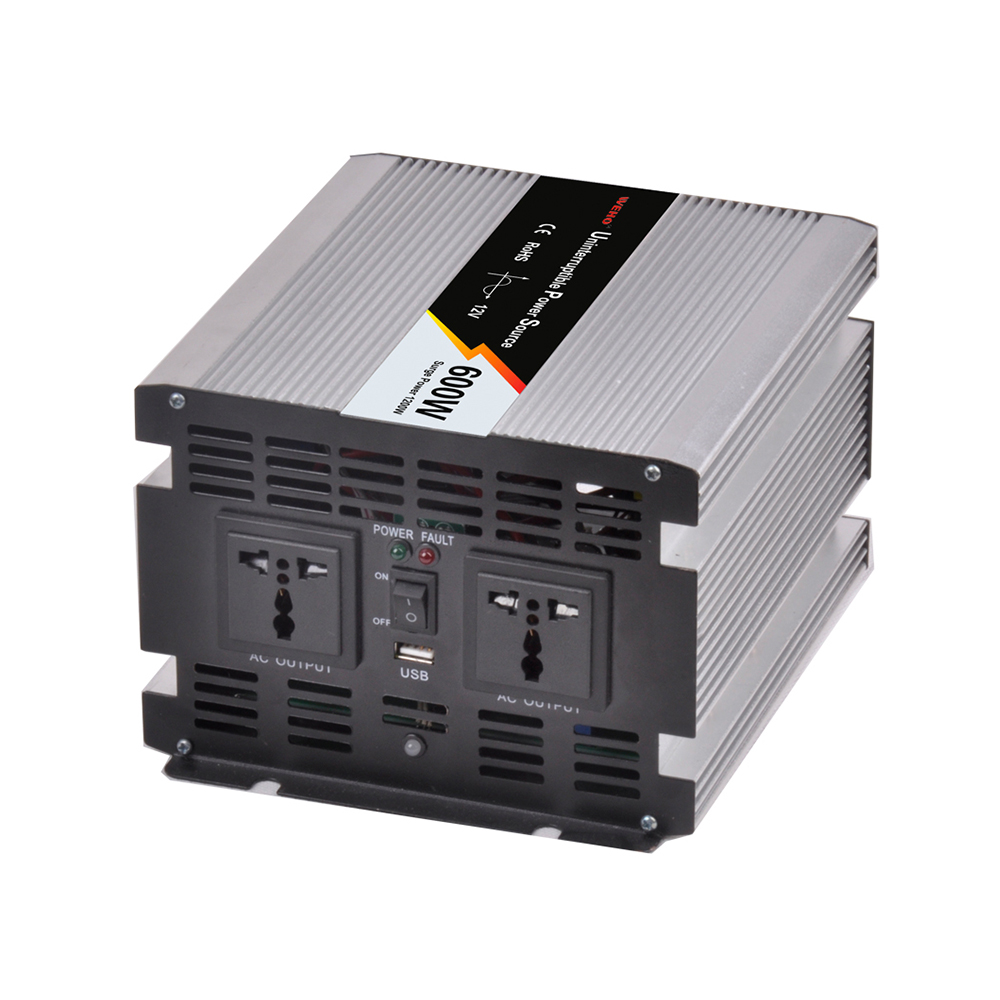
Ask for the defined conditions behind the entry and the behavior of the supplied unit in the proposed storage state. The original photograph’s 12 V marking is retained; a 24 V table option does not relabel that pictured sample.
Keep published limits, assumptions and measured values in separate cells. A later measurement can improve the storage estimate only for the conditions it actually covers.
Measure low current without changing the state
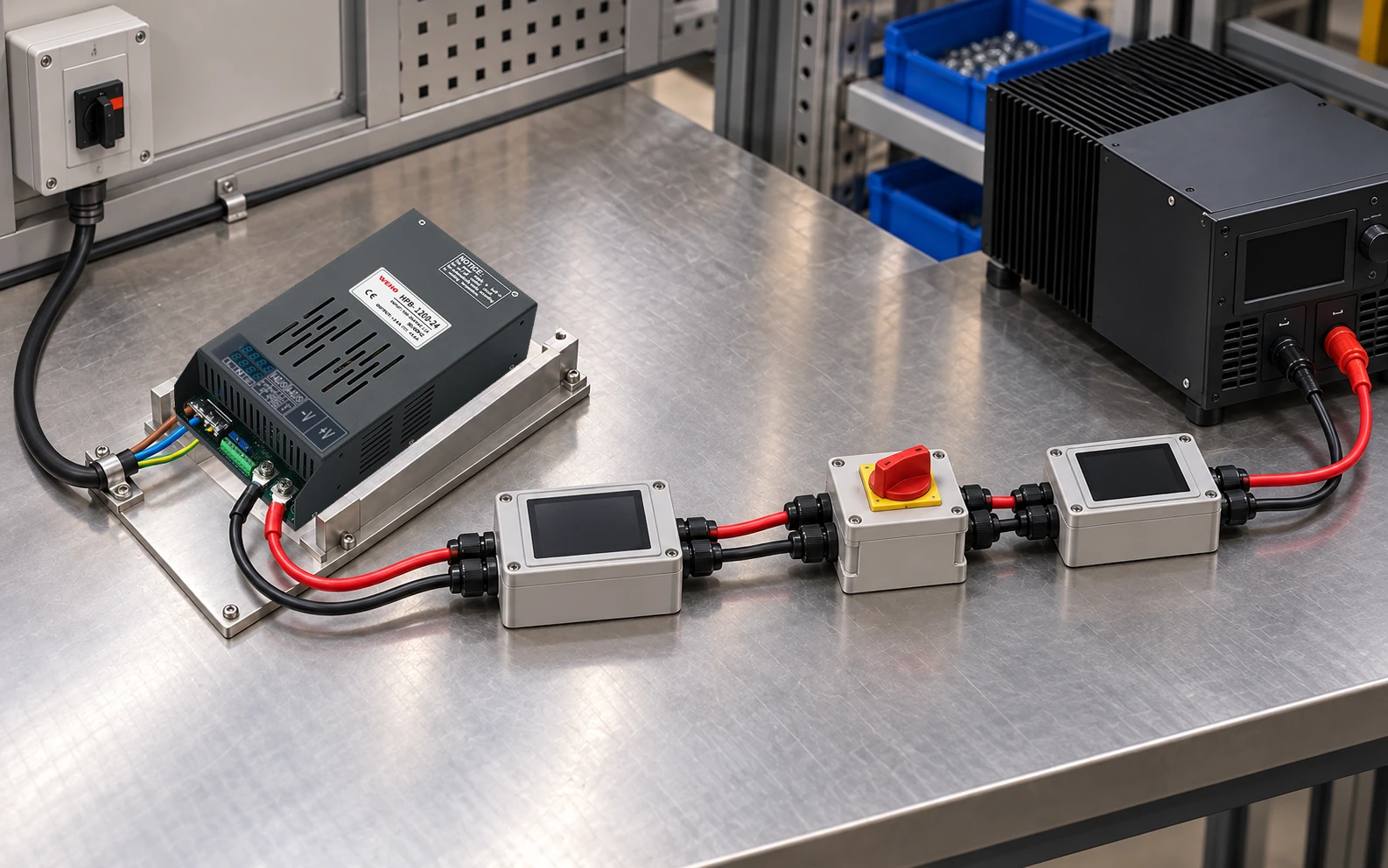
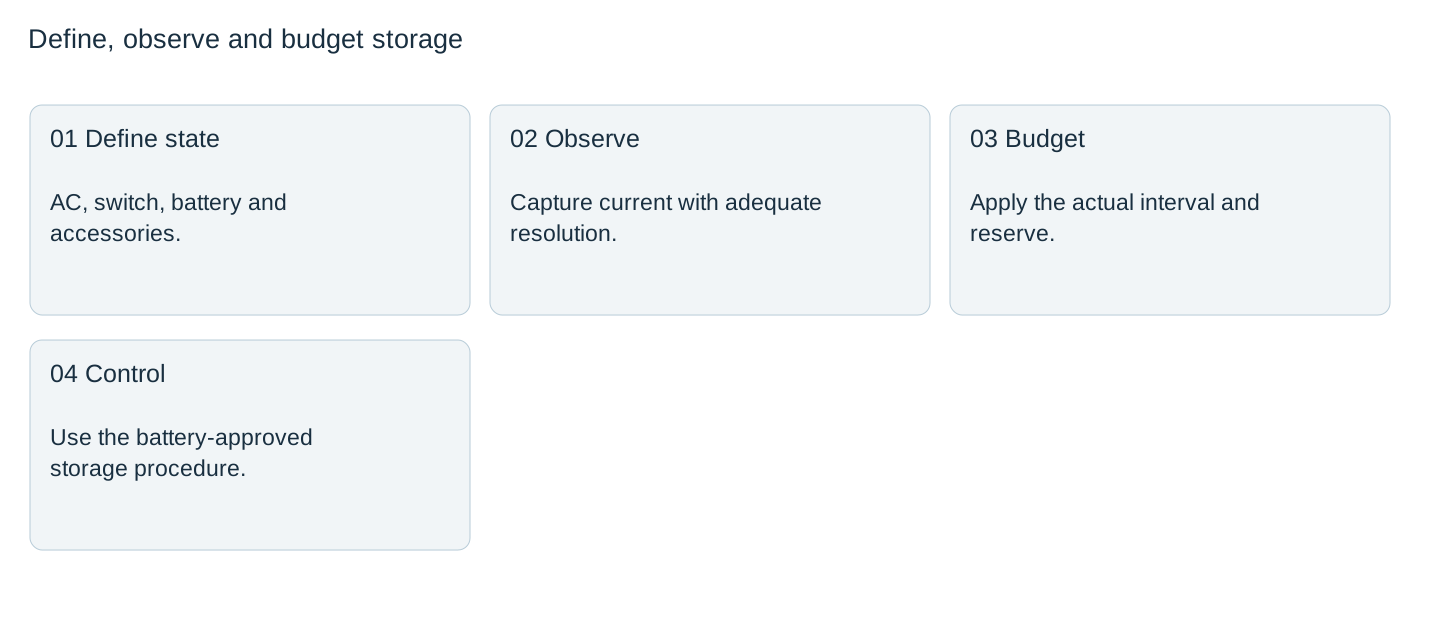
Select a DC current measurement method with adequate resolution and offset stability for the expected draw. A large-range clamp can be useful for operating current yet inadequate for a small storage current. A series sensor can introduce a burden or require a changed connection; the qualified test team must assess that method before use.
Record how long the equipment has been in the chosen state. Wakeups, periodic checks or a fan event can make a short snapshot unrepresentative. Where current varies, retain a time record long enough for the actual behavior being assessed.
Observe net battery draw if the storage question concerns the whole assembly. Measuring only the inverter branch omits other devices that can continue to discharge the battery.

Turn the observed state into a clearly limited estimate
For a constant-current approximation,charge removed in Ah=current in A×hours. An assumed 0.03 A net draw over 14 days removes 0.03×336=10.08 Ah. At an assumed constant 12.8 V, the corresponding energy estimate is 129 Wh.
If the assumed current were 0.3 A instead, the same interval would remove 100.8 Ah. Neither value is measured WHPU-600 consumption. The example shows why a decimal place matters and why “nearly off” is not a usable storage specification.
Actual available storage time also depends on battery condition, temperature, self-discharge, permitted state-of-charge reserve and other loads. Do not divide nominal battery Ah by one observed current and present the result as a guaranteed unattended period.
Write an operating rule from the verified record
The battery manufacturer’s storage instructions set the permitted approach. Use measured assembly draw to decide whether the planned interval needs a documented recharge/check routine or an approved isolation state. Confirm any consequences for monitoring and battery management before disconnecting them.
Victron’s battery-monitor guidance notes that residual system consumption can matter during unattended periods. That is a system-energy issue, not evidence for a particular WHPU off-state current.
Retain the actual state, current trace, battery requirement and allowed interval together. Recheck after adding telemetry, changing firmware or altering the storage procedure. This makes the instruction useful to operations staff without pretending the front switch is a battery disconnect.
Confirm the proposed storage state
Provide WEHO with the exact WHPU-600 configuration, battery instructions, connected accessories and intended unused interval. Request the unit’s state definitions and review the measured storage-current record.
Storage-state battery-current record
| Documented state | Elapsed time / current trace | Net battery A | Estimated interval / Ah | Storage action / limits |
|---|---|---|---|---|
Blank project worksheet. Enter verified project data; example calculations above are not measurements.