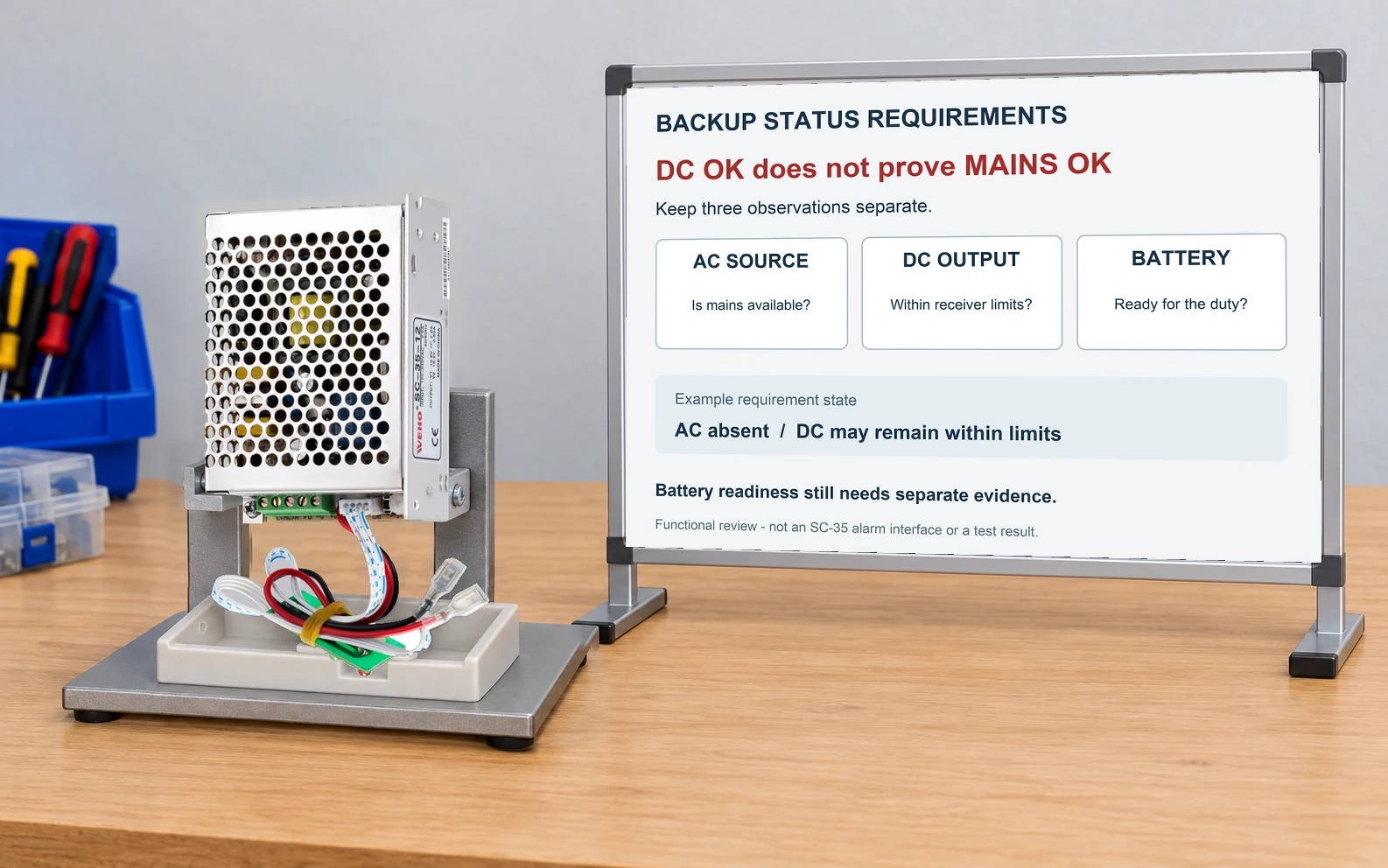
A healthy DC output is not proof that AC mains is present when a battery can continue supplying the load. Define mains, output and battery observations separately before choosing the controller’s alarm logic. A green output indicator alone cannot identify which energy source is carrying the circuit.
This guide helps an OEM prepare the status requirements for an SC-35 family candidate. The available page describes AC/battery backup, but it is not sufficient evidence to assign an undocumented alarm contact or exact switching time.
State three different questions before naming an alarm
First: is the intended AC source available at the monitored point? Second: is the DC output within the receiver’s required limits? Third: is the battery connected and able to support the required duty? These conditions can differ. A system can have acceptable output with failed mains, or present mains with an output problem.
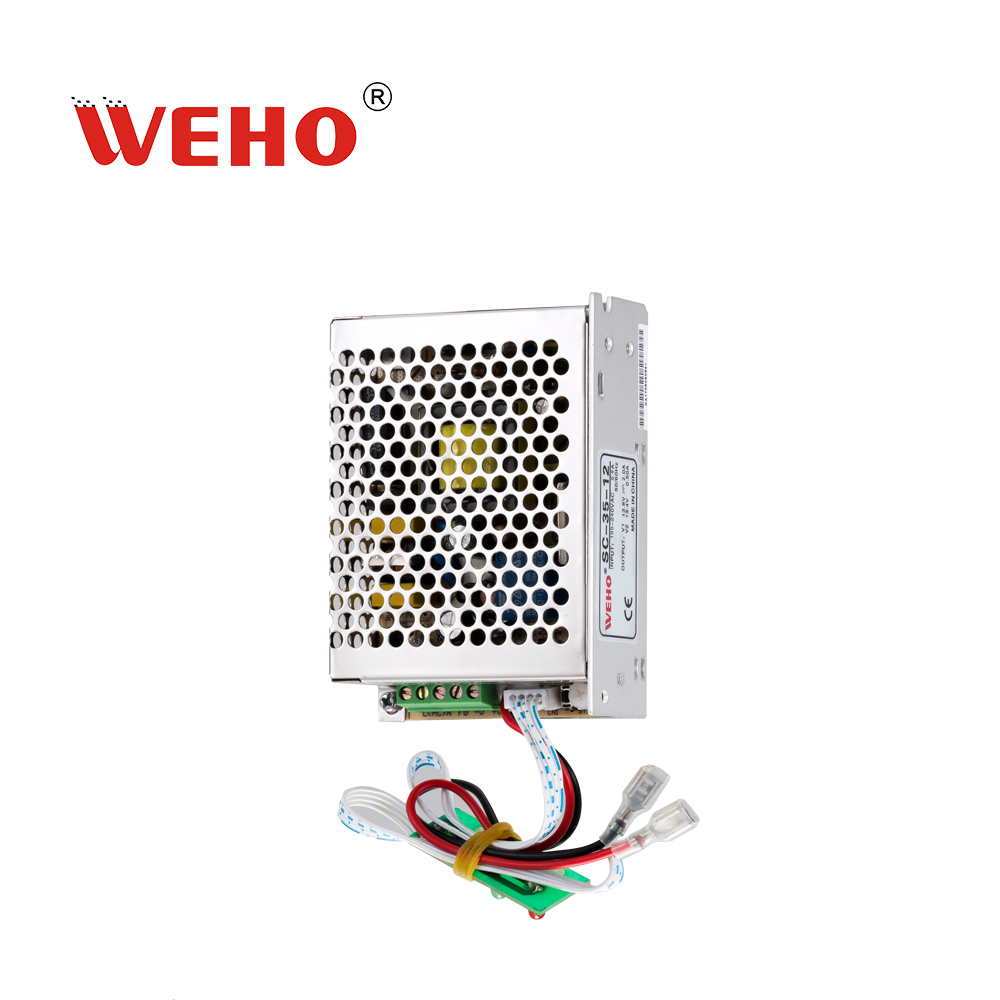
Le WEHO SC-35 page lists battery backup behavior and two output variants. Its table contains a duplicated channel label in the 12 V column. Do not repair that text by assumption, or use a family photograph to infer the exact variant and all status functions.
Write the required status matrix before selecting interfaces
| Defined state | AC observation | DC observation | What must remain distinct |
|---|---|---|---|
| Normal supplied operation | Source available at chosen point | Within receiver limits | Battery readiness still needs evidence |
| Mains absent, battery supporting | Source absent | May remain within limits | Report AC loss without declaring DC failure |
| Output fault with mains present | Source may be available | Outside receiver limits | Investigate output/load path |
| Battery disconnected | May be available | May appear normal while mains is present | Normal DC does not prove backup readiness |
This is a requirement matrix. It does not assert that the SC-35 has a separate hardware output for each row. Obtain the supplied revision’s actual signal definitions and decide what additional approved monitoring is needed.
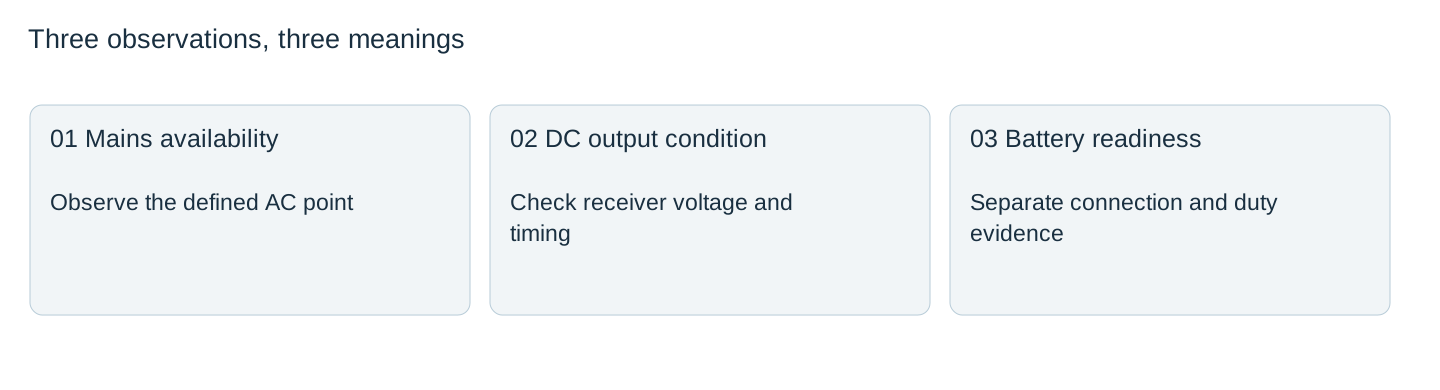

Verify what any proposed status interface actually reports
Ask for the signal’s reference point, electrical type, active state, thresholds, hysteresis, timing and behavior when the supply or monitoring controller loses power. An active voltage output, an open collector and a floating relay contact are different interfaces. Their names cannot be exchanged in the drawing.
As an external example, Mean Well’s DRC-40 specification separately documents AC OK and battery-low signaling. That document illustrates the evidence needed for that product; its pins, levels and thresholds do not apply to the WEHO SC-35.
If an external mains monitor is proposed, define which point it observes. Voltage present upstream of a branch protective device may not establish AC at the supply input. Select and install any mains interface through the qualified equipment design, not an improvised connection to a controller input.
Define alarm timing independently from backup continuity
A load may ride through an AC interruption while the alarm is intentionally delayed. Conversely, the alarm may arrive after the receiver has already reset. Record the required detection time, nuisance-alarm filtering and controller reaction separately from the DC output interruption criterion.
For an illustrative requirement, a project might permit an AC-loss alarm after a 200 ms persistence interval but require a different receiver continuity limit. These are project-defined requirements, not SC-35 timing specifications. The validation plan must measure the actual alarm and receiver behavior rather than infer either from a marketing phrase.
Test each required state and preserve the observation point
Use an authorized sequence to exercise the defined states and recovery. Record AC at the intended observation point, receiver voltage and each actual status interface using suitable isolated measurement methods. Do not use the article as a live-wiring or battery-disconnection procedure.
Give operations a record that explains each displayed alarm and its limitation. For example, “DC within limit” should not be renamed “mains healthy” or “battery ready.” Recheck the matrix when a controller, status module, supply variant or battery arrangement changes, so a reassuring display continues to mean exactly what the evidence supports.
Send WEHO the proposed SC-35-12 backup application with the required AC/DC/battery state matrix, observation points, alarm timing and actual controller interfaces. Request the supplied revision’s status-signal definitions and channel identification; select any additional monitoring only after those capabilities are established.
Backup status acceptance record
| Required state | Actual measured evidence | Interface definition | Timing requirement/result | Meaning shown to operator |
|---|---|---|---|---|
Blank project worksheet. Enter verified project data; example calculations above are not measurements.