Key Engineering Takeaways
- TX4-M manual mode changes the controller output command; a percentage is not a heater-power measurement.
- The TX4 manual describes P00–P100 adjustment and a key action to return to RUN mode.
- Define the permitted output change before transferring control back to the automatic loop.
- Verify the receiving device and process response, not only the display.
What must be checked when an operator takes manual control?
Check who controls the output before, during and after the intervention. Manual mode can be useful during an authorized commissioning task, but it changes the relationship between the measured temperature and the command reaching the external switching device. An output that is deliberate during a test may be unsuitable once production resumes.
For an OEM controls engineer using the TX4-M PID temperature controller, the decision is how to release a manual-to-automatic handover. Define the required starting condition, allowed process excursion and final operating state. This article describes a verification method; it does not report a completed TX4-M transfer test.
A displayed RUN state is one observation. The external relay, SSR, contactor or other receiving circuit must also respond as intended. Its wiring, logic and actual power path belong in the same commissioning record.
What does the TX4 manual establish about manual mode?
The TX4 instruction manual, revision TX4 230808EN includes a manual-mode shortcut. It describes entering manual mode with a three-second key action, modifying output within P00–P100 using the adjustment keys, and pressing the mode key once to exit manual mode and return to RUN. Follow the illustrated key symbols on the applicable unit.
These instructions establish an available operating function. They do not establish the output immediately before entry, the command selected on every entry, a transition time, or a guaranteed disturbance-free return. Do not add a claim of automatic matching between manual and automatic output when the documentation does not provide it.
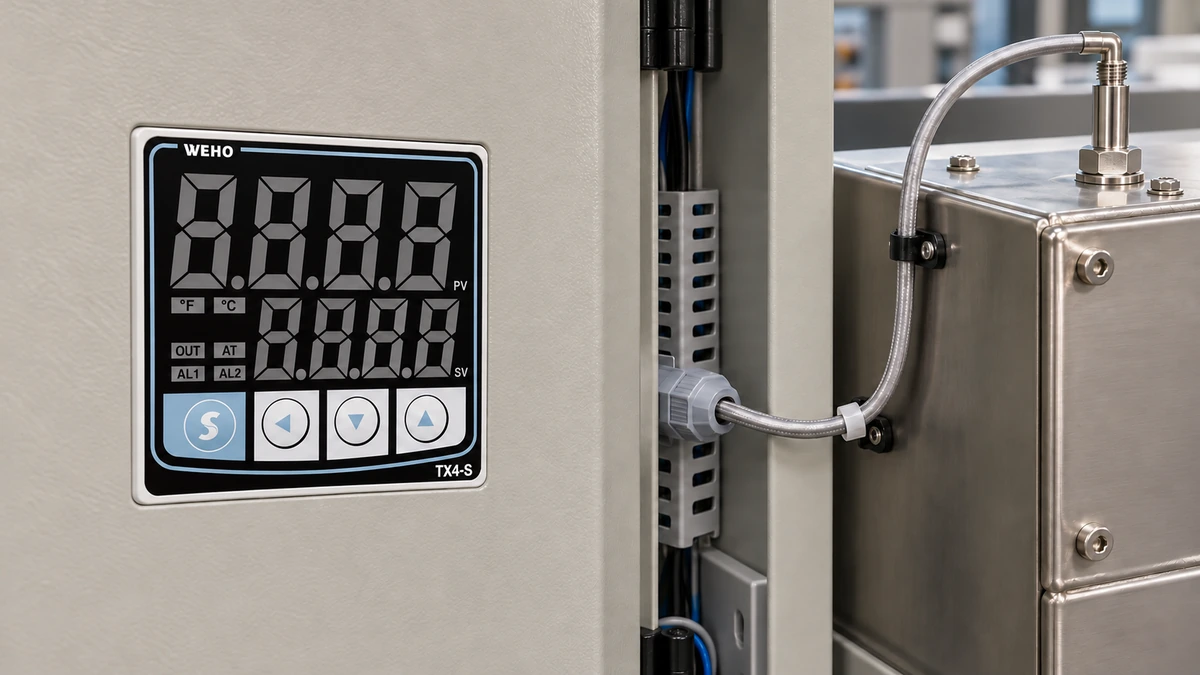
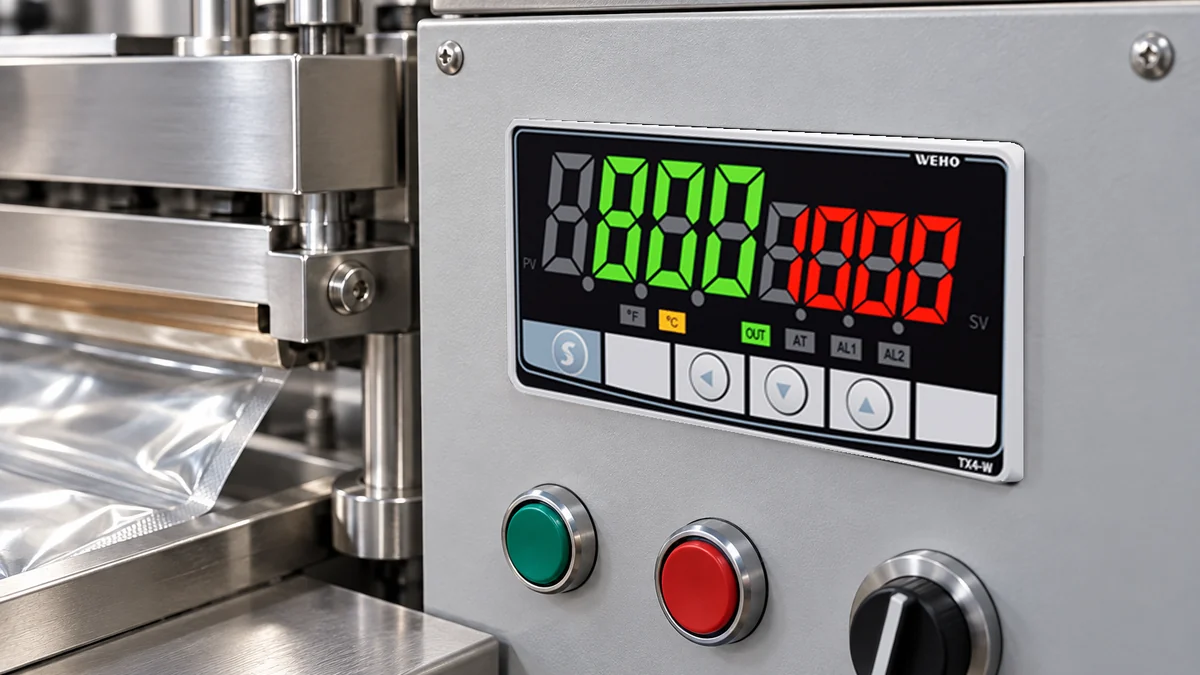
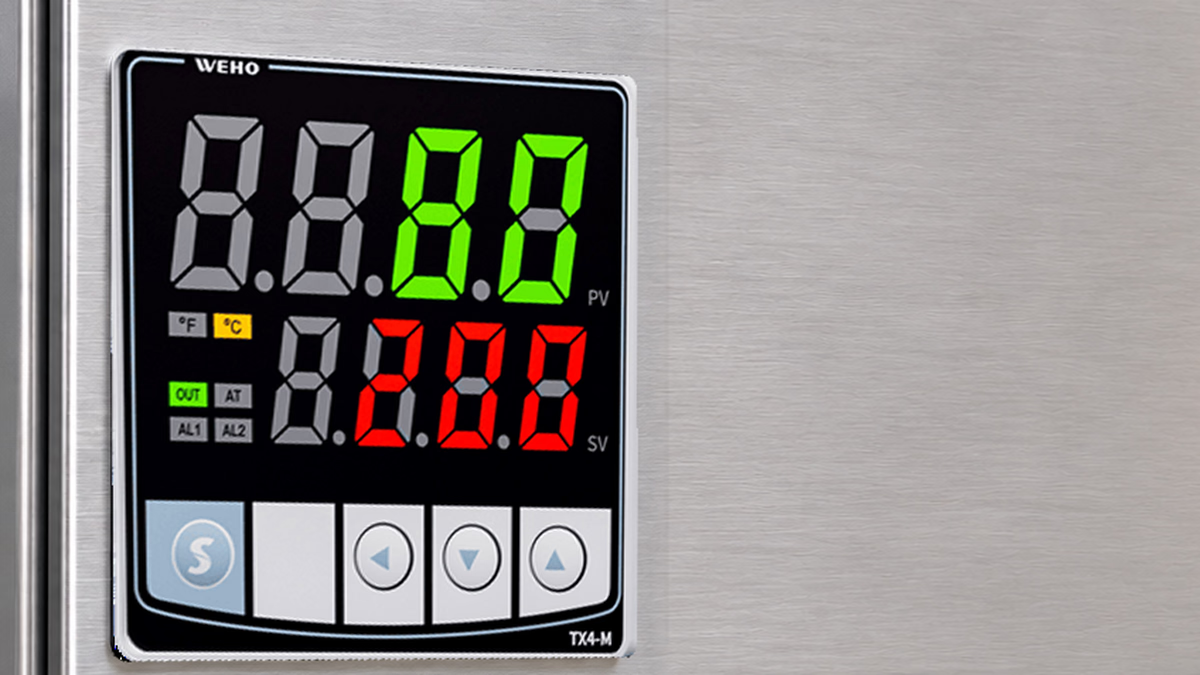
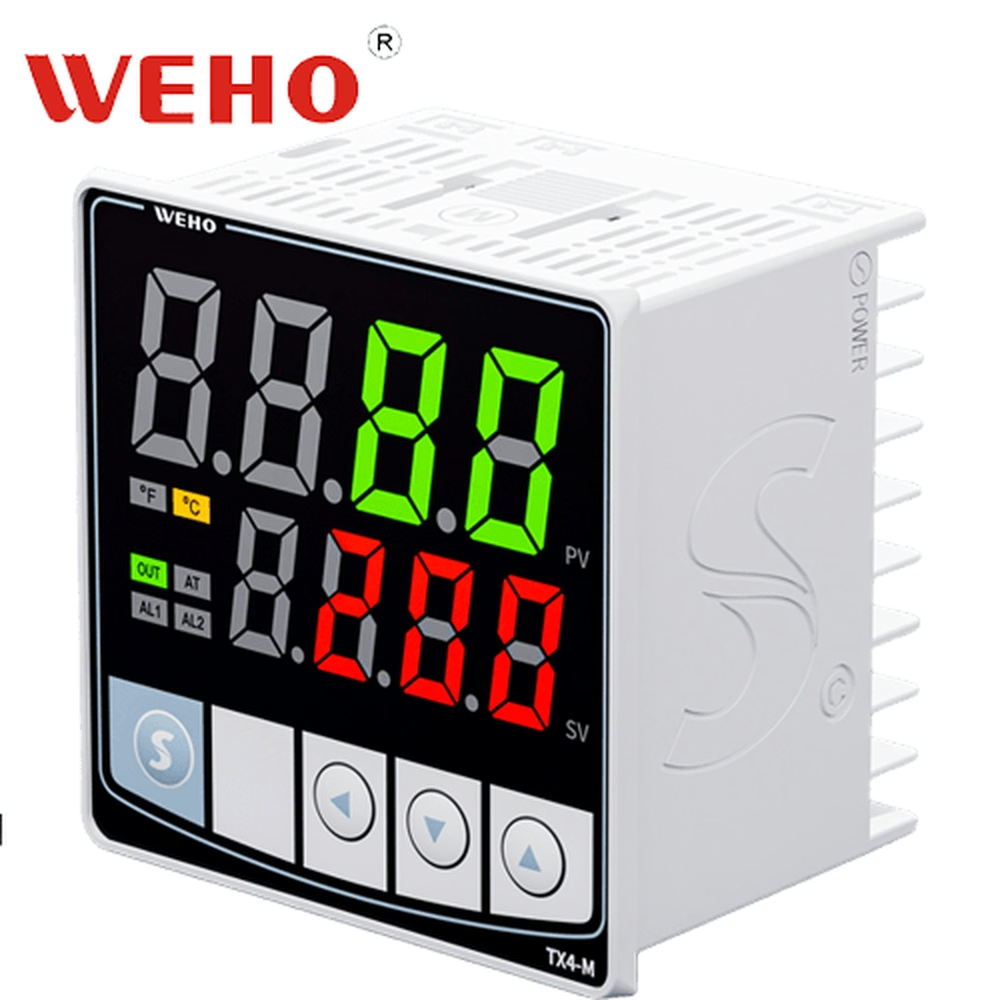
The output-selection parameter remains relevant. Relay and SSR-drive options are different interfaces, so confirm the complete controller code, configuration and external receiving circuit. A photograph of the TX4-M front identifies the enclosure form, without proving a particular supply or rear-terminal option.
Why does P40 not prove 40 percent heater power?
An output percentage is a controller command. Actual heater power depends on how the receiving circuit interprets that command, the switching method, supply conditions and the load. A time-proportioned switching arrangement may connect a defined command to an ON-time ratio, but that relationship must be established for the actual interface.
Consider a Hypothetical Manual-Output Example. An OEM uses a heater whose rated power is 1,000 W at its specified supply voltage. The commissioning plan requests a 40% switching duty under controlled conditions. If the heater receives its rated voltage during each ON interval and its behavior supports that model, the ideal average electrical input is:
Average power = 1,000 W × 0.40 = 400 W.
This calculation is a conditional load model. It is not a TX4-M measurement, a promise that every P40 indication produces 400 W, or a prediction of process temperature. An SSR that remains conducting, a relay that does not operate or an incorrectly interpreted command invalidates the simple model.
Thermal output also has a history. A tool can continue warming after the electrical command falls because heat stored in surrounding material still moves toward the sensor. A declining command therefore does not prove that the process has stopped rising in temperature.
Which observations distinguish a command change from a successful handover?
Record the command and receiver separately. The table below is a proposed commissioning structure; it contains no observed results. Populate it with the actual unit and approved process limits.
| अवस्था | Controller record | Receiver record | Release question |
|---|---|---|---|
| Before intervention | Mode, PV, SV and output selection | Actual switching or command state | Is manual intervention authorized? |
| Manual operation | Requested output and displayed setting | Response to the requested change | Does the receiver follow the command? |
| Return to RUN | Mode transition and resulting command | Any abrupt or delayed response | Is the transition within the process limit? |
| After stabilization | PV, SV and automatic operation | Normal switching behavior | Can the equipment return to its intended duty? |
Choose an observation interval that can capture the transition of interest. A handwritten value taken several seconds later can miss a short command change. Conversely, a switching event alone cannot show whether the thermal process remains within its approved operating conditions.
Keep unrelated changes out of the comparison. Changing SV, output selection and manual command together can make the response difficult to interpret. If the actual intervention requires several changes, document their order and the reason for each one.

Swipe horizontally on a small screen, or open the full-size diagram.
How should the transition be verified?
- Identify the complete controller marking, manual revision, input configuration and receiving circuit. Record the existing PV, SV and output mode before the intervention.
- Define the permitted manual command, duration and process conditions. Where appropriate, begin with an isolated receiver or suitable simulated process input under the equipment commissioning procedure.
- Enter manual mode using the applicable instructions. Record the displayed state and actual receiver response before increasing the command.
- Change the command only within the approved test conditions. Capture the command and receiver behavior together, including any discrepancy.
- Return to RUN using the documented key action. Observe the immediate response and subsequent process behavior against the predetermined limits.
- Restore the intended operating configuration and document permission to resume duty. Retain any unexplained transition as an unresolved commissioning issue.
Work on power wiring requires the equipment isolation procedure and qualified personnel. The manual-mode command is an operating control; it is not an isolating device. The test should not depend on changing a displayed percentage to make a hazardous energy path safe.
What should be controlled when the procedure is repeated?
Keep the tested starting conditions with the result. Initial PV, SV, control type, output selection, external switching arrangement and load state can all affect what happens after the return to automatic operation. A result from one configuration should not silently qualify a different machine.
The TX4-M controller configuration information provides a product reference for the review. Use it with the actual device marking and applicable connections. Avoid changing relay/SSR selection merely to reproduce the appearance of another installation.
A replacement controller, changed receiving device or revised commissioning sequence should reopen the affected transition checks. The useful question is whether the new arrangement follows the required cause-and-effect relationship, rather than whether the front panel still looks familiar.
Use the manual-output handover worksheet to keep the operating states and acceptance decision together. Its blank result fields require actual observations; the worksheet itself does not certify that a transfer has passed.
What information should be sent to WEHO?
Send the complete TX4-M marking, manual revision, input type, control-output selection, receiving-device information and the sequence that produced the concern. Include synchronized observations of the displayed mode, requested output, actual receiver and process response.
Contact WEHO about the TX4-M configuration with the operating limits and the transition question. Ask for clarification of documented controller behavior while keeping machine acceptance and permission to resume the process with the responsible engineering team.
Engineering FAQ
Does P00 provide electrical isolation?
P00 is an output command and does not establish electrical isolation. Apply the machine isolation procedure before work on wiring or power components. A failed external switching device can remain energized independently of the displayed command.
Is P50 a measurement of half the heater power?
P50 is a controller-output setting, not a power measurement. Actual power depends on the interface, switching behavior, load and supply conditions. Verify the receiving circuit before using a duty-based power model.
Does returning to RUN guarantee an unchanged output?
The cited TX4 manual describes returning to RUN but does not provide a guaranteed unchanged-output transition. Define and observe the permitted response for the installed configuration, including the external receiving device.
Which result should be kept after a manual intervention?
Keep the before, during and after controller states together with the actual receiver response and process disposition. A final display photograph alone cannot establish how the equipment behaved during the transition.