Key Engineering Takeaways
- A sparse temperature record can miss an excursion that occurs between observations.
- Select the external recording interval from the event and acceptance task, not the display's appearance.
- In the hypothetical example, 30-second observations miss a nine-second event; a five-second record captures one point inside it.
- Keep recorder timing, controller configuration and sensor response separate in the handover record.
Why Can a Temperature Trend Look Better Than the Process?
An OEM may receive a neat temperature spreadsheet with every recorded value inside the agreed band, yet production reports a short thermal problem. The spreadsheet establishes what was observed at its timestamps. It does not prove that the temperature stayed inside the band between those observations. The first investigation should include how the record was collected.
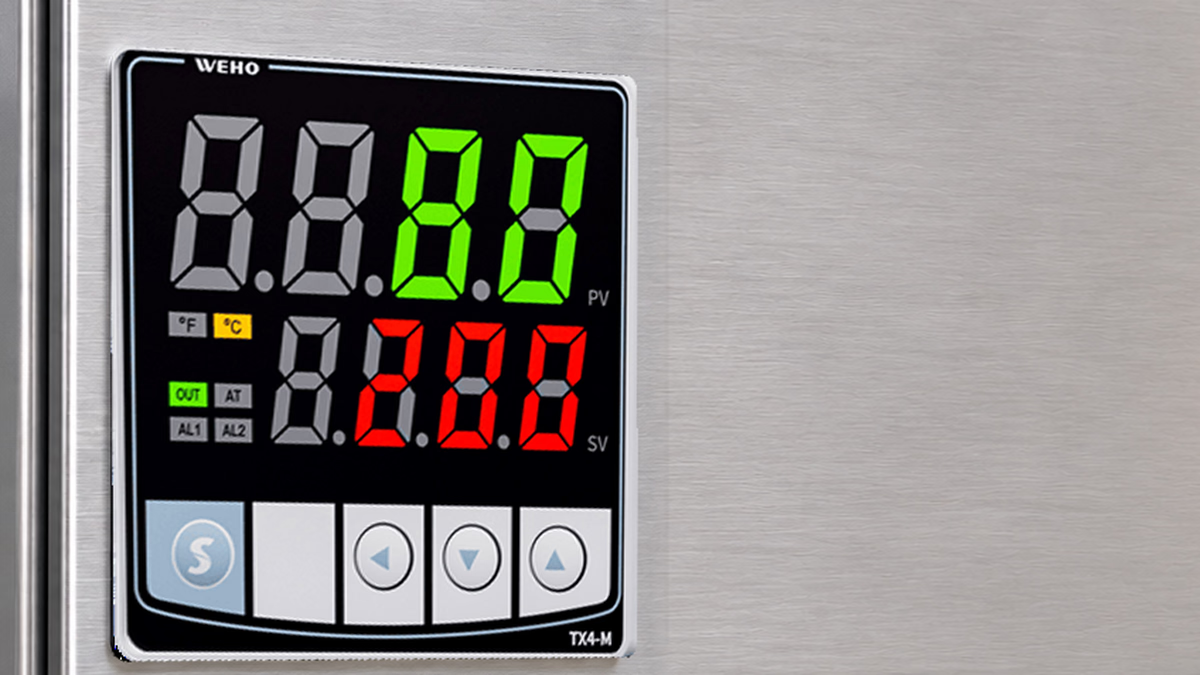
For a machine using the TX4-M temperature controller, define the external observation or recording method before treating a trend as process-acceptance evidence. This article does not claim that TX4-M includes a built-in data logger, communications option or a particular internal sampling interval.
Which Time Intervals Need Separate Names?
The controller's input conversion, indication update and the team's recording interval describe different stages. A technician copying the display once every 30 seconds creates a 30-second observation record even if the controller updates more frequently. Changing the spreadsheet interval does not change how the physical probe responds.
Identify what the recorded value actually represents. It might be a manual observation of PV, an independently logged product sensor or another documented measurement channel. Do not label an external reference trace as TX4-M PV unless that is genuinely what the method acquires. A trace from another location answers a different measurement question.
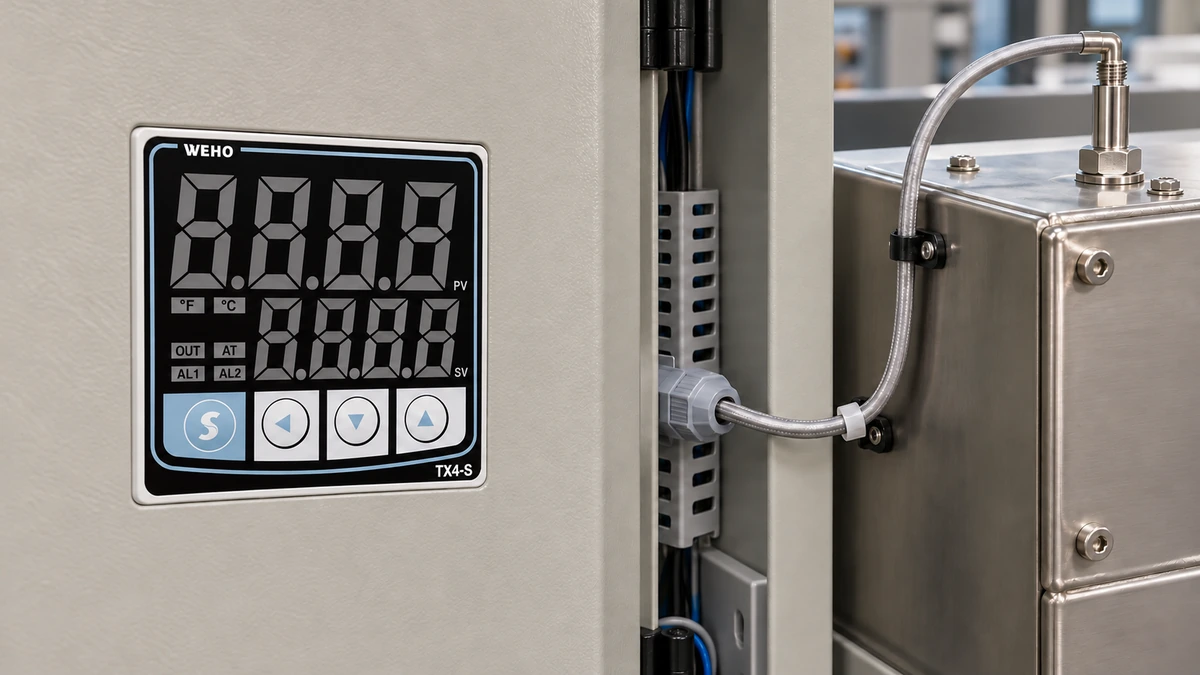
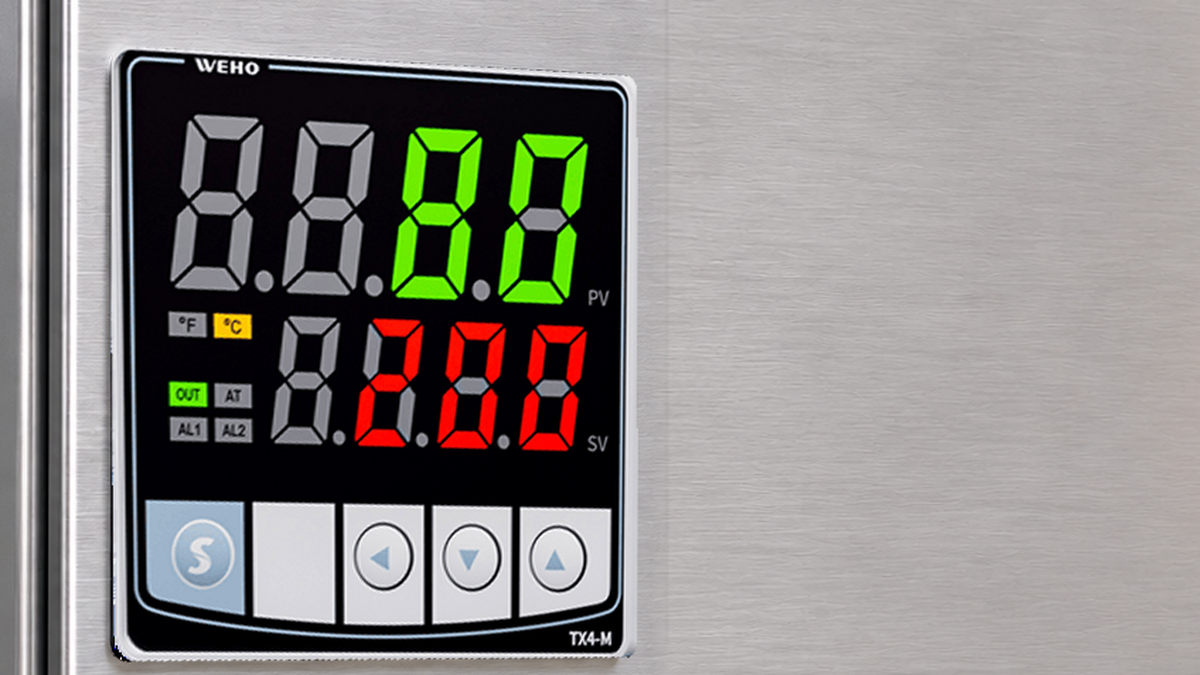
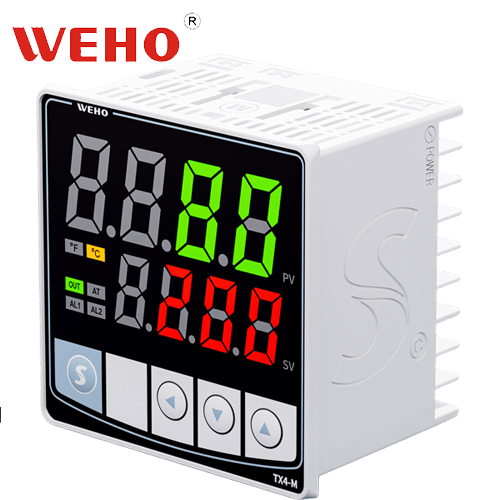
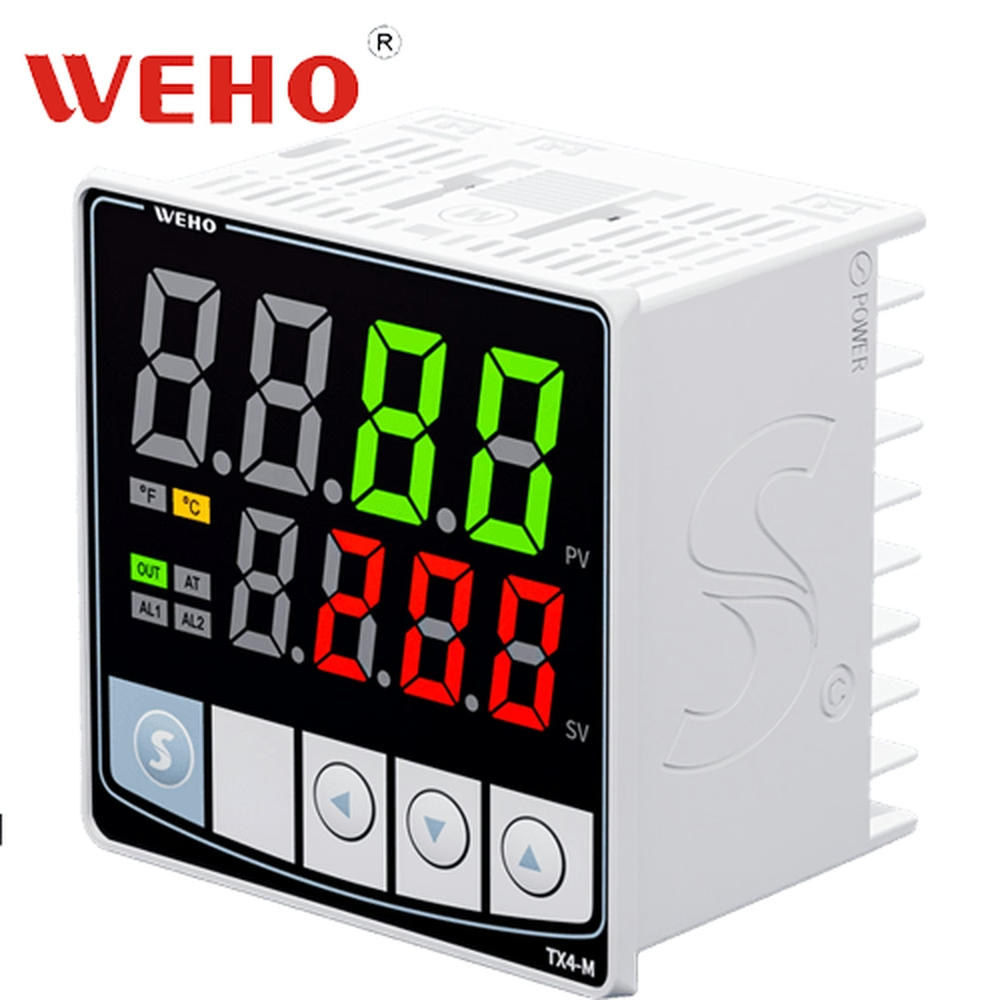
The TX4 family instructions should be checked against the supplied order code and configuration for actual controller features. The recording plan then documents the separate equipment and method used. A front-panel photograph identifies the product form; it does not establish a digital interface or exported data format.
Standard Engineering Observation Example
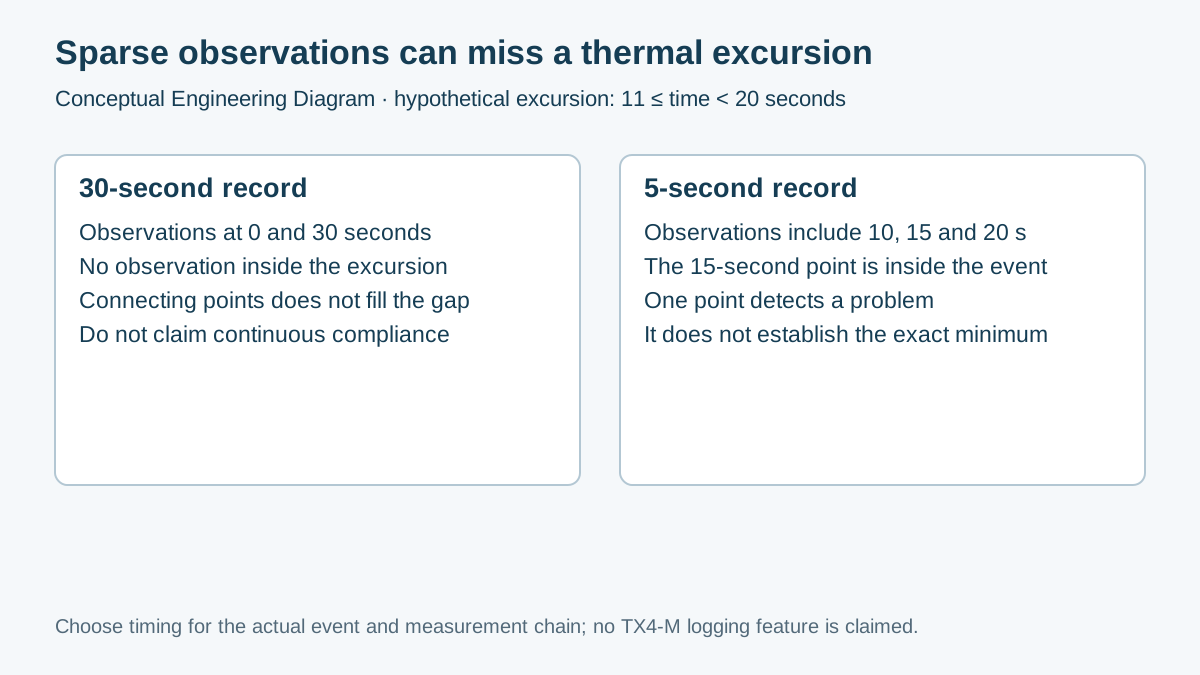
Assume a hypothetical process is below its permitted lower temperature boundary from 11 seconds until just before 20 seconds. The out-of-band interval is 20 − 11 = 9 seconds. At 15 seconds, a suitable independent reference indicates 95 °C, below the example's 98 °C lower boundary. These are assumed observations, not a TX4-M test.
A manual record taken at 0 and 30 seconds has no observation within that interval. Both entries might be inside the permitted band while the intervening event is missed. Drawing a straight line between those entries does not recover the missing temperature history.
A second hypothetical record taken every five seconds includes 0, 5, 10, 15, 20, 25 and 30 seconds. Its 15-second observation falls inside the defined excursion and reveals a problem. One captured point still does not establish the exact threshold-crossing times or the minimum temperature. Additional temporal resolution and a suitable measurement chain are needed for those decisions.
| Record method | Example observations | Evidence available |
|---|---|---|
| 30-second observations | 0 s, 30 s | No observation inside the defined excursion |
| 5-second observations | 0, 5, 10, 15, 20, 25, 30 s | One observation at 15 s is below the boundary |
| Required next decision | Event duration or minimum temperature | Cannot establish either exactly from one captured point |
The example demonstrates a recording gap, not a universal five-second recommendation. Actual process events can be shorter, and probe dynamics or recorder behavior may limit useful detail. Define the shortest relevant event and the accuracy required for its timing, then select and verify the measurement method.
Why Is Connecting the Dots Insufficient?
A plotted line is a presentation of recorded points, not evidence of every intervening value. Interpolation may be useful under a justified model, but it must not erase a possible process excursion. Keep the original timestamps and samples so a reviewer can distinguish observations from an assumed line between them.
Sampling can also distort the apparent behavior of recurring changes. NI's sampling explanation describes aliasing as an effect of inadequate sampling of changing signals. That principle supports examining the acquisition method; it does not provide a TX4-M rating or mean that one simple frequency rule qualifies every thermal event.
A temperature acceptance task may concern a brief threshold crossing rather than reconstruction of a band-limited periodic signal. Event duration, threshold uncertainty, sensor response and acquisition filtering all matter. Choose a method that answers the process question instead of applying a generic “twice the frequency” slogan to an undefined event.
What Should the Recording Plan Contain?
Define the measurement point, temperature band and event to capture. State whether the purpose is to detect an excursion, estimate its minimum, measure its duration or compare recovery. These tasks can require different evidence even when they use the same sensor location.
Specify the recording equipment and actual acquisition behavior. Some systems save instantaneous values; others save averages, extrema or values after filtering. A one-minute average within the band cannot establish that every instantaneous temperature was acceptable. Keep the aggregation and filtering settings with the export.
Record the sensor construction, mounting and reference uncertainty. A fast recorder connected to a slow or poorly contacting sensor does not recover temperature changes that the sensor did not resolve. Verify the installed measurement chain for the task rather than relying on the recorder's advertised maximum rate.
Finally, document the timebase. Preserve event markers, clock synchronization and any known delay between channels. A trace with accurate temperatures but an unidentified time offset may be unsuitable for deciding whether a material-loading event preceded the excursion or followed it.
How Should the OEM Verify the Recording Method?
- Write the process decision and the shortest event that must be resolved. Define the measurement point and acceptance boundary before collecting a favorable trend.
- Identify the TX4-M configuration and every external recording component. Distinguish controller indication from independently measured product temperature.
- Select suitable acquisition settings and record how saved values are formed. Check actual timestamps and missing samples in a trial record.
- Verify the method against a permitted, documented comparison or timing event appropriate to the equipment. Do not create unsafe thermal excursions to test a logger.
- Review the raw observations alongside the plot. Calculate only the quantities the temporal and temperature resolution can support.
- Preserve the settings, raw export, event markers and limitations with the machine acceptance record. Recheck after changes affecting the measurement chain.
Qualified personnel should follow the machine's approved procedures when attaching sensors, inspecting electrical connections or working near hot and moving parts. Keep independent protective functions in service. A trend recorder used for process analysis is not automatically a protective device.
Request a TX4-M Measurement-Record Review
For a TX4-M input documentation review, provide WEHO with the full ordering code, configured input, probe details and the process range. Include the external recording method and the event you need to capture. Ask which controller documentation applies, without assuming that a family page confirms a particular logging interface.
Keep the acceptance statement proportional to the evidence. A record can support that no out-of-band samples were observed under its defined method. A stronger claim about continuous process compliance requires a method and acceptance plan capable of supporting that claim.
Engineering FAQ
Do all in-band samples prove there was no excursion?
No. An event can occur between observations. Evaluate the interval, sensor response, acquisition behavior and acceptance method before claiming that the temperature remained in band continuously.
Is a five-second interval always adequate?
No. It captures one point in this hypothetical example only. The appropriate interval depends on the event, timing requirement and complete measurement chain, including sensor and recorder behavior.
Can a smooth plotted line recover missing observations?
No. The line may connect known points using an assumed interpolation. Keep the original samples and do not treat the plotted connection as an independently measured temperature history.
Does this article say TX4-M has a built-in logger?
No. It discusses an external observation or recording plan. Confirm any controller-specific interface or feature using the complete ordering code and applicable documentation.
Can a faster recorder fix a slow temperature probe?
No. Faster recording does not remove the probe's thermal response or contact limitations. Assess the installed probe and recording system together for the process event that matters.