Do not transfer a PID proportional setting by copying its number alone. Establish whether the parameter represents a temperature band, a percentage of span or a gain, then compare its units and control definition.
- Proportional band and proportional gain use different conventions.
- A band expressed in degrees needs a defined span before conversion to percent.
- A conversion supports comparison; it does not replace loop validation.
Why can the same proportional number produce different behavior?
Two controllers can assign different meanings to the same numeric proportional setting. One may use a band in degrees, another a percentage of input span and another an output-to-error gain. A copied value can therefore change the effective control response even when both instruments display a parameter named P.
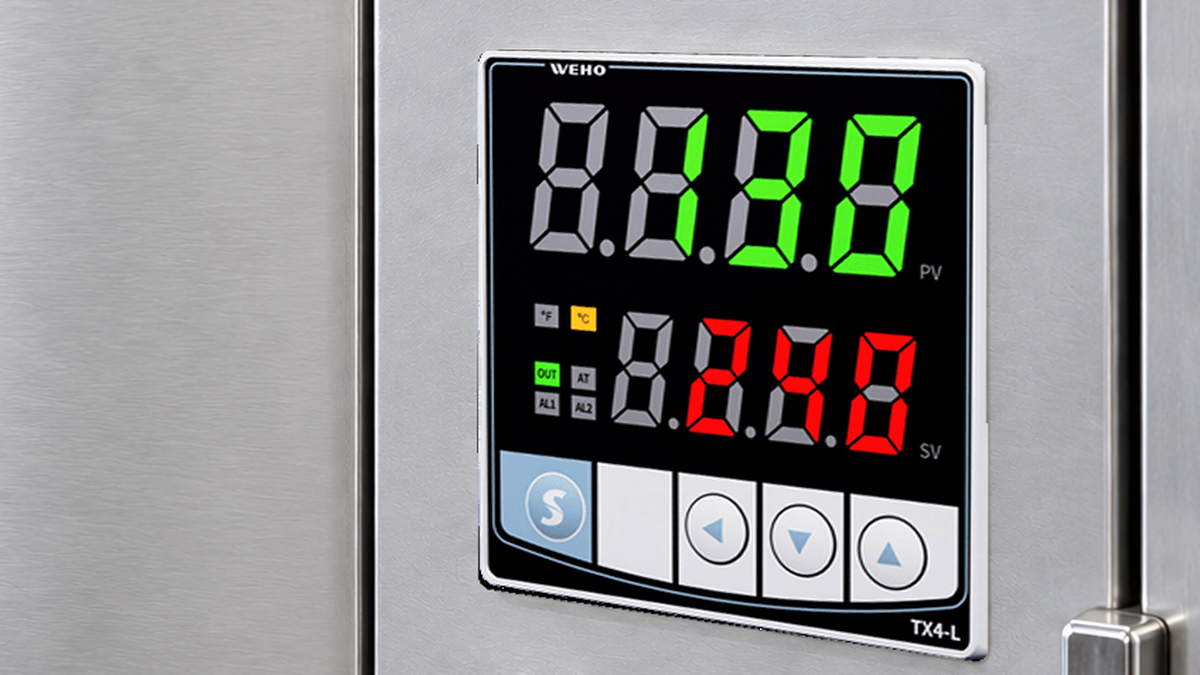
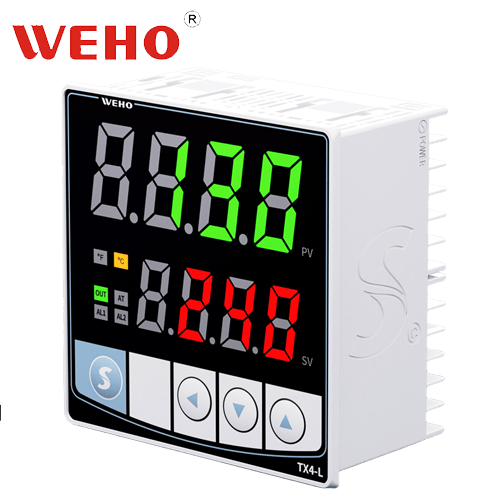
For a TX4-L PID controller project, use the applicable TX4 parameter definition. The official manual describes the proportional band in temperature units. That definition should be carried into the commissioning record rather than replaced by a generic percentage convention.
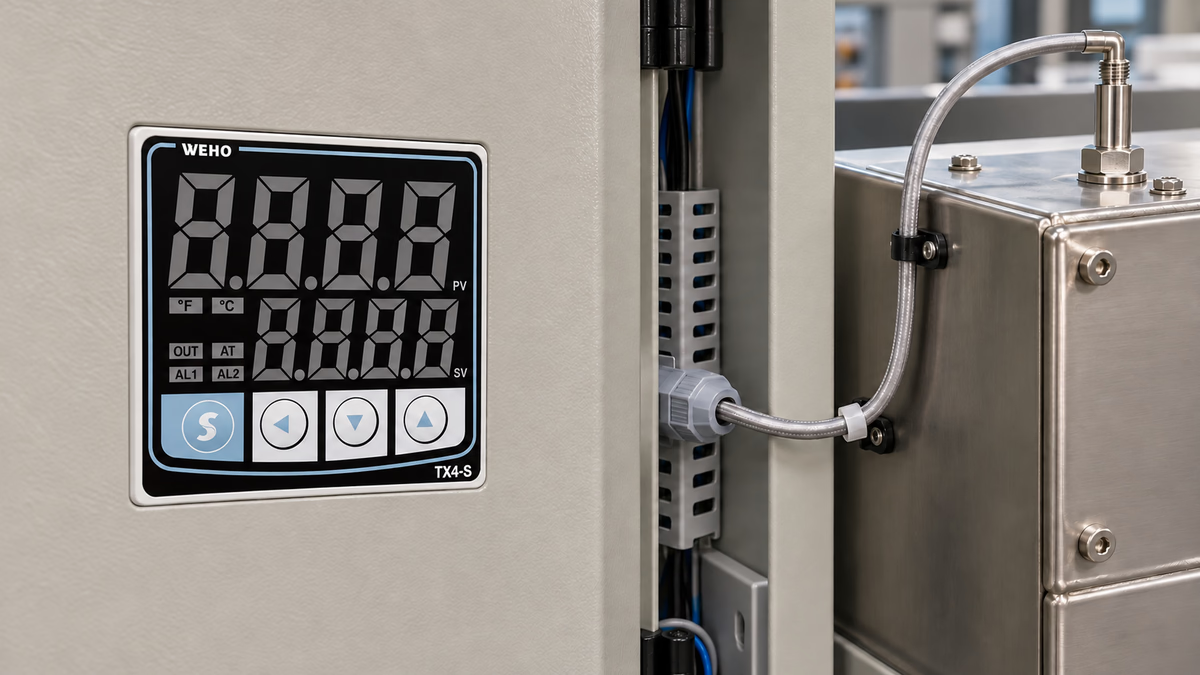
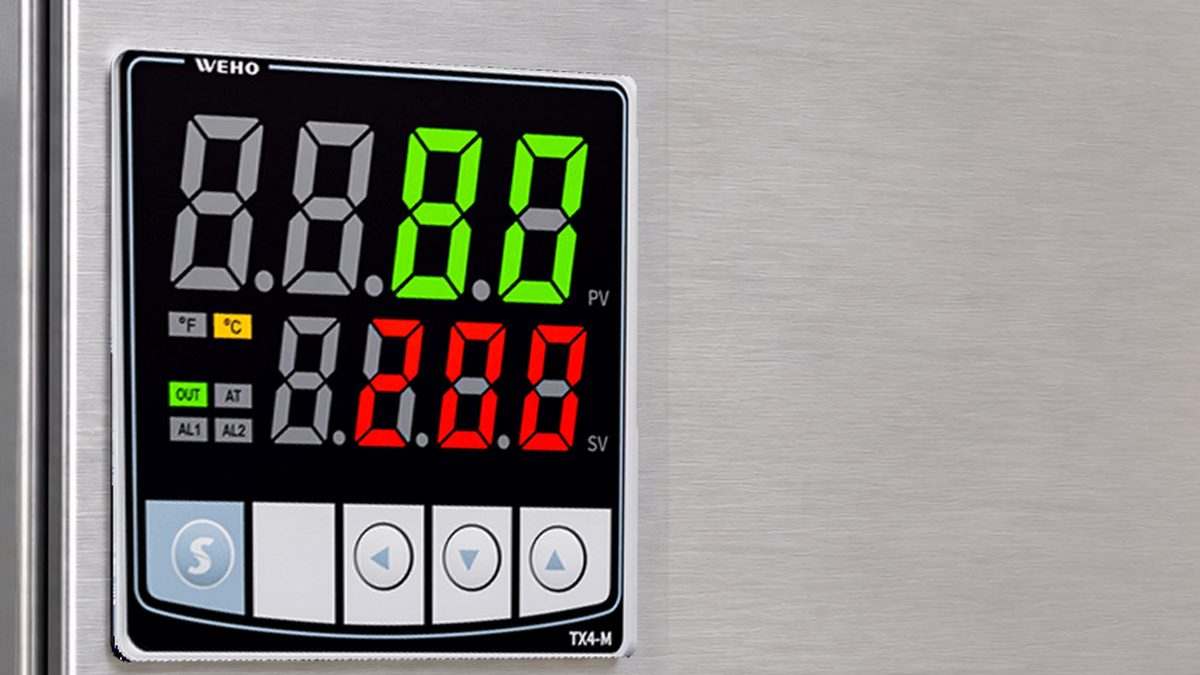
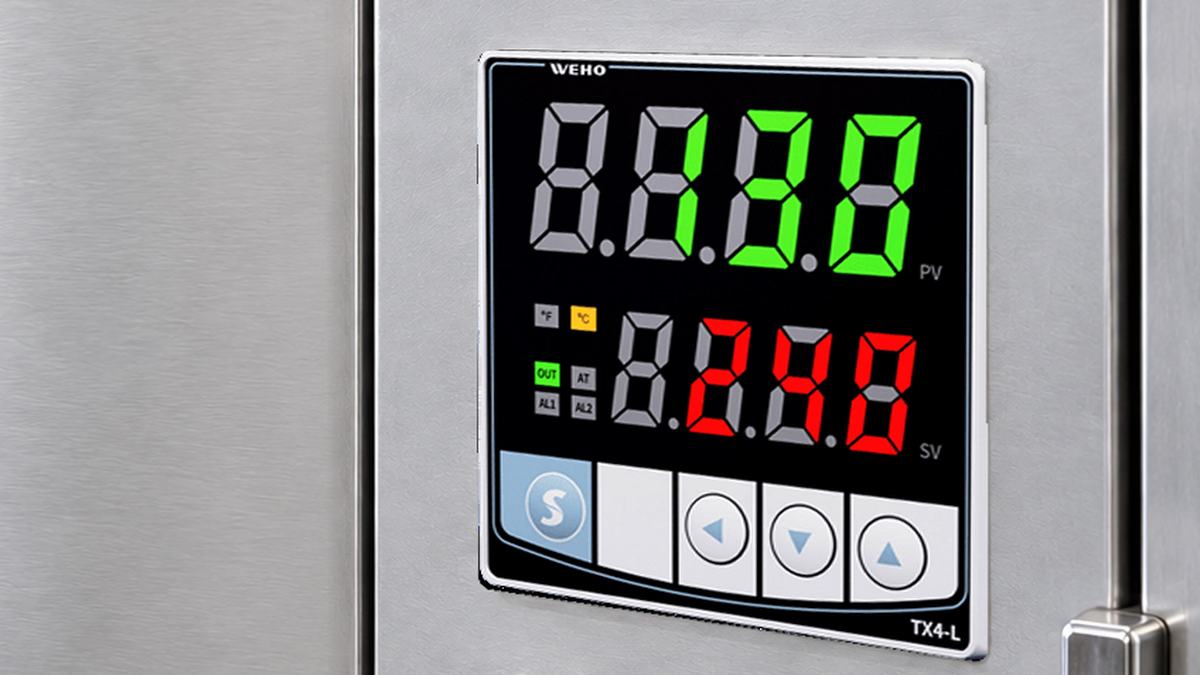
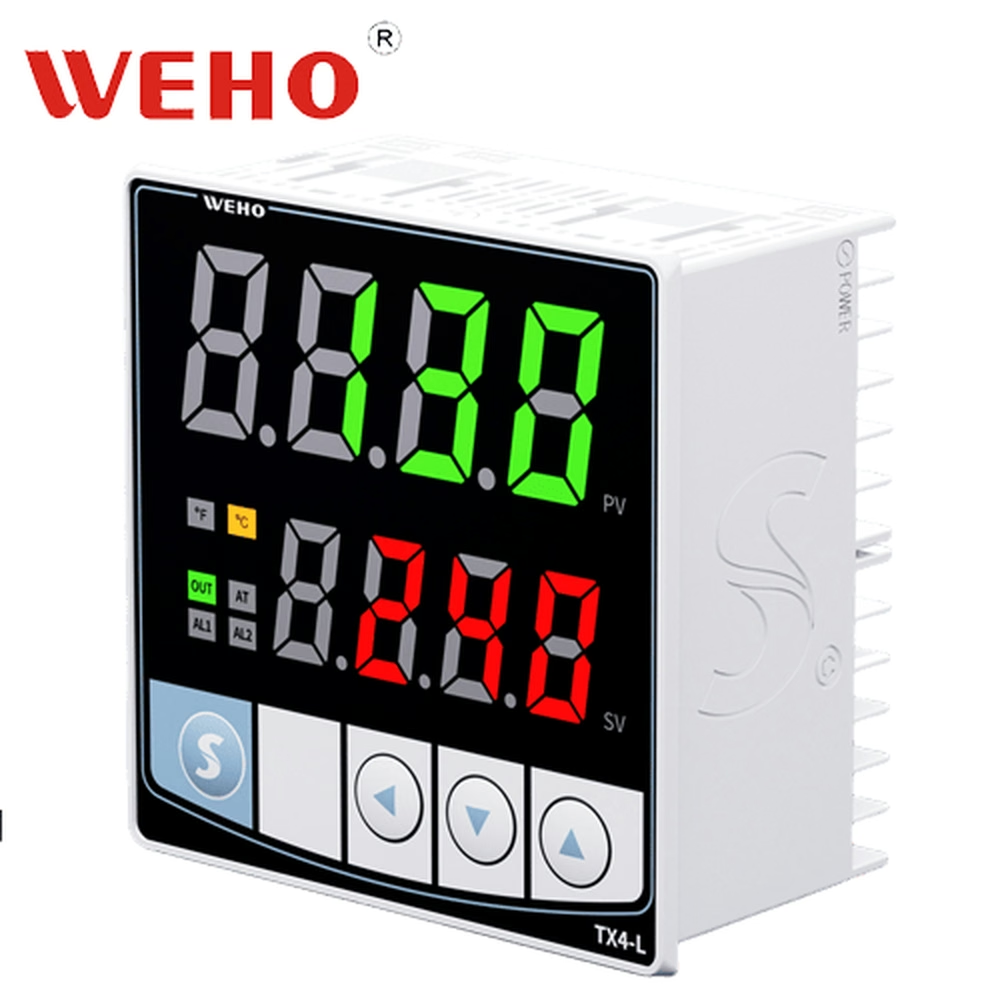
The product and panel illustrations identify the model context. They do not show a transferred tuning set or establish a particular process response. Displayed source values remain artwork, not evidence of a tuning experiment or a measured heating result.
This article helps an OEM compare parameter meanings before migration or replacement. It does not provide a universal tuning value. Heater size, sensor placement, thermal inertia, output device and control structure all affect the eventual loop behavior, even when the proportional conversion itself is correct.
How are temperature band, normalized band and gain related?
First define a normalized input span and an output scale. Under a simple convention in which proportional gain is output-percent change per input-percent error, Kp = 100/PB%, where PB% is the proportional band expressed as a percentage number. The relationship assumes those particular normalized scales.
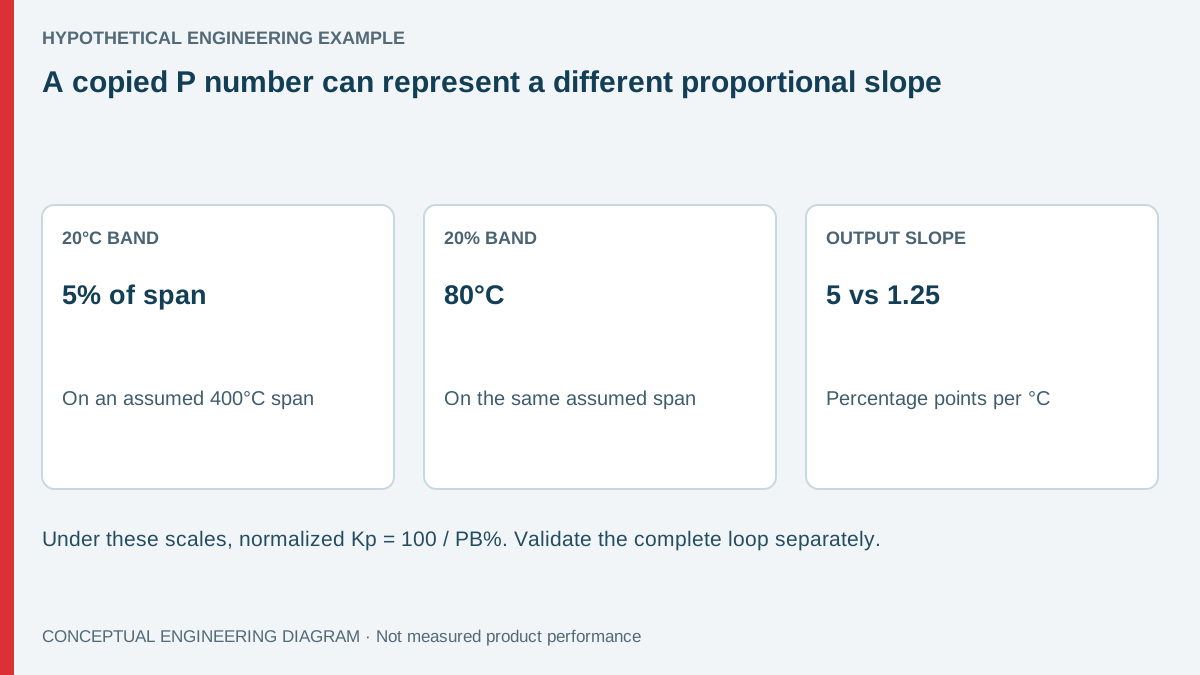
Consider a hypothetical proportional band of 20°C over an illustrative 0–400°C normalization span. The band occupies 20/400 × 100 = 5% of span. Under the stated convention, normalized gain is 100/5 = 20 percent-output per percent-input error.
In temperature units, the same simple proportional slope is 100/20 = 5 percentage points of output per degree Celsius. An error change of 2°C would therefore correspond to a 10-percentage-point proportional-output change before considering bias, saturation, integral or derivative action.
If someone interprets the original number 20 as a 20% band over the same 400°C span, the implied temperature band becomes 80°C. Its proportional slope is only 1.25 output percentage points per degree. The copied number has changed the proportional sensitivity by a factor of four.
| Hypothetical interpretation | Temperature band | Normalized band | Simple output slope |
|---|---|---|---|
| 20°C band over a 400°C span | 20°C | 5% | 5 percentage points/°C |
| 20% band over a 400°C span | 80°C | 20% | 1.25 percentage points/°C |
| Normalized gain of 20 | 20°C under these scales | 5% | 5 percentage points/°C |
| Undefined P = 20 | Unknown | Unknown | Cannot be compared reliably |
What assumptions can invalidate a direct conversion?
The normalization span must be explicit. It may be the configured input range, an engineering-unit scale or another definition provided by the controller manufacturer. Do not choose the span merely because it produces a convenient conversion or matches the machine's usual setpoint interval.
Control action and algorithm form also matter. A heating loop and a cooling loop may use different sign conventions, while interacting and noninteracting PID forms can interpret integral and derivative parameters differently. Matching proportional sensitivity alone does not establish equivalent overall tuning.
The official TX4 manual should define the supplied controller's parameter meaning. Use the other controller's own manual for its convention. External terminology guidance, such as OMRON's temperature-control explanations, supports the distinction but does not define a WEHO variant's undocumented options.
Check how output bias, limits and operating mode affect the comparison. A saturated output can hide the difference between two proportional settings during a large step. Compare the relevant unsaturated behavior within an appropriate test, then assess the actual controlled process under its own acceptance criteria.
How should a migration worksheet be built?
Give each parameter a name, physical meaning, unit, source definition and proposed destination value. Include the input span and output scale used in every calculation. Keep the original values so the responsible engineer can reconstruct the migration rather than rely on a final list of numbers.
- Identify the exact source and destination controller configurations.
- Extract each proportional definition from its applicable manual.
- Convert through explicit engineering or normalized units where justified.
- Review integral, derivative, cycle and output settings separately.
- Validate the proposed settings on the actual process under a controlled plan.
Qualified personnel should manage the effects of changed control settings. A more aggressive loop can alter heater operation and process temperature, while an incorrect control direction can produce a more serious response. Do not perform an uncontrolled setting transfer during production simply because the conversion arithmetic is complete.
Record the test's starting condition and disturbance. Comparing one controller on a cold empty process with another on a warm loaded process does not isolate the tuning difference. A useful comparison needs matched or explicitly accounted-for conditions and an acceptance criterion related to the actual process requirement.
Why is autotuning not a substitute for parameter identity?
Autotuning, where supported and appropriate to the supplied configuration, can generate settings for its observed process condition. It does not explain an undocumented parameter convention or guarantee an acceptable result under every load. The settings still require a defined handover record and relevant process verification.
The TX4-L product information provides the entry for confirming the actual model arrangement. Avoid inferring supported output combinations, control functions or migration tools from another size in the family. A common front-panel style does not prove identical installed options.
When a comparison fails, preserve the original settings and observed response before changing multiple parameters. A factor-of-four proportional mistake can otherwise become buried under several compensating adjustments. Resolving the definition first usually produces a more understandable engineering record than tuning around an unknown conversion.
A commissioning report should distinguish a successful unit conversion from a successful process test. The former means that the parameter relationship has been interpreted consistently. The latter requires evidence that the machine meets its temperature, recovery and operating requirements under the documented conditions.
Keep interval conversions separate from absolute-temperature conversions. Proportional-band width is a temperature difference: converting it between Celsius and Fahrenheit scales uses the scale factor, without adding an absolute offset. Setpoints and alarm temperatures require their own appropriate conversion.
A worksheet should preserve the algorithm conventions even when no direct conversion is justified. Writing that two definitions require further validation is more useful than forcing them into one number. The actual controlled response, rather than the appearance of matching settings, determines whether the proposed migration meets the project requirement.
Prepare a TX4-L parameter comparison
Send WEHO the supplied variant, applicable parameter pages, input span and existing tuning record. State whether the goal is understanding a parameter or replacing another controller. Include the process test requirements so the discussion can connect a correct definition with the actual engineering decision rather than produce an unsupported universal setting.
Frequently asked questions
Is proportional band always a percentage?
No. It can be expressed in engineering units or normalized units depending on the controller. Read the parameter definition and carry its unit into the worksheet before comparing values.
Does a narrower band mean a stronger proportional response?
Under the same band definition and scaling, a narrower band gives a larger proportional-output change for the same error change. That relationship alone does not predict the stability of the complete PID loop.
Can Celsius and Fahrenheit band values be copied directly?
No. A temperature interval of 20°C corresponds to 36°F, without adding the 32-degree absolute-temperature offset. Confirm how the controller handles unit changes and verify the complete configuration afterward.
Does equal proportional gain prove interchangeable tuning?
No. Integral and derivative conventions, output timing, limits, sensor dynamics and process conditions can differ. Use the conversion as one documented comparison step, then validate the relevant complete-loop behavior.