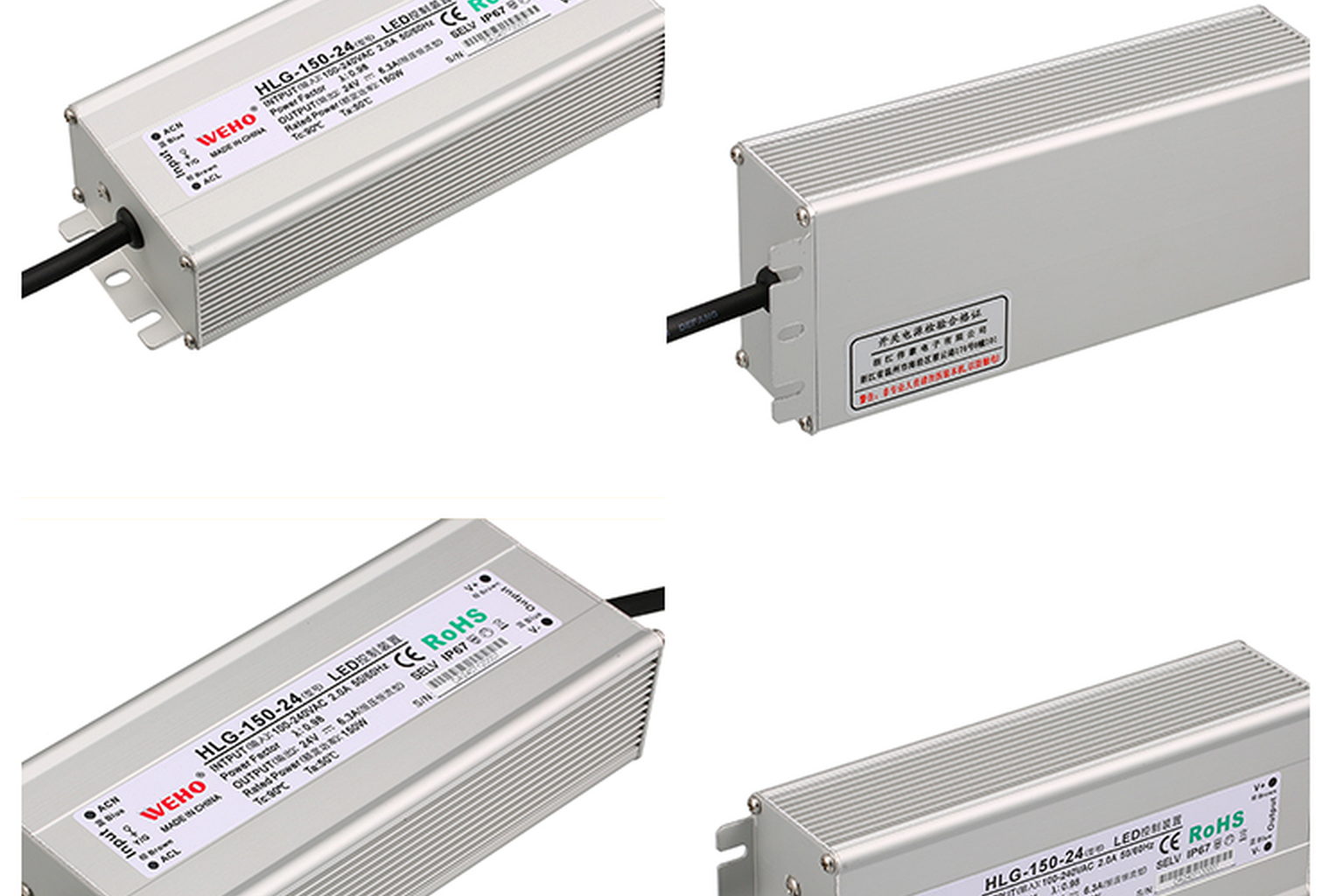
Quick answer: A constant-voltage LED driver maintains its specified DC output within its rated operating range. Match the driver to the strip or module’s specified voltage and check total load, current, voltage drop, temperature, installation and protection requirements. Some LED loads instead require a constant-current driver; follow the exact load manufacturer’s instructions.
Panimula
A correctly selected power supply helps an LED installation meet its electrical and environmental requirements. In commercial fit-outs, signage and architectural lighting, assess the driver together with the strip, wiring and installation location.
This guide covers constant-voltage LED drivers: how to size and select one, how to plan installation, and which specifications to verify before ordering. It is written for lighting designers, electrical contractors, signage manufacturers and facility buyers specifying across a project.
What Is a Constant Voltage LED Driver?
A constant-voltage (CV) LED driver regulates its DC output near its specified voltage, within the manufacturer's load and operating limits. Common strip systems use 12 V or 24 V, but other voltages exist. The load draws current according to its design; the driver’s rated current is an upper limit, not a current forced through every load.
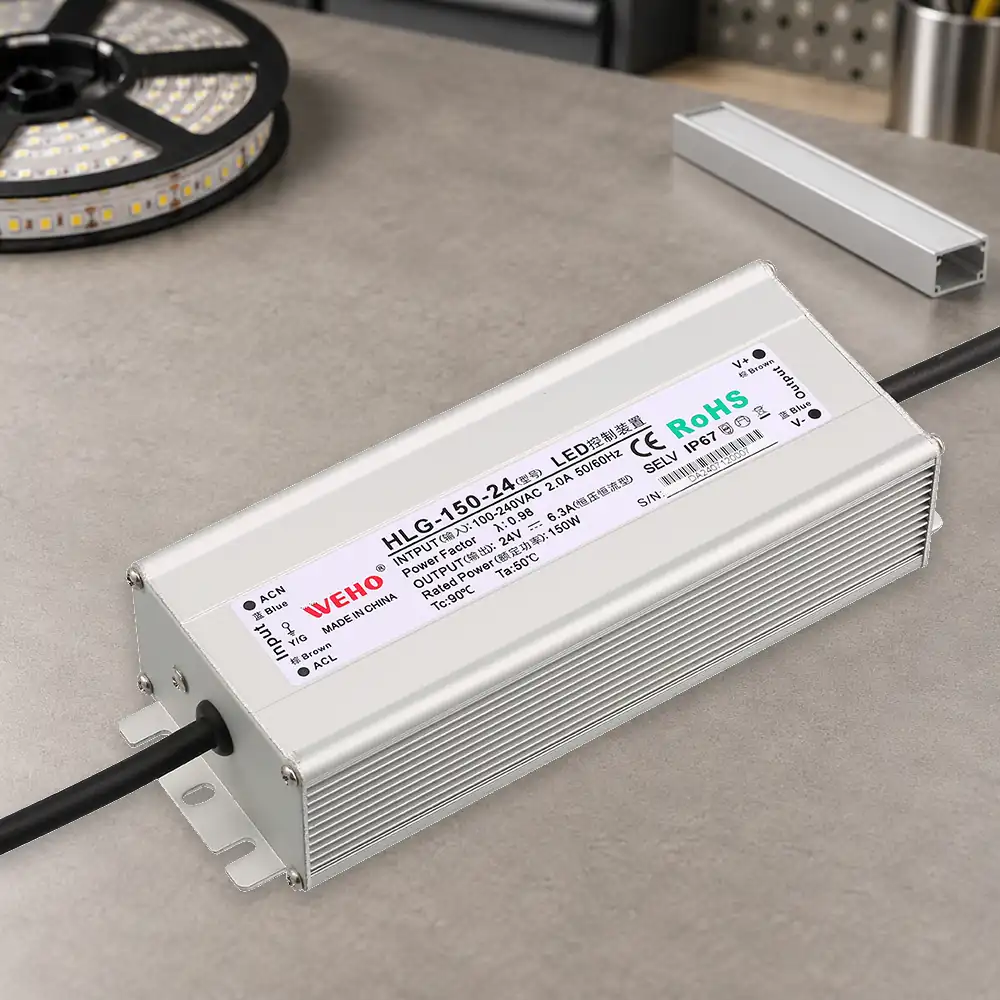
Some constant-voltage strips use repeating LED segments with current-limiting resistors; others use different current-regulating circuitry. LED modules may also include current regulation. Check the load documentation rather than assuming all strips or modules have the same internal circuit. Loads specified for a constant-current (CC) driver need the specified current and an appropriate voltage window, whether they are COB arrays or other LED assemblies.
| Characteristic | Constant-voltage driver | Constant-current driver |
|---|---|---|
| Controlled output | Voltage within the specified range | Current within the specified voltage range |
| Typical load | LED strips or modules specified for the driver’s CV output | LED assemblies specified for a CC output |
| Selection basis | Load voltage, total current and power, operating limits | Specified load current and forward-voltage range |
| Strip modifications | Cut only at marked points and follow strip and driver limits | Follow the load manufacturer’s instructions |
Using the wrong driver can damage the load or produce incorrect operation. Our article on constant current vs constant voltage LED drivers explains the distinction.
Why It Matters
- Brightness along the run. Voltage drop in the feed cable, connectors and strip can reduce the voltage at the far end. Check the load’s permitted range and the strip maker’s maximum feed length.
- Service life and temperature. Ambient temperature, mounting and loading affect operating conditions. Check the driver’s installation instructions and model-specific derating curve.
- Installation environment. Select an enclosure and connections for the actual exposure at the driver location. An IP code alone does not establish suitability for condensation, chemicals or UV.
- Flicker and compatibility. Check the driver, control method, dimmer and LED load together. Visible or camera flicker can have several causes; the ripple figure alone does not determine the result.
How to Select the Right Unit
Match the Strip Voltage and Plan the Run
The driver output must match the strip’s specified voltage. At equal power, 24 V draws half the current of 12 V; for the same conductor and current path, cable voltage drop is correspondingly lower. That comparison does not establish a universal strip run length: strip construction, current per metre, feed arrangement, cable length and permitted voltage range all matter.
| Strip supply | What to check | Planning considerations |
|---|---|---|
| 12 V DC | Verify strip rating, power per metre and maximum feed length | Shorter runs can be practical; calculate and measure drop for the actual installation |
| 24 V DC | Verify the strip is rated for 24 V | Lower current at equal power may help distribution, subject to strip construction and manufacturer limits |
Where the strip manufacturer permits multiple feeds, distribution or injection can reduce voltage drop. Follow the strip, driver and protection instructions; do not connect separate driver outputs together unless the manufacturer explicitly permits it.
Allow Wattage Headroom and Check Derating
Sum the maximum simultaneous load on each driver using the strip manufacturer’s W/m rating and installed length, adding any modules and control equipment on that output. Compare both current and power with the chosen driver’s continuous rating. A design margin can help accommodate uncertainty or future load, but no fixed percentage guarantees startup or covers every temperature condition.
For an illustrative calculation only, 8 m of strip rated at 10 W/m has an 80 W nominal load. If a project chooses a 20% margin on that load, the preliminary requirement is 80 × 1.20 = 96 W. The selected model must still supply the required continuous current and power at the actual input voltage, ambient temperature, mounting and cooling conditions; apply its own derating curve. Confirm any startup or transient requirements separately.
Match the Environment with an IP-Rated Unit
Match protection to the driver’s mounting location and actual exposure. In a dry indoor enclosure, follow the manufacturer's instructions for ventilation, accessibility and protection against contact. For damp or outdoor locations, assess dust, water jets or immersion, temperature, condensation and connector/cable-entry protection. IP ratings describe defined test conditions; the appropriate rating depends on the installation and local requirements. They do not alone establish resistance to condensation, UV, salt or cleaning chemicals. Obtain model-specific documentation before choosing the enclosure or fittings.
For a product reference, review the XLG-250-24 LED driver details. Confirm the exact ordered version, output operating mode, load compatibility and applicable current datasheet with WEHO before selection.
Specifying LED Drivers for a Project?
Contact WEHO with strip voltage, watts per metre, run lengths, cable lengths, mounting environment and control requirements. Request the applicable model datasheet, available options and a quotation.
How to Install & Integrate
Installation affects whether a selected driver can operate within its specified limits. Electrical installation should follow applicable local requirements and be performed by qualified personnel.
- Plan the feed. Cable length, conductor size and load current affect voltage drop. Calculate the complete outgoing and return path and select conductors and protection for the installation.
- Check distribution. Follow the strip manufacturer’s maximum run length and permitted feed arrangement. Do not parallel driver outputs unless specifically permitted.
- Observe polarity and cut points. Follow the strip markings and manufacturer instructions, and isolate power before making or changing connections.
- Use suitable connectors. Check the ratings of terminals, cable entries, branch connections and any required protection; avoid exceeding their specified capacity.
- Provide suitable cooling. Check driver clearance, mounting and derating in the actual enclosure rather than assuming nameplate output under all conditions.
- Verify under load. A qualified person should compare voltage at the load, including the far end of the longest run, with the LED manufacturer's specified operating range.
Key Specifications to Check Before Purchasing
| Pagtutukoy | Why it matters | What to verify |
|---|---|---|
| Output voltage and tolerance | Must match the LED load | Load voltage range and driver tolerance |
| Continuous power and current | Must cover the actual simultaneous load | Ratings at the applicable conditions and required margin |
| AC input | Must suit the available supply | Model-specific voltage and frequency range |
| Dimming and controls | Incorrect interfaces may affect operation | Driver, controller and LED-load compatibility |
| Environment and IP | Exposure and ingress vary by location | Applicable rating, entry conditions, condensation and environmental limits |
| Protection functions | Behavior depends on the model and fault | Specified functions, thresholds and recovery behavior |
| Thermal derating | Available output may change with conditions | Applicable curve, mounting and ambient measurement point |
| Compliance and warranty | Requirements vary by project and market | Model-specific documents, scope, validity and written terms |
LED Strip Driver Sizing Worksheet
| Step | What to record | Your figure |
|---|---|---|
| 1 | Strip length × rated W/m plus other simultaneous loads | ____ W |
| 2 | Strip voltage and permitted operating range | ____ V |
| 3 | Design margin and continuous driver power needed | ____ W |
| 4 | Output current at the operating voltage and load | ____ A |
| 5 | Longest feed/run, conductor size and length, permitted feed arrangement and calculated drop | ____ |
| 6 | Ambient temperature, mounting and model-specific derating | ____ |
| 7 | Water, dust and other environmental exposure | ____ |
Mga FAQ
What is the difference between constant voltage and constant current LED drivers?
A CV driver regulates output voltage within its specified limits, while a CC driver regulates output current within its specified voltage range. Select the type required by the LED strip, module or array documentation.
Should LED strips use a 12 V or 24 V driver?
Match the driver to the strip’s specified voltage. Compare voltage drop and permitted feed length for the exact strip and wiring. A 24 V system draws less current than a 12 V system at equal power, but there is no universal 5 m or 10 m cutoff.
How much headroom is needed when sizing a constant voltage LED driver?
Select a project-specific margin based on load uncertainty and expansion, then separately check the driver’s continuous current, power and derating at the actual operating conditions. A fixed percentage does not replace those checks.
Can a constant voltage LED driver be used outdoors?
Yes, when the exact driver and its connections are suitable for the site’s exposure and comply with applicable requirements. Verify ingress rating under the stated test conditions, cable entries, temperature and other environmental limits.
Konklusyon
A constant-voltage LED driver can power LED strips or modules designed for its regulated output. Match voltage, total load and distribution to the exact products, check the available power after applicable derating, and select protection appropriate to the driver’s location. Confirm the relevant datasheets before ordering or installation.
Contact WEHO with the load, run lengths, mounting conditions and control requirements to discuss suitable models.
Related Resources
- Constant current vs constant voltage LED drivers
- 12V and 24V LED strip power supplies
- Best practices for LED strip power supplies in large installations
- Waterproof IP67 LED driver buying guide
- 24V LED drivers for strip and sign lighting
- LED Driver product range
- 200W DC 12V/24V LED power supply
- 300W ultra-thin LED driver