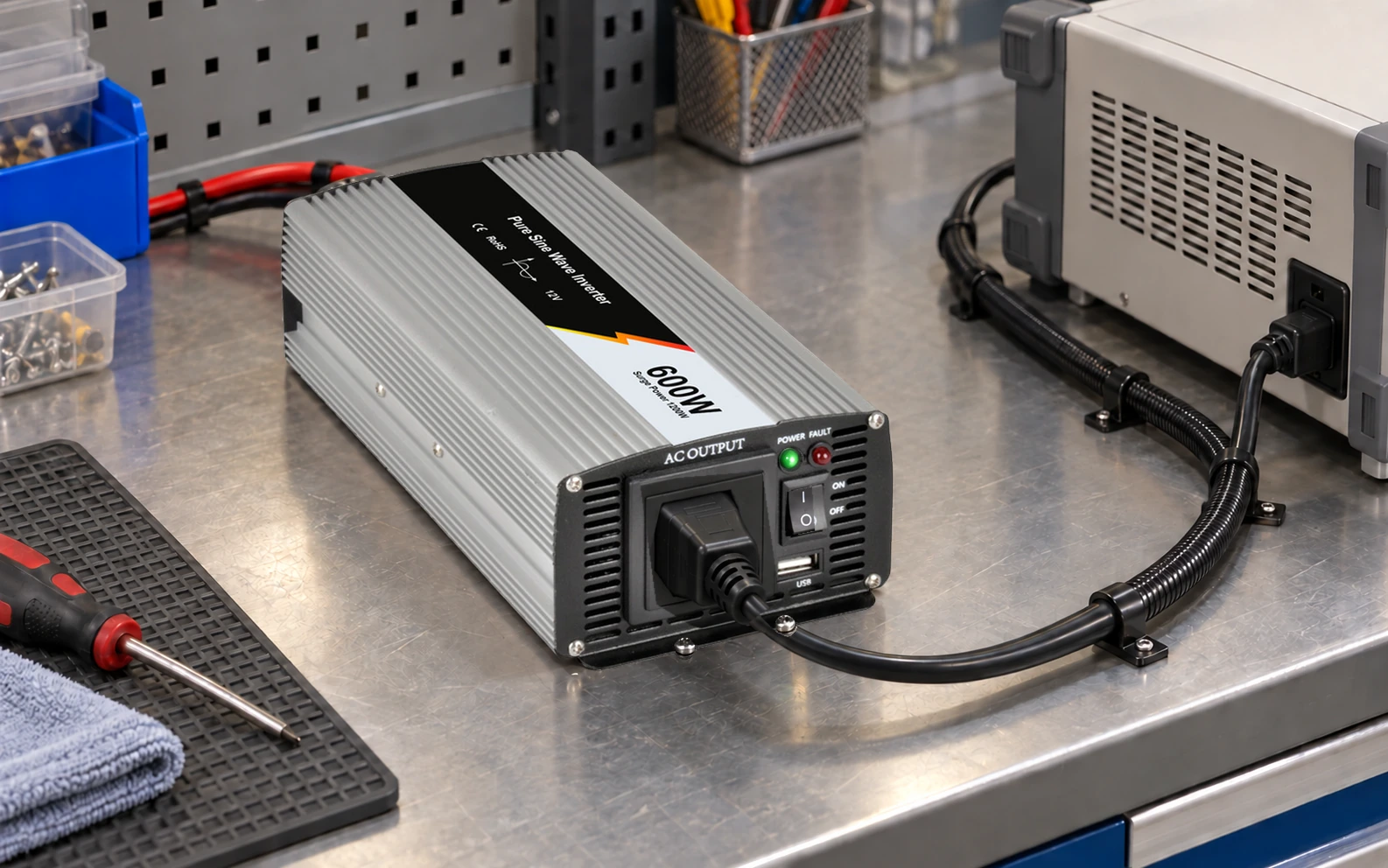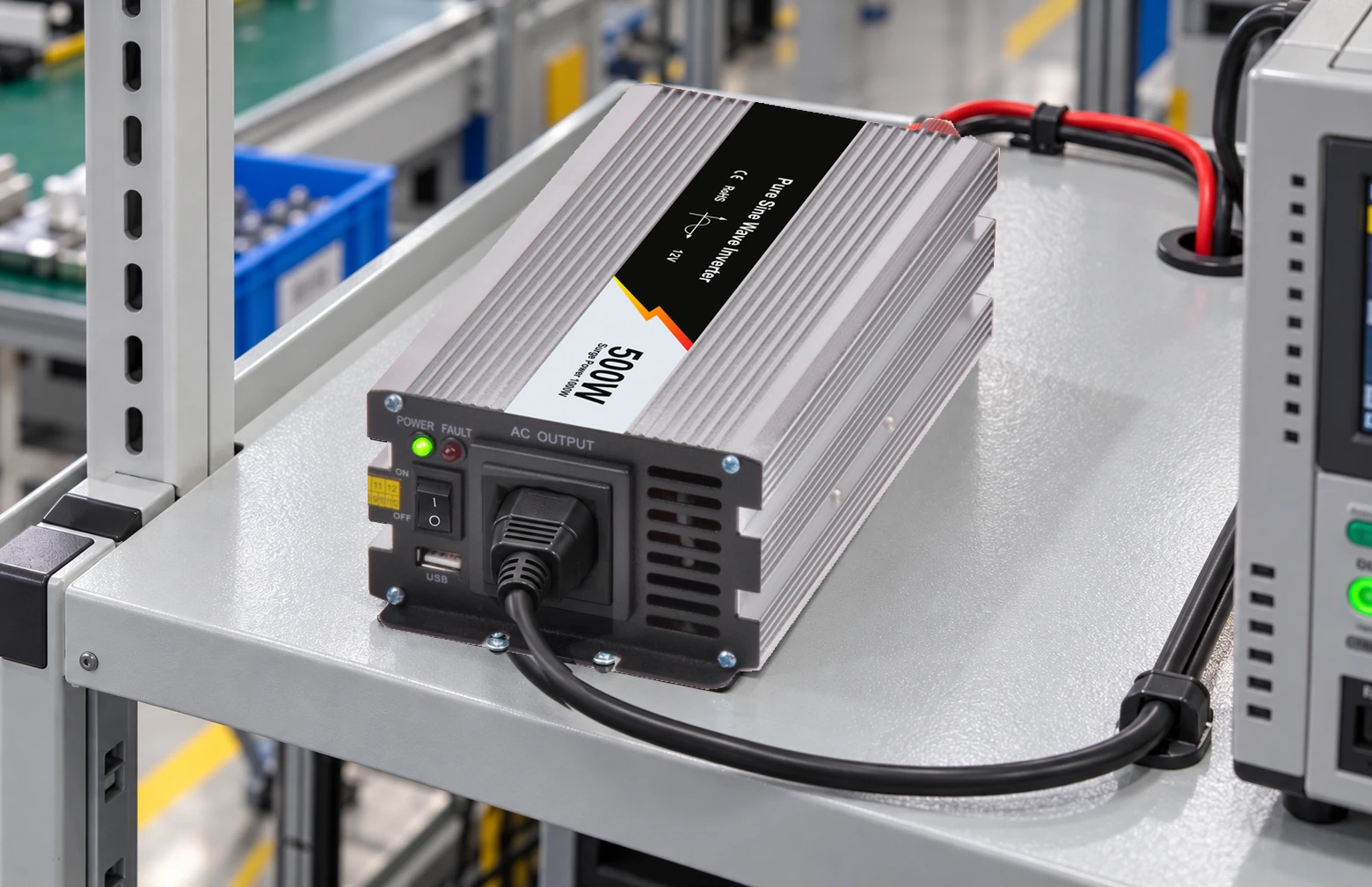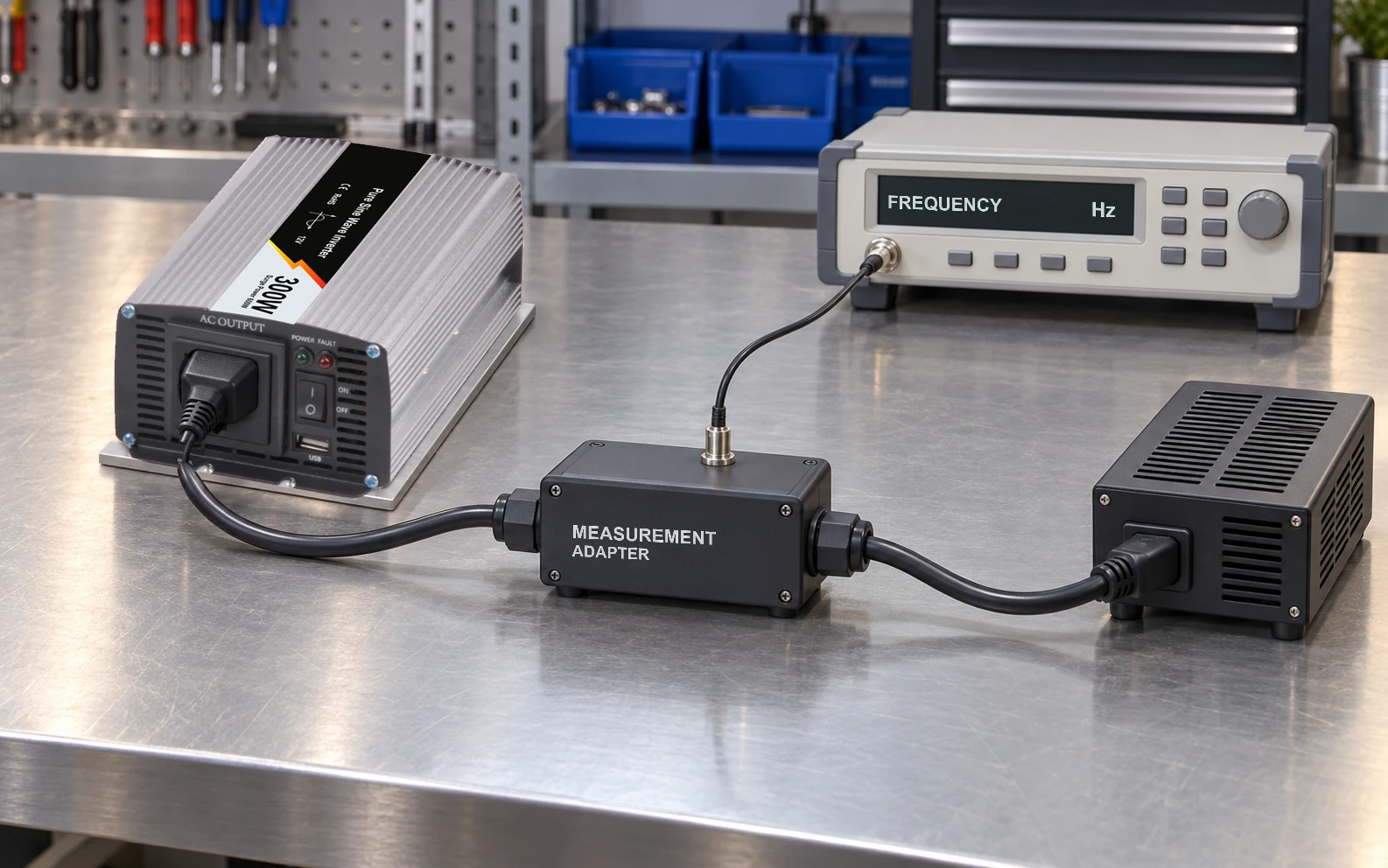
Specify an inverter’s AC output frequency from the connected equipment’s requirements, then confirm that exact option on the order and received unit. A matching voltage and plug shape do not settle the frequency question. “50 Hz or 60 Hz” in a family table does not establish that either frequency can be selected on every unit.
This guide helps an OEM buying a small AC power module create a frequency acceptance record. The WEHO WHP300W inverter family provides the product reference; a frequency check remains separate from load-power and battery-input approval.
Read the load requirement before choosing the inverter option
Collect the nameplate and instruction sheet for every AC receiver that the equipment can energize. A marking of 50/60 Hz permits a different discussion from 50 Hz only,60 Hz only or an absent frequency specification. Record a source document instead of converting an absent value into an assumed wide range.
Separate an equipment input requirement from an internal motor or timing reference. A receiver containing an electronic supply may tolerate both mains frequencies, but that conclusion must come from its documentation. A motor, transformer, fan or line-frequency timing circuit may have additional conditions. The device’s nominal wattage cannot answer them.
Where a controller offers several input versions, identify the supplied version. Do not use an export brochure for one option as permission for a different installed assembly.
Keep family options separate from the photographed unit
The current WEHO product table lists 50 Hz±0.5 Hz or 60 Hz±0.5 Hz output options for the 300 W family. It also presents several AC voltage and DC input choices. These are separate purchasing decisions, not evidence of one universal unit.
The official photograph visibly identifies a 300 W pure-sine inverter marked 12 V. It is useful for recognizing that hardware, but the visible marking does not establish the ordered AC frequency. Keep the photograph attached to the identity record without using the socket silhouette to fill the missing configuration.
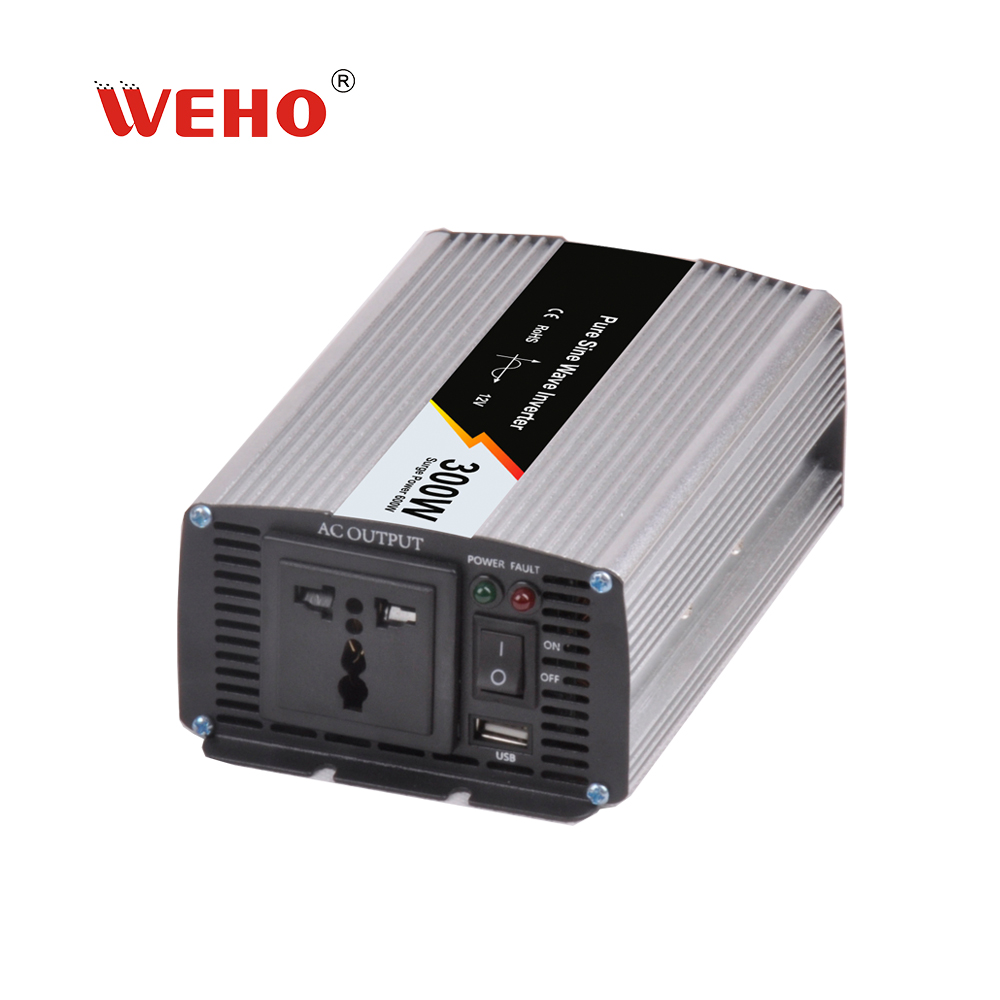
Ask for a unit-level configuration statement covering nominal frequency, tolerance, output voltage, permitted adjustment and the matching instructions. If frequency is configurable, define who may change it and how the released setting is retained.
Build a receiver-by-receiver frequency matrix
| Receiver evidence | Frequency entry | Procurement action |
|---|---|---|
| Nameplate permits 50/60 Hz | Either, subject to the full input specification | Choose one output option and verify all other receivers. |
| Nameplate permits 50 Hz only | 50 Hz required | Do not release a 60 Hz option by analogy. |
| Frequency absent or unclear | Unresolved | Obtain the manufacturer’s applicable input requirement. |
Include accessories that operators may add later. A service outlet whose allowed receiver is unrestricted creates a different control problem from a dedicated connector for one approved appliance. State the permitted equipment list in the machine documentation so a later service change does not undo the frequency decision.

Use period as a cross-check, not as a substitute for a test plan
For a periodic waveform, frequency is the reciprocal of period. In a hypothetical measurement, a 20.0 ms period corresponds to 50 Hz, while 16.67 ms corresponds to approximately 60 Hz. These are arithmetic examples, not measurements of this inverter.
Check how the instrument detects frequency on the actual waveform. Noise, a distorted zero crossing or an unsuitable trigger can produce a plausible but incorrect reading. Retain the instrument identification, measurement method, output state and load with the result. Avoid judging a complete tolerance from a rounded display alone.
A qualified test team should choose suitably rated equipment and the connection method. Record steady operation and any documented operating states relevant to the receiver. Do not infer a frequency-versus-load performance curve from a single unloaded reading.
Release a configuration and a result together
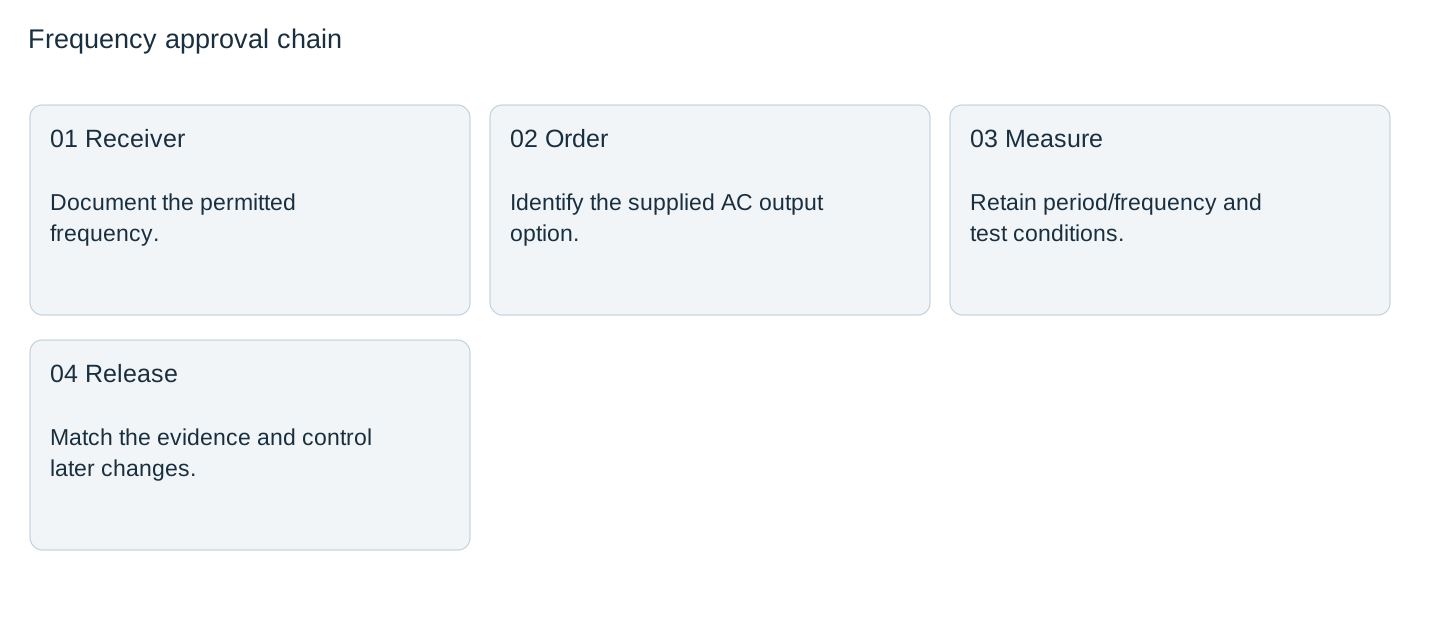
The release record should connect three items: what each receiver requires, what inverter option was ordered, and what the supplied assembly actually produced under the agreed test. If one item is missing, a matching plug and a working power indicator cannot close the gap.
When a discrepancy appears, preserve the original label and observation. Check the order code and applicable instructions before changing a setting or substituting hardware. Increasing available watts does not correct a frequency mismatch.
Use the worksheet to retain the required frequency, source document, ordered option, measured result, instrument uncertainty and release decision. Reopen the record after an inverter substitution, control-setting change or addition of an AC receiver.
Specify the required AC configuration
Send WEHO the receiver frequency requirements, AC voltage, permitted load list, battery configuration and required configuration control. Request the matching WHP300W option and its unit-level output information before ordering.
AC output frequency acceptance record
| Receiver / document | Required frequency | Ordered option | Measured result / uncertainty | Karar |
|---|---|---|---|---|
Blank project worksheet. Enter verified project data; example calculations above are not measurements.