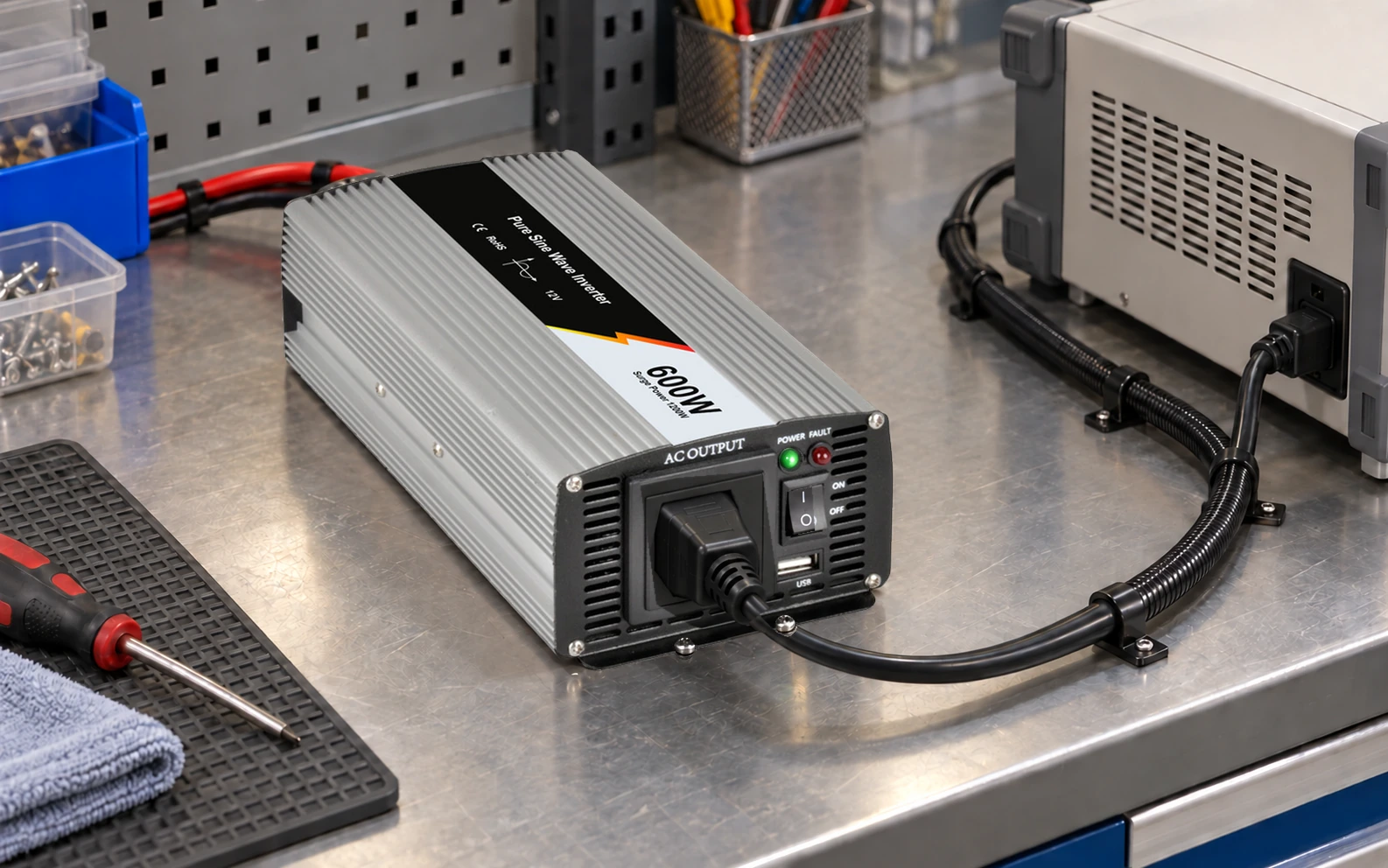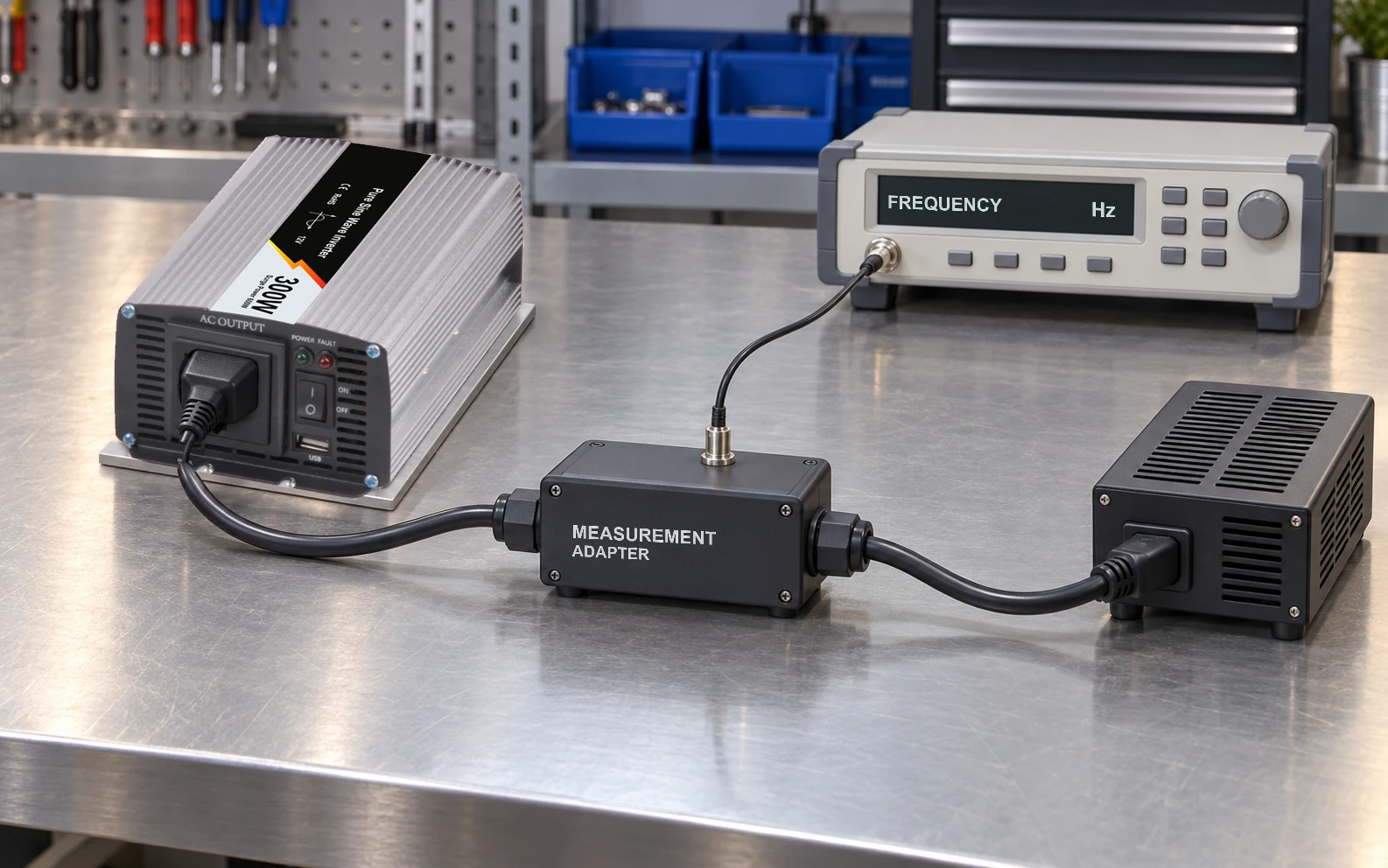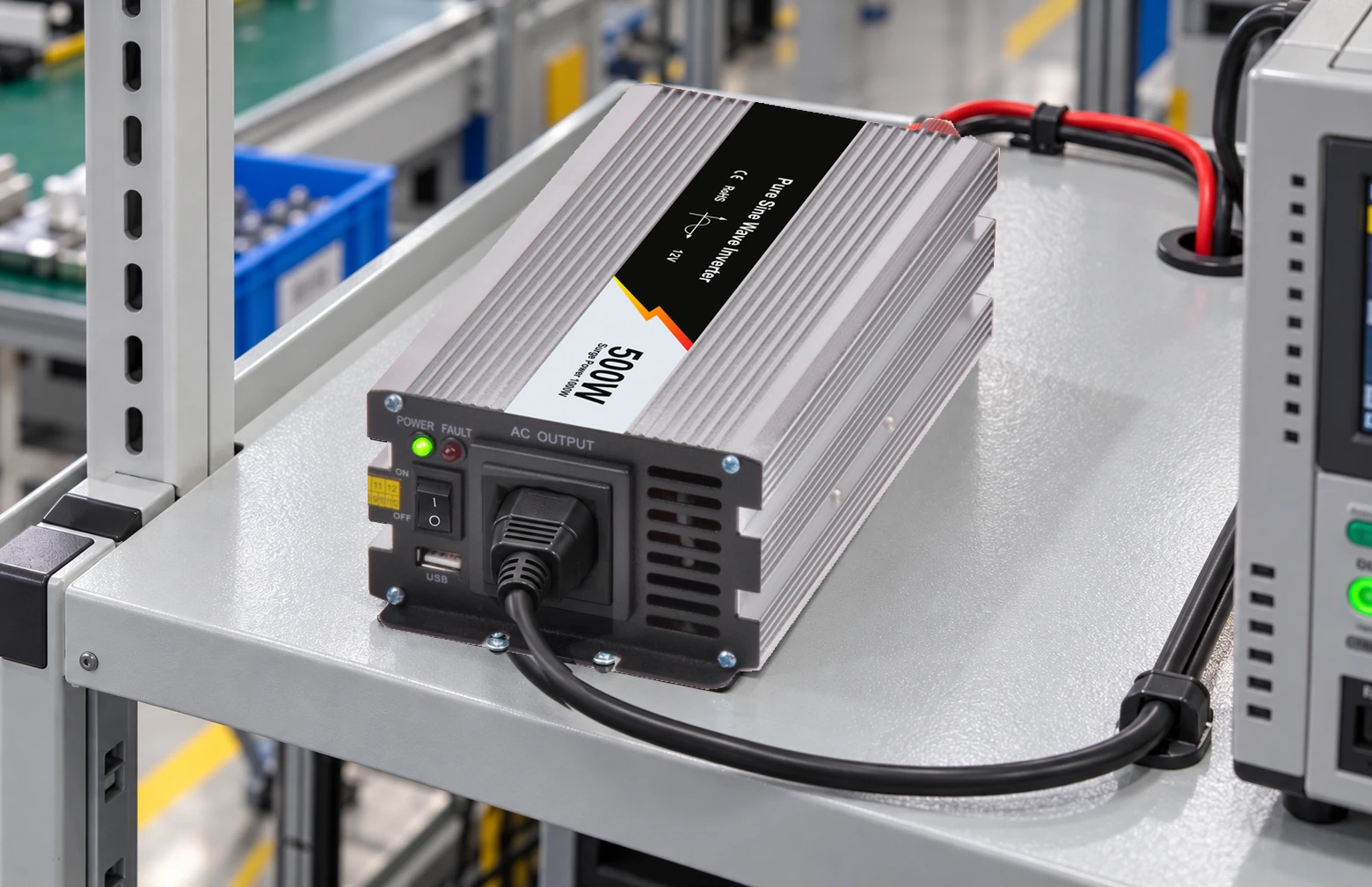
Approve the actual plug-and-socket pair, its electrical limits and its destination requirements before releasing an inverter-powered assembly. Mechanical insertion alone does not establish contact rating, protective-earth continuity, retention or an acceptable regional interface.
The WEHO WHP500W inverter family is shown with a universal-style outlet. For an OEM integrating that product, the useful output is a connector-interface record tied to the supplied option. This article concerns the interface; it does not approve an unrestricted service outlet.
Identify both halves of the connection
List the inverter outlet option and the mating cordset or appliance plug by manufacturer and configuration. Include any adapter, detachable cord, locking device or distribution accessory in the chain. The receiver’s final installation can differ from the plug shown in a sales photograph.
Record intended AC voltage and frequency alongside the mechanical interface. A travel-style adapter changes geometry; it does not establish the correct voltage, frequency or protective arrangement. A product rated for another input must be evaluated against the supplied output even when it inserts easily.
For a dedicated OEM load, controlling one cordset can make the review concrete. For an operator-accessible socket, define which loads and plug types are permitted rather than assuming every mechanically accepted plug is an approved use.
Use the official photograph to identify the visible interface
The official 500 W image shows one AC outlet, a switch, indicators and a USB interface. The upper marking identifies a 12 V input example and pure-sine output. It does not display a complete outlet contact rating or destination conformity file.
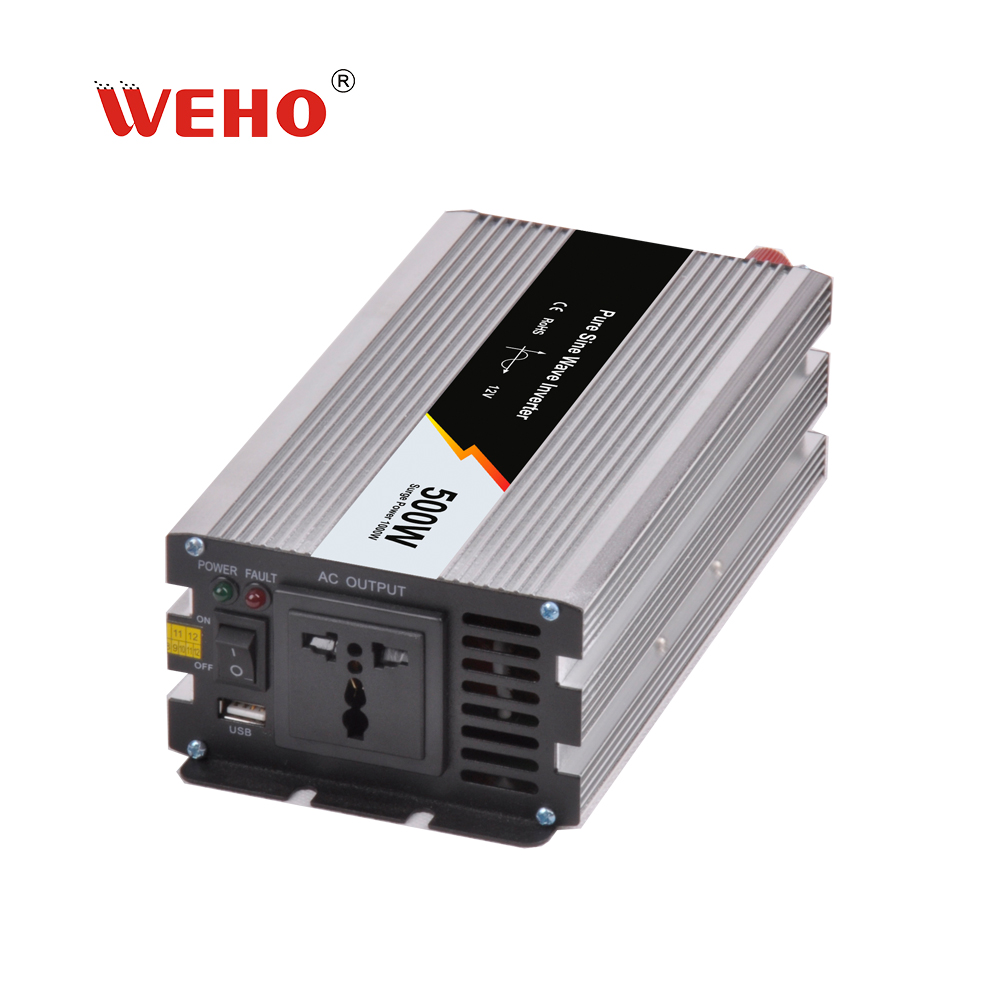
The product table gives 500 W rated power and 1000 W peak power at family level. Neither number establishes the rating of every possible plug/cord/accessory chain. Confirm the exact outlet construction supplied and obtain the applicable product and connector documents.
Keep the source photograph unchanged. Replacing a socket in an illustration with a familiar local design would imply that configuration is supplied and would remove the evidence needed for a useful interface review.
Review fit, rating and protection as separate questions
| Ögeyi gözden geçirin | Evidence needed | What a visual fit cannot establish |
|---|---|---|
| Mating geometry | Exact plug/socket configuration and permitted use | Retention or reliable contact pressure |
| Voltage and current | Ratings of outlet, plug, cordset and accessory | Allowable current from the 500 W label alone |
| Protective provisions | Unit instructions and the assembly’s protection design | Earth contact behavior from a front photograph |
| Destination | Applicable product and component evidence | Local acceptance from a universal-style socket |
Do not assume an accessory with a larger printed ampere rating improves the complete connection. The allowed path remains constrained by every relevant component and its installed conditions. A multiway accessory also changes who controls the connected loads.
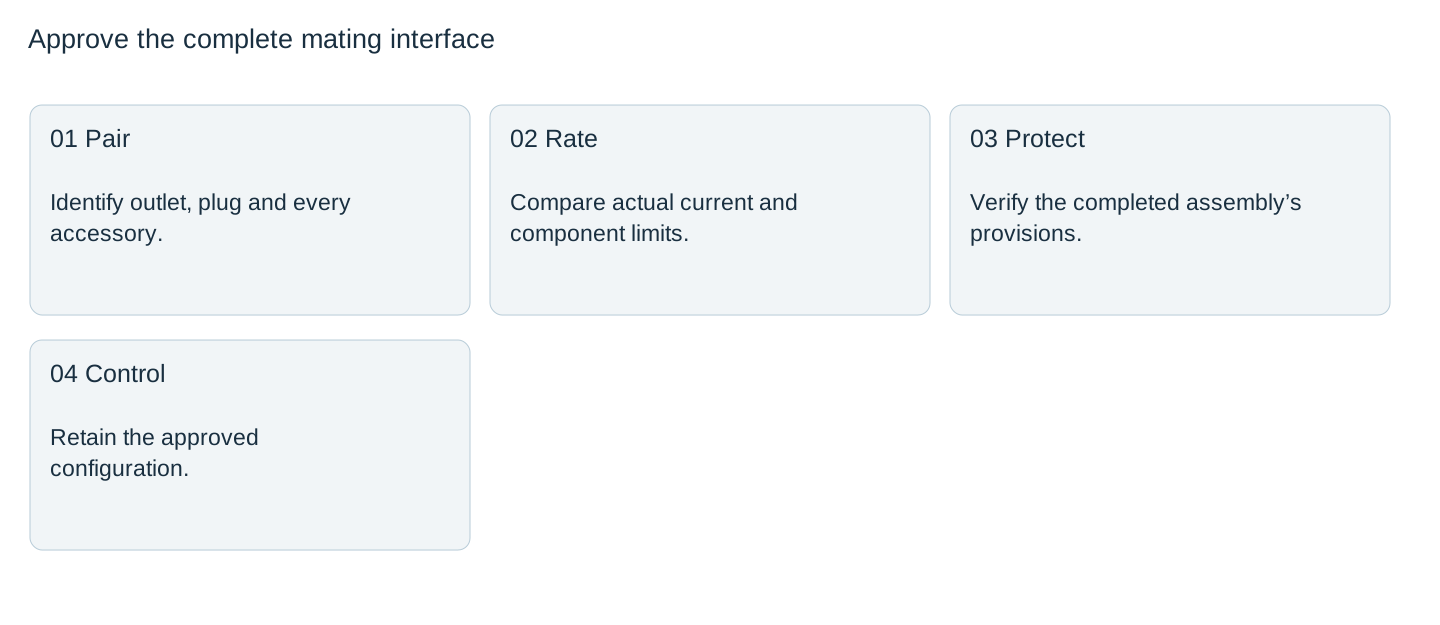

Use load current to screen the interface
For a hypothetical 230 V,400 W load with a true power factor of 0.8, apparent power is 500 VA and RMS current is approximately 2.17 A:400÷0.8÷230. This is a load calculation, not a contact-current test or a WHP capability claim.
The example explains why 400÷230 is not always the right input-current estimate. Use documented or measured receiver RMS current where possible. Check starting or pulsed current separately if it affects the connector or accessory selection.
A numerical current screen cannot prove retention, grounding, touch protection or conformity. Those remain separate evidence and assembly checks. Never use a lower observed current to excuse a damaged socket or an undocumented adapter.
Close the sample review with a controlled cordset
Compare the received outlet and cordset with the released configuration while isolated. Follow the applicable component instructions for mechanical checks and have the responsible team define electrical verification of the completed assembly. Do not improvise live probing inside a socket or modify plug pins to obtain a fit.
Retain the part identities, document references, photographs, actual permitted load current, accessory conditions and release decision. If the supplied outlet differs from the ordered version, stop the interface release and resolve the difference before treating a successful power-on as acceptance.
Reassess the interface when the export market, cordset supplier, service load or distribution accessory changes. The completed record should explain why this particular connector chain was accepted, rather than merely stating “universal socket.”
Request the actual supplied outlet information
Provide WEHO with the destination, mating plug/cordset, AC requirements and load-current evidence. Ask for the exact WHP500W outlet option and matching unit documents before freezing the OEM interface.
Inverter plug-and-socket interface record
| Interface component | Part identity | Voltage/current evidence | Protective provision | Serbest bırakma koşulu |
|---|---|---|---|---|
Blank project worksheet. Enter verified project data; example calculations above are not measurements.