













Introduction
Electricity is something we use every day, but not many people really pay attention to it. Mobile phones need to be charged, electric vehicles need to be charged, and equipment in factories also need power supply; Behind all of these, there is a process of changing and managing electricity. The so-called intelligent power module charger is a component that converts AC power into DC power and also controls the charging tube; It’s not just about plugging it in, there are controls, protections, and heat dissipation considerations inside. This article will sort out this module, first explain what it is, then explain how it works, and finally explain where it is used.
What Is WEHO Intelligent Power Module
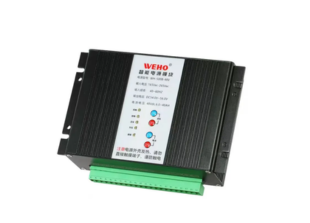
The WEHO intelligent power module, in other words, is a relatively complete charging unit. The power conversion circuit, control circuit, and protection circuit are all packed into one module; Leave only two wires outside, one connected to the input power supply and the other to the battery. Compared to the method of building parts one by one, it is more convenient; Before the module leaves the factory, these issues have been addressed by the manufacturer and can be easily resolved by hand connection. What does it look like? It’s just a metal box with terminal blocks on top, and some models even come with a small light or a communication interface. CW is an offline series of this product, mainly targeting industrial and charging scenarios.

How WEHO Intelligent Power Module Works
Integrated Power Conversion for Charging Systems
Power conversion is the most fundamental activity of the module. AC power comes first and is first rectified to become a direct current with each impulse; Then, after passing through the transformation circuit, the voltage is raised or lowered to the desired value for the battery. The WEHO CW module adopts an integrated approach, which means that the entire transformer path is enclosed inside the module, and the scattered power components cannot be seen from the outside. There is a benefit to doing this, as the line is shorter and the impact of various factors on the route is smaller, and efficiency is not easily reduced. The input voltage is not fixed to a single number, it has a range, which will be brought up later when discussing wide temperature.
Intelligent Charging Control Logic
Just changing the voltage is not enough, there must be a rule for charging. Batteries do not charge as much as electricity is injected, as they require different voltages and currents at different stages. There is a set of control methods in the WEHO CW module, which adjusts the output according to the battery status. First maintain a constant current, then maintain a constant voltage, and when it is almost full, switch to a small current to maintain; The module will make its own decision on how to cut between these steps. The logic behind this is executed by a control chip, which retrieves the voltage and current from the output terminal and compares them with a pre-set curve. The output for the next moment is determined accordingly. Usually, no one needs to manually adjust it.
Multi-layer Protection System
Protecting this area will be discussed in detail later when discussing the engineering advantages. Here, let’s first talk about the principles. The module is charging normally while also monitoring several parameters: output voltage, output current, and whether the module is heating itself. Once the number exceeds the predetermined line, the protection will be activated. If the voltage is high, the current is high, and the temperature is high, the tube will also be affected; These layers are stacked together, not just relying on one gate. Which one to start with first, what kind of problem can be identified and how severe the problem is.
Reverse Polarity Protection
The positive and negative terminals of the battery are reversed, which makes it easy to make this mistake when using it. When wiring, if you shake your hand, the positive and negative will be reversed. The WEHO CW module has been designed with anti reverse connections on both the input end and the battery end; If the connection is reversed, the current cannot flow into the battery, and the protective components inside the module will block the circuit. This is not determined by the program, it is directly blocked by hardware and responds quickly.
Key Engineering Advantages of WEHO CW Modules
System-Level Protection Architecture
I mentioned several layers of protection earlier, let’s go into more detail here. The WEHO CW module is designed for protection, not by cramming one component at a time, but by considering the entire system. From the input end to the output end, any point that may have a problem is assigned corresponding protection. Input side overvoltage and undervoltage protection; Protection against overvoltage, overcurrent, and short circuit on the output side; The module also has its own temperature protection. These protections come together, not individually. If something really goes wrong, the system will determine which section to disconnect instead of shutting down the entire module immediately.
Reliable Battery Reverse Connection Protection
The battery is reversed, which sounds low-level, but it’s really a big problem. The lighter ones can damage the battery, the heavier ones can catch fire and explode, and the bigger the battery, the more afraid of this. The WEHO CW module is equipped with a dedicated anti reverse circuit on the battery circuit. When the wires are connected correctly, this section of the circuit is similar to a regular wire, and the current should be routed accordingly; As soon as the line is reversed, it immediately cuts off the road. This design is user-friendly, and if the wires are connected incorrectly, it will not immediately cause irreparable consequences. However, it must be made clear that anti reverse connection is for your fault tolerance, and you cannot randomly connect it just because you have it. Correct wiring is always the first priority.
High-Efficiency Thermal Design for Charging Scenarios
When it comes to charging, heat is essential. The power changes back and forth, and it is impossible to deliver 100% of the input electricity. There will always be a portion that becomes heat dissipated. A higher efficiency results in less heat. The WEHO CW module has put effort into heat dissipation, and the metal shell itself can help dissipate heat. The placement of the components inside also takes into account where the heat flows. The charging scenario is different from ordinary power supply. It takes several hours to charge, and the heat keeps coming out. Whether the heat dissipation can keep up is crucial. The heat dissipation structure of the module can transfer the heat conduction inside to the shell, and then dissipate it from the shell to the outside air.
Wide-Temperature Operation in Industrial Environments
The temperature on the industrial site is incomparable to that in the office. In summer, the temperature in the workshop can reach over forty degrees Celsius, and in winter, it can drop to minus ten degrees Celsius when placed outdoors. The device still needs to operate in this environment. The WEHO CW module can withstand a wide temperature range, it can ignite when cold, and then reduce its output and continue working when hot. Wide temperature is not just talk, it requires that the selected parts have stable parameters within this temperature range; Capacitors and semiconductor components are more sensitive to temperature and need to be carefully selected. If the temperature is really too high, the module will rely on reducing output or protective actions to protect itself, and will not be forced to burn out.
Application Scenarios of WEHO Charging Modules
Let’s go back to where it’s used. The first thing that comes to mind is electric vehicle charging: forklifts AGV、 Tourist buses need to be equipped with charging devices, and the modules are installed in charging stations or chargers. Another is the backup power supply for communication base stations. The batteries stored in the base stations need to be regularly charged and maintained, and this task is left to the modules. There are also energy storage systems, which are used for household, industrial, and commercial purposes. How to manage battery pack charging also involves this type of module. In addition, there is a direct DC output point on the industrial site, which supplies power to the PLC and sensors, and also charges the battery. The usage is quite diverse, but the requirements are similar: stable output, reliable protection, and the ability to run continuously for a long time without stopping.
Why Choose WEHO CW Modules Over Discrete Solutions
What is discrete? You can buy the rectifier bridge, MOS transistor, control chip, board, and debug it yourself. At the time of research and development, it was flexible to do so, but if we had to do it in bulk, the troubles would arise one by one: design would take time, debugging would cost money, and the performance of each batch of boards may not be uniform, so there may be differences between this batch and that batch. As for the module solution, the manufacturer has completed all these tasks for you, tested them, and run through the aging process. The performance of the received items is complete. Users only need to choose a model according to their desired voltage and current, regardless of how it is designed inside. Speaking of which, the module is not without issues, the unit price may be slightly higher than building it yourself, and the flexibility is also lacking; For the vast majority of usage, the saved research and development time, as well as the saved after-sales disputes, are much more than the price difference.
FAQs
Q1: Can the module be directly connected to the battery?
A1: It depends on whether the voltage is correct and whether the output range of the module meets the requirements for battery charging before it can be connected. Blind connections are not allowed.
Q2: Can I disassemble and repair the module myself if it’s broken?
A2: It is usually glued or sealed inside, and it is not recommended to dismantle it yourself. It is more convenient to replace it with a new one.
Q3: What is that communication interface for?
A3: Used for data exchange with the upper computer or monitoring system, it can remotely see the voltage and current levels, and can also issue commands from external sources.
Q4: Can several modules be connected in parallel for use?
A4: Some models support parallel capacity expansion. Please refer to the specification book for details, not all models are suitable.
Conclusion
The intelligent power module charger, in other words, turns the complex task of charging into a component that can be used immediately after being connected. Whether it’s power conversion, charging control, multi-layer protection, or anti reverse connection, all of these are integrated into one; The two ends of heat dissipation and wide temperature range have also been designed specifically. From industrial charging to communication backup power, and then to energy storage, the usage areas are quite spacious. Compared to building discrete circuits on its own, modules have obvious advantages in terms of reliability and ease of development. WEHO has been working in the field of charging modules for some years, and the CW series is a line it has introduced for industrial charging scenarios; If you encounter more detailed usage later, just flip through the specifications and parameters.